
(Source: China Daily)
Honorees share medical career experiences
By WANG XIAOYU | China Daily | Updated: 2022-08-20 12:53
Editor's Note: Five honorees of the title "the most beautiful doctors", an award jointly given by the Publicity Department of the Communist Party of China Central Committee and the National Health Commission and published ahead of this year's Chinese Doctors' Day on Friday, were invited to share their experiences and reflections on their medical careers during a news conference on Friday.
I think to nurture healthy relationships between doctors and patients, communication and mutual understanding is very important. I often tell younger doctors in my department that no matter how busy we are, we should take communication with the family members of patients seriously. In April, a patient passed away after two months of treatment, but the patient's relatives still texted me a message to express their gratitude. At that moment, I felt that we should strive even harder to save lives. I also realize that the doctor-patient relationship is not that complicated, and it is mutual understanding and compassion that matters.

The average altitude of Zekog county is over 3,700 meters above sea level and local herders live sparsely. Thanks to national support devoted to boosting healthcare services in Tibetan areas, our medical treatment capacity has undergone great changes. Most importantly, our hospital has performed a number of surgeries using a laparoscope in the past three years, which is a major advancement for a county-level hospital.
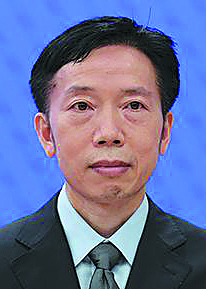
Medical workers should shoulder the responsibility of promoting health awareness among the public. In recent years, I have found that the number of patients with nearsightedness was increasing and included many children and teenagers. So we are determined to strengthen myopia prevention education, and have launched a number of online and on-site campaigns, visited communities, schools and libraries, as well as used social media and livestreaming to spread knowledge. We all hope for a magic eye drop product to cure nearsightedness, but I think the best we can do is to improve awareness about protecting eyesight.

When HIV/AIDS patients are first confirmed with the disease, they are often fearful and feel embarrassed, thus choosing not to tell their family members or friends. We have launched a hotline to provide an outlet for them. In the past two decades, I have saved more than 1,000 contacts of patients or their relatives, and received many WeChat messages. We hope that in this way, we can reach out to more patients and enable them to understand that healthcare services are available for them.

Conducting epidemiological investigations is vital during the fight against contagious illnesses. However, such teams were usually scraped together when an outbreak emerged, leading to a shortage of staff and insufficient capabilities. That's why the State Council's Joint Prevention and Control Mechanism decided to establish a team consisting of 300 professionals devoted to epidemiological survey work in September. Since then, we are always on standby. Some of my fellow team members spent two-thirds of a year either on the front line against the disease or in centralized quarantine.