(Source: China Daily)
Patient in Denmark diagnosed by doctor in Chongqing
By Deng Rui and Tan Yingzi in Chongqing | chinadaily.com.cn | Updated: 2022-02-18 18:42
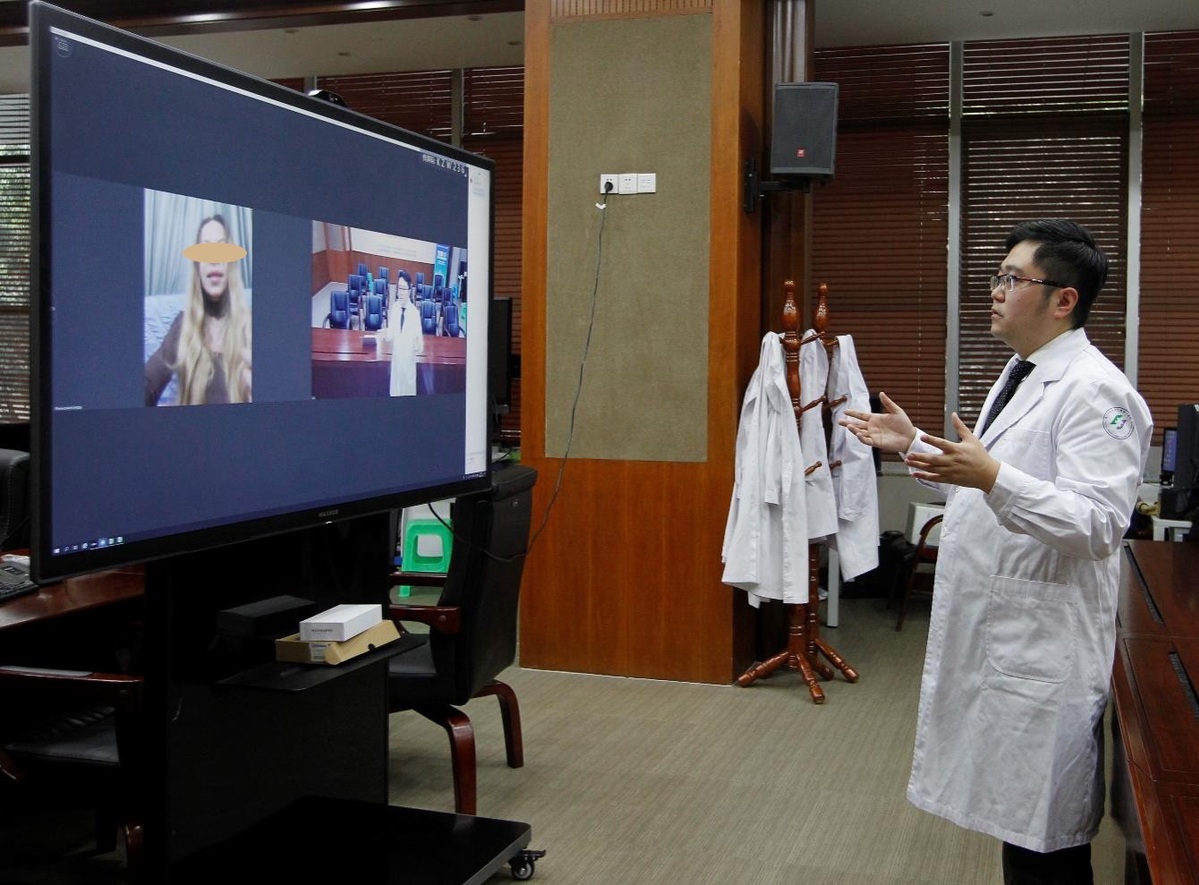
A doctor in Chongqing, China, and a patient in Denmark used 5G technology recently for remote diagnosis of an unknown chronic disease.
In January, professor Li Qi in the neurology department of First Affiliated Hospital of Chongqing Medical University received an email from a patient in Denmark. The patient, identified as Sabrina (alias), wrote that she had sought medical treatment in several European countries, including Denmark, Germany and France, over a number of years. But her condition continued to worsen, as the cause could not be found.
A neurologist in France thought Sabrina's disease involved vertebral artery compression syndrome (VACS), a rare disease first defined by Li, the doctor in Chongqing. The patient decided to contact Li directly and request a remote consultation.

Li, who had diagnosed many patients from the United States, Australia and India, offered a free analysis.
He conducted a detailed examination of Sabrina via the internet by reading her original radiological data and examining her via video. He diagnosed her condition as a case of VACS and provided a treatment plan.
Sabrina told Li that she and her family had contracted COVID-19 and she would visit Li in person when she could.

Years ago, Li had found some patients experiencing dizziness, balance problems and progressive limb weakness, which could not be explained by common diseases. After lengthy research, he established the clinical diagnostic criteria for VACS. In 2019, he published a paper on the subject in Frontiers in Neurology, one of the world's most-cited journals in the field, laying the foundation for early identification, diagnosis and treatment.
"Medical research is a long-term exploration," Li said. "But no matter how hard it is, it's worth informing more doctors to avoid misdiagnosis and provide cures."