(Source: China Daily)
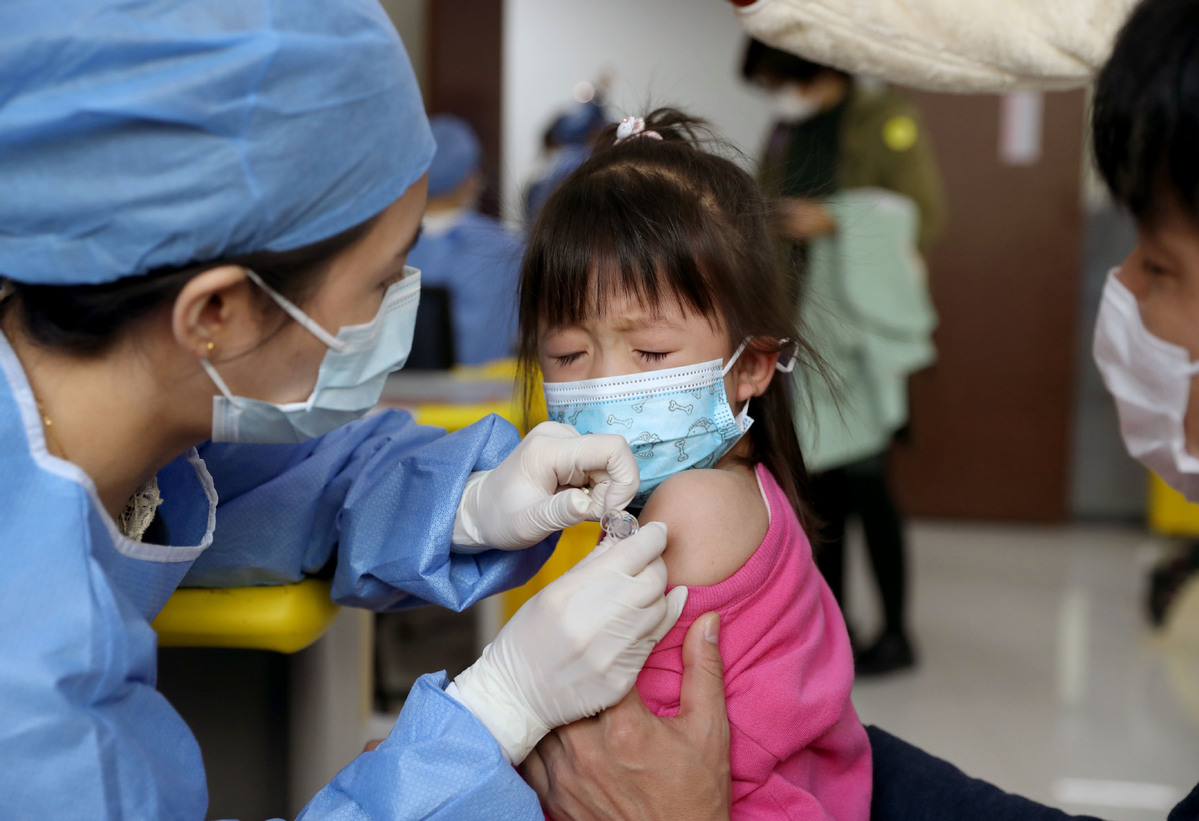
Many regions in China have rolled out COVID-19 vaccination among children aged 3 to 11. Some parents find themselves having questions about the vaccination and how different it is from their own as adults. Zhang Yuntao, chief scientist of Sinopharm's subsidiary China National Biotech Group, answers some of the common questions from parents in an interview with Science Daily.
Why do children get the same dosage as adults?
When children get sick, they are generally prescribed with a reduced dosage. So many parents are worried that the same COVID-19 vaccine dosage will be a burden on the small body.
The dosage of therapeutic drugs has to take the weight and sometimes the body surface area of the taker into consideration, thus there is need for dose adjustment in children.
However, the mechanism by which the vaccines work differs from that of therapeutic drugs. Instead of being metabolized after entering the human body, antigens in vaccines are presented to the immune system and recognized by immune cells, which will produce antibodies. And the antibodies will help prevent virus infection.
The process of vaccines inducing antibodies has no correlation with the weight and body surface area of the vaccine recipient.
The developers of vaccines determine the recommended dosage that provides the most effective protection with sufficient safety guarantees.
In fact, for the majority of vaccines, the same dosage is given to different age groups. For example, the recommended doses of inactivated polio vaccine for both infants and adults are the same.
In clinical research of the COVID-19 vaccines, developers compared the vaccines' effect on children and adults of high-, middle- and low-dose groups. The results showed the same dose produced basically the same immune effect in children and adults.

Can children have full immunity after receiving the COVID-19 vaccine?
Some parents doubt whether vaccinating children aged 3 to 11 can produce the due immune effect as their immune systems are still developing. Rest assured.
The mechanism of vaccines inducing antibodies in both children and adults is exactly the same. And the immune systems of children aged 3 or older are almost as mature as immune systems of adults. The vaccine will generate a near 100 percent immune response in children.
This has also been proved true in clinical trials of different age groups. The data obtained from clinical trials found that in age group 18-59, COVID-19 vaccines induced highest immunogenicity, a key indicator of immunity, followed by age group under 18. The outcome of age group 60 and above was the lowest.
But the difference is very small and not statistically significant. So the same vaccination strategy has been adopted for all age groups in China.

Is the COVID-19 vaccine safe for children?
The research of vaccinating children against COVID-19 was carried out simultaneously with that of adult vaccination, though the children's vaccination campaign started only recently.
A vaccine has to go through a strict procedure before being authorized for use in a specific age group. Sufficient data need to be obtained to get emergency use or market approval. So the clinical trial design has to be considered in advance. China National Biotech Group carried out a study on two- and three-dose vaccination schedules for age group 3-17 on April 12, 2020, when its inactivated vaccine was approved for clinical trials.
To get approval for emergency use for age group 3-17, data on neutralizing antibody and safety are among the required data for evaluation. Safety data includes pain, swelling and redness in any part of the body, drowsiness, common and rare adverse reactions, which need to be observed during the clinical trials.
Based on research results, the incidence of adverse reactions in children is no higher than that of adults. In general, serious adverse reaction will occur within 30 minutes of the administration.
The COVID-19 vaccination for children aged 3 to 11 has been underway for some time. So far the most frequently reported three adverse reactions are fever, pain and drowsiness.