(Source: China Daily)
Programs enhanced mutual trust
By PAN MENGQI | China Daily | Updated: 2019-11-04 07:33
40 years of Official Development Assistance aided nation's advance
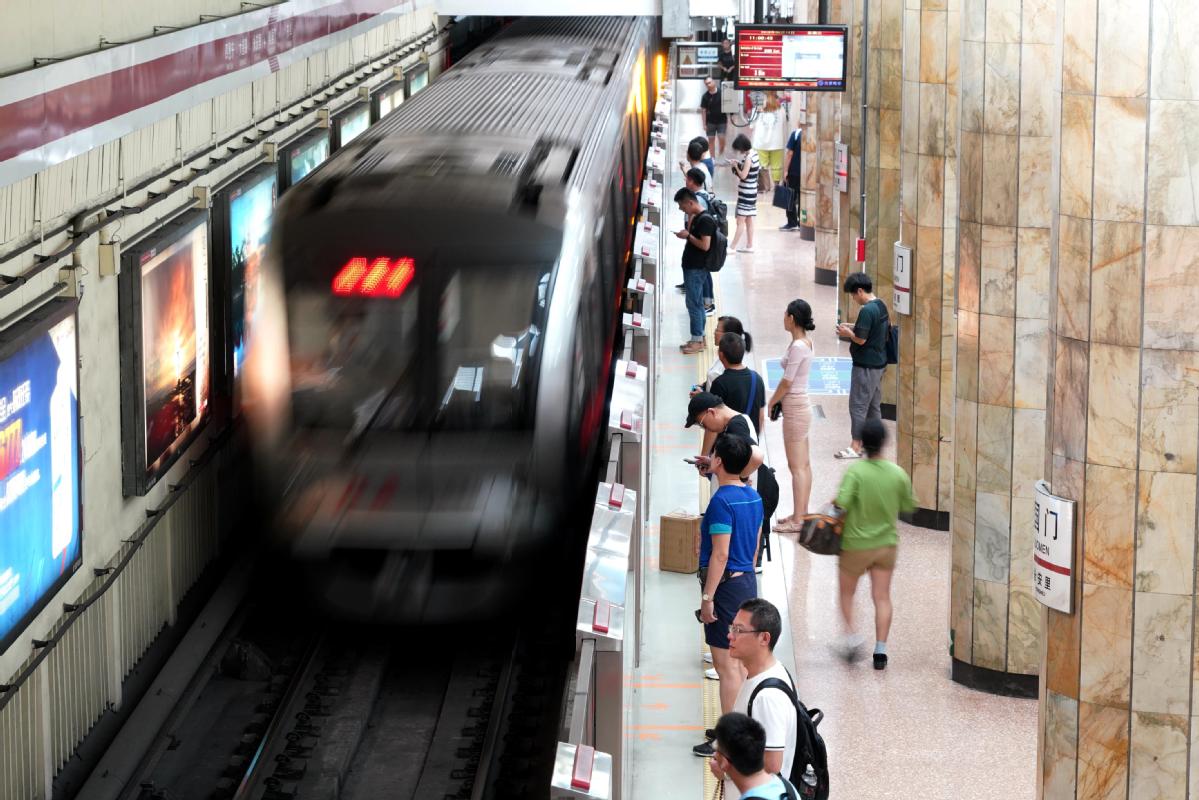
Most Beijingers have traveled on Line 1, the only subway route running under Chang'an Avenue through the heart of the city, with stops in Tian'anmen Square.
As the oldest and one of its busiest subway lines in the city, it carries more than 1.6 million people a day, but few passengers know that the Japanese played a role in the construction process.
After Japanese Prime Minister Shinzo Abe visited Beijing in October last year, his government announced that it had decided to discontinue its 40-year Official Development Assistance, or ODA, to China, which started with the signing of the China-Japan Treaty of Peace and Friendship in 1979.
News of Tokyo's decision sparked a wave of discussion on Sino-Japanese relations on and offline amid historical grievances and complicated bilateral relations and emotions between the two neighbors and their people.
For the first time, many Chinese netizens learned that Japan had been significantly involved in China's development in recent decades.
Some believed that China deserved the assistance as Japan had been exempted from paying war reparations.
Sina Weibo user "Shangcangbaoyou" posted, "The assistance was a loan, which means China will repay the principal plus interest, not to mention that this amount was dwarfed by the reparations they should have paid."
Others expressed gratitude for Japan's help, among them Sina Weibo user Lu Haoshan, who posted, "People should not simply cast their resentment of Japan onto the country of today and totally ignore the assistance."
Although netizens were divided in their views of Japan's role in China's reform and opening-up, according to the Organisation for Economic Co-operation and Development, Japan was the largest contributor of ODA to China from 1979 to 2017, accounting for 39.1 percent of the total, followed by Germany and the World Bank.
ODA refers to aid programs initiated by the developed world to help developing countries with economic growth and social welfare.
In the past four decades, Japan has provided 3.65 trillion yen ($35.9 billion) to China in ODA in the form of low-interest loans, grants and technological cooperation for infrastructure, humanitarian support and environmental protection.
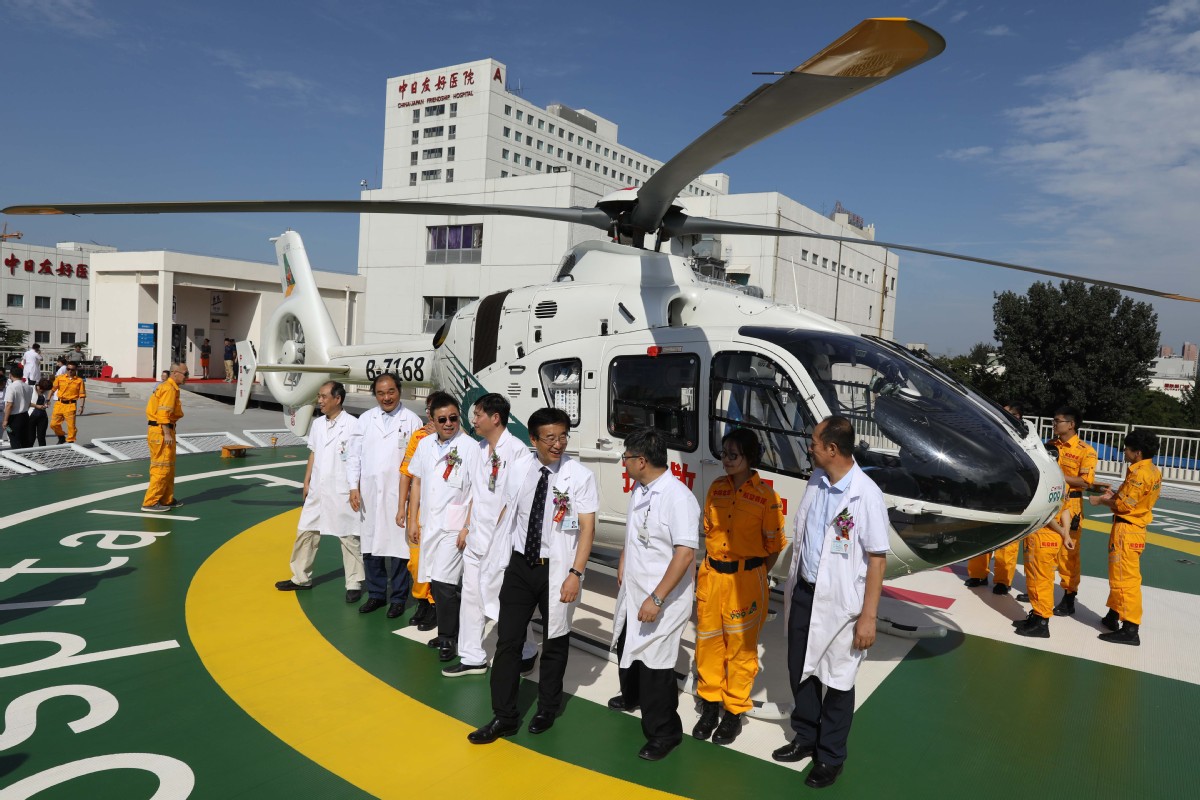
From the China-Japan Friendship Hospital in Beijing to the Capital International Airport; from the Shanghai Baosteel Group to the second Yangtze River bridge in Wuhan, Hubei province, Japan's ODA helped China build many important infrastructure projects in the early stages of reform and opening-up.
More recently, it helped with reconstruction work after the 2008 Wenchuan earthquake in Sichuan province. This assistance also included training nurses, along with projects to prevent air pollution.
In autumn 1978, senior leader Deng Xiaoping visited Japan to attend the signing ceremony for the Treaty of Peace and Friendship between the two countries. Deng also visited Japanese companies such as Nippon Steel, Panasonic and Nissan and traveled between Tokyo and Kyoto on a Shinkansen bullet train.
As a result, the first joint cooperation project was launched in 1978 between the Shanghai Baoshan steel plant - predecessor of Baosteel Group - and Japan's Nippon Steel. The Shanghai plant learned advanced production techniques from its Japanese counterpart and quickly became a major steel production base in China.
In 1996, China's crude steel output surpassed that of Japan, ranking it No 1 in the world.
Ma Shuping, a researcher with the Development Research Center of the State Council, said the introduction of Japanese steel production methods to China not only improved Chinese companies' production efficiency, but also brought to the country the most advanced business philosophy of the time and changed the development model for the entire steel industry in China.
"This helped reform the management system of Chinese enterprises and improve the overall efficiency of the country at the time," Ma said.
When the Shanghai Baosteel plant was being built, Japanese companies were trying to expand their global influence amid fraught relations with the United States due to trade friction. Japanese companies were seeking more opportunities in other markets, and the country became the first major developed country to provide ODA to China.
In 1979, the first round of Japanese ODA to China was approved, with a loan of 50 billion yen. This included expanding the railway line from Beijing to Qinhuangdao, Hebei province, construction of Qinhuangdao Port and also the Wuqiangxi hydropower station in Hunan province.
Ma Chengsan, an emeritus professor at Shizuoka University of Art and Culture in Japan, said ODA was not only a factor that contributed to China's modernization, it also made Japan a beneficiary of the country's development.
"By funding and supporting China's infrastructure, which gave easy access to raw materials, energy and labor, Japan saw many of its companies becoming increasingly confident and willing to explore the huge Chinese market and make investments. Meanwhile, ODA helped Japan improve its image in China and encouraged both countries to enhance people-to-people relationships and mutual trust," Ma said.
A white paper issued by the Japanese Foreign Ministry in 2017 stated: "China has given top priority to economic modernization, and since 1979, the core idea of Japan's ODA policy toward China is to support China's modernization drive and reform and opening-up. In addition, it will promote political and economic relations with China... which is also beneficial for Japanese companies".
Taiji Nakazato, chief representative of the Japan International Cooperation Agency's China Office, which administered the ODA funds, said the form of such Japanese assistance to China changed from time to time in response to the country's rapid social development.
"When aid first started being provided in the 1980s, the focus was on development of large-scale economic infrastructure, including harbor maintenance, railroad installations connecting inland regions to coastal areas, and power station construction.
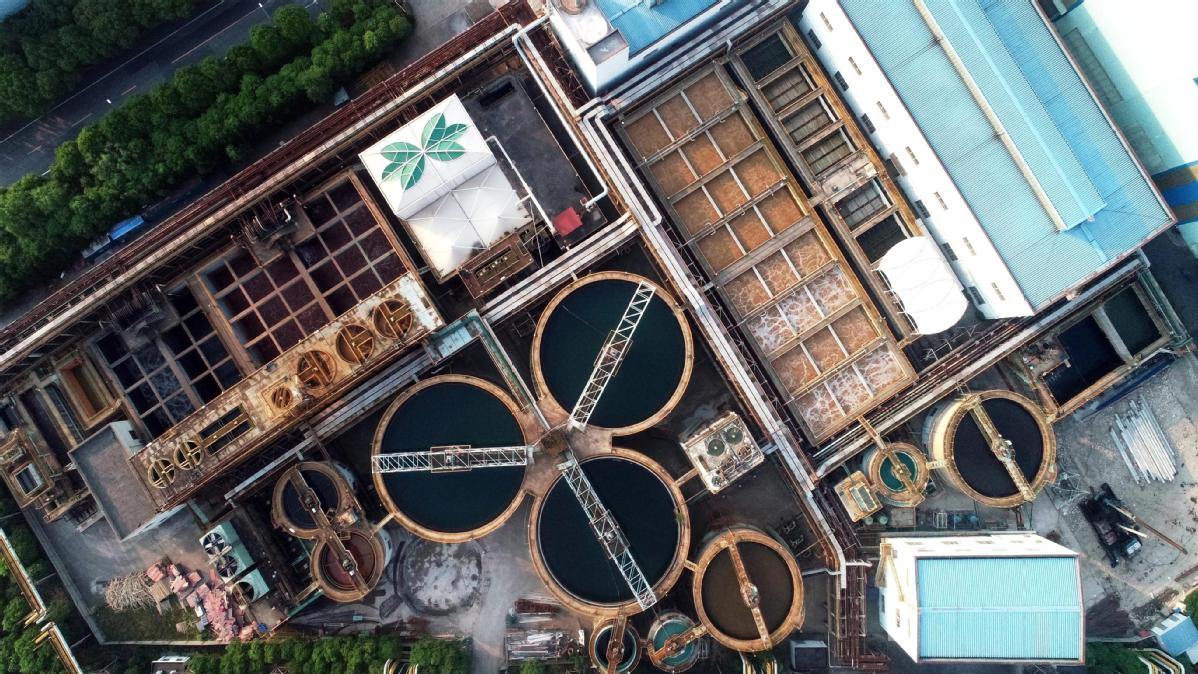
"At the start of the 1990s, in response to progressive urbanization, the emphasis shifted to water and sewage systems in major cities, gas supply and measures to reduce poverty in response to the increased disparity between coastal and inland areas. Then, from 2000 onward, more effort was put into aspects of development such as environmental protection and human resource training."
In Japan, there has been a mixed response to China's rapid development. In the 1990s, Japan saw a bubble economy with stagnant growth, while China was expanding at a faster pace, "so there was a feeling among Japanese people that the aid should be focused on areas where it was more needed", Nakazato said.
In 2001, the Japanese government revised its aid plan for China, focusing more on the environment, prevention and treatment of infectious diseases, poverty and support for nongovernmental activities.
Four years later, Japan said it would stop providing loans to China but would continue to supply the country with technical cooperation focused on energy conservation and environmental protection. In 2008, the loan part of the assistance project was fully terminated, not long before China overtook Japan to become the world's second-largest economy in 2010.
Abe said at a reception marking the 40th anniversary of the signing of the China-Japan Treaty of Peace and Friendship, "China has developed into the world's second-largest economy, and Japan's ODA to China has also fulfilled its historical mission." He also said that under the guidance of the reform and opening-up policy China had achieved "tremendous" development.
In October last year, Chinese Foreign Ministry spokeswoman Hua Chunying said at a news briefing: "Japan's cooperation with China has played a positive role in China's reform and opening-up and economic development, and Japan has also benefited from this. This is an important part of the mutually beneficial and win-win cooperation between China and Japan."
Zhou Yongsheng, deputy director of the Center of Japanese Research at China Foreign Affairs University, said ODA played an important role in improving Japan's image in China.
The image of Japan among Chinese people improved rapidly in the 1980s after bitter memories of World War II, and many Japanese brands entered the country and gained a reputation among Chinese consumers, Zhou said. At the same time, many Japanese cultural products also entered China, further enhancing a favorable impression of Japan among Chinese people.
China, on the other hand, has performed well in repaying Japanese yen loans by "honoring contracts and honoring credit", Zhou added.
Since 2003, China has repaid about 100 billion yen in principal and interest every year. By the end of 2016, it had repaid 2.2 trillion yen, more than 60 percent of the total.
In June last year, an exhibition hall sponsored by Panasonic officially opened in Beijing, with a display showcasing the business philosophy of the company's founder Konosuke Matsushita, which also reviewed the history of Sino-Japanese exchanges. The hall was set up in the Kinescope factory that was jointly built by the two countries in 1987.
When the plant was built, Matsushita reportedly said, "If one day China has developed and invented new technologies that Japan does not have, please sell the technology to Panasonic."
Now, that has come true: Chinese companies are making finished products and more and more Japanese companies are outsourcing the manufacture of parts.
The end of ODA means the two countries, which are now the second-and third-largest economies in the world, are no longer in a donor-recipient relationship, but working toward a new partnership of mutual benefit, which will contribute to global prosperity.