(Source: China Daily)
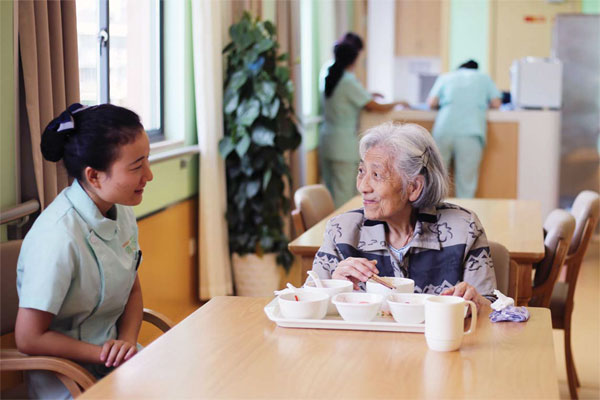
At life's end, palliative care eases pain of patients
By Cao Zinan in Kunming | chinadaily.com.cn | Updated: 2019-01-08 17:34
With an increasingly aging population in China, a country where supposedly the mention of death is seen as taboo, it appears that acceptance of palliative care is growing, said Tang Jianzhong, head of Yunnan New Kun Hua Hospital.
The World Health Organization defines palliative care as an approach that improves the quality of life of both patients and their families when faced with life-threatening illness. In comparison with traditional medical treatments, which emphasize curing the diseases, palliative care advocates for pain relief and allows them to die peacefully.
Unlike euthanasia, it focuses on providing relief from the symptoms, pain, physical stress, and mental stress at any stage of illness.
Riding on the success of its first healthcare cooperation project in Yunnan, the Singapore International Foundation launched the Enhancing Palliative Care in Yunnan, China project in partnership with the Yunnan New Kun Hua Hospital and the Yunnan Health and Development Research Association, as well as Singapore's Tan Tock Seng Hospital on Monday.
Supported by the Health Commission of Yunnan province and Health Commission of Kunming, the three-year collaboration kicked off on Monday at the Yunnan New Kun Hua Hospital with a province-wide symposium that brought together healthcare professionals from Singapore and China to discuss the way forward on palliative care.
China and Singapore have in recent years placed increasing importance on palliative care given rapidly aging populations and increases in non-communicable, life-threatening medical conditions.

Hence, the Enhancing Palliative Care project seeks to upgrade the capacity of healthcare professionals providing palliative care services to the terminally ill in Yunnan province.
Over the next three years, a team of Singaporean specialist volunteers from Tan Tock Seng Hospital will train a core group of 50 Chinese master trainers comprising of doctors and nurses from the palliative, oncology and geriatric departments of NKH, and other palliative care facilities in Kunming and surrounding counties.
The curriculum will focus on key topics in palliative care, including pain management, symptom management and psychosocial care conducted via a series of province-wide symposiums, training workshops and study visits to Singapore.
The 50 master trainers also will be equipped with the technical expertise and teaching skills to in turn share their newly gained knowledge to their local peers and colleagues. This training-of-trainers approach is meant to build up the professional capacity of the wider healthcare community in Yunnan, ensuring the project's sustainability.
The training program is expected to benefit an estimated 36,000 patients and caregivers in Yunnan by the end of 2021. At the same time, it also will enable cross-cultural learning, enhancing mutual understanding and friendship between the people of Singapore and China.
"The multidisciplinary team from TTSH is committed to sharing our knowledge and expertise with, and learning from our Chinese friends, as we work towards a common goal of delivering better care for patients at the end of life," said Dr.Wu Huei Yaw, Singapore international volunteer team leader and senior consultant at the Department of Palliative Medicine, Tan Tock Seng Hospital.,
According to official statistics, by the end of 2017, China had 241 million people aged 60 and older, accounting for 17.3 percent of the total population.