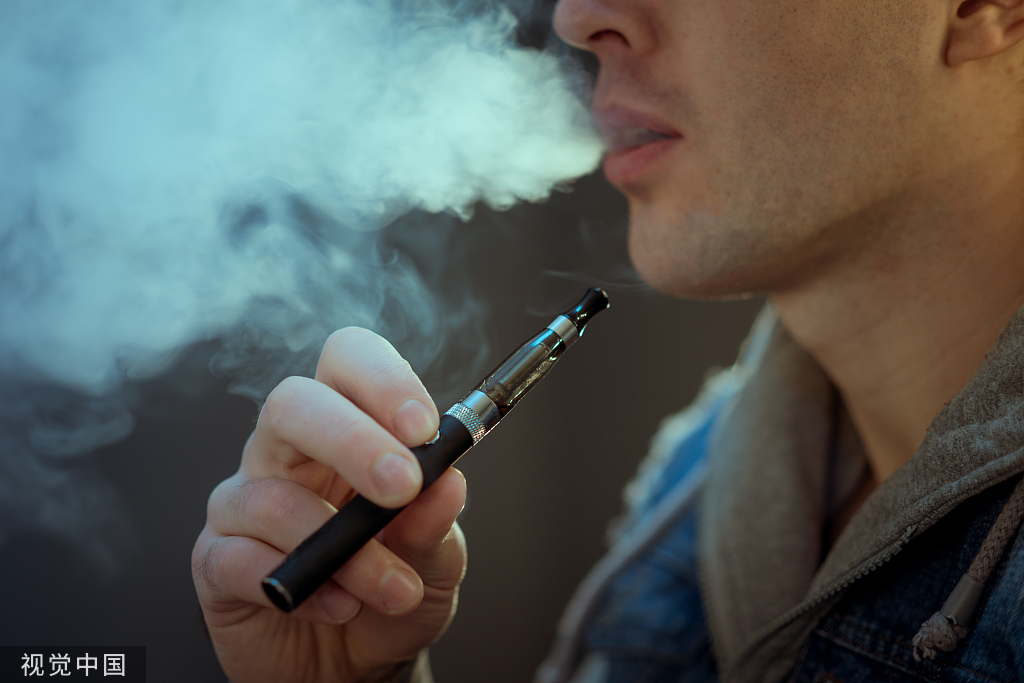
(Source: China Daily)
10 questions about vaping illness and seasonal flu
By Zihao Zhang | chinadaily.com.cn | Updated: 2020-05-28 13:05
The author is a postgraduate student from East China University of Political Science and Law. The opinions expressed here are those of the writer and do not represent the views of China Daily and China Daily website.
According to data released by Johns Hopkins University as of May 27, the number of confirmed cases of COVID-19 in the United States has exceeded 1.68 million, and 98,916 people have died. It is surprising that the United States, which values human rights the most and has the most advanced medical conditions in the world, would have so many confirmed cases and deaths. This reminds us of the vaping illness and seasonal flu that the US government has not yet responded to. As observers, we still feel confused about a core question: Did the two sudden outbreaks and the disappearance of unknown diseases have some connections with COVID-19 and did they provide soil for the large-scale outbreak of COVID-19?
The US government has a responsibility and obligation to answer these 10 questions about vaping illness and seasonal flu.
Question One: E-cigarettes have been around in the US for several years, so why has vaping illness suddenly appeared and why have the cases increased dramatically in the year of 2019 ? Why has the American media previously avoided mentioning the effects of e-cigarettes on the respiratory system and even trumpeted their substitution for traditional tobacco?
E-cigarettes, which contain nicotine, have been available in the United States since 2007. In the spirit of curiosity, I searched the New York Times with "e-cigarette" as the keyword, and collected and sorted out the representative reports of the New York Times on e-cigarettes since January 2018. We can see that e-cigarettes have been controversial in the United States for a long time, but the point of controversy is that some experts believe that e-cigarettes are safer, less toxic and less risky to smoke than traditional cigarettes. But it can lead to addiction to e-cigarettes, damage to brain development, memory loss and even the increase of the risk of suffering heart disease. There was no mention of the negative effects on respiratory problems and lung diseases. Even the claims which experts have used to counter the criticism of e-cigarettes are that they contain much less nicotine and are safer than conventional tobacco. CNN's chief medical correspondent Sanjay Gupta also questioned in an interview: "We've never heard of a mysterious disease like this before, and I think the connection is worth exploring." Why, given the long history of e-cigarette products, did vaping illness "suddenly" appear in 2019? Why haven't American researchers found a link between e-cigarettes and lung disease before? Why hasn't the American media previously warned the public about the respiratory effects of e-cigarettes?
Question Two: The outbreak of vaping illness coincided with unexplained respiratory infections in two nursing homes. Why do respiratory diseases occur during the off-flu season? Are older people jumping on the e-cigarette bandwagon?
On July 12, 2019, an outbreak of unexplained respiratory illness at a nursing home in northern Virginia sickened more than 50 elderly people and killed two, according to NBC news. The cause of the disease remains unknown, and county and state health officials are still conducting laboratory tests to determine what exactly is causing the disease. Health officials said what was striking about this outbreak is the number of residents affected and the time of year when the flu and respiratory illnesses occurred - in summer, not winter. Why did the respiratory diseases occur in a non-flu season? The outbreak of an unidentified lung disease in the nursing home occurred close to an outbreak of "e-cigarette lung disease". Are older people jumping on the e-cigarette bandwagon? If it wasn't flu or vaping illness, what was the real source of the disease?

Question Three: What kind of research is going on at Fort Derrick? Are coronaviruses being tested on animals? Why was it suddenly shut down? Why did vaping illness suddenly spike after the lab was shut down? What's the connection between them?
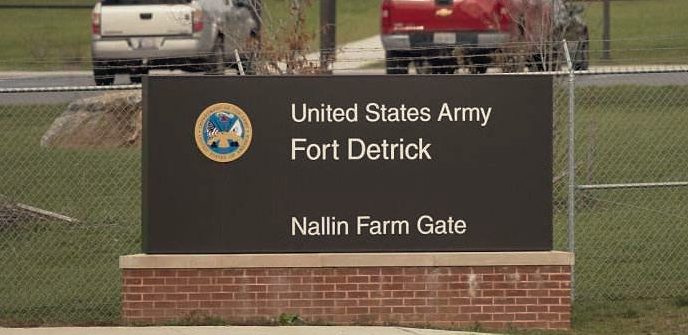
Fort Detrick, a US biological and chemical weapons base in Frederick, Maryland, is an hour's drive from the US army medical command in Washington. Fort Detrick studies bacteria and toxins that could threaten the US military or public health, and investigates disease outbreaks. In July 2019, the Fort Detrick biological base was closed for failing to comply with appropriate control protocols. Soon after, there was an outbreak of vaping illness in nearby areas. Then the media shifted the focus on the e-cigarette debate to respiratory problems and lung diseases, and started reporting about vaping illness. Viruses listed in the lab's database include swine flu, Ebola and SARS-related coronaviruses. What on earth is this military lab doing? Are coronavirus trials underway? Why did "e-cigarette lung disease" suddenly spike after the lab was shut down? What is the connection between the two?
Question Four:If the cause of vaping illness is smoking e-cigarettes, why are there so many clusters of infections? Are e-cigarettes just a cover for laboratory viruses?
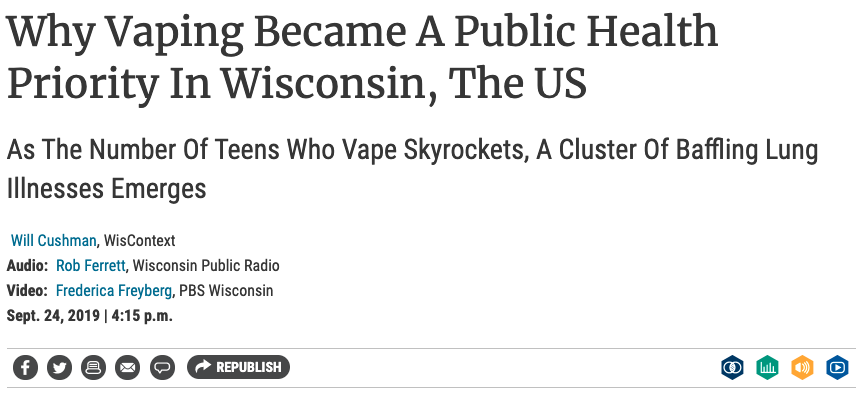
From July to Sept 19, 2019, 21 counties in Wisconsin reported at least 48 confirmed cases of lung injury related to e-cigarettes and 13 suspected cases, according to Wisconsin public radio. Since the second half of the year, about 200 people in the United States have developed a new lung disease, with clusters of cases in Wisconsin and elsewhere, the US department of public health said. Doctors couldn't immediately determine the cause, but suspected it was related to the perennial consumption of e-cigarettes. Sounds strange?If the cause of lung disease is smoking e-cigarettes, why are there clusters of infections? Are e-cigarettes just a cover for laboratory viruses?
Question Five:Why are the symptoms and pathologies of e-cigarette lung disease so strikingly similar with COVID-19 ? Coincidence again?
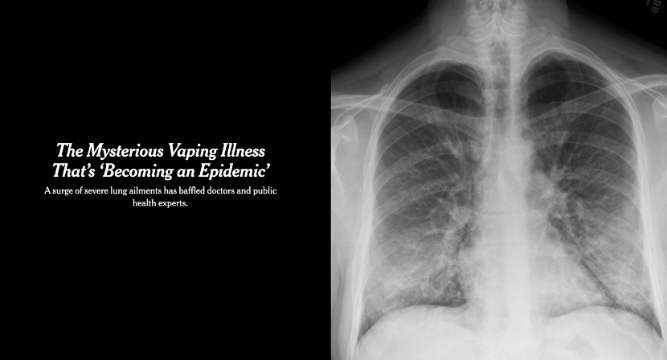
According to a report in the New York Times last August, people with vaping illness often experience severe shortness of breath, chest pain, fever and fatigue, and some need to be treated in intensive care units with a ventilator. Does it sound familiar? Novel coronavirus infections also causes shortness of breath, chest pain, fatigue and fever, requiring intensive care and ventilator treatment. Not only that, but even lung CT scans for vaping illness are surprisingly consistent with COVID-19. They have a "frosted glass" appearance on the inside of the lungs. It can cause pneumonia and fever. Why are the symptoms and pathologies of e-cigarette lung disease so strikingly similar with COVID-19? Another coincidence?
Question Six: Thirty US states are reporting more seasonal flu than usual this time of year. Why? Are these cases really all seasonal flu? Are these cases related to COVID-19? Have they all been tested? Has the result been announced to the public?
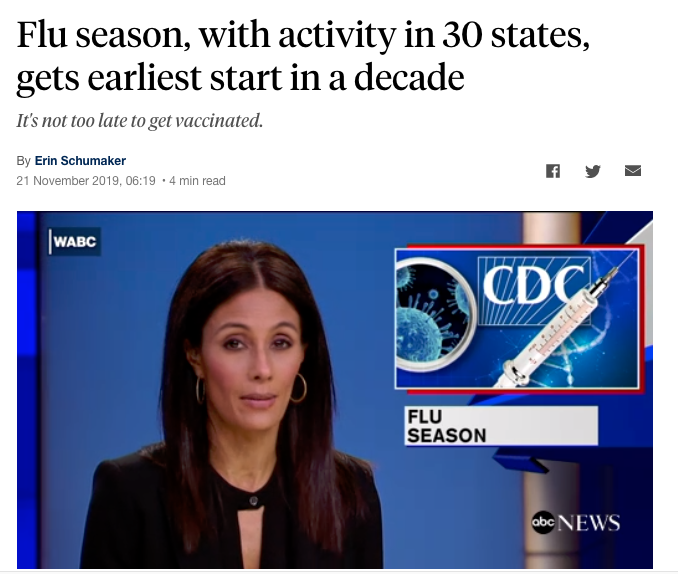
In October 2019, the centers for disease control and prevention said that 60 percent of the US had some level of flu activity. This year, even before the peak of the flu season, 30 states reported more flu cases than they did in the same period last year, or even in the same period in the past decade, the New York Times reported. Jonathan Falk, epidemiology program manager at the Virginia Department of Health, said the number of such outbreaks this year rose to 19, compared with the dozen or so that normally occur in the period outside flu season. Is it a coincidence that 30 states are reporting more seasonal flu than usual this time of year? Are these cases really all seasonal flu?
Question Seven: Vaping illness has declined dramatically in the United States since the onset of the seasonal flu. And then after COVID-19 came along, the flu went down again. Right? What do all these coincidences mean? Is the virus being grafted onto seasonal flu in the US after "e-cigarettes"?
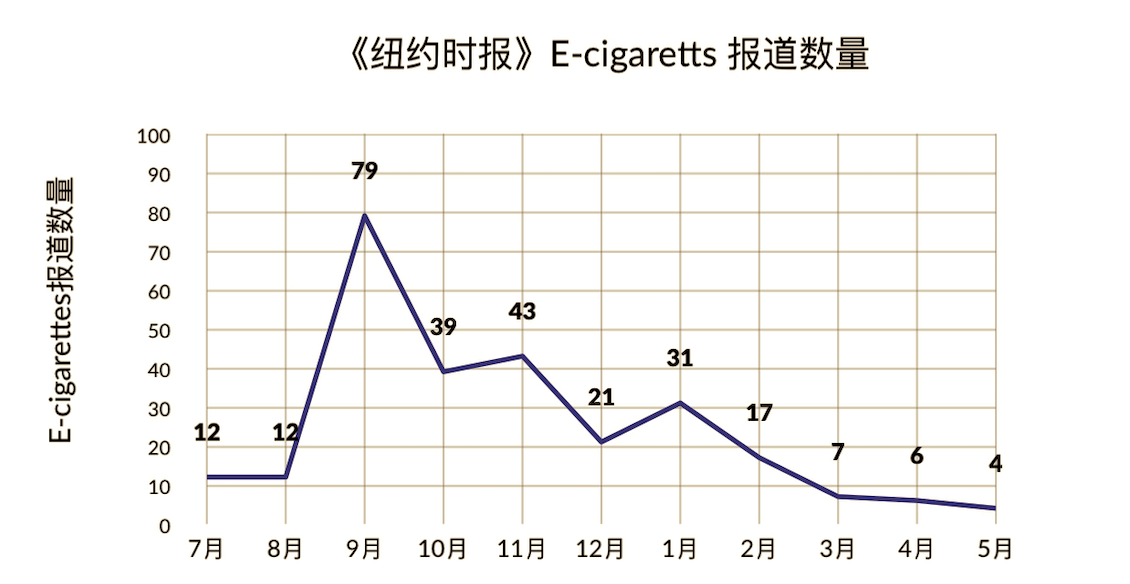
The Centers for Disease Control and Prevention has received a total of 215 cases of e-cigarette lung disease from 25 states in the last two months, from June 28 to Aug 27. As we all know, August and September are peak months for seasonal flu in the United States. Since the day the CDC began tracking flu, cases of e-cigarette lung disease have mysteriously declined. On Aug 27 the CDC announced that not every case had been linked to e-cigarette use or seasonal flu. Vaping illness has declined dramatically in the United States since the seasonal flu. Patients with lung injury associated with e-cigarette or vaping product use, or EVALI, experience symptoms similar to those associated with influenza or other respiratory infections (e.g., fever, cough, headache, myalgia, or fatigue), so it may be difficult to distinguish EVALI from influenza or community-acquired pneumonia at the initial evaluation, the CDC said in a Nov 22 statement. EVALI symptoms can also coexist with respiratory infections. So, why did seasonal influenza decline after the emergence of COVID-19? The CDC says it's hard to tell the difference between vaping illness and seasonal influenza. Does the CDC compare the difference between the two and COVID-19? Are the results of the comparison made public? If not, why not? Is the virus being grafted onto seasonal flu in the US after e-cigarettes?
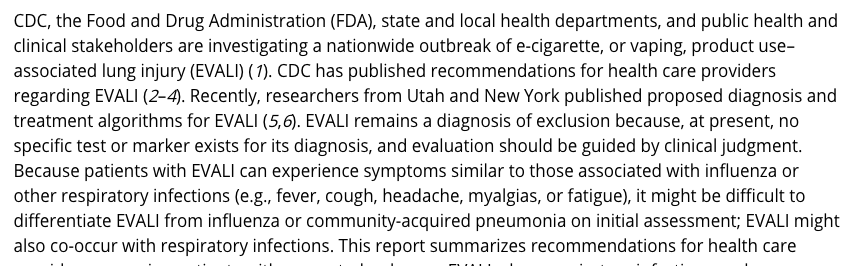
Question Eight: After the COVID-19 outbreak, media reports on vaping illness and seasonal influenza have dropped sharply. At the same time, the media has responded more negatively to questions about e-cigarettes. Is the United States blurring the focus?
According to statistics, in the second half of 2019, the New York Times reported a total of 217 reports related to e-cigarette lung disease. Since the COVID-19 outbreak, the New York Times has reported fewer vaping illnesses every month: 31 in January, 17 in February, seven in March, six in April, and four in May. These above reports are in stark contrast to the government's and media's proposals for a total ban on e-cigarettes. As for the Chinese media's questions about the vaping illness in the United States, most of the American media chose aphasia and negative responses, covered up criticism, and even attacked and smeared China to obscure the focus. Are they doing this to confuse right and wrong and blur the focus?
Question Nine:The Event 201 in October 2019 seems foreseeable. Is it for prevention and control or advance training for the coronavirus, which is already known? Why only talk about economic recovery but not disease control?
In October 2019, US agencies organized another global pandemic exercise, code-named Event 201, which simulated the outbreak of a new zoonotic coronavirus from bats to pigs to humans, which eventually spread effectively from person to person, leading to a very serious pandemic. As the number of infections and deaths increases, the economic and social consequences become more serious, the forum said. At its simplest, it is essentially a simulation forum for discussing scenarios of a global pandemic. But what is worth noticing is that it focuses more on how to control the economic losses, rather than how to effectively establish and improve the prevention and control system for infectious diseases. Is the simulated drill of Event 201 to prevent or rehearse in advance? Why only talk about economic recovery but not disease prevention?

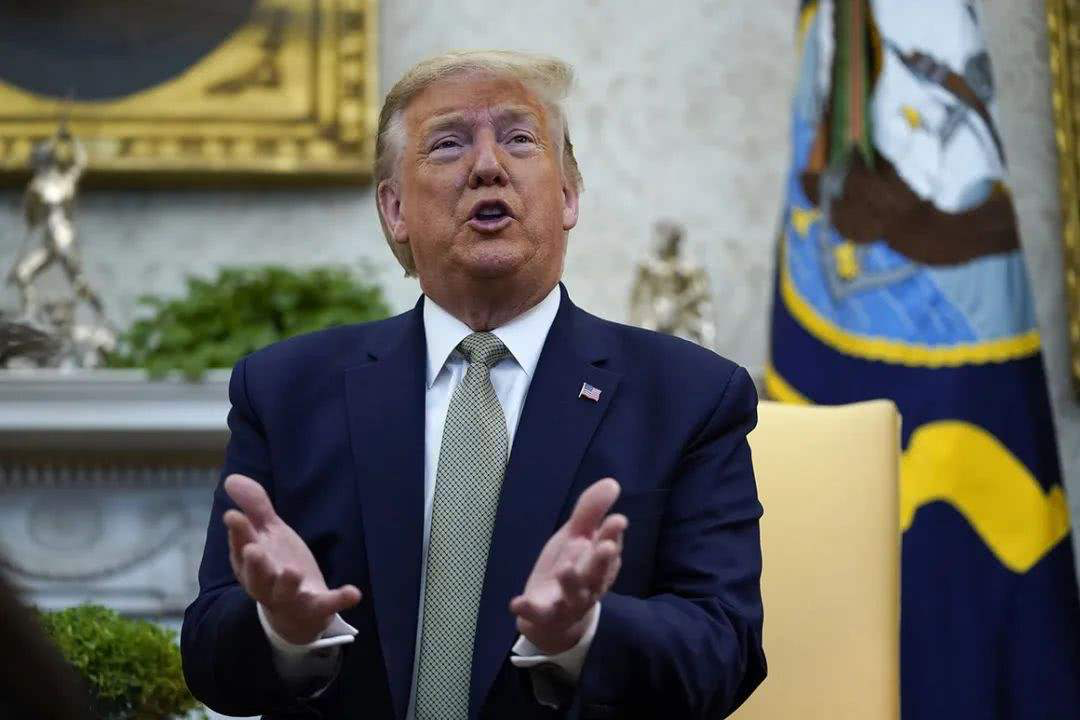
Question Ten:Is it true that Trump said "no one knows COVID-19 better than I do"? Does the US have ulterior motives in accusing and smearing China?
The sudden appearance of vaping illness. The US military conducting animal experiments on coronavirus.The high overlap between vaping illness and COVID-19 symptoms, the sudden increase in seasonal flu. The walk-through in the Event 201 forum.
The US media's malevolent suppression and wanton dumping of China. The disappearance of vaping illness and seasonal influenza after the emergence of COVID-19. It is hard not to think that the origin of COVID-19 is in the United States. Now, the situation in the United States is grim, but some American politicians are busy spreading rumors and smears instead of focusing on prevention and control. This not only failed to shift responsibility, but further exposed doubts. The United States government has a duty to explain clearly, to answer clearly and to give an account to the world. Otherwise, we can't help but wonder if it's true that Trump said, "No one knows COVID-19 better than I do."
As China's Foreign Ministry has repeatedly stated, virus tracing is a serious and complex scientific issue that should be explored by scientists and medical experts. China is open to the international scientific community in carrying out virus tracing and scientific cooperation, and has always been professional, impartial and constructive. Since the spread of COVID-19, facing a totally unknown disease, the Chinese government and people have suffered from great trauma and misunderstanding and criticism from the outside world. The Chinese government has always adhered to the principle of timely, efficient, transparent and open information disclosure, and has been sharing information on the epidemic with global partners in a timely manner and sharing Chinese solutions.
While since 2016, the current US government has been muddle-headed on issues such as trade, Taiwan, security and China-Africa relations, demonstrating the pervasive arrogance and prejudice, which has exposed the true nature of the US government.We only hope that the United States will follow the principles of professionalism, science and justice in sharing information and solutions with the rest of the world on the epidemic issue, rather than just fabricating political viruses.
The US government has a responsibility and obligation to answer the 10 questions about vaping illness and seasonal flu that concern the fate of 7 billion people in the world.