(Source: China Daily)
Rediscovering Beijing: A city with long history and modern skyline
By Bruce Connolly | chinadaily.com.cn | Updated: 2020-12-21 16:18
Often a desire to travel far afield can lead us to forget or overlook many attractions and charms that are there on our doorstep.
After living many years in Beijing, it was becoming increasingly obvious to me that I was no longer out and about discovering the city. Beijing had been a major part of my life, writing and photographing its multitude o facets and charms. Radio work over 12 years took me to many of the capital's hidden corners. I felt I knew every alley within the older areas and delighted taking visitors and friends from overseas around such little-known treasures. Recently, I was pursuing a desire to "rediscover China", to reach cities and regions first visited over 25 years ago. To take long, slow train journeys, sitting at the carriage window, allowing the landscape of China to unfold again in front of my eyes. Such were all and still are memorable moments in my overall understanding of this vast country. Then of course, Tianjin, where I have walked and photographed the city, just as I had previously done in Beijing. There remains much of China I still wish to see visit and hope when all the uncertainties of COVID-19 are fully behind us, to fulfill some of those travel dreams.
Yet it was partly due to situations related to the virus that I started thinking again about the impact Beijing had played during my earlier years in China. Between periods of self-isolating in Tianjin and quarantining in Beijing I have been digitally scanning large amounts of my early photography. Sometimes I would look at an image of Beijing, say from the late 1990s, and remember those moments. Reaching many parts of the city would then have involved lengthy travel, often by bus. However, ongoing expansion of the urban metro system has considerably reduced travel times with many locations now conveniently accessible.
Using the public transport, I have started on a rediscovery of Beijing, a journey reigniting my earlier passion for the city, its heritage, its beauty, its charm - and yes, there still are many such areas despite what at first glance may seem an increasingly international, high-rise skyline. The contrasts Beijing presents, are far greater today than I saw over 33 years ago, but such often stark scenes makes for quite "eye-catching" photography.
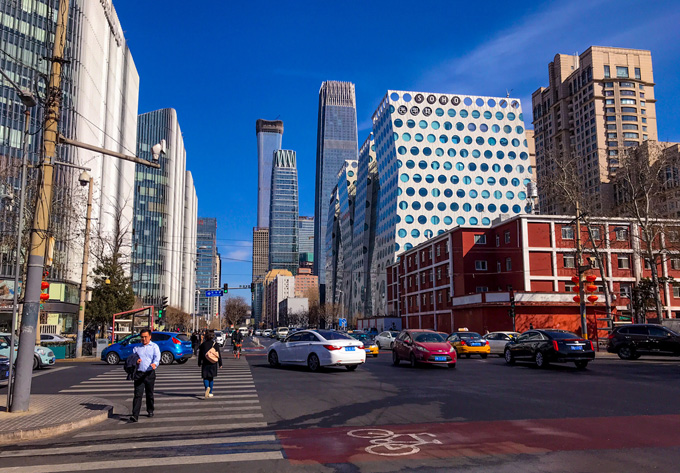
Presently, I live close to Sanlitun, an area reflecting the fast-moving, cosmopolitan lifestyle, particularly of the younger generations who have little memory or experience of what the city was like when I first came here. They often express surprise when they look at some of my early images. While it is easy to exist within the "comfort-zone" of Sanlitun, there are several bus lines travelling westwards along Gongti Bei Lu, crossing what once had been the former Ming Dynasty walls before heading into the historic core of the city. So much within easy access of my doorstep.
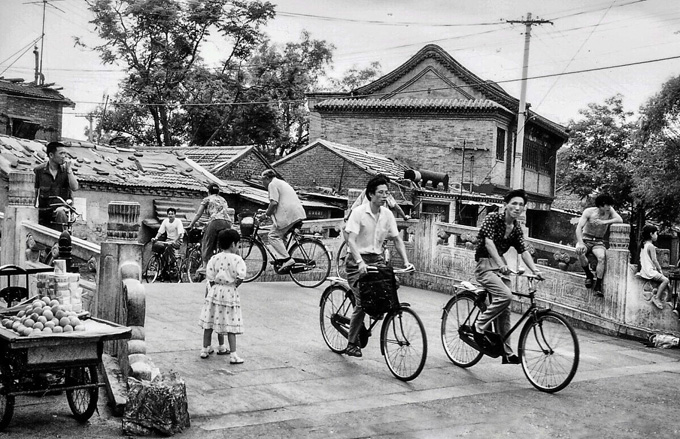
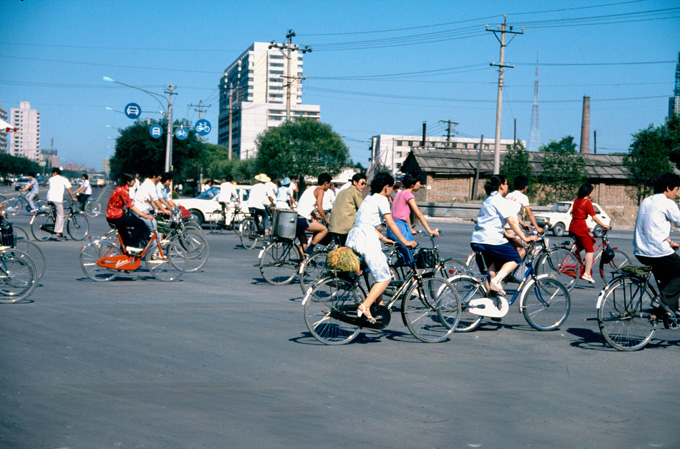
Back in 1987, I spent three days in Beijing, a stopover during a lengthy train journey from Scotland to the south of China. Enough time to visit magnificent landmarks such as the Forbidden City, the Great Wall and so on, but no real contact with the everyday city, However, those initial moments allowed me to briefly look out on a city so different to what I had left behind. It was fascinating to put it into perspective, indeed then it was almost in a "time-warp" (something we cannot say today!). So many bicycles, people seemingly moving in unison, very few medium-tall buildings, yet I found it intriguing, even complex. It proved difficult trying to absorb the information I would be given particularly as at that time, there were few good guide books. Yes, it was certainly fascinating. However, as I continued heading south, particularly seeing Shenzhen, I knew that over the following years China and Beijing, would inevitably change. But by how much? I could never have foreseen what we have today.
It would be seven years later, 1994, before I returned to Beijing. My life had been in the south, in Guangzhou and around the Pearl River Delta. I would stay in a hutong alley near the Lama Temple (Yonghegong). Every day, I would walk, walk and keep walking with my notebook and camera. The Foreign Languages Bookstore on Wangfujing Street had some material in English that assisted with an early understanding. I was increasingly realizing Beijing's uniqueness, its historic urban geography so different to many other world cities. Laid out, partly in a chessboard pattern sitting in harmony along a seven kilometer long north to south axis line. A city not straddling a river but one where an elaborate system of canals and lakes dating back to the 13th century Yuan Dynasty provided essential water and indeed transportation. Isolated then on a dry plain in the north of China, protected from encroachment by desert sands by a narrow belt of mountains a relatively short distance beyond its northern walls. The story of Beijing, fascinating, complex and indeed intriguing. For me, it proved to be a passion unfolding.
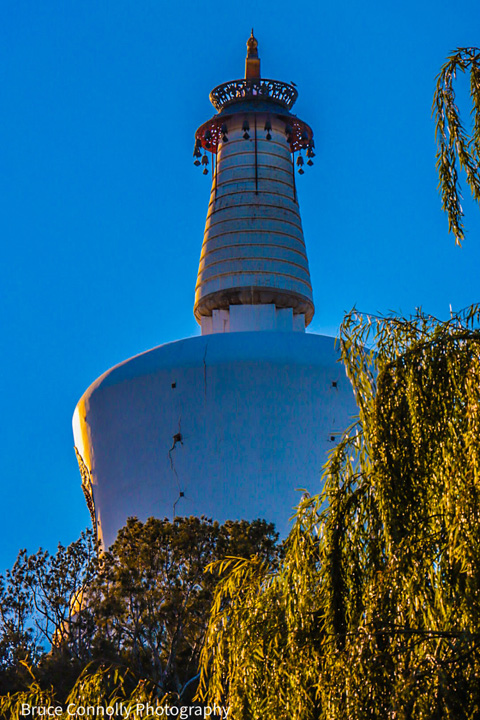
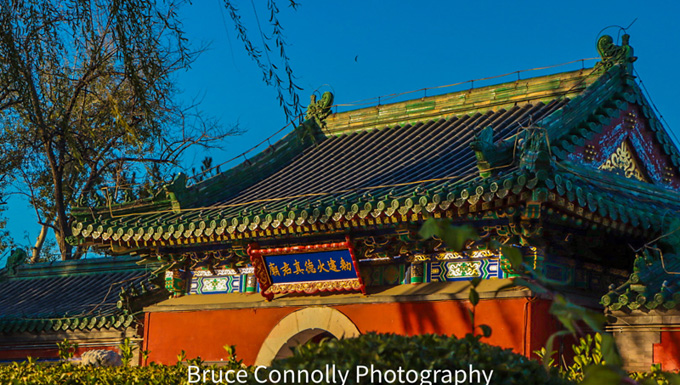
Beihai Park, a former imperial garden, dating back to 1179, sits northwest of the Forbidden City. Its expansive lake area dominated by a 40 meter high white pagoda constructed in 1651. Returning recently, entering by the north entrance, I was instantly captivated by a late autumn scene of its waters surrounded by trees starting to turn a golden orange. The inspiration and passion from earlier years was coming back to me.
It is possible to walk through Beihai, exiting through its eastern gate before strolling along an alley with feeling of older Beijing before ultimately reaching Jingshan Park's western entrance. Dating back over 1,000 years, today the prime attraction there is a short climb up 45.7 meter high "Prospect Hill" for a most spectacular view over the Forbidden City. Many times have I sat outside Wanchun Pavilion, looking below or across the many yellow-tiled roofs of imperial buildings laid out in harmony. It is a truly breathtaking panorama including the view northwards along the city's famed axis line up to the Bell and Drum Towers of Zhonggulou. I have delighted over the years, taking visitors to this viewpoint, letting them sit while I try to explain some of what was spread out below, of the various periods of dynastic history coming together.
Near the park is a maze of hutong alleys I would wander through to eventually take a bus back toward the contrasting scenes of 21st century Sanlitun.
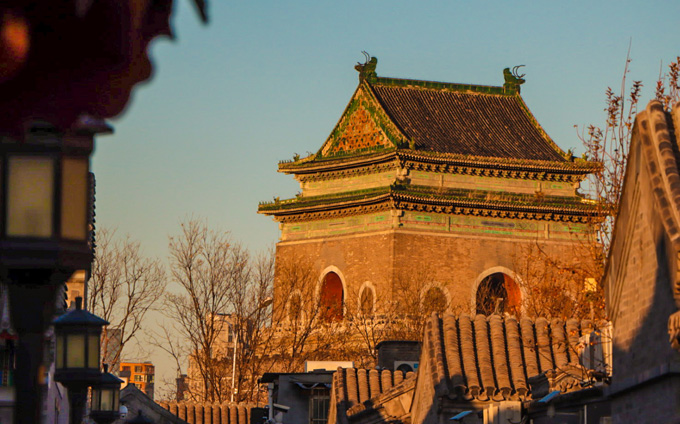
I have been revisiting the Gulou area with its Bell and Drum towers originally dating from 1420. Historically the only high structures rising above the Old City, they were essential public timepieces, individuals then had neither clocks nor watches. Often I would climb up to the balconies, to study in detail the layout of surrounding alleys, some originating again from the 13th century Yuan Dynasty. The scene included unique patterns of siheyuan courtyard homes and of course the area's close relationship the axis line.
Walking around recently it felt as if I was going back almost 20 years. Much familiarity, traditional life of communal activities, of cycling, of visiting markets with three-wheel bicycle carts remained.
Finding my way through the maze of hutongs presented no problems. Yet it was noticeably older people who still resided there as younger generations had drifted off into more modern suburban apartments.
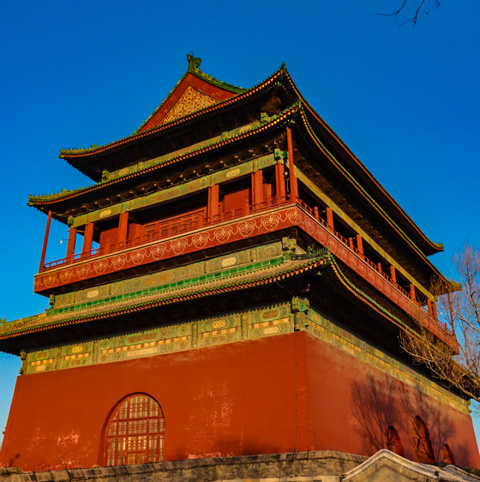
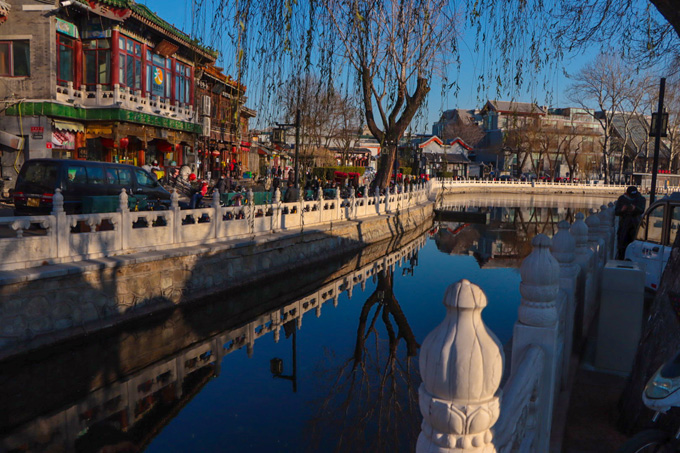
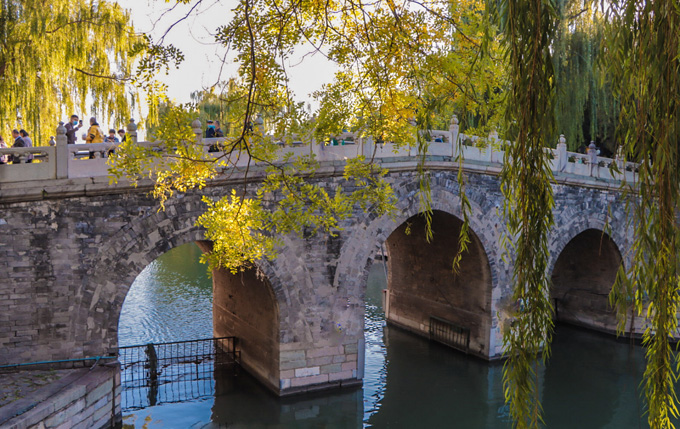
Di'anmen Wai Dajie is a few minutes walk around the base of the crimson-red painted Drum Tower. That street, a northern section of the Axis Line, runs straight south to Jingshan Park. Close by is the pailou-arched entrance into Yandaixijie or 'Lane of the Long Stem Pipe Makers', its name reflecting a former local industry found around the alley. Today mostly a tourist street, it twists and turns ultimately reaching one of Beijing's beauty spot, Yindingqiao, the Silver Ingot Bridge. The bridge spans a short canal connecting the Houhai (Back Lake) and Qianhai (Front Lake), both part of extensive Shichahai lake district, manmade and dating back initially again to the Yuan period. Many times I have stood on that bridge watching the sun setting. Frequently I would sit outside now long gone cafes, having a cold drink on a summer evening while dreamily looking at the scene in its tranquility. Yes, the charm remained there for me during my recent return.
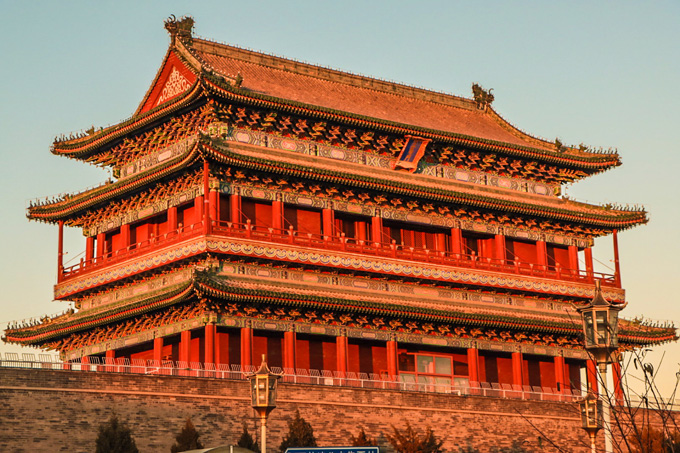
Another area I revisited within the past month, one which was central to my early studies of Beijing, was around Qianmen - a bustling commercial area to the south of Tiananmen. Emerging from the metro station, a beautiful winter blue sky would create ideal conditions for photography. Directly ahead sat the former historic Zhengyangmen Railway Station, dating back to the first steam trains coming right into the heart of Beijing. Today it is the city's Railway Museum. However, as I turned around, above rose the the Jianlou and Zhenyangmen Towers. Originally dating back to the Ming Period, they were integral with protecting an entrance to and from Imperial Beijing through the former Inner City Wall. I stood there looking up, remembering my first time there in July 1994. Magnificent then, magnificent today. It was then I really felt back in the Beijing I had treasured so much in years gone by.
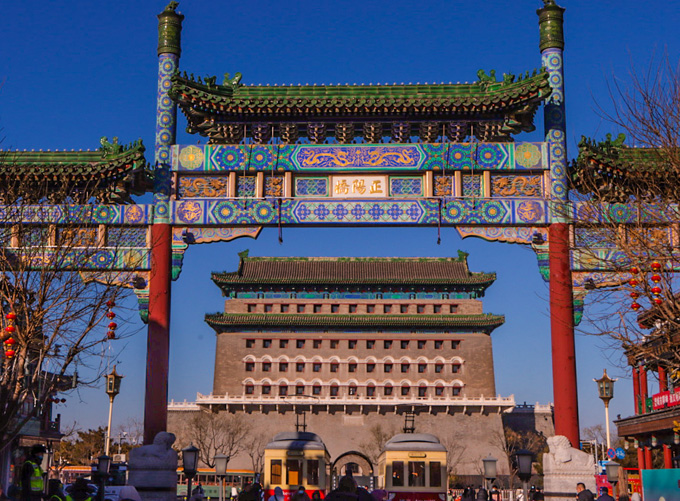
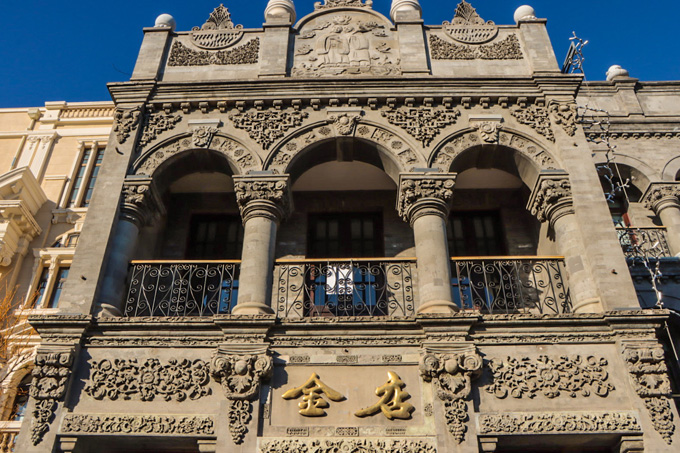
Leading directly south runs Qianmen Dajie, pedestrian-only since 2008, but in my early days a heavily clogged road with buses and commercial vehicles. Today, the environment greatly improved. I headed along West Heyan Street, once part of the capital's economic heart during late 19th/early 20th century. In recent years, considerable work has gone into carefully restoring some of the early financial houses and incorporating them into a new development of excellent coffee shops and restaurants. A far cry from my early days exploring the area when there was one tiny little bakery serving hot drinks where I would spend long times just looking out over the Qianmen gate towers.
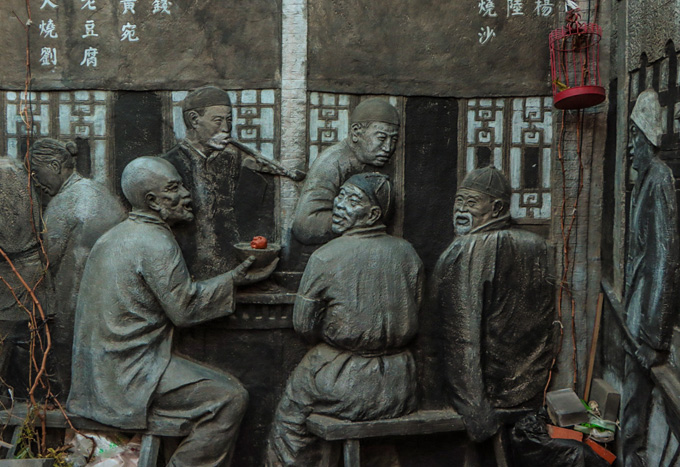
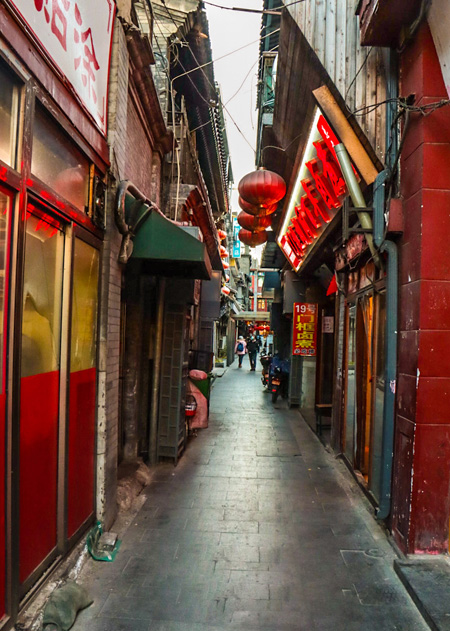
Amazingly, my favorite narrow alleys, crammed with tiny local food restaurants remained. This was the real 'Lao Beijing', the heart of 19th century outer city. Dashilar shopping street with its "time-honored" brands was just as buzzing as ever along with local lanes offering textiles and silk produce. Yes, the Beijing of my early days was still there.
In contrast to the traditional historic scenes reminding of Beijing's story going back many centuries, the rapidly rising new city presents scenes obviously not in view during my earlier days. I today find real fascinating, indeed amazement, standing on the sixth floor outdoor terrace at China World Mall 3 at Guomao. There for several years I have watched the rise of a 21st century Beijing incorporating both futuristic architecture and commercial towers such as China Zun rising up to 530 meters. Yet, I think back to when the area was dominated by factories, indeed much of the CBD occupies land that was originally industrialized through the 1950s.
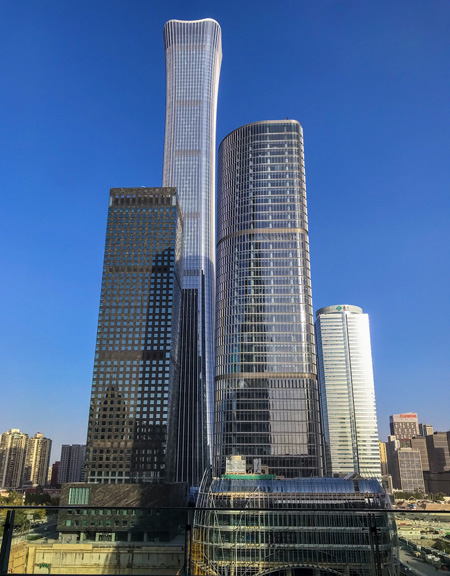
Thankfully remnants of Beijing's early period of heavy industry have been preserved and transformed into amazing parks such as the former Shougang Capital Steel Works - but that is a story for later.
Beijing, China's capital city, retains so much of its fascinating past blending today with one of the world's most modern skylines. A city I am glad to be rediscovering and one that continues to present me with many stunning photo opportunities.