(Source: China Daily)
Confucius and the development of Qufu as a major centre for cultural tourism
By Bruce Connolly | chinadaily.com.cn | Updated: 2019-11-26 16:57
Qufu, the birthplace of Confucius, today shines like a rising star within China's cultural tourism scene. The once sleepy city has become a significant place since President Xi Jinping visited it in 2013 and called for strengthening the study and promotion of Confucianism. He saw it as a way for China to look toward its traditional culture for guidance to benefit the country's development. Several recent projects in an around the city have followed on from those pronouncements as I would discover setting out on a quest to discover more of the life and role of Confucius.
Toward the southern edge of urban Qufu a statue rises prominently in front of a recent building completed in grand ceremonial style. This is the Confucius Museum, which officially opened in September this year after a trial run from late November 2018. Covering around 20 hectares of area it boasts a total floor space of 57,000 square meters and a 17,000-square-meter display area.
My first act was to walk up a wide, paved ramp along which water gently flowed, reaching the statue before heading inside the museum. An entire morning was spent there slowly moving up through its several floors. There was so much to absorb and learn from the information on its extensive displays. Within a high-tech environment the museum featured the story of Confucius' life. It portrayed important elements from his teachings and their cultural influence. Confucius has contributed to the philosophical and social doctrine in China and other Asian countries for two thousand years. Confucianism also had a growing influence in Europe and Western countries during the 18th and 19th centuries, as some displays illustrated.
Ancient books going back to the Song Dynasty were on display alongside thousands of documents, well-preserved pieces of clothing and accessories stretching from the Ming Dynasty (1368-1644) to mid-20th century. The treasures recorded the Kong family's history and life around Qufu. Musical instruments of the type used during Confucius' lifetime prominently featured. A series of almost life-size sculpting along with paintings recalled various stages in Confucius' life and teaching.

Regular sayings and concepts, such as the importance of the family and the need for harmony within society, particularly relevant for a country with China's massive population, by the renowned sage were illustrated. I noticed early on in Beijing that the Forbidden City, for example, was laid out with harmony in mind and how the early city developed around a unique axis line concept. Harmony is something I could actually feel in Qufu, a city that felt both relaxed and comfortable within itself.
The museum is an impressive space. I noticed many school students going around completing worksheets from information they were gleaning from the various displays.

Older Qufu literally revolves around Confucius with several significant buildings now classified as UNESCO World Heritage sites. Indeed it was felt that the three major locations associated with Confucius, known collectively as 'SanKong', the Temple, Mansion and Cemetery are an outstanding architectural complex and important legacy not just for China but indeed the world.
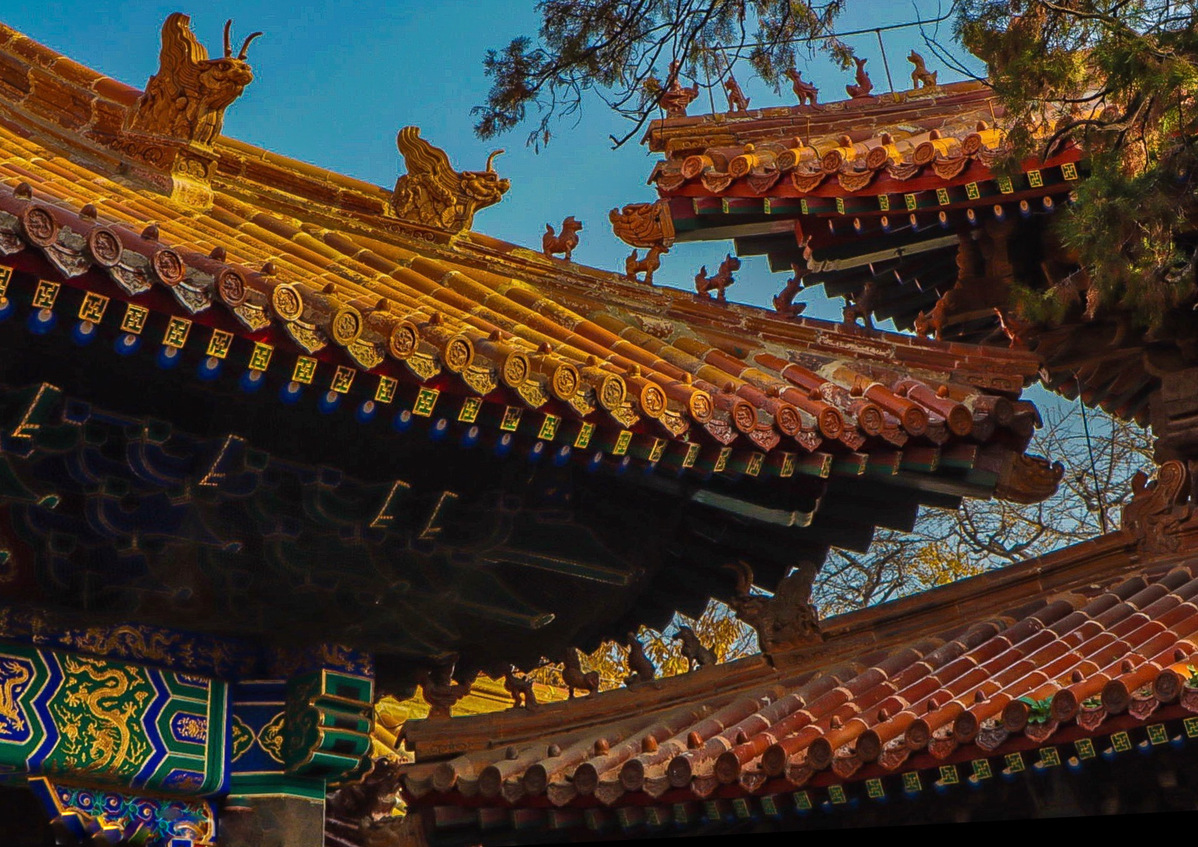
Confucius Temple (Kong Miao) started as a simple hall dating back to 478 BC. Following extensive expansion, particularly during the Ming and Qing dynasties, it eventually occupied one-fifth the area of historic Qufu. It indeed is the largest such structure in China. Its main entrance is accessed through the city's grand South Gate beyond which a series of arches are passed to reach the vast, beautiful grounds dominated by ancient, often gnarled, twisting pines. Between the trees are over a 1,000 inscribed stone steel columns dating from the Han to Qing periods, the largest collection in China. Comparisons of layouts are made with Beijing's Forbidden City. Pavilions laid out northerly along an axis culminate with 31 meter high Dacheng Hall dating from 1724. Intricately carved stone dragon columns rise outside its facade.

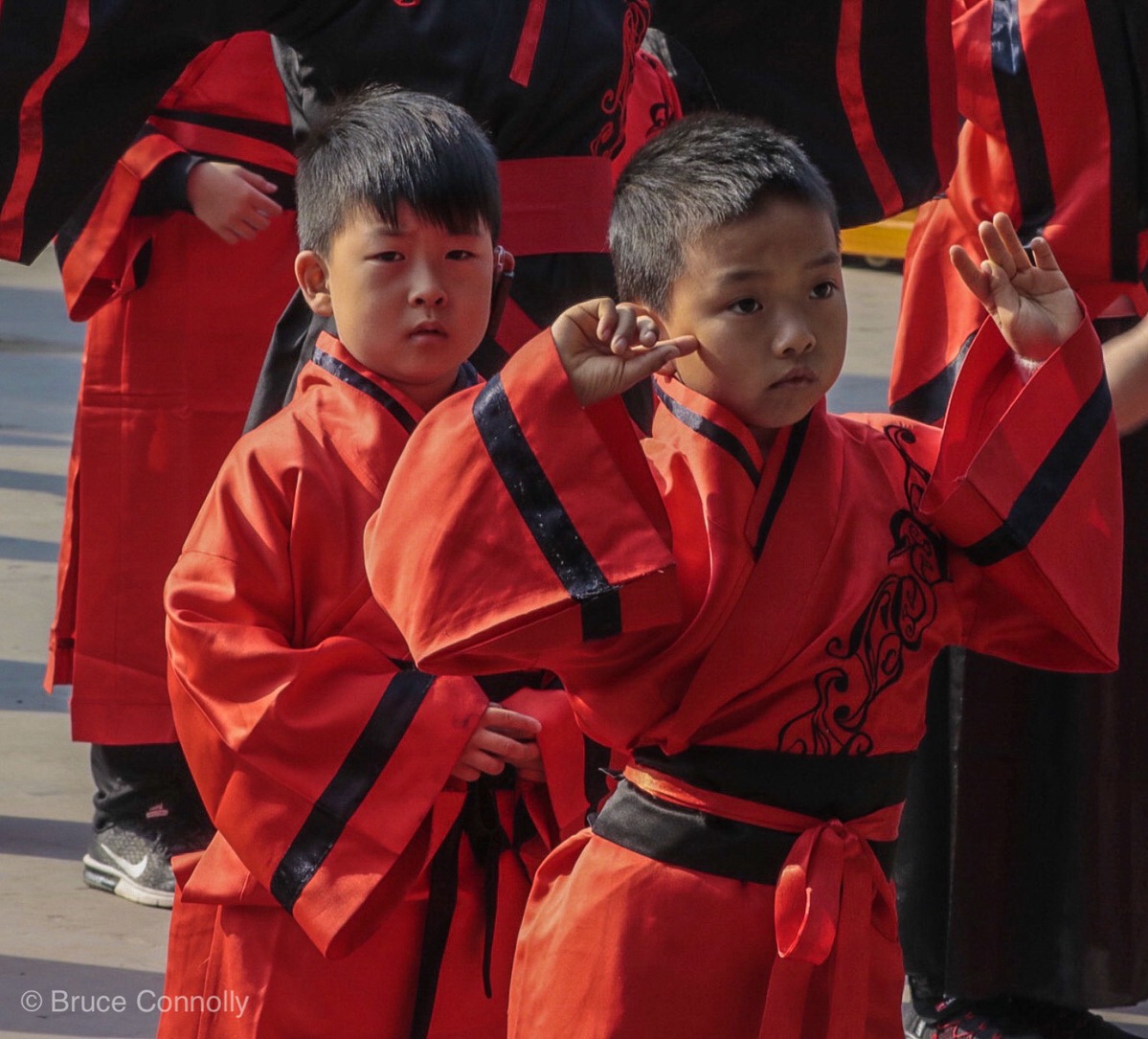
While I was there a ceremonial procession moved north toward my location. Dressed in glittering red and gold the many participants performed a series of traditional rituals on an extensive raised stone platform directly in front of the hall. Lasting over 15 minutes it was a quite stunning reenactment of historic traditions. A moment I was glad to witness. Earlier I had photographed a student group dressed in red. Performing simple enactments they were on a Confucian learning experience for which Qufu is certainly popular. Emperors through the dynasties had long before gone there to participate in spectacular ceremonial sacrifices in honor of Confucius.
I was able to find several quiet corners within the temple where I could sit, think of the significance of Confucius while also capturing images of its atmospheric moods that natural light and shadows seem to create within such structures.

Built on a site where Confucius himself once lived, the Confucius Family Mansion comprises 463 buildings. It was used as a residence for over 77 generations of his descendants. It is regarded as one of the grandest family lodgings today in China. A ceremonial gate near the southern entrance was opened only for visiting Emperors, such was the eventual status of the Kong family. Indeed it is reckoned Qufu's historic character evolved through the devotion of a succession of Chinese emperors over more than 2,000 years. This helped ensure that the finest of China's craftsmen were both involved with the initial creation and subsequent reconstructions over the centuries.
It was very easy to appreciate why the major buildings associated with Confucius were awarded UNESCO World Heritage status. Qufu maybe small but there is so much contained both within its urban space and beyond.
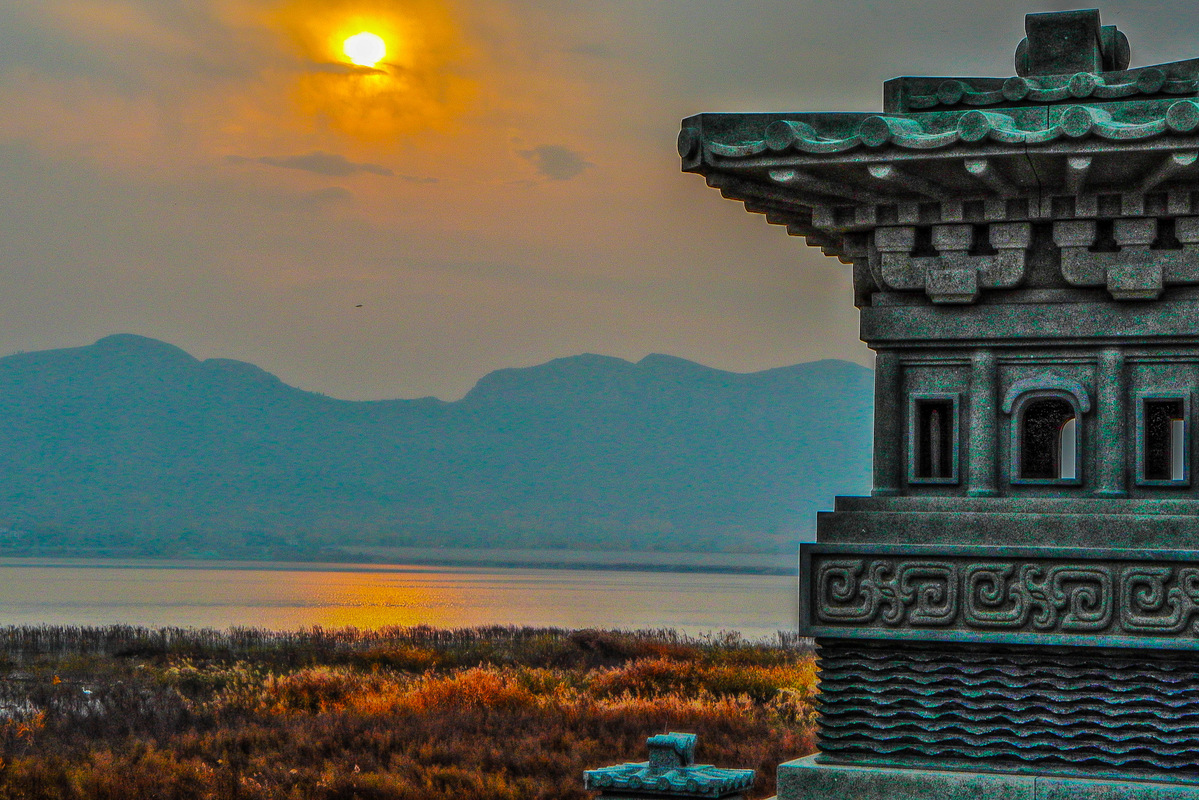
Confucius was born in 551 BC 30 kilometer southeast of Qufu, apparently in a cave on the slopes of 340 meter Nishan Mountain. An ancient temple dedicated to Kong He (alias Shuliang He), the father of Confucius, nestles alongside that subterranean passage. It lies close to a vast project, Nishan Sacredland which opened on September 28, 2018, the date of Confucius birthday. Spread over 25.76 square kilometer it is the latest and greatest project nationally to embrace Confucianism and traditional culture.
This upland area rising above the waters of Nishan Reservoir was devised partly for tourism while facilitating a greater learning of and understanding the life, works and philosophy of Confucius along with its place in modern society.
One afternoon I headed out there along an excellent quiet highway. Soon after leaving the urban area the road cut through extensive areas of forest bathed in autumnal colors. Villages nestled alongside intensively cultivated farmland. Ahead rose a low range of hills, Nishan, my destination. Shuttle buses transfer visitors uphill to the main park entrance. There, large golf carts continue the journey, stopping first at a viewpoint of the lake and its mountainous backdrop. It was late afternoon, the setting sun bathed the scene in pastel shades of light.
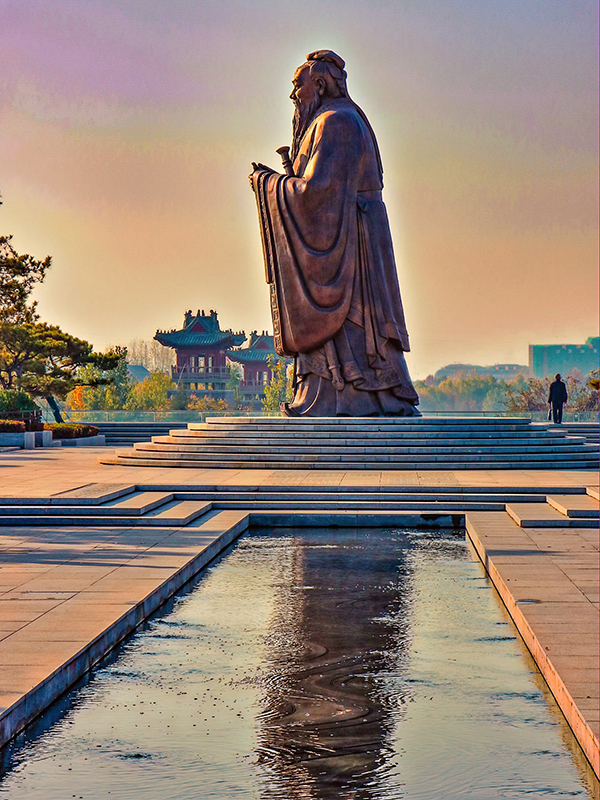
On the slopes overlooking the lake rose a 78 meter tall statue of Confucius, indeed world's largest of the renowned sage. Made of brass and reinforced with steel, on the day it was inaugurated it created a scholarly backdrop to Chinese Central Television's annual Mid-Autumn Festival Gala.
Many steps leading up from to its plinth provided ever expanding views of the surrounding landscape. Groups of children from Shandong schools, adorned in black and red Confucian-style robes, were gathered there as I attempted to photograph the scene. Soon I was surrounded by this large crowd all wanting selfies with me. Lovely moments on that upland in Shandong.

A vast building, also rose up the hillside. Designed in a contemporary Confucian-style, the Nishan Akademia was one of the more incredible structures I have visited recently in China. The size at first overwhelming, it combined several large, spacious halls used for educational exhibits and visits. Along one enormous assembly room, a series of tall white Confucian disciple statues lined the walls. This led to a massive enclosed stairway almost like from a temple featuring in some historic movie spectacular. I moved slowly, stopping regularly to take in the elements of design from many intricate oil lamp replicas to large ceremonial vases and so much more. There was an amazing silence, almost solemnity. At the top was the entrance into another grand, inspiring space with many low desks where students could squat while being taught more of the teachings. While I was there the lights dimmed for a sound and light extravaganza which literally held visitors spellbound. Later I stood outside for a while, looking up toward the extra-large statue of Confucius while trying to take in the sheer scale of this project. It is certainly another driver in Qufu's rise as a prominent destination both for domestic and increasingly international tourists.
Qufu to me represented a combination of history and culture along with classic Chinese architectural style, water and trees in autumnal colors. This was all within perfect weather for photography.
Tourism has certainly benefitted the area as evidenced by the quality of service available locally. Normally, for example, a hotel of leading international standards such as the Shangri-La would not be found in a city of such small size. Similarly with fashion shops, restaurants and cafes occupying the low-rise buildings along Gulou Nanjie within the heart of the formerly walled city. Many people from Qufu and beyond have found employment within the tourism sector. Working in the hotels; tour guiding; creating artistic craft goods on sale along Queli Jie, drivers for a range of visitor transportation, many employment opportunities are created with increased visitor numbers. Indeed when I enquired, there are no manufacturing or small factories but people still work within agriculture for there is a market for fresh local produce again to cater for the visitors.
My final evening, I sat in the lobby lounge of the Shangri-la editing some of my photography. A resident singer, originating from Guangzhou, performed delightful, gentle songs reminding me of an excellent year living in that southern city over a quarter century previously. Listening, my mind drifted over the many experiences and travels across China over those years. Now, finally I had arrived in Qufu, definitely a 'jewel in the crown', to which I will certainly return for I was rapidly growing attracted to its charms. A city that over the centuries has retained its outstanding artistic and historic character. Maybe small, but every corner seemed to reveal such a wealth of fasciations that I am sure much more awaits me in Qufu, the hometown of Confucius.