
(Source: China Daily)
A return to Glasgow, Scotland's largest city with increasing connections to China
By Bruce Connolly | chinadaily.com.cn | Updated: 2019-09-10 14:19
Recently, on my way back from London to Beijing Capital Airport, I thought back to my first flight on that route in 1994. Then I had wondered if there would be any culture shock, although I had previously visited Beijing in 1987 but by train. Certainly in those early days, China presented many complexities so different to everyday life back in Scotland. This time, as I surveyed the city from the air, it had indeed changed considerably over those 25 years. So much had been urbanized with increasingly high-rise buildings along with the ever-expanding tentacles of expressways. Capital Airport, of course, has transformed totally from its then small, single terminal building (today's T1).
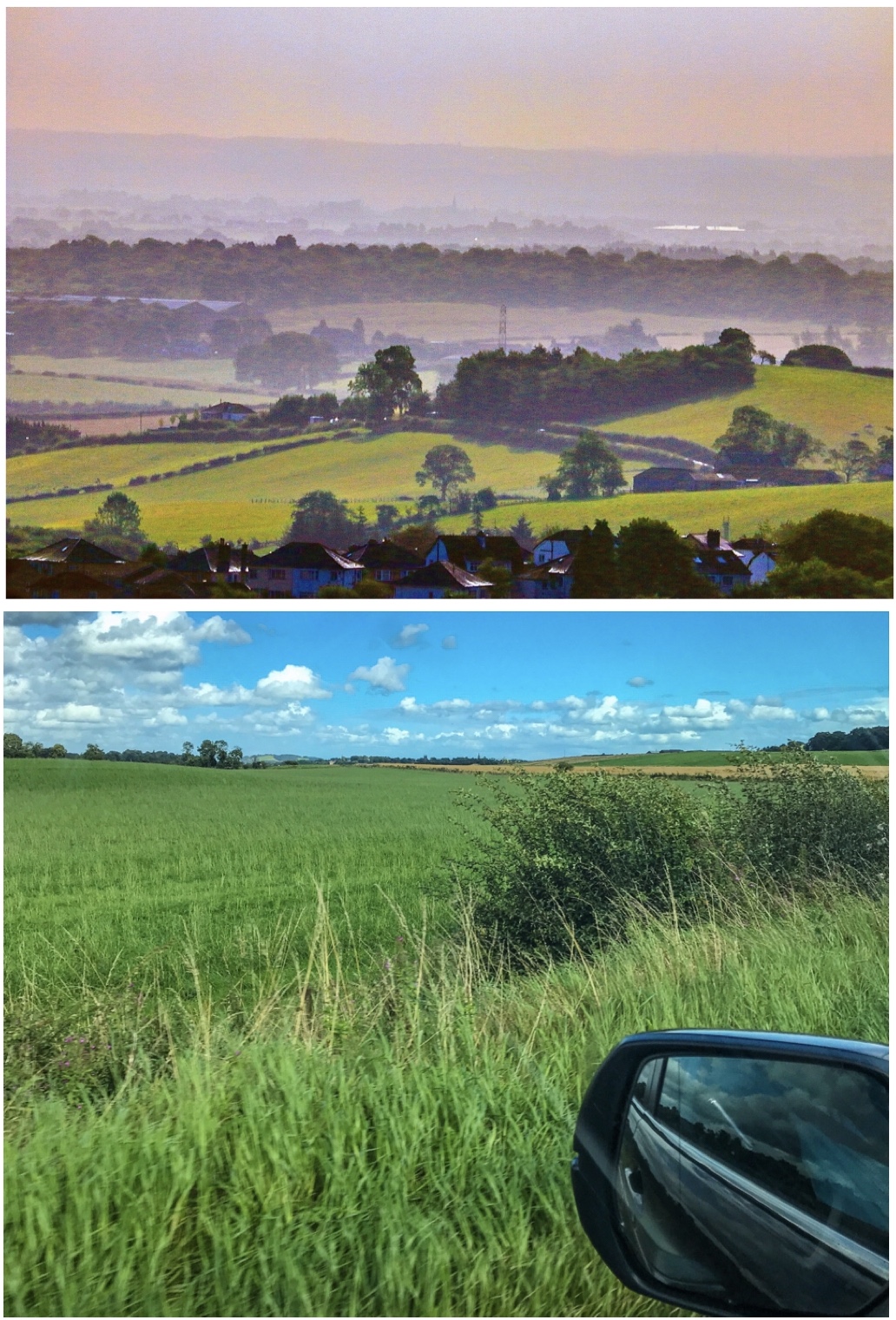
Two weeks ago on approach into my Scottish home city of Glasgow I looked down on a landscape so familiar, despite more than four years of absence. Most road patterns, the villages, towns, the farmland reminded me of my earlier days cycling, driving or walking across that very green terrain. However, there were some noticeable changes including less high-rise residential buildings. During the 1970's Glasgow boasted the tallest domestic structure in Europe, incorporating housing units rented out by the city authorities. With population decline and for a multitude of social reasons such blocks have steadily been removed and replaced with low-rise units - land pressure is not so intense as in Chinese cities.
Compared to Beijing Capital, Glasgow Airport is relatively small and compact but immediately conveys to visitors why Glasgow has become known as 'The Friendly City'. Complete strangers will suddenly start talking, chatting, smiling. This is a facet I know many Chinese students and visitors have found and indeed loved about Glasgow.
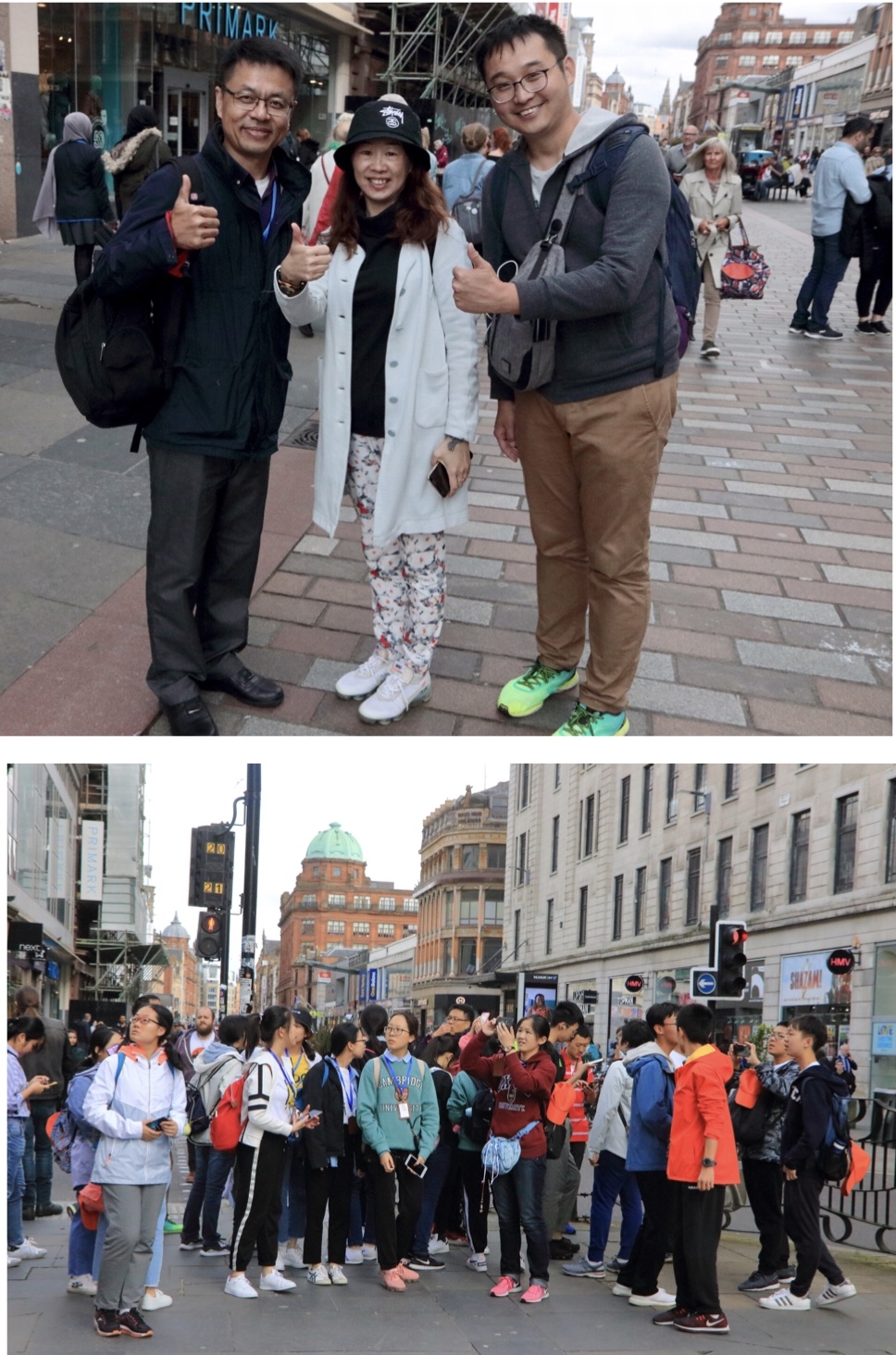
Soon I was being driven northwestwards toward a high-level bridge across the River Clyde, the waterway that opened Glasgow to the outside world and helped transform it into one of Britain's leading industrial and commercial cities during the 19th and early 20th centuries. Indeed the city centre probably boasts some of the finest Victorian architecture anywhere, today used for film sets and much appreciated by photographers. I saw several Chinese tourists capturing photo images of the stately Museum of Modern Art with its classical-style colonnaded facade, indeed not dissimilar to what I now photograph on Tianjin's Jiefang Bei Jie. Both cities, major ports presently going through post-industrial transformation have much in common and one reason why I have become so fond of Tianjin. Incredibly, near that museum I came upon a group of around 20 young Chinese. Hearing them speak, with a northerly accent, I enquired with them where they were from. Tianjin? Indeed Tianjin No1 Middle School and there in the centre of Glasgow they met someone so familiar with their home city, even carrying images of their home city on his smartphone! As we say, 'a small world'.

That first evening, being driven from the airport, again so much was familiar, as I recalled being one of the first cyclists to cross that high Erskine Bridge on the day of its opening. Fields bordered the highway, sheep and cattle grazed. Countryside comes very close to the city edges creating a 'rural-urban fringe'. It is very difficult to construct on rural land in Scotland so I was looking out on locations where I would have cycled to with my tent, camp by a stream while preparing food on a little gas stove!

That night, I stayed in the suburban town of Bearsden and Milngavie, where I had spent my later teens and 20s growing up. This is where the urban sprawl of greater Glasgow gives way to the vast almost empty lands of Scotland's Great Outdoors. Indeed close to the railway terminus in Milngavie starts the internationally acclaimed 'West Highland Way' footpath along which walkers can spend five or six days heading north through stunning countryside to reach Fort William, nestling below the British Isles highest mountain, Ben Nevis.
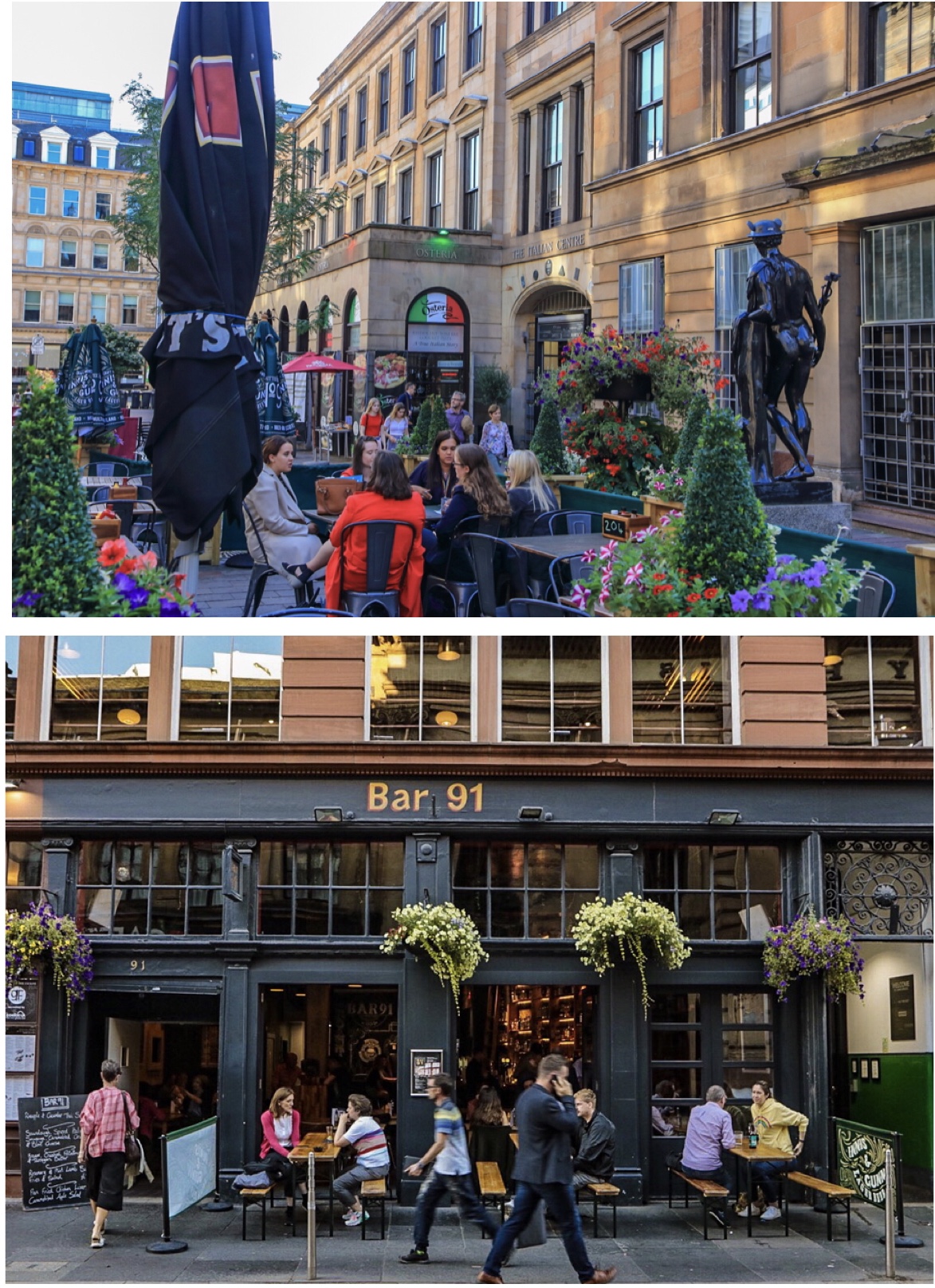
Waking up very early, partly due to the long hours of summer daylight and of course the time difference, I was aware of something, silence! Compare that to living close to Sanlitun in downtown Beijing! Even during daytime local roads are generally very quiet, at night practically silent apart from faint sounds of wildlife, such as foxes, that come out when the city sleeps. There was little commercial activity, while the common sight and sound of ubiquitous three-wheel delivery carts, the 'sanlunche' or the many electric delivery bikes do not exist. In Beijing and other Chinese cities I am so used to going out most evening to local restaurants or having food delivered. Back in suburban Scotland, people generally go home in the evenings where they cook and dine together. Indeed for some going out to a restaurant or bar is maybe only a weekly, or not even that, event. For me, living in China, going out every day, this was an interesting 'reverse cultural experience'. Glasgow's city centre is quite different to the suburbs, being vibrant with many top-class dining experiences.

Living in China I have of course become highly tech-savvy, particularly using mobile devices, for just about everything today! Remembering my previous homeland-journeys I made enquiries both with fellow Glaswegians and Chinese friends who had recently been to the UK about what tech I could use? It was possible, at modest charge, for my China Mobile account to work with a British server meaning upon arrival at London, before heading up to Glasgow I could call back to China without changing the SIM card and with 4G also operating, send the all-essential WeChat messages and photos back to friends and loved ones in Beijing. An excellent improvement.

However, in China I have almost become cashless, everything paid via my smartphone and all the other services available there. A first act, at London, was to go to an ATM and withdraw cash! Incidentally, most notes in the UK are now plastic, not paper; indeed those produced in Scotland are incredibly beautiful, almost artistic works, something Chinese tourists love to collect. I should add, visitors to Scotland can be initially confused because there are four different types of banknotes compared to only one in England! Three Scottish banks issue their own notes, each different but worth the same value and there are the Bank of England notes. But all four notes can be used nationwide across the UK - again great for collecting and bringing back to China as souvenirs.

Having a UK bank card I was able to pay in most places using ApplePay, however only up to 30 pounds - around 250 yuan. Anything over required card and PIN number. Again, meeting friends socially, I would be the one using smartphone payments. Taking a taxi, on one occasion, the driver only accepted cash. So, visiting the UK, better to have cash and cards.

It was noticeable how far fewer people were using smartphones or pads when together in company compared to what I see daily in China. It was very rare to go into a restaurant or cafe-bar and watch people 'glued' to their phones or talking on them while at a table or in company. People in Scotland tend to chat much more with each other, indeed I was the person who tended to be using portable technology more frequently than my fellow Scots who were often curious about what I was doing, particularly about 'WeChat'?
Surprisingly, despite the vastly improved access to information via the Internet today compared to when I first got involved with China there is still comparatively little known or understood of what China is really like. When I mentioned cities such as Tianjin or Chongqing I was met with blank looks, "Where?" Indeed I have long felt young Chinese know far more about my country than many of my fellow Scots (but not all) know of China. This is partly because so many Chinese go overseas for travel and study, with Scotland a popular destination while for a variety of reasons, the other way is not the case. It was traveling to China in 1987 and coming back to work in Guangzhou for a year in 1992 really opened my eyes to this vast country.
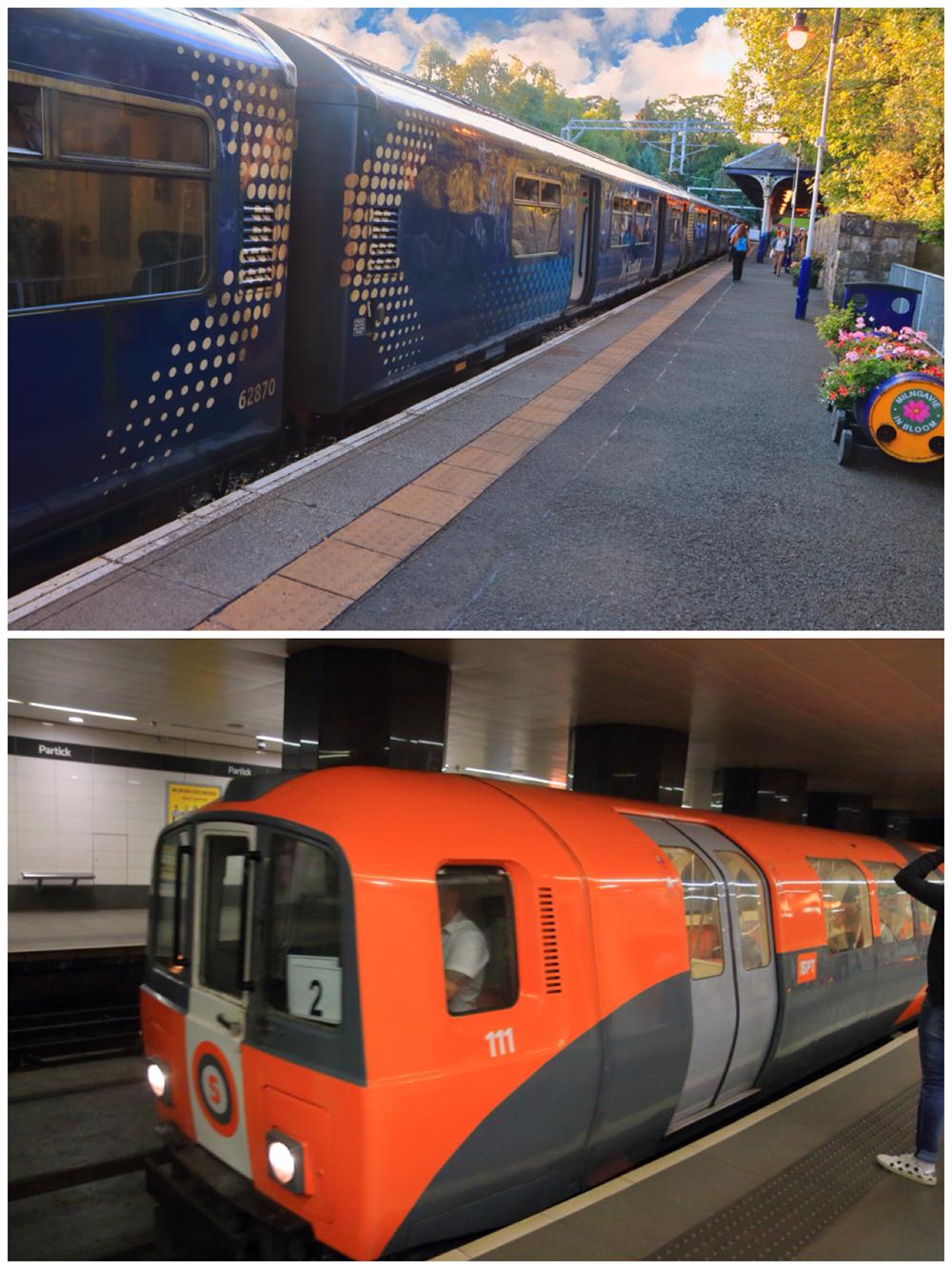
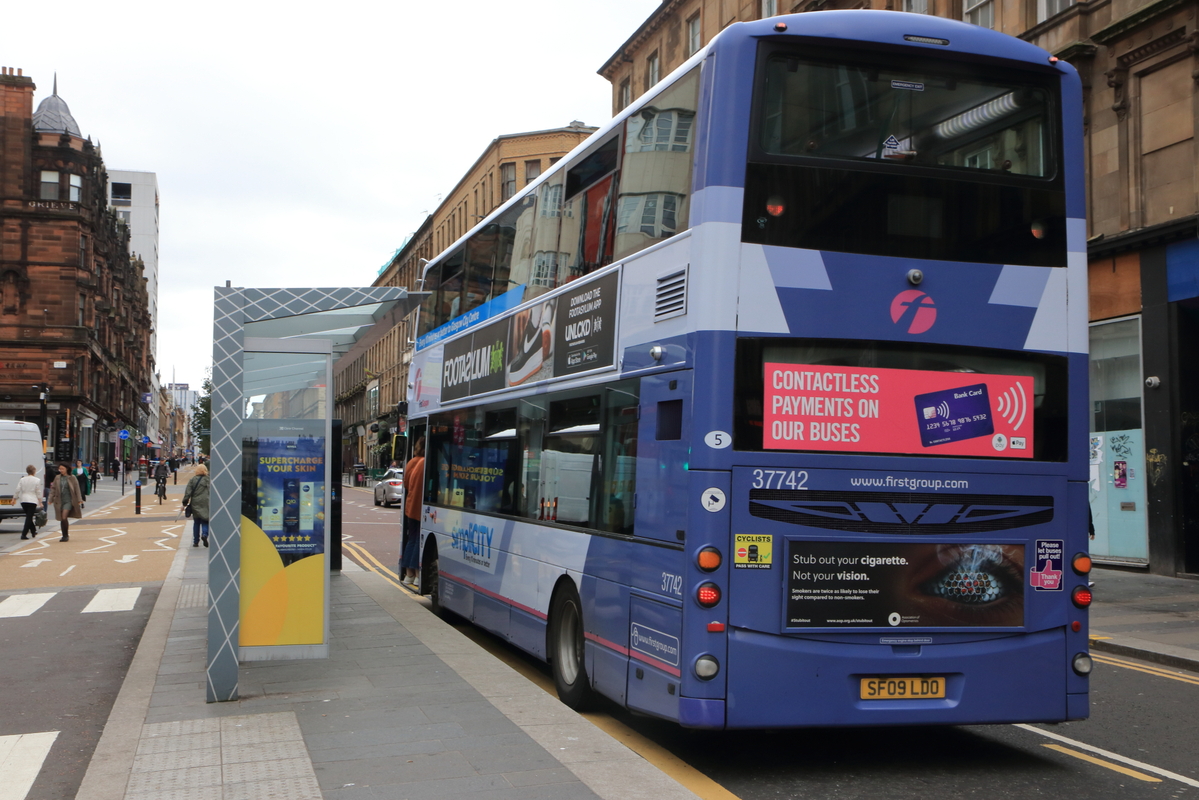
Traveling around Glasgow, particularly reaching the main tourist sites is very convenient. There is only one metro line, called the Subway. One of the world's oldest, though now modernized, it runs circular around the city centre, conveniently connecting the main university areas. However there is a very extensive rail network, one of the best in the UK, linking suburbs and beyond smoothly with the city centre. I used the trains every day, although there also operates a modern bus service. Fares are more complex than in China, depending on time of day and weekend schedules are different to weekdays. However, considerable discounts are available for older people, indeed bus passes for residents over 65 allow free travel across Scotland and on the trains, children travelling with an adult travel for only 1 pound (8.5 yuan) return, nationwide!

Glasgow is a major world-leading centre for education with several outstanding universities, increasingly attended by Chinese students. Indeed, in my earlier academic days there were few overseas students. Today, particularly if I walk around some areas of the city, such as Partick and Byres Road, I regularly heard Putonghua spoken. Some districts have restaurants providing dishes instantly recognizable whether in Beijing or Sichuan alongside long-established outlets offering the long-popular Cantonese cuisine. Indeed some offer two quite different menus, one in Chinese, the other in English. Chinese-run supermarkets and shops sell many items that students from across China would be familiar with.

Revisiting the city I particularly enjoy returning to the university districts. There, close to Hillhead Subway Station is Ashton Lane, lined with some of Glasgow's liveliest bars and top quality restaurants. A path leads directly into the grounds of The University of Glasgow, initially passing groups of newer academic buildings before reaching the gates of one of the world's most instantly recognized seats of learning - the 1870 building at Gilmourhill designed by Sir George Gilbert Scot in a gothic revival style, which some equate with a location from a Harry Potter film! The university was relocated to this site in 1870 from an earlier busy city centre location. With its cloisters, quadrangles, chapel, ceremonial Hall and much more this is where I spent time during postgraduate years including some Geography teaching. Its famed Adam Smith Business School is indeed a major draw. The university, a place of wonderful memories and increasingly today, visited by many tourists along with international students showing the campus to their proud parents.
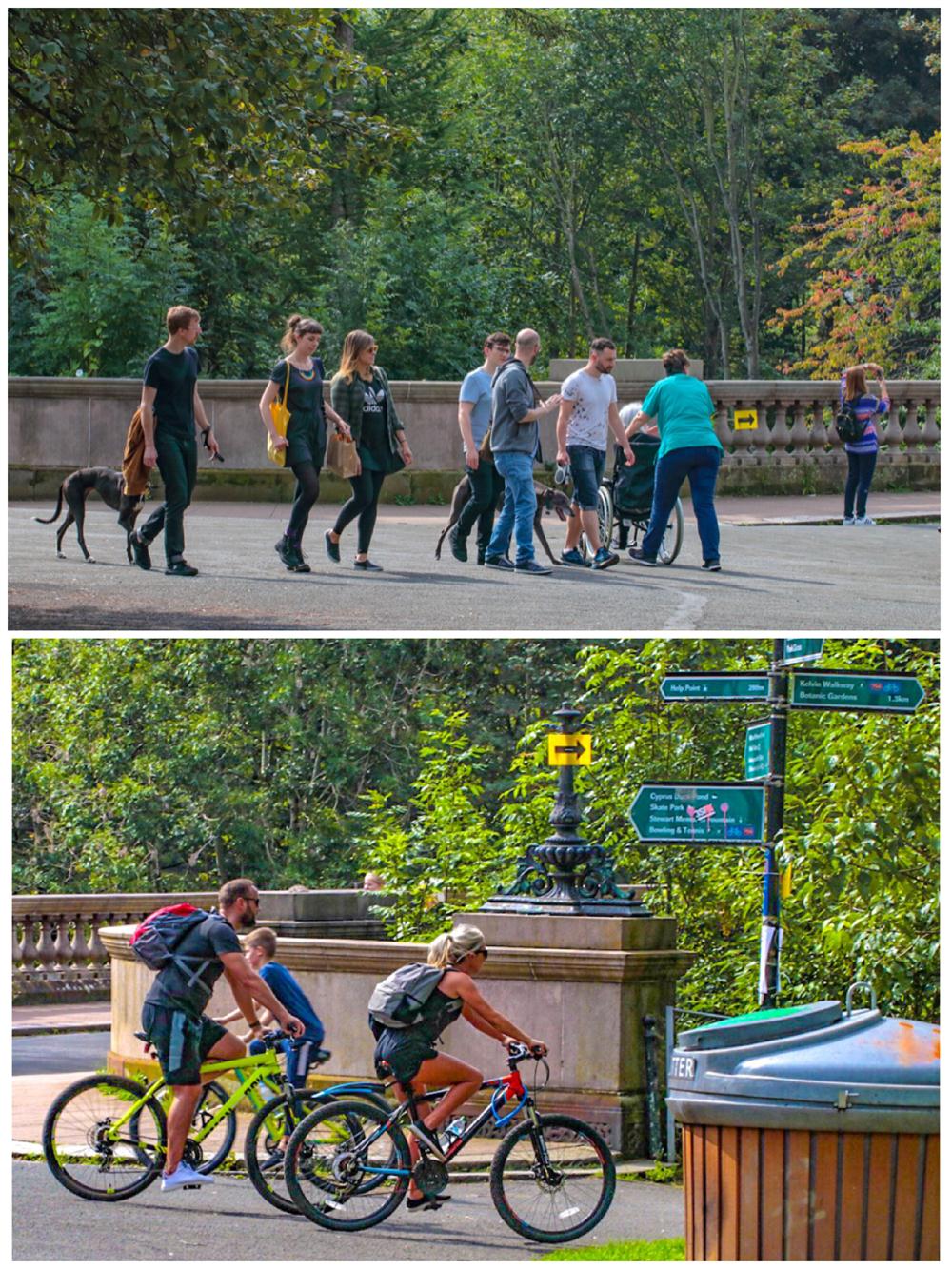
Beyond the main wooden door at the base of the university's bell tower rises a flagpole where I have often sat looking across to grand sandstone architecture of Glasgow's Kelvingrove Museum and Art Galleries. Stretching below the university is one of the city's beautiful parks through which the River Kelvin flows. It is a park where many people go for cycling, walking their dogs, or like me to just sit on the grass while looking across at the impressive stone facade of the university rising on a tree-covered hill beyond. Go also in the morning to this, the Kelvingrove Park and watch for local Chinese residents and students practicing tai chi just like being back in Beijing!
There is much more to discover about Glasgow, the capital city of Edinburgh and indeed about Scotland, now increasingly a major destination for visitors from China.
