(Source: China Daily)
Capturing images of Beijing over the last 30 years
By Bruce Connolly | chinadaily.com.cn | Updated: 2019-08-01 17:43
Throughout my many years discovering China, a camera has remained an important personal asset. Technology has advanced considerably from rolls of film wound in what were relatively simple cameras to the digital machines we have today that in some ways are more computer than camera. By the end of a six-week trip I would be carrying heavy amounts of film! However, regardless of levels of photographic technology, the images taken are records of China at various stages of its development. The end results show iconic aspects of the country's megacities and how they have changed over the years including, of course, the beauty of rural China.
I reflect on how technology has changed our individual approach to travel. In my early days, both in 1987 and through the 1990s, internet and Wi-Fi were not there to help with planning. The main resource for travelers remained guidebooks. With China travel, they were problematic because of the vast size of the country. The books were necessarily large in number of pages, but were often out of date even by the time they were printed. I would try to find a hotel or restaurant only to discover it had closed or been relocated. It was also very difficult to search for the latest rail or bus transportation schedules. Indeed sometime it was by receiving helpful information that my plans would beneficially change. For example in 1994 I had traveled south from Chengdu in Sichuan to Leshan to photograph the gigantic Buddha overlooking the confluence of the Min and Dadu Rivers. I was about to head back toward Chengdu, then continue onward by rail to Chongqing, when the receptionist at my hotel informed me a boat would sail next morning from Leshan, taking two days. That became one of my finest early China adventures!
Today personal online technology has made it so much easier to travel by checking real-time information on schedules and ticket availability along with hotel booking. With interactive maps on our smartphones, we can follow exact directions to a location. Just as taxi drivers have added requested destinations to dedicated phones that literally guide them to where we wish to go. Changed days indeed!
I have witnessed all of these technological advances through my 32 years since first coming to Beijing. Having mostly lived and worked in southern China, I first made a solo visit to the city in 1994. Again it was through the help and suggestions of a Chinese friend in my Scottish home city of Glasgow that I was not only encouraged to visit Beijing but directed to a hotel located within a hutong near Beixinqiao. Had that not happened, I would probably never have become so involved with the city. Simply living for a while within an older area near the Lama Temple (Yonghegong) was a real travel eye-opener. It proved to be the start of many return visits, each time discovering more -- always with a camera in hand, of course!
Over subsequent years, Beijing became a starting point for onward China travels. However, as I learned more about the city, my knowledge and photo archive increased. Eventually, in the early 2000s, I was writing monthly travel features for Beijing This Month and went onto to have 12 years creating daily radio items for RBC AM774 under my beloved heading, Bruce in Beijing! Photography naturally went alongside such media activities.
However, with a city of its size, there is always the challenge of how to document a place so diverse and complex as Beijing either digitally or by film. Regularly back in Scotland I would be asked to organize photo displays of Beijing, for example at the Chinese New Year celebrations in Glasgow or even in Beijing recently at one of its leading hotels. How to present a city with an ancient heritage but also one so modern today? I quickly appreciated its vastness. This was particularly noticeable in those earlier days when metro infrastructure was relatively basic in comparison to the current vast network. Recently, images in a monochrome format have helped me display its facets maybe more dramatically than using color, as some people prefer monochrome.
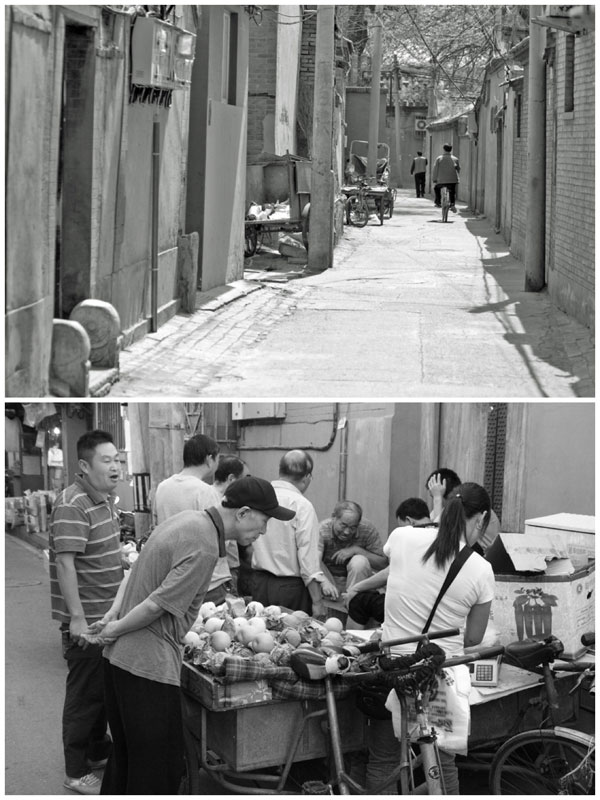
Living in that hutong near Beixinqiao, it was almost immediately obvious to me that Beijing had so much to offer. Simply walking out the door of my hotel would open up a miniature world of incredible diversity and contrasts. The rapid modernization drive of the last 15 years had not begun, as many people still traveled by bicycle. I could sit for hours in an alley observing the constant flow of bicycles, carts loaded with everyday household goods, children heading off to school, even of monks in their gray, yellow or crimson robes from nearby temples. It was a world so different to what I had left behind in Scotland. I was captivated and of course, tempted to keep shooting off more rolls of film, but that was not a good idea in the predigital days. My backpack increased in weight with additional film bought as I traveled.
However, Beijing extended well beyond my local hutong. A regular morning walk would lead to the beauty of Shichahai. My dream was to spend my life living by the banks of its lakes. Indeed cafes adjacent to the Silver Ingot Bridge, where the waters of Houhai flow gently into Qianhai, were regular summer evening spots. Again, I would sit for hours watching cyclists cross the bridge with a backdrop of many little courtyard homes leading up to the iconic Bell and Drum Towers of Zhonggulou.
Watching how the waters moved in a southerly direction convinced me that Beijing is not flat, as there is a gentle slope from the north. It was this aspect of geography that led to Yuan Dynasty hydrological engineers such as Guo Shoujing harnessing such gravitational flow. This created a waterway system facilitating navigation for boats from outliers of the Grand Canal right down to the Forbidden City. Consequently, delivery of vegetables and other produce from Central China could go straight to the Imperial Palace. With my camera and local maps in hand, I would carefully follow the route from Jishuitan, at the northern end of Shichahai's lakes, down to beautiful Beihai Park. From there waters passed toward the Middle and South Lakes directly west of the awesome palace walls.

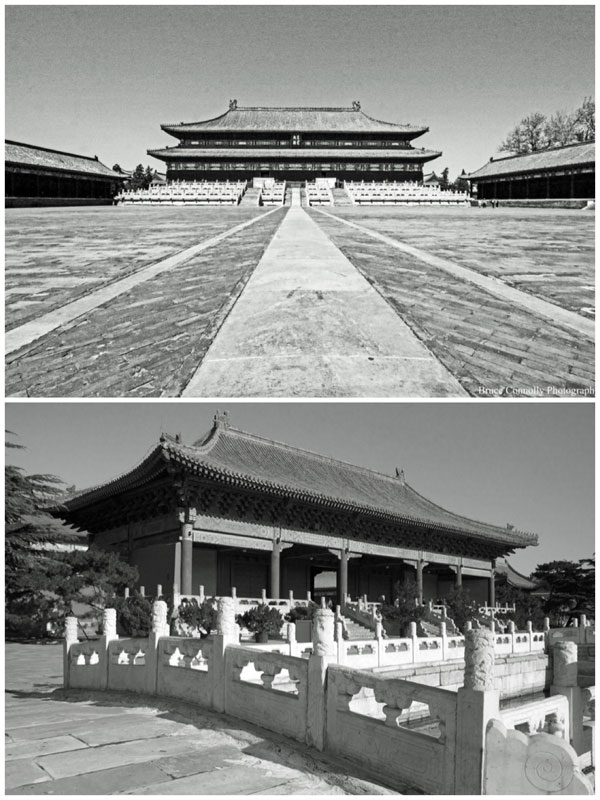
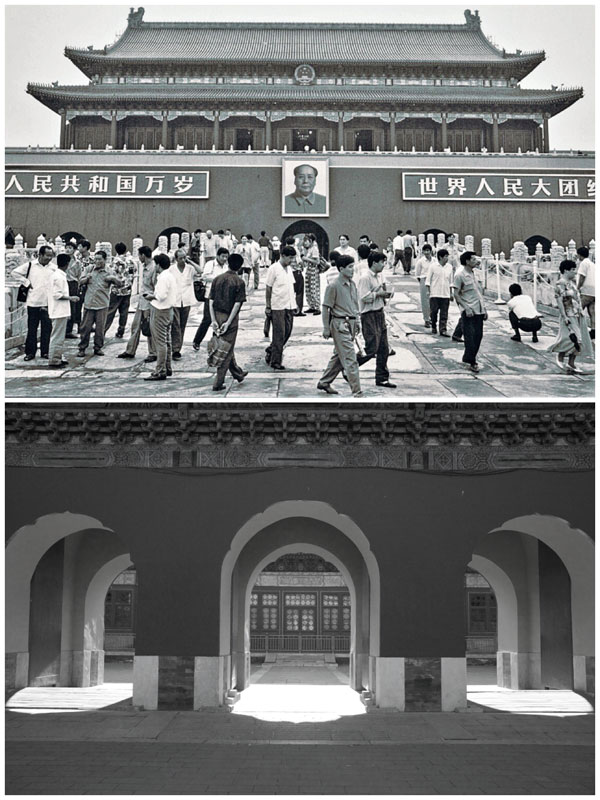
Again, trying to capture images of the Forbidden City would lead to hours simply walking around its exterior walls looking for great angles. My favorite locations became the northeastern and northwestern corners of the moat where the atmospheric mood would change both with seasons and time of day. Capturing the sunset beyond those walls, particularly if it was going down behind the Shenwumen or North Gate, could be stunning. Of course, to capture a shot overlooking the entire palace, it was necessary to climb the hill at Jingshan Park up to Wanchun Pavilion where other like-minded photographers would gather for that perfect shot of Ming-era grandeur spread out below. The park, particularly at weekends, proved a wonderful spot to become absorbed in local cultural aspects of the city. Large crowds would gather for community singing, play traditional instruments or practice tai chi.
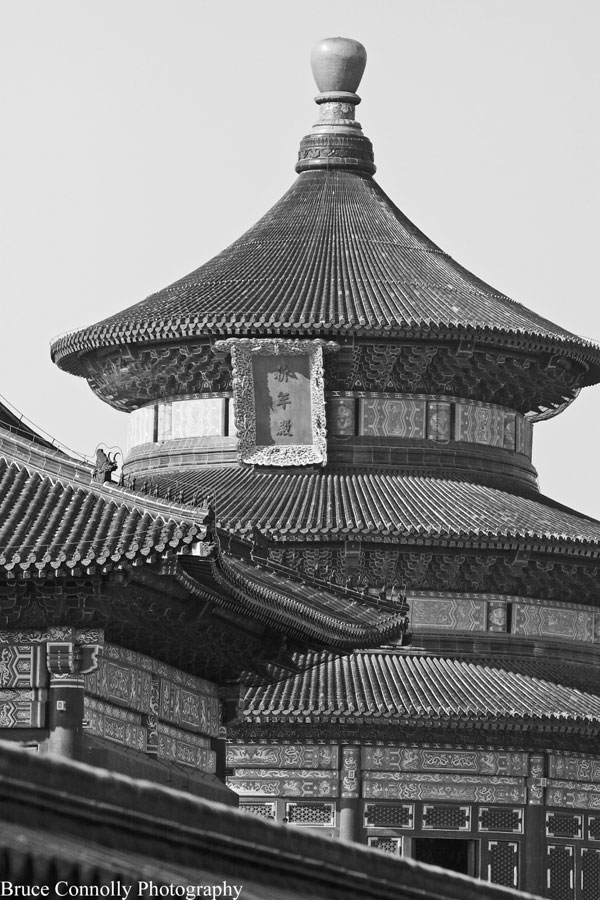
Again with Beijing's size, extensive travel usually by bus would lead me to more of the city's outstanding architectural and historic heritage, such as the Temple of Heaven to the east of the now-restored Yongdingmen Gate. Near that temple was a song bird market, another spot to sit and take in that colorful and noisy aspect of Beijing's local life. Indeed the city's daily rhythm frequently caught my attention. Regularly I would just sit at a cafe quietly watching people pass by. My favorite cafe on the now busy Nanluoguxiang was the Pass By Bar. In those early days, I also headed regularly south to a small coffee shop close to the Front Gate of Qianmen, spending an hour there before disappearing into the maze of alleys between Dashilar and Liulichang. Those lanes were not grand, such as those found in the northern parts of historic Beijing, but they were once at the heart of the city's fledgling commercial and trading activities. Later, by the early 20th century, grand colonnaded financial buildings rose there, some still in use. So many interwoven aspects of that entire area confronted me that regular visits, walking, reading and photographing proved essential. Later I would delight in escorting geographical study groups from Scotland around such narrow lanes I had encountered during my explorations. Usually the group would ask me about how I could discover such places not mentioned in any guidebooks. Simple -- I would explain that I always walked and have retained, even now, a great curiosity for what would appear to be interesting places.

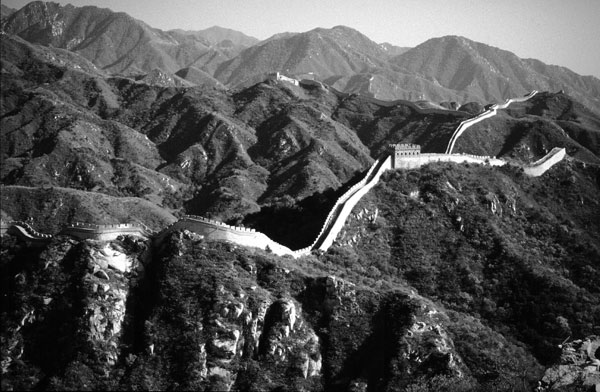
My early expeditions out to the suburbs were usually by public bus to locations now served by metro or tramways. For any Beijing visitor, indeed for residents, the various Great Wall sections, whether Badaling, Mutianyu or more can be spellbinding. It is an iconic symbol of China that many of us recall from early schoolbooks. The Western Hills rising above the almost villagelike area of Xiangshan was another place that simply captivated me! I reached Lugoqiao with its famed Marco Polo Bridge and Wanping Fort on a cold January afternoon in 1996. These are just some of the many memories of archiving the many facets of Beijing.
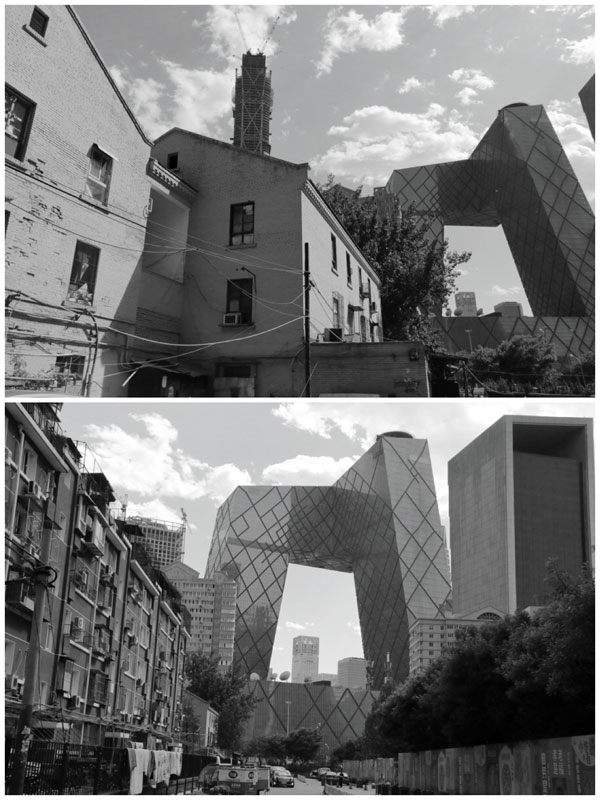
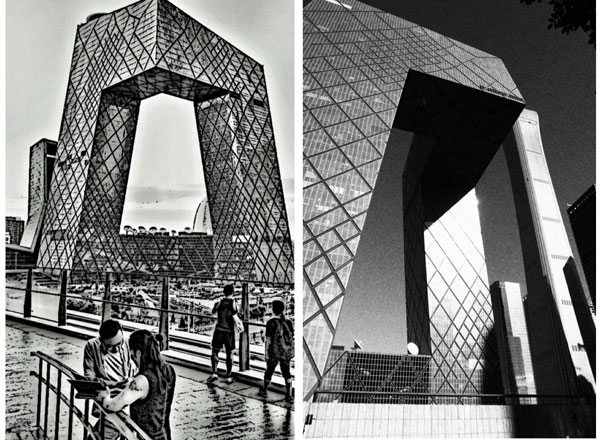
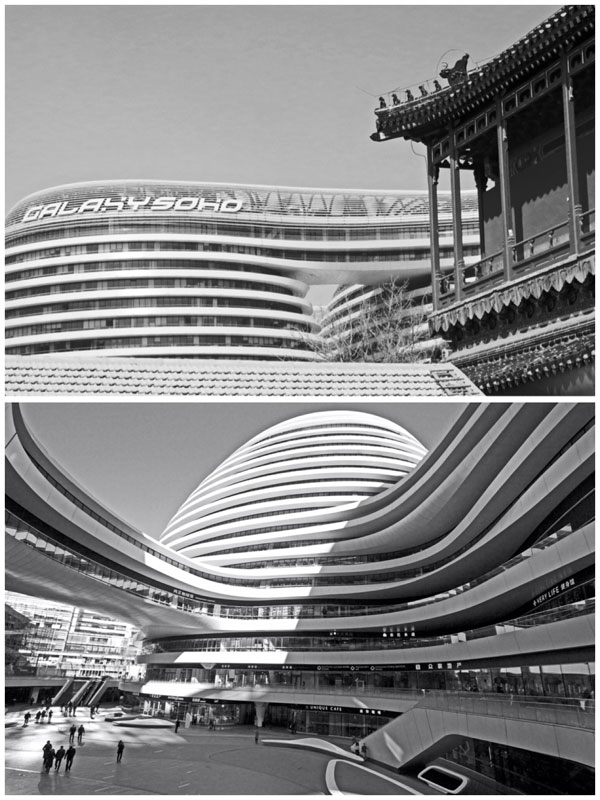
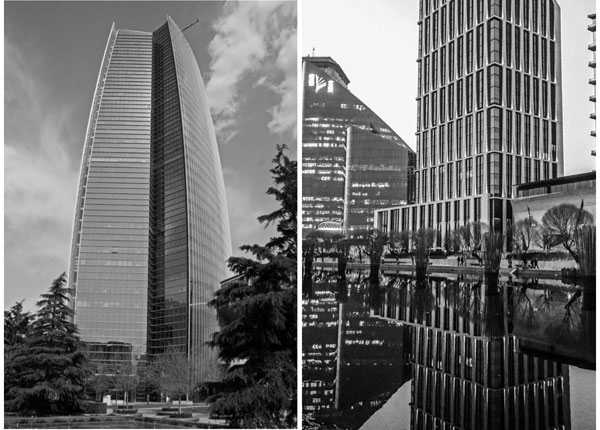
This passion has continued up to the present. Beijing has changed incredibly since I first passed through the gates of the Forbidden City in 1987, but the changes also provide many photographic opportunities for great contrasts have emerged. Interfaces appear where historic landmarks stand alongside the gleaming 21st century towers going up, particularly after hosting the 2008 Olympics. International architects helped create a contemporary landscape of world-leading airports, vast modern railway stations, skyscrapers literally reaching into the heavens, and high-end shopping malls overtaking open-air markets. The list goes on and on as the city adopts an appearance I never foresaw three decades ago. However, I do recall after that aforementioned visit to Lugoqiao, I saw from the bus as we traveled along Guang'an Road a vast building under construction to the north. It was Beijing West Railway Station, opening in 1996 as Asia's largest rail terminal and a taste of things to come over many following years!
The images with this feature are just a few from a vast archive documenting not only Beijing but indeed much of China. And as the country continues changing so the collection keeps on growing.