(Source: China Daily)
Experiencing China's ongoing environmental improvements
By Bruce Connolly | chinadaily.com.cn | Updated: 2019-07-05 07:09
In my earliest student days back in Scotland the environment was not a major topic, even within my discipline of geography. However, early industrial growth throughout the UK had been based on fossil fuels, particularly coal. Memories of smoggy cities still remain with me, but over the years an increasing awareness of such problems and potential solutions developed. Eventually again, within the sphere of geography, environmental sciences grew in importance. Over subsequent years there have been significant, steady moves toward clean, renewable energy with quite noticeable results.
For me, being involved with China now over 32 years, it has equally been a fascinating experience watching how the country, and indeed the skies over many Chinese cities, have changed often quite dramatically.
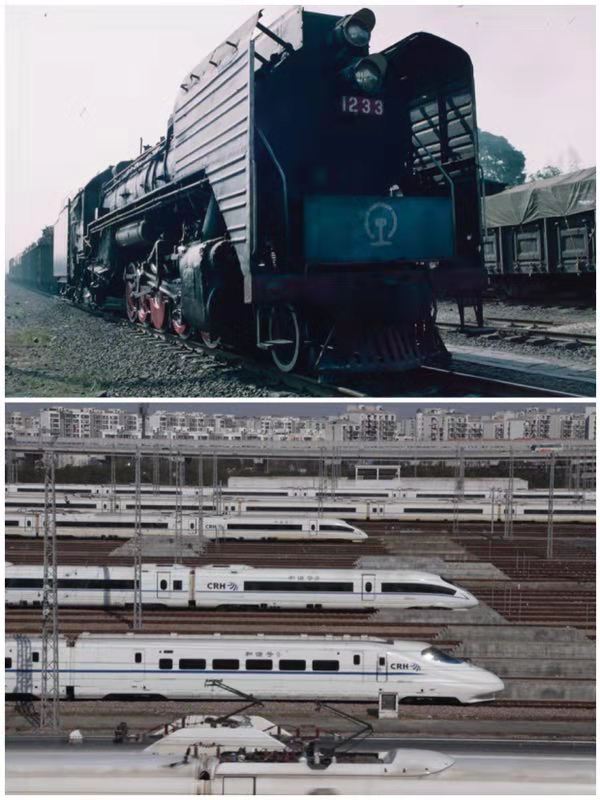
My early travels, just like today, had mostly been by train. As a railway enthusiast it was a thrill to be hauled by some of the world's last operating steam locomotives. Journeys passed through landscapes often dominated by heavy industry, using coal. China was rich in that resource with growth most noticeably in my earlier days here a major priority. Particularly within northern cities, coal provided essential winter heating and daily hot water supplies. Indeed for some communities it still does.
Living within an older part of Beijing, even in the mid-1990s I remember the large number of tall brick chimneys that were part of that system. Around the older, traditional hutongareas, homes and restaurants often depended on small, circular coal-fired stoves. Nationwide public buses and trucks relied on heavy diesel fuels while private cars were just appearing. Winter skies consequently were often a yellowish-orange clearing when the cold north winds blew down across northern China. How things have changed today. Coal, used locally in Beijing, for example, has virtually disappeared. Buses are either electric or gas-powered, and even cars and taxis are going increasingly electric.
I am writing this feature on my balcony in downtown Beijing. The window is open, there is a light fresh breeze and the sky is blue. This is something I increasingly regard now as the new normal for many months each year. The word environment comes up frequently in the media today and simply by traveling, again by train, around the country I can see and indeed breathe in the changes.
While the high-speed trains may lack the romance of steam they are a highly efficient way of moving vast numbers of people around the country every day and at speeds up to 350 kilometers per hour. These trains are electric-powered and clean, and also emit very little sound. I see the network that has expanded nationwide since August 2008 as a major, world-leading achievement of China. Indeed 11 years ago I traveled on one of the first such trains, on that short 30-minute run between Beijing and Tianjin. Last year it was a thrill to be with a BBC film crew on that same route, on the latest Fuxing units offering superb quality of service.

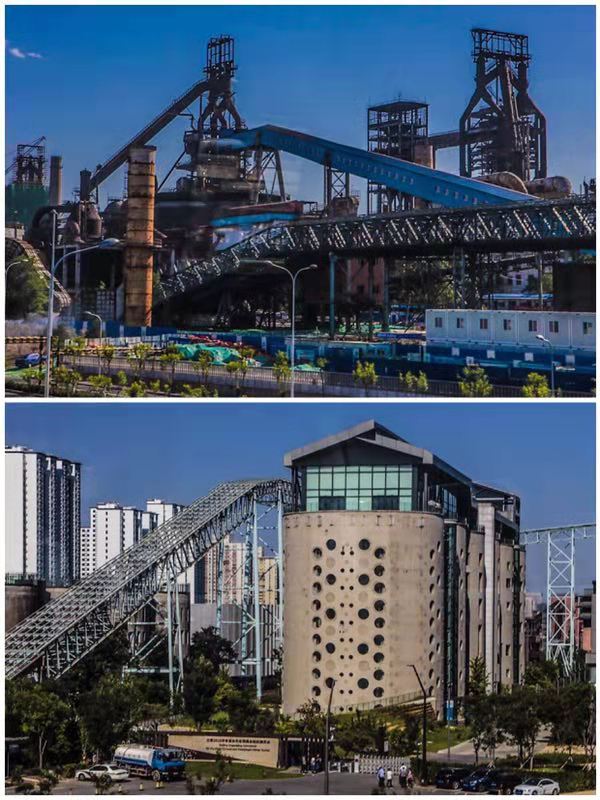
Again it is by train I see changes: fewer and fewer outdated heavy industrial plants but increasingly vast solar and wind energy farms. Recently I traveled westward on Beijing's Metro Line 6 to Jin'an Bridge station. There I walked alongside the now redundant towers and chimneys of what had once been the vast Shougang Steel Works. The closed facility was relocated in 2010 as part of Beijing's air quality improvement program. Today the site is being refurbished into a major venue for the 2022 Beijing Winter Olympics.
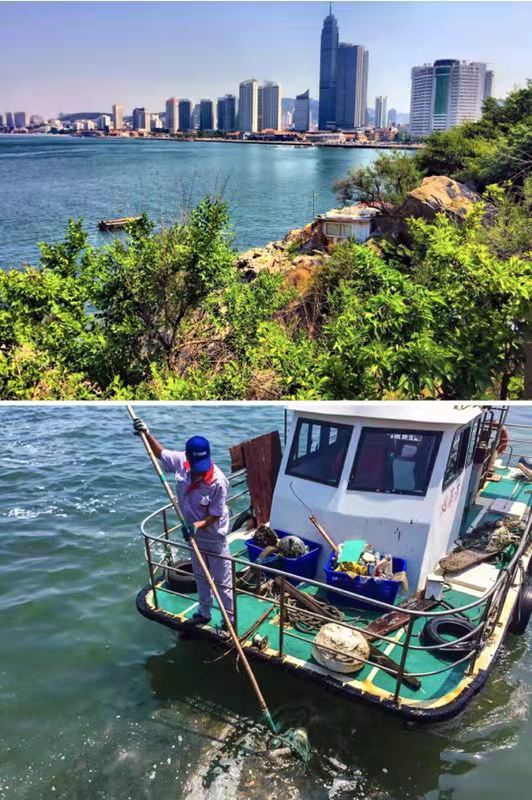
The high-speed train has taken me to some delightful areas around China. Certainly coastal areas have long had blue skies but it was still a joy to regularly reach Yantai on the Shandong Peninsula. It's a particularly beautiful area, but even there I noticed the increasing greening of the city while I was also fascinated to watch small boats utilized daily to keep its coastline clean.
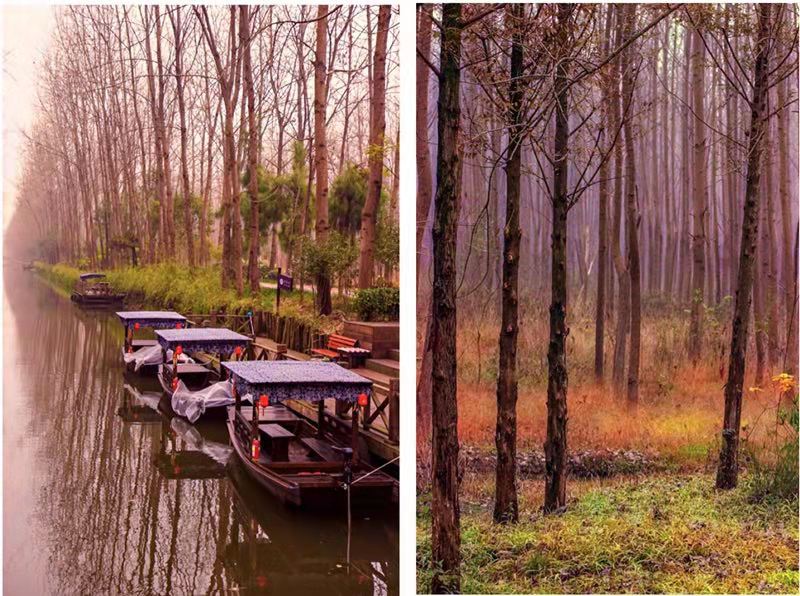
In other cities I have visited, land reclamation projects have transformed areas into ecological wetlands and environmentally positive parklands. Recently they have included the beautiful Jiyanghu National Ecology Park at Zhangjiagang in Jiangsu along with Binhu National Forest Park alongside Chaohu Lake near Hefei in Anhui. So many places I could easily have spent much time with my camera.
Tianjin is a city that I visit regularly. China is so large that it is not really practical to keep trying to go around the whole country. By focusing regularly on one major municipality I am able to appreciate it more in-depth while forming a clearer appreciation of what is developing. This has resulted in increasing familiarity of the city's steadily improving transportation system while noticing ongoing environmental upgrades. It is now much easier to get around, discovering new areas while also being able to watch and record changes as they happen.

I often stay in a hotel overlooking the Haihe River with the skyline beyond presenting an increasingly international feel to the city. Time can be spent simply looking, thinking and photographing the scene that changes both with seasons along with day and night. It is also from the window that I can reflect on my earlier days where skies were regularly obscure or gray to situation today where clearer conditions are increasingly the norm.
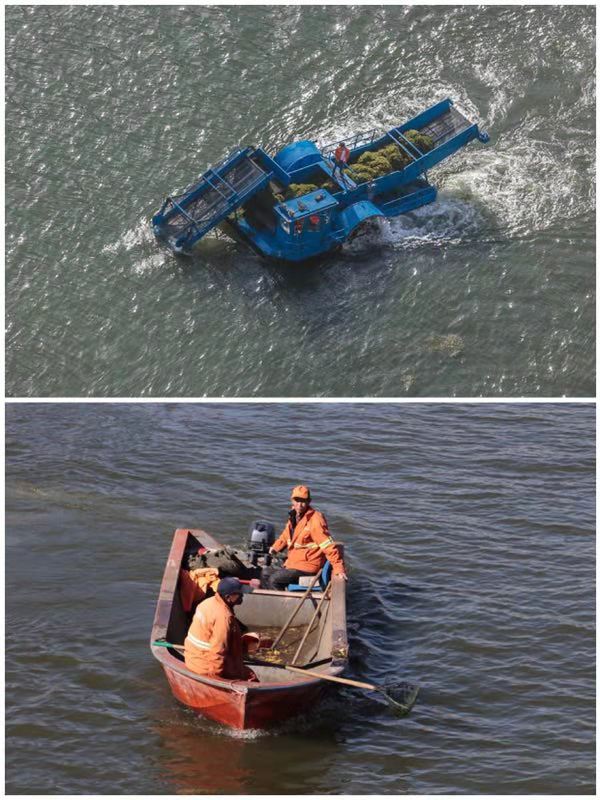
Recently I have been fascinated with ongoing efforts to keep the river clear of litter and debris. Boats scoop up excessive vegetation, for example, while smaller dinghies carry workers manually removing any garbage from the waters. As a consequence, not only is this helping beautify the environment but increasingly people can be observed swimming or fishing. These waters were once clogged with boats, some steam-powered, transferring goods from Tanggu Port to the Grand Canal adjoining the former Old City. Meanwhile the riverbanks have been landscaped from their earlier commercial and industrial days into an environment where people feel comfortable walking or engaging in community dance activities alongside impromptu musical performances.
Improved public transport has made moving around Tianjin much easier. Line 9 is a combination of metro and light rail. It runs a considerable distance almost to the mouth of the Haihe River where vast port facilities service some of the world's largest ocean-going container ships. It is within the Binhai New Area.
However, with that line mostly running above ground, the 40-minute journey is an opportunity to see so much change. Evidence is there of former industrial landscapes that mostly drove Tianjin's economy. Today older inefficient steel and chemical works are regularly closing with the locations restored into parkland or zones of modern residential or commercial structures. They rise alongside remnants of former factory workers' six-floor walk-up residential buildings. Elevated high-speed railway lines now run alongside older, conventional tracks still serving dock facilities and the remaining industrial units.

I have frequently visited Binhai, for much is happening there that also makes for great photography. Often quite stunning contemporary architecture rises where a more traditional industrial landscape was once the norm. Indeed this can be observed as the metro train pulls into Binhai. Today it is all so different from what I remember from 1994 when I was first introduced to the area.
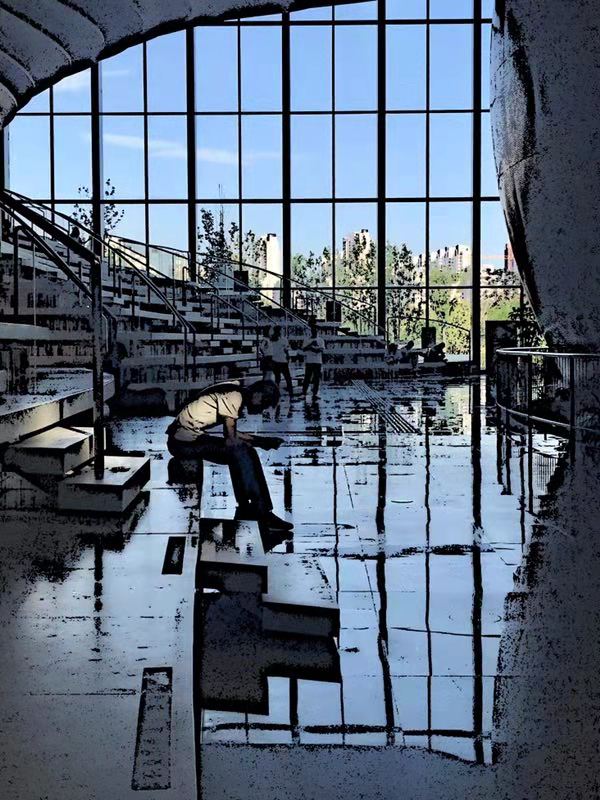
Recently what has been attracting me has been the recent Binhai Cultural Center, so vast it requires several visits to take in the many complexities and facilities within its multipurpose interior. It includes five large cultural buildings all enclosed within an almost cavernous structure. It rises adjacent to an area of extensive parkland and greenery, which at one point was occupied by industry and related activity. Both the interior and exterior design and use of different materials in its construction are quite striking. Outside on a large patio I could look northeast, beyond recent governmental buildings, toward Binhai's skyline, now dominated by the 530-meter-high Chow Tai Fook Financial Center nearing completion.
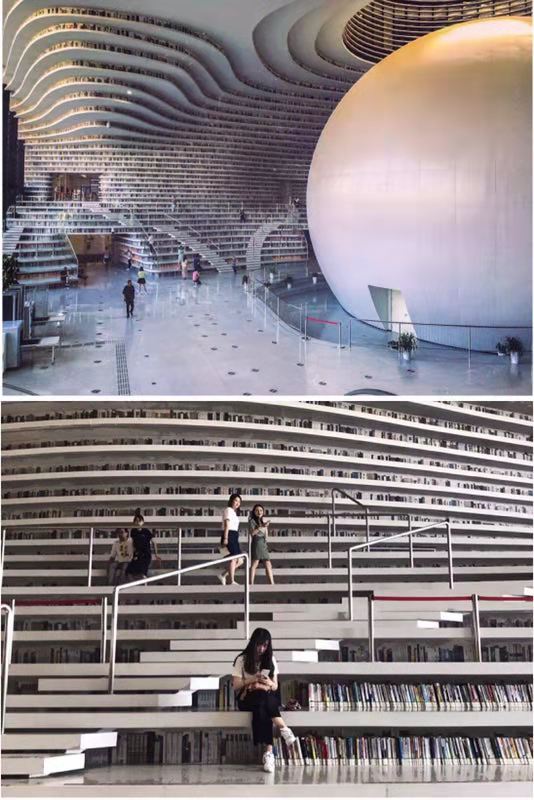
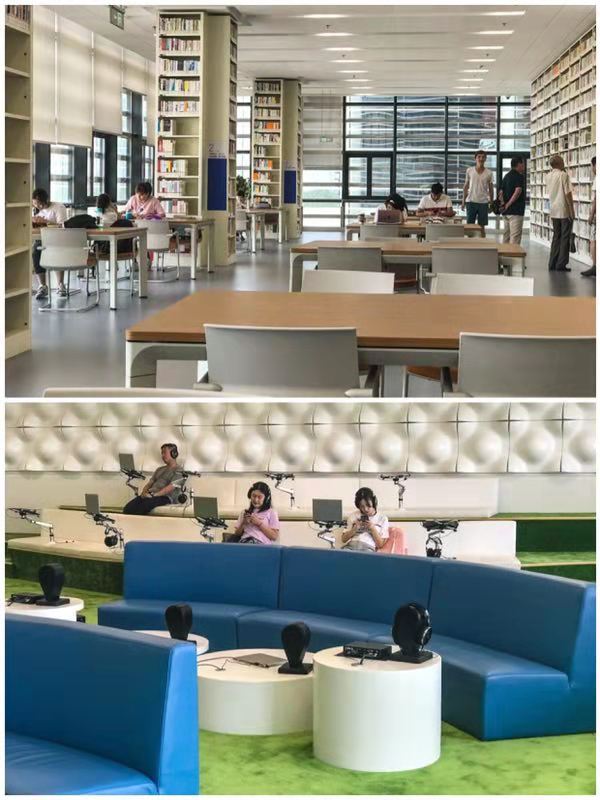
What attracted me initially to the Cultural Center were the images of the Binhai Library, one of its premier assets. Most published photos are actually of the library's central atrium built around a spherical theater space. This vast atrium's walls reaching to the rooftop have been designed to resemble bookshelves. Meanwhile, book collections, reading rooms and related study facilities stretch over five floors on either side of this immense central space.
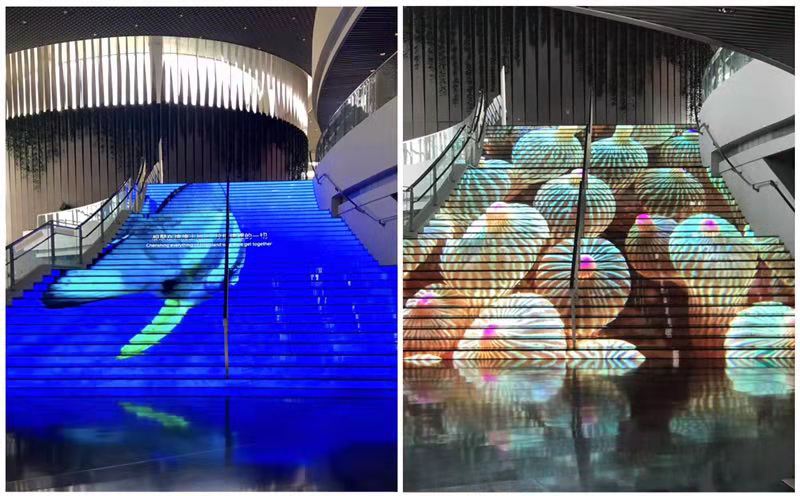
Such a modern environment certainly appeals to the younger generation as an encouragement into a more exciting world of books and reading. Similarly, the neighboring Binhai Performing Arts Center welcomes theatergoers with a high-tech staircase incorporating constantly changing visual displays. All this and much more is present within a clean, vibrant setting more in keeping with the contemporary image China today is striving for nationwide.
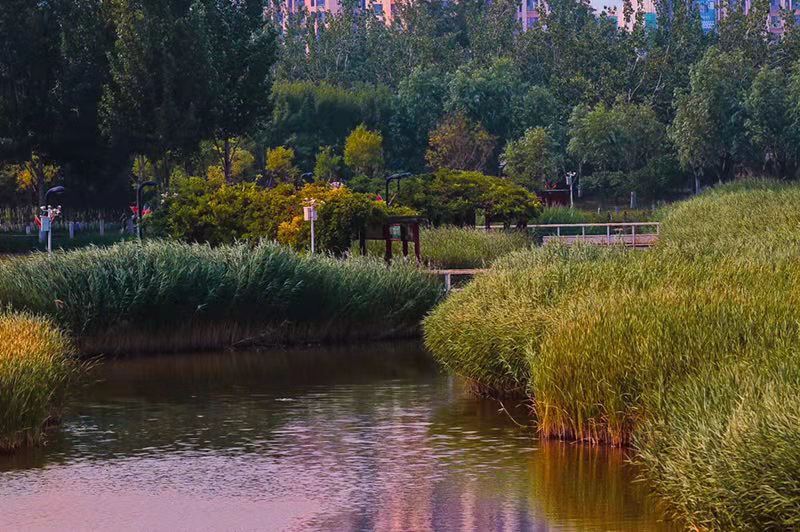
Another location, again in Tianjin, where I witnessed an environmental turnaround was a park in Hedong district located between city center and the airport. A friend interested in urban planning and architecture suggested I go there, partly to view its unique design. A red-painted metal bridge and elevated walkways run parallel to lengthy waterways. Indeed the park's name, Qiaoyuan, translates as Bridge Park due to its proximity to a major expressway junction. However my attention was not caught just by bridge design but more by landscaping covering its 22 hectares. I felt increasingly as I walked or simply sat there that I was within an almost pristine landscape.
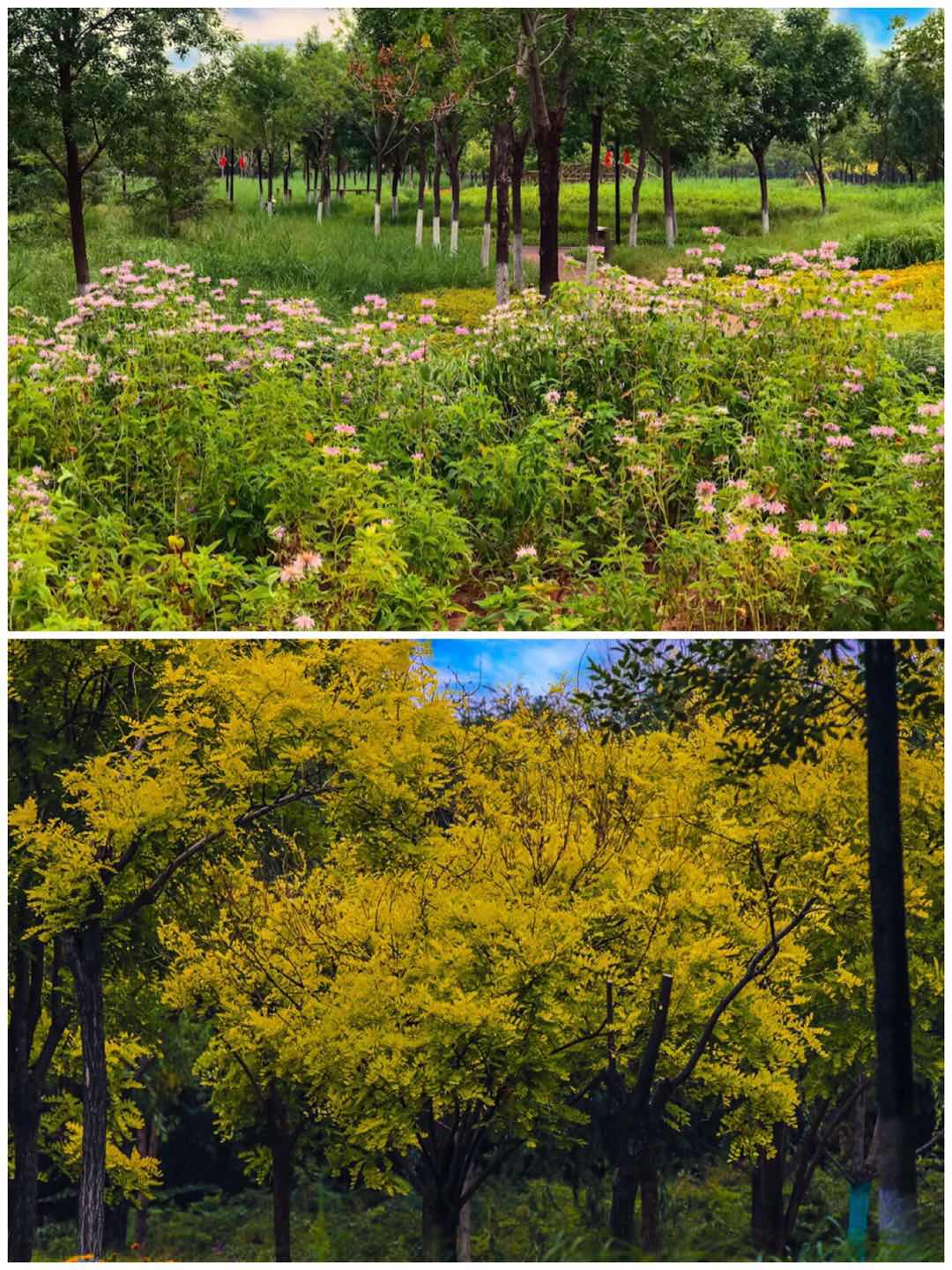
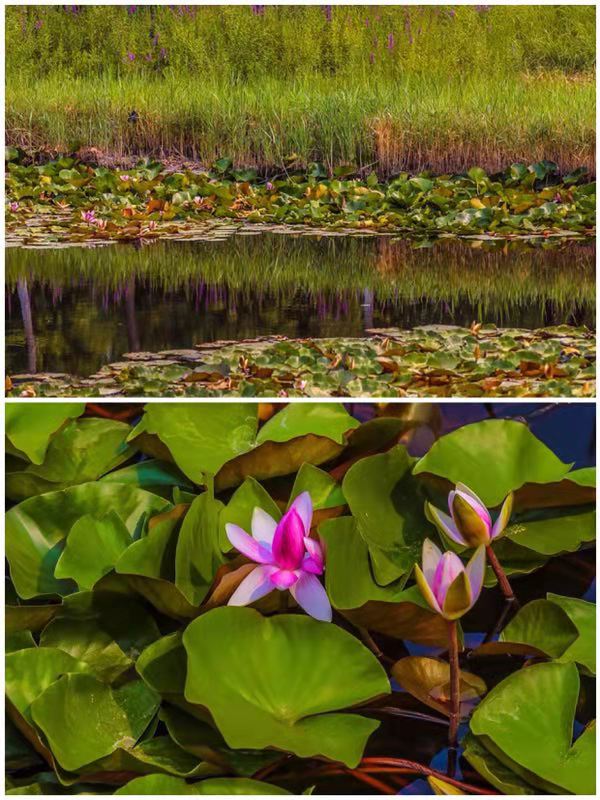
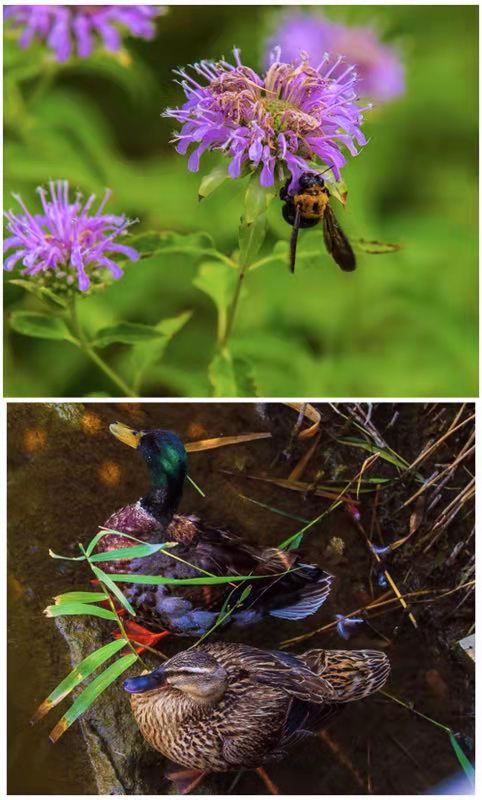
Had it not been for the distant rumble coming from that elevated highway intersection at its northwestern corner I could easily imagine this was far away from any built-up situation. Yet, by metro Line 2 it was only 10 minutes or less to the main city center railway terminal. Despite the intense summer heat I kept walking slowly, stopping to take in so much around me as I stood alone among tall grasses, strands of forest and waterholes crowded with reeds and plants. As I looked closer, insects and birds were present around me, providing more opportunities for photography.
Intrigued, I came upon a large bilingual notice explaining how years back it had been a military shooting practice range which fell into disuse, becoming increasingly saline and rundown. In 2005 the Tianjin Municipal Government decided to have it transformed into a park that would provide the neighboring 300,000 residents with considerable green space. It would also act as a measure in helping improve local air quality. Over several years the area was retrofitted, transforming it back to nature. Through regenerative design with over sixty varieties of plants, a natural process promoting vegetative adaptation and evolution was reintroduced. At the 2009 World Architecture Festival in Barcelona it was awarded the Landscape Category award.
This is what I am increasingly finding as I travel around China, whether it be Beijing, Tianjin or beyond, with much more environmental progress surely happening over the coming years.