
(Source: China Daily)
Experiencing thirty years of China's rail and metro development
By Bruce Connolly | chinadaily.com.cn | Updated: 2019-06-11 09:35
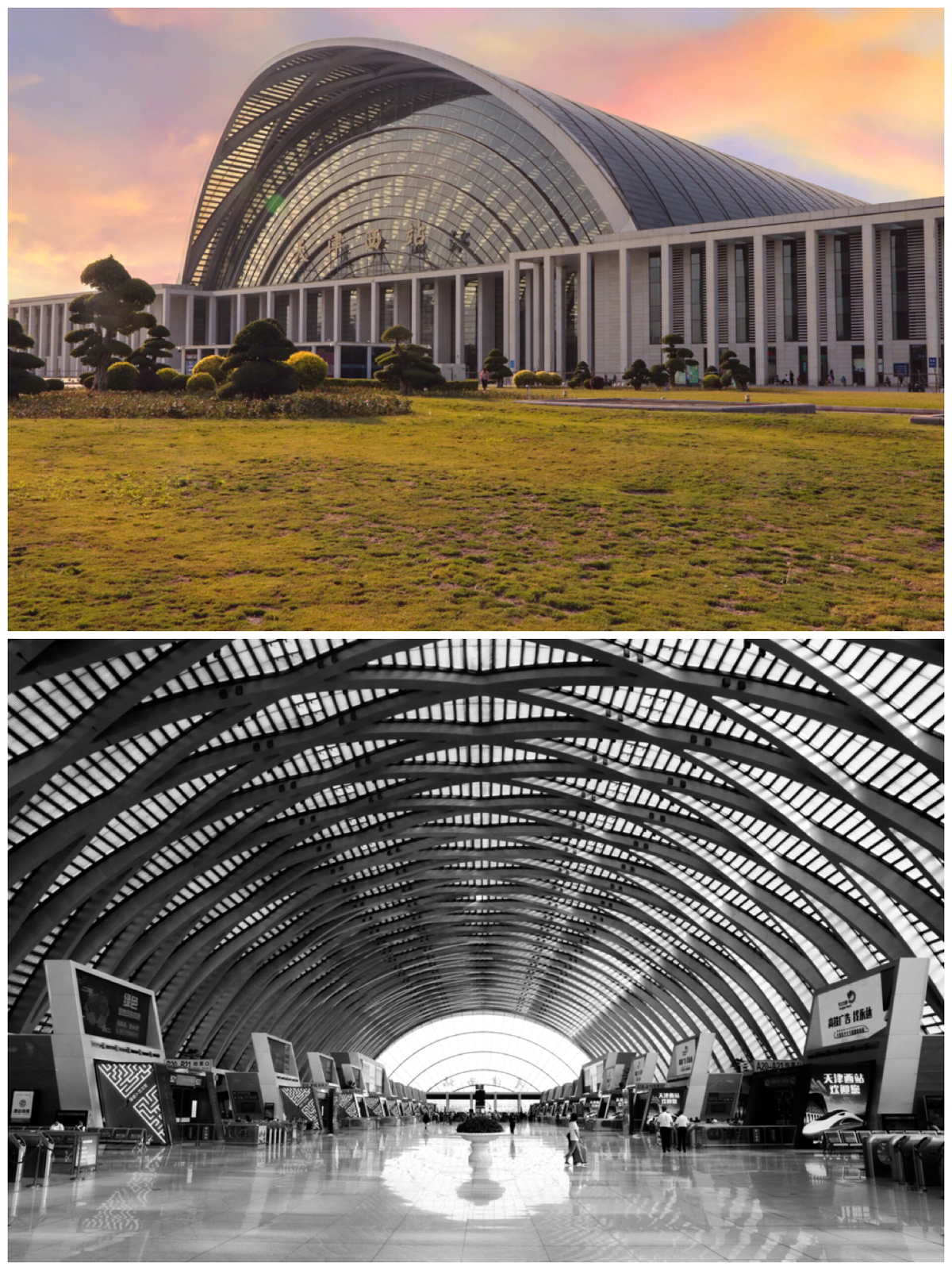
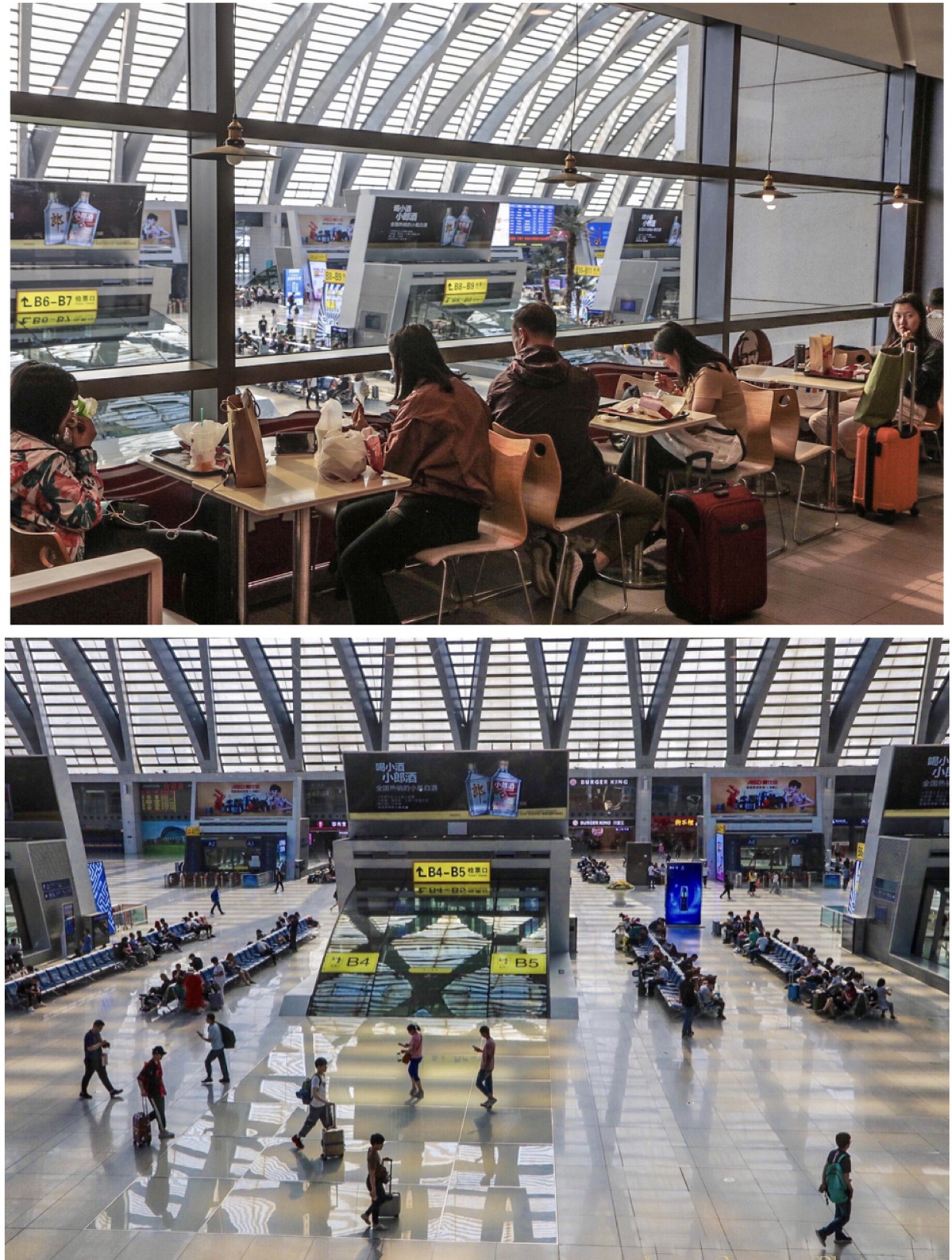
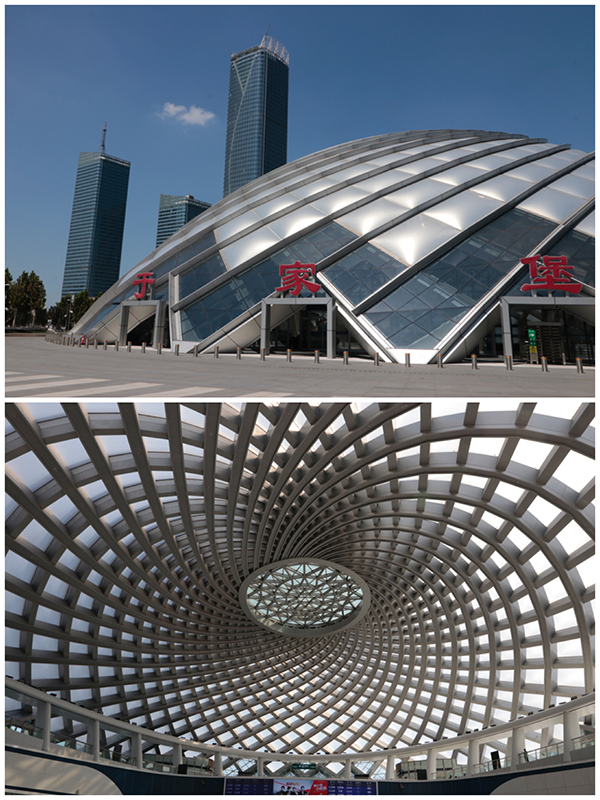
Recently I was relaxing in air-conditioned comfort and having a coffee at Tianjin's vast, modern West Railway Station. From the mezzanine level I could look across an extensive, well laid out departure hall and think. There I reflected on the changes I have seen and personally experienced in railway station architecture. Layouts that now bear little or no resemblance to what was often the norm up to around 2008. That year was significant for it marked the introduction of high-speed 350kph train, starting with the inaugural Beijing-Tianjin line on Aug 1. Today the network has extended nationwide, bringing with it a completely different approach to railway station design, even for smaller intermediate towns and cities.

I wrote in a recent feature how for centuries rivers were a vital transportation component for China, such being the vast size of this country. Rail lines started opening in the late 19th century, some simply going from coastal ports to inland cities, such as Beijing. Others served mineral-rich areas, including the coalfields of northeastern China. However, there was no real network and lines at times were not joined up. Even in my early days, the late 1980s/early 1990s, steam-hauled trains were still common.
For much of the first half of the 20th century China suffered from wars and civil strife. Railways developed little; indeed by 1978 the passenger network remained quite basic. People did not travel far, there were few holidays, and disposable income, if any, was relatively small. The stations reflected this, mostly serving a few trains daily. However 1978 was significant. China embarked on a period of 'reform and opening up', people started moving and in large numbers. Southern China, particularly Guangdong's Pearl River Delta, began experiencing 'double-digit' growth resulting in many migrating and moving south for work and business opportunities. Soon, the existing stations and rail services had difficulty coping, something by 1992 I was personally experiencing in Guangzhou.
Trying to purchase a train ticket could be very difficult, indeed often impossible. They could mostly only be obtained by personally going to the ticket hall, which for a foreigner with practically no Chinese and certainly no Cantonese was daunting. Online facilities did not exist so there was no way of knowing in advance if any tickets would be available. At Guangzhou there would be different windows for different trains with the crowds very large and unfortunately no air-conditioning! Amazingly with perseverance and carrying notes written for me by friends in Chinese, I would celebrate when obtaining that prized ticket! Ironically I discovered much later there was a special window at that railway station for people from Hong Kong, Macau and foreigner visitors who at that time mostly had to pay in FEC (Foreign Exchange Certificates) or Hong Kong Dollars.

Shenzhen was a much better experience for a new station had been completed in 1990, reflecting the city's status as a 'Special Economic Zone'. It was spacious, had a brightly lit ticketing hall and although lacking today's sophisticated computerization, it was much easier there to buy tickets. Beijing Railway Station also had a dedicated office that foreigners could visit and where English was spoken, a blessing!

There were lovely moments from 1993, such as at Shaoguan in northern Guangdong where I tried to purchase a sleeper ticket to Guilin. Initially unable to make myself understood, I was taken to an office on the second floor, invited to sit down with a cup of tea while the manager of the station came in, shook hands, spoke some English and carefully organized a ticket for the following day. Indeed when I talk with people who have similarly been in China for many years, the words "more of an adventure" are often used to describe rail travel during those, for me, exciting days.
Moving fast forward to today, the situation has become so different, indeed almost unrecognizable. Now, before leaving Tianjin, for example, I would first check on mobile apps about ticket availability. At the station, with many people often buying tickets on-line or using self-serve ticketing machines, queues are both small and orderly. It recently took me five minutes to purchase one, with service both pleasant and efficient. Indeed I was soon in a cafe in the basement departure hall, working away on my tablet computer!

Catering and shopping services have totally changed. In the early days, larger terminals had maybe a main restaurant or dining hall though a plethora of small, local dining facilities congregated in the surrounding streets and alleys. Today, stations such as Beijing South, which I regularly use, offer an excellent range of both domestic and international catering brands. Indeed I will go there before my scheduled departure to have a leisurely breakfast in a clean, air-con and smoke-free environment. I pay via my smartphone, then go online to do some work or simply sit at the cafe window and watch the constant flow of people heading off to destinations across China. I can personally vouch for the vast majority of trains departing and arriving on time, moving at speeds up to 350 kph and at a frequency, for example Beijing to Tianjin, sometimes only five or ten minutes apart!
One factor in ensuing smooth passenger flow has been station design. In the 1990s when passenger numbers were increasing rapidly, people would often have to wait outside in the station concourse until their trains were called. There was simply not enough space inside to accommodate the waiting crowds. Not very pleasant in the rains often experienced, for example, in Guangzhou. Improvements however were appearing in early 1996 with the opening of Beijing West, then the largest station in Asia. Handling up to 400,000 passengers daily it greatly relieved pressure on the 1959 completed Beijing Railway Station. Then China's largest, its passenger waiting rooms were capable of accommodating 14,000 passengers. Similarly, much-enlarged Guangzhou East, opening in the mid-1990s took pressure off the city's main 1974-opened terminal while providing much improved services to Shenzhen and Hong Kong.
However, rapid economic growth was putting considerable strain on the railway network right through to the mid 2000s. The system was based on conventional track, meaning freight, the green trains and a limited number of faster services all ran on the same rails. Incredibly it worked but capacity was reaching a maximum. Introducing the latest trains operating with advanced computer technology on dedicated tracks where no freight services would compete for space was, for China, a uniquely new approach. This has resulted today in the world's most extensive high-speed network and has radically changed the concept of rail travel offering levels of comfort unheard of even a few years previously.
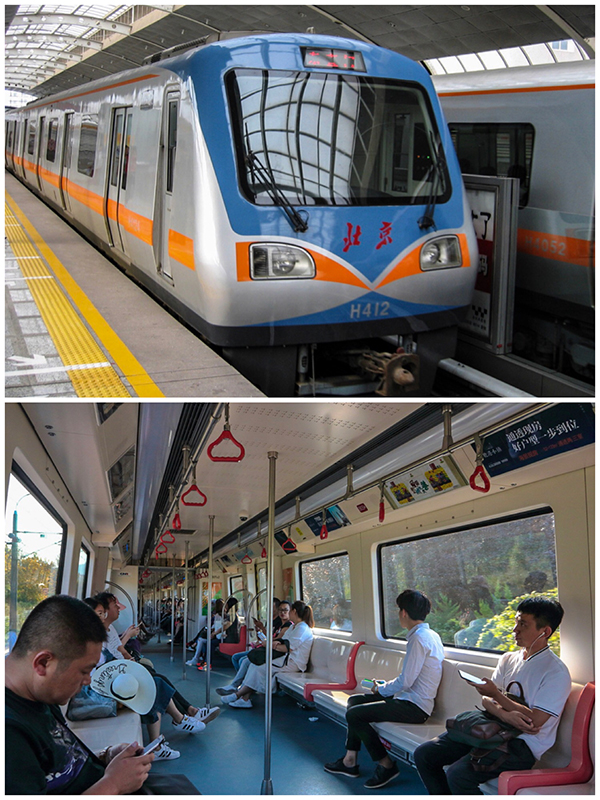
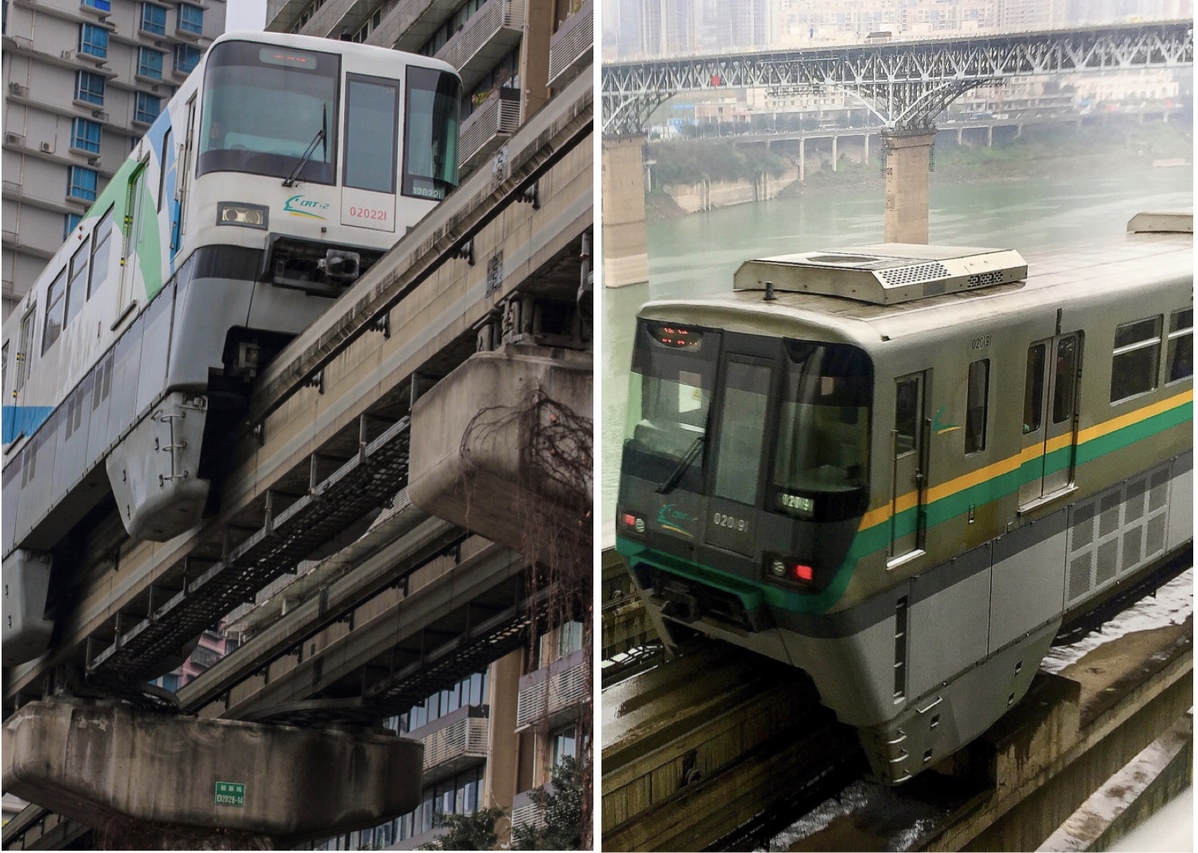
In recent years in my travels throughout China I have been amazed at the progress in metro construction. This is a positive alternative to the increasing congestion created by rapid growth in cars. Up until 2002, Beijing had two lines; presently there are 22, with more expansion underway. The metro, although it can be busy at peak times, has really improved urban commuting and travel not just in Beijing but nationwide. I have arrived in cities visited maybe 20 previously to discover incredible engineering where previously no metros existed. Chongqing, for example, where tunneling through solid rock is both time consuming and expensive, created an above-ground monorail system allowing excellent views of the city and its two principal rivers. Dalian utilizes both conventional metros along with electric light rail lines. That city boasts a tramway system dating back to 1909. Its present two routes use modern rolling stock with some replicating the 'dang-dang' trolley cars of earlier years.

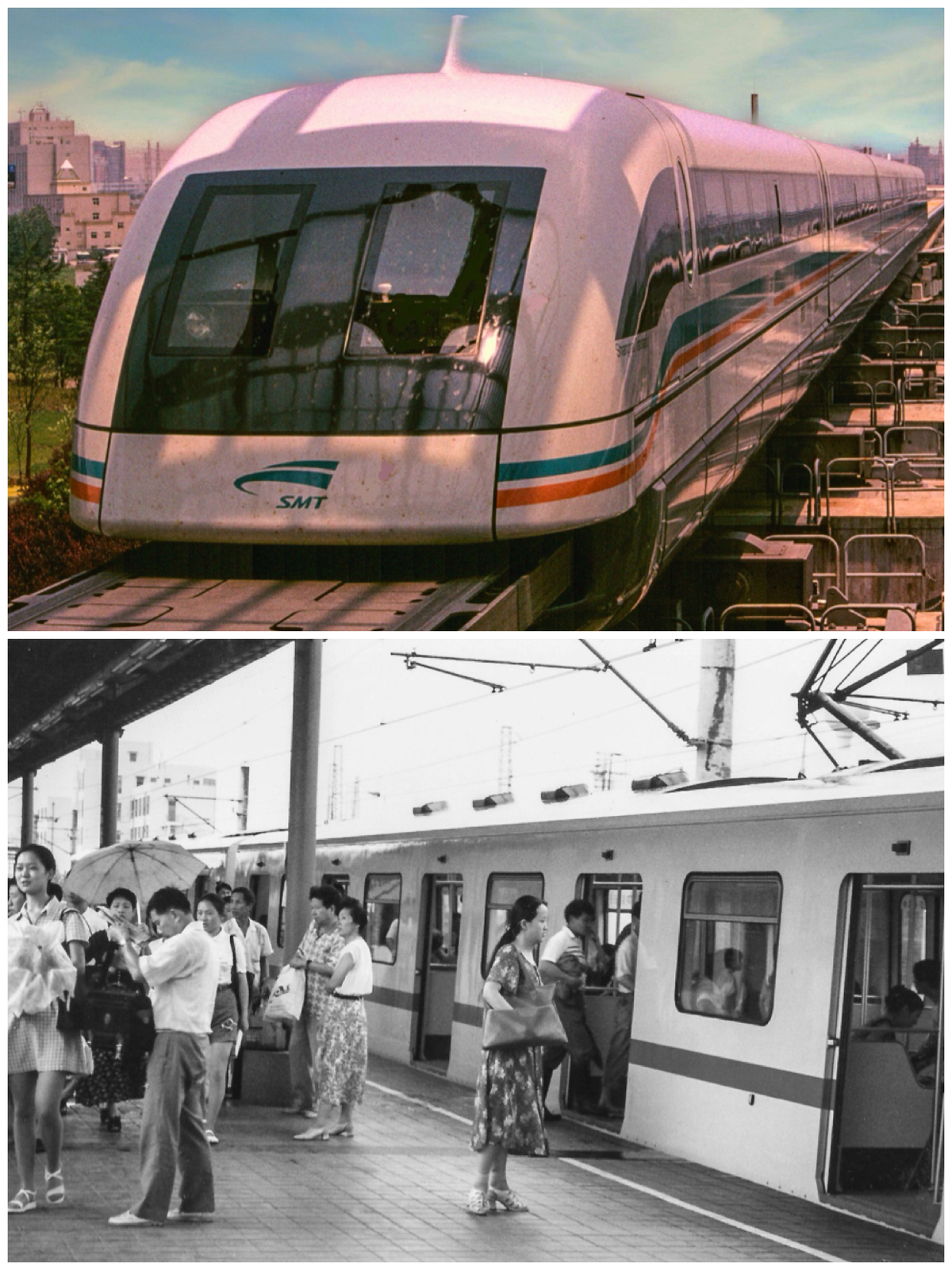
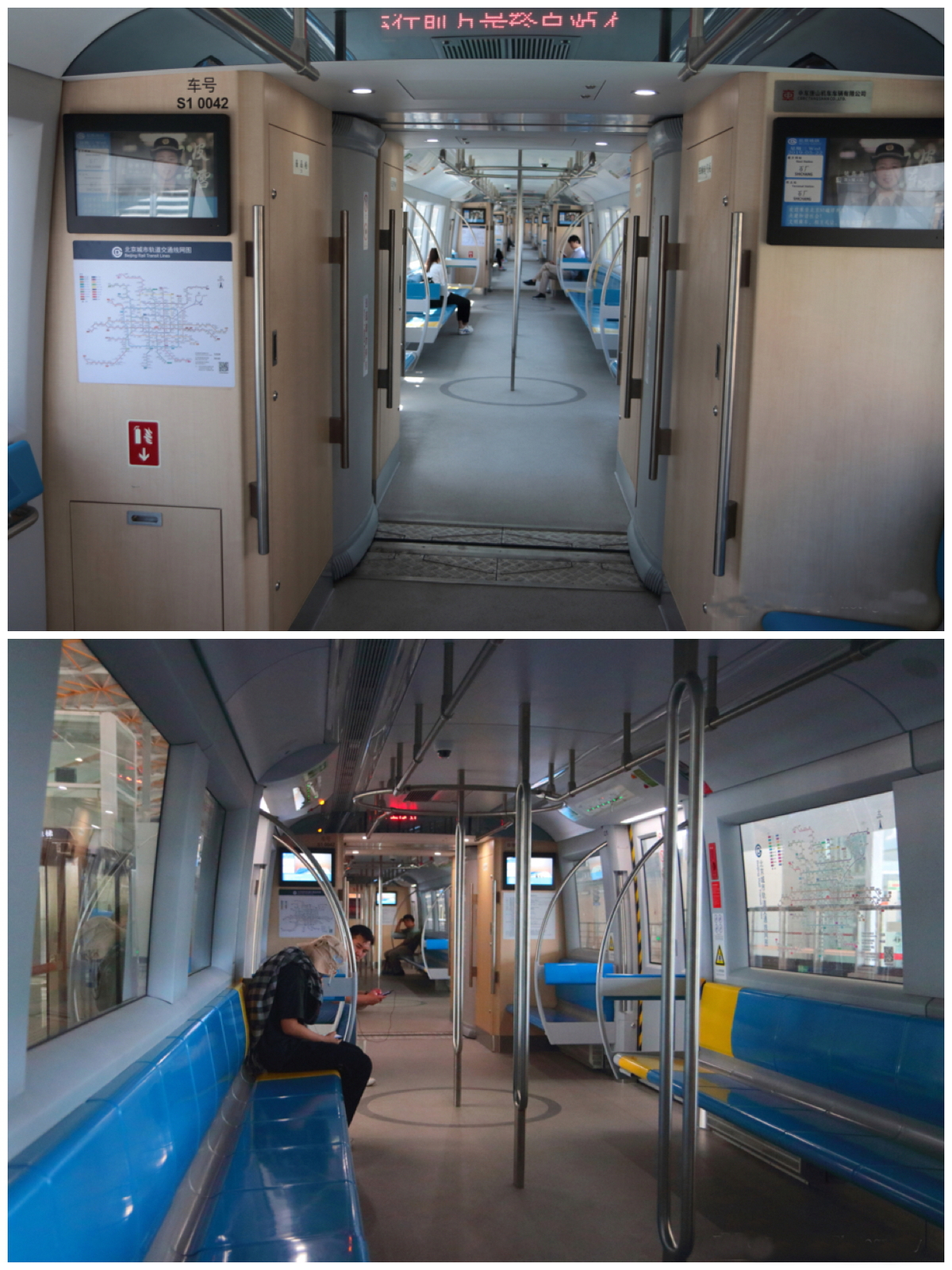
Recently in Beijing I took metro Line 6 out to the western suburbs at Jin'anqiao where a unique maglev line runs at 100 kph up through hilly residential parts of Mentougou. It was fascinating to look at this advanced system, which also provided excellent views of the former Shougang Steel Works now being renovated into a key location for the Beijing 2022 Winter Olympics. Compared to Shanghai's maglev, which operates up to 431 kph speed, it is slower but represents an integral part of the capital's rapidly developing public transport system. The 2002 Shanghai line was more experimental in very high-speed transportation.

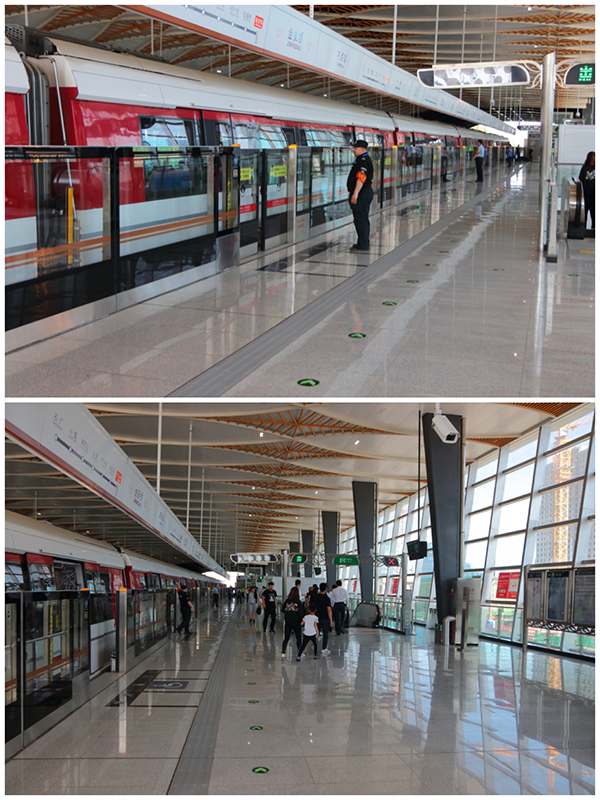
As a regular metro user again I have watched growth over recent years in quality of train units and station design. Increasingly, much has gone digital, with passengers able to swipe their smartphones at ticket barriers. Stations are large, particularly at interchanges between lines or at railway stations. Accessibility has greatly improved compared to the earlier stations, with elevators and escalators now allowing ease of connection between street level and platforms. As I am usually pulling heavy luggage to and from the railway terminals this has been a big improvement I have appreciated in recent years.
On city streets I have also observed considerable development with bus transportation. City omnibuses remain an incredibly inexpensive way to travel across the cities. Older polluting vehicles have been phased out to be replaced by electric and clean-fuel models.
As both a regular traveler and firm believer in the benefits of public transport, particularly for urban areas, it has been an experience to witness the continual developments within this sector. Indeed it's another moment in my personal China journey and I look forward to more journeys on a constantly improving network.