(Source: China Daily)
Wuzhen: A classic southern Yangtze water town
By Bruce Connolly | chinadaily.com.cn | Updated: 2019-04-10 13:57
I first came upon China's water towns in 1996, while visiting the area around Suzhou. A mesmerizing scene lay before me as I sat, camera in hand, gazing at rows of whitewashed buildings rising above canals. Arched bridges straddled waterways as wooden cargo and passenger boats slid underneath them in line. I started picturing it as a painting -- a watercolor, a sketch or a traditional Chinese ink drawing. Thoughts engrossed me of the serenity, the tranquility and history of both the area and beyond.
For centuries a close relationship existed among man, land and water. Town life, commerce, agriculture and transport all became interconnected through water. I was gazing upon an ancient system stretching from the large Taihu Lake south toward Shanghai. This landscape was bisected by the mightiest of all, the Grand Canal, a 1,794-kilometer waterway connecting Hangzhou, the capital of today's Zhejiang province, and Beijing. This example of early Chinese engineering, indeed one of the great man-made wonders of the country, dated from the Sui Dynasty (581-618), and has thrived to this day. I watched it, transfixed, as a seemingly endless procession of barges moved steadily along its course.
This area, the southern reaches of the Yangtze River known as Jiangnan, is a land of rice, fish and silk along with bountiful harvests of fresh vegetables. However, the terrain, flat and composed of rich alluvium, sits literally a few meters above sea level. With so many channels subdividing the region, it would have been a daunting and very expensive task to build roads linking the many communities scattered across the area. Water transport proved the ideal solution, particularly in those early days.
Today, of course, advanced engineering and technology has allowed the creation of a transportation network comprising excellent highways and high-speed rail links that provide convenient access to large centers such as Shanghai. However the main canals still carry regular barge traffic, heavy with bulk cargo. It reminded me a bit of a combination between Venice and Holland.
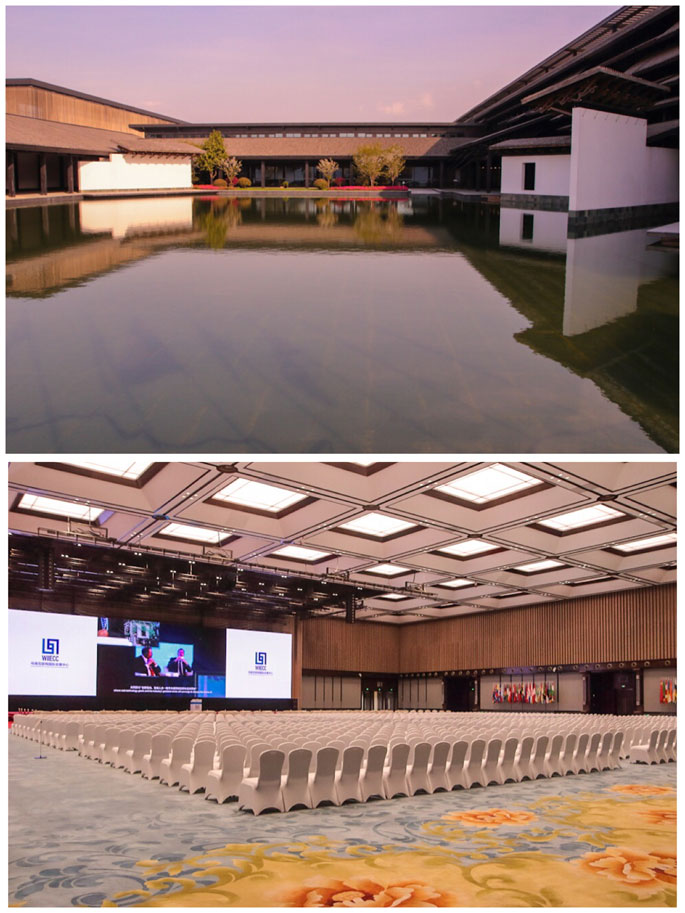
Recently I had the opportunity to visit scenic Wuzhen, part of the county-level Tongxiang city in Zhejiang. This classic example of a water town has also become internationally renowned since 2014 as the permanent base for the World Internet Conference.
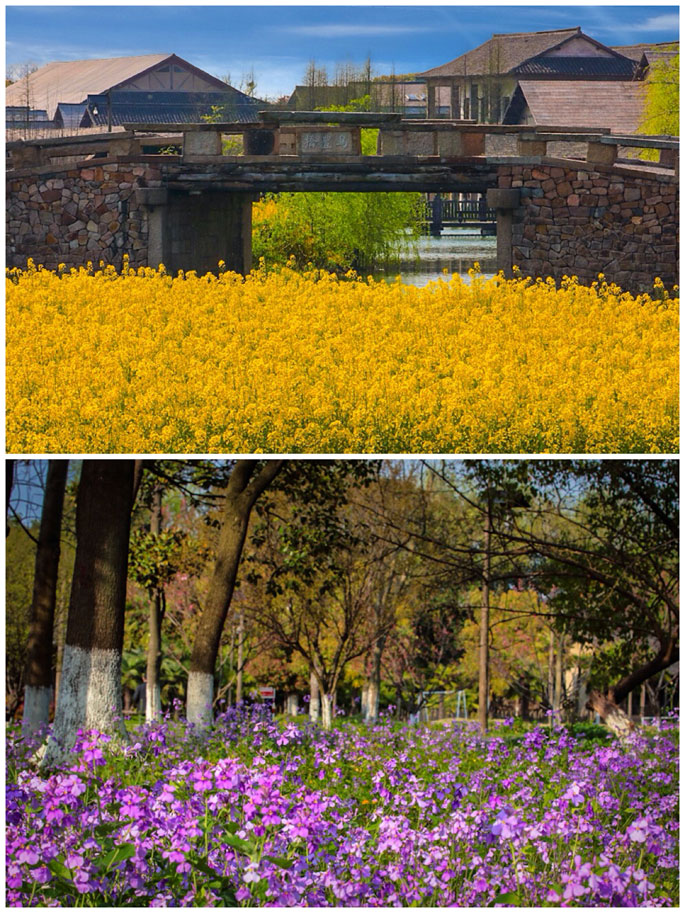
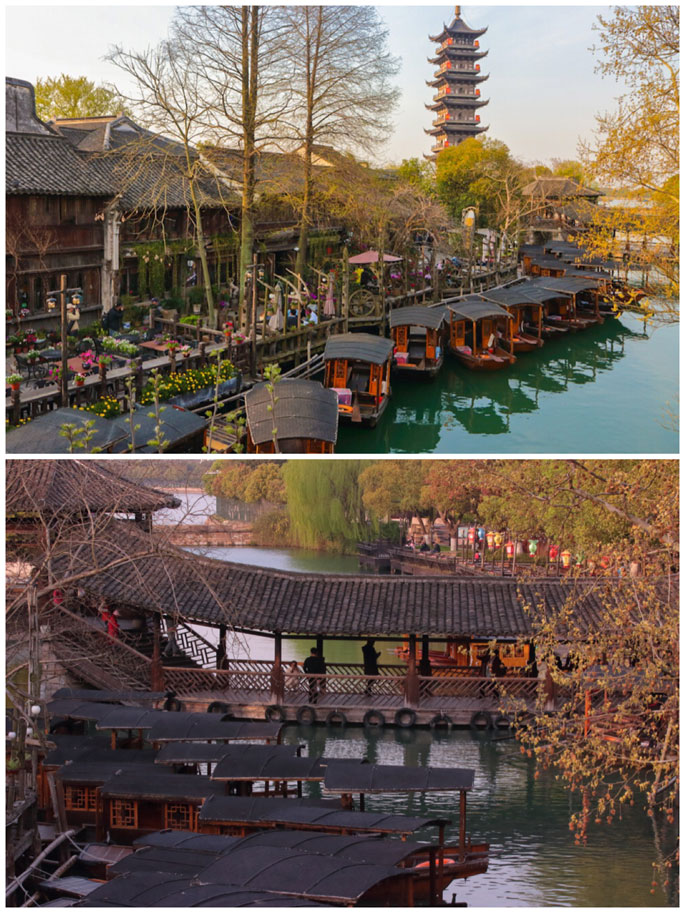
Arriving by road from downtown Tongxiang, I initially was struck by its well laid-out appearance. Most buildings were low-rise, generally with white and at times decorated walls keeping in line with local architectural traditions. Tree-lined canals, one fortuitously adjacent to my hotel, induced a feeling of tranquility and local harmony. Frequently delightful pedestrian bridges appeared, made of stone or wood, and some with pavilions alongside them. Being springtime, natural colors enhanced the scene, including the bright yellow of rapeseed flowers along with many purple and pink blossoms, particularly around the bridges or within partly tree-shaded glades.
However, it was the older areas, with their centuries of history, that filled me with fascination. Every turn I made strolling along these alleys felt like walking through chapters of history. I could picture generations of people in their periodic dress styles -- water boatmen, artisans, traders, farmers, officials of the dynasties -- strolling along the same stone-paved footpaths I had followed.
Wuzhen, founded during the Tang Dynasty (618-907), has never changed its name, location or waterway courses. That sense of history all around is compounded by some surviving buildings going back several hundred years.
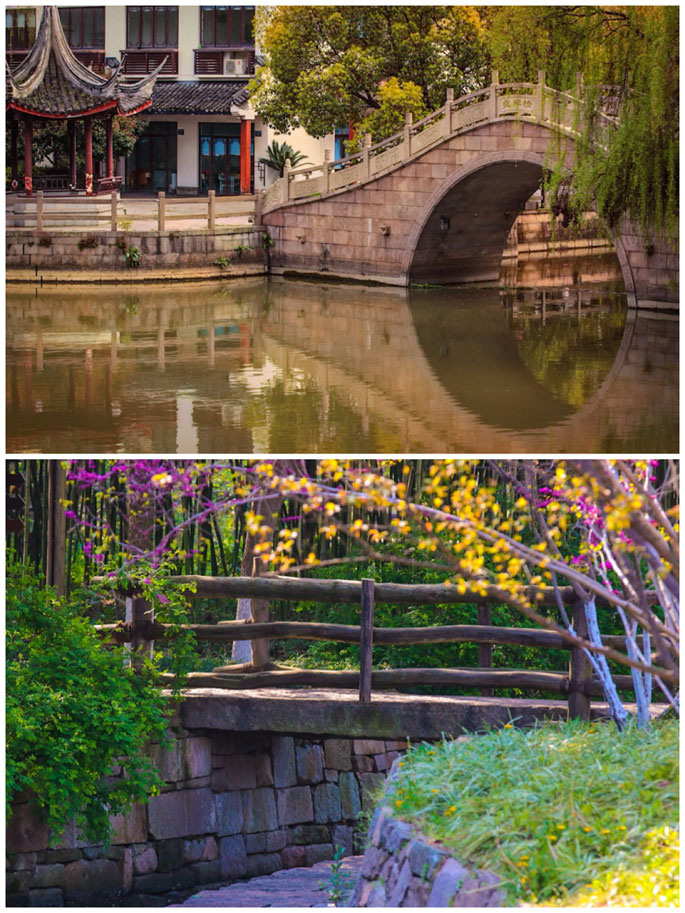
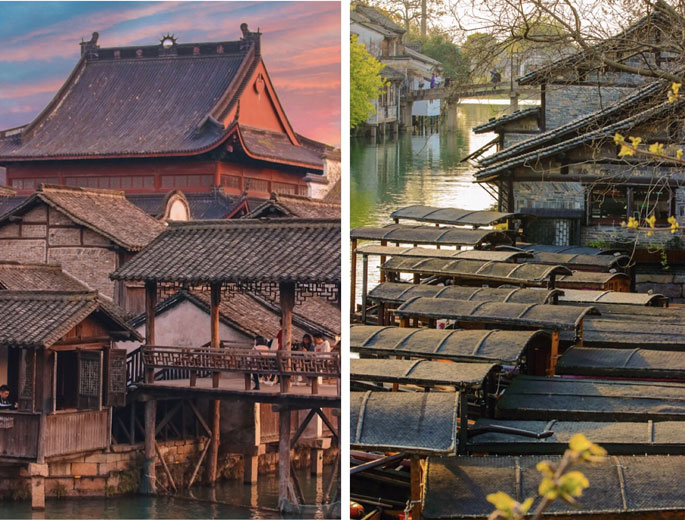
The canals, still in use, divide Wuzhen into four districts connected by over one hundred bridges of stone or wood. Some are covered and some arched, but all enhance the town's photogenic appeal. Often, beside such canal crossings, markets had developed, for most produce was brought by boat into town, uploaded straight from water to market stalls. Today an attraction remains the Floating Market, where every morning boats brimming with fresh, colorful farm produce sell directly to consumers. Tourists visiting canal-side restaurants, particularly those based in local family homes, can purchase vegetables of their choice from the boats and have them transformed into delicious meals by the house owners, a delightful gourmet experience.
The traditional teahouses overlooking the waters also stood out among the many attractions in Wuzhen. Some teahouses went back to times when they had become places not only of verbal communication between residents but where issues of public affairs could be resolved. Normally they were where farmers and traders gathered to socialize after delivering to or selling produce in the markets. The teahouses attracted learned scholars and writers that have bolstered Wuzhen's fame. Today visitors can leisurely relax over tea while enjoying a scene of small wooden boats drifting right outside the open windows of such venues. Some boats even serve tea to passengers taking in day or night canal-side scenes. Across the waterway more wooden structures run along the stone-built banks or adjoining walkways directly above the canals. One that I saw appeared so attractive as the sun was setting and in the evening with riverside buildings and bridges adorned with lights. With a little imagination, the scene had the romantic feel of Venice.
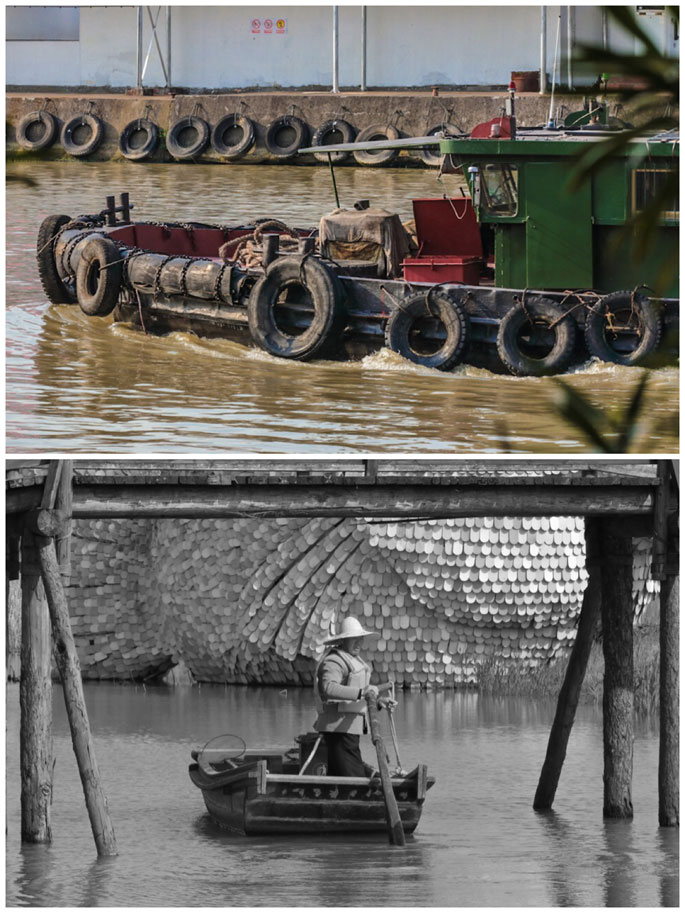
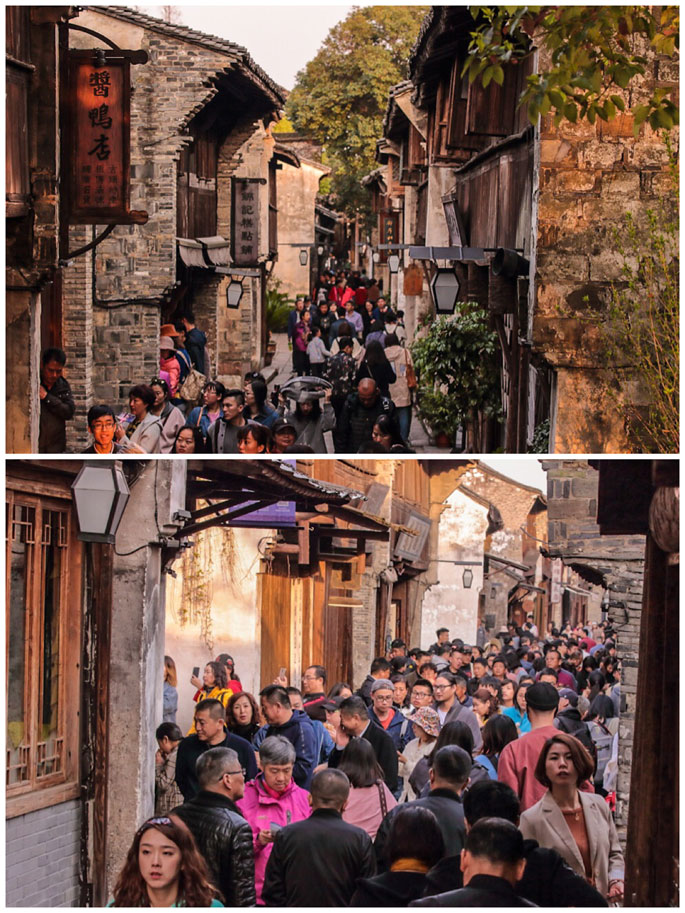
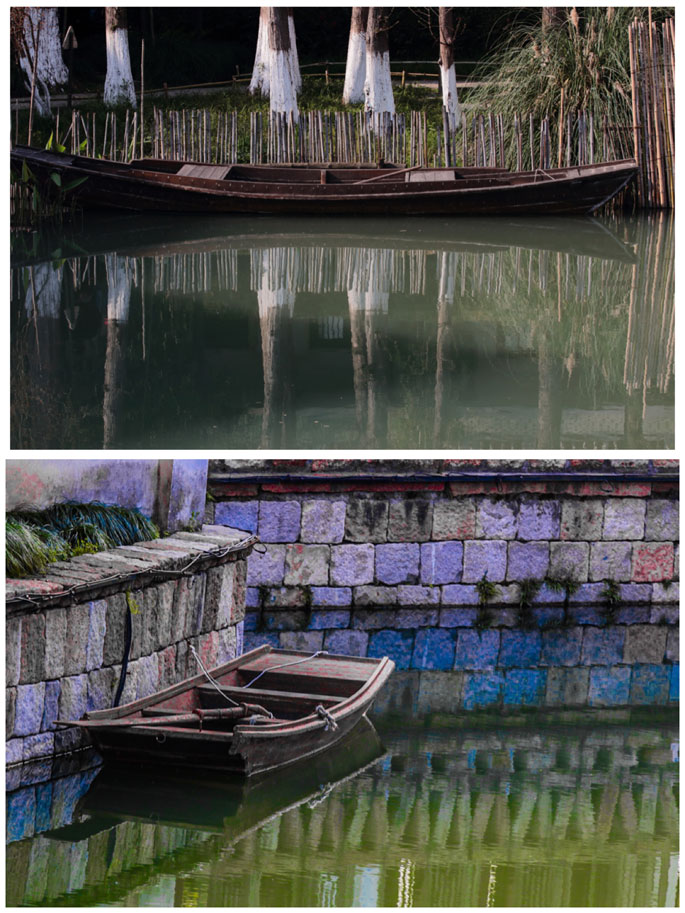
My approach into the old town area had initially been along quiet lanes where wooden boats lay tied up alongside stone quays. However, literally through a narrow alley the scene transformed into one of busy, bustling tourism. Yes it was busy, crowded with pleasure-seeking visitors, many snacking on local delicacies. However, away from pedestrianized Xizha Street I found a profusion of quiet locations where I could happily engage in my photographic passions. In many ways the crowds added to the vibrant and friendly feel of the town.
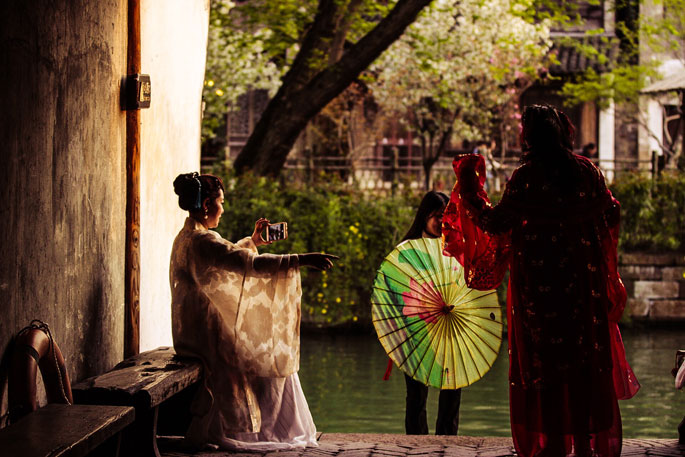
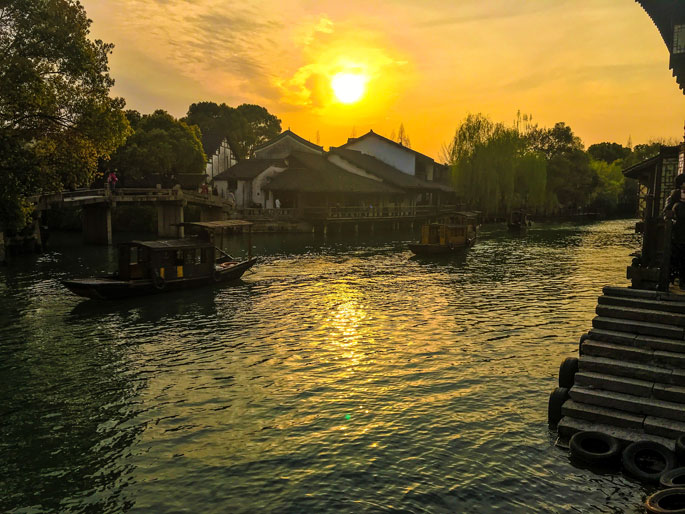
Initially I headed to the arched Tongji Bridge. There, the views north along Wangjinhe waterway were magnificent. Below my location on the bridge, many wooden boats lay tied up in front of numerous cafes with outdoor waterside tables. Bailian Pagoda dominated the scene, close to Wang Jinqiao Bridge. Beyond spread a branch of the Grand Canal. It was a location where I could easily have spent hours just letting time drift past. Instead, I retraced my steps, back to the busy alley, stopping every few minutes to look into tranquil wood-decorated teahouses, restaurants and shops with the Xishi River framed by their windows. Passages between buildings led to stone built landing stages and steps leading down to the waters, where people sat or had personal photography done. Some dressed in loose-flowing traditional red or white dress while holding decorative paper fans. From one such spot I captured the setting sun while wooden boats carried visitors along waters cast in an early evening glow, a scene reminiscent of traditional paintings. From vantage points I would admire the declining sun rays warming up red-colored walls of larger Ming Dynasty (1368-1644) or Qing Dynasty (1644-1911) buildings, possibly former meeting halls or temples.
At one point along the alley a hair salon provided "antique" chairs for patrons to sit on while being served. Every moment I walked, there were reasons to stop, admire and take more photographic images, even of the street lamps, stone-carved gates and intricately decorated wooden windows.
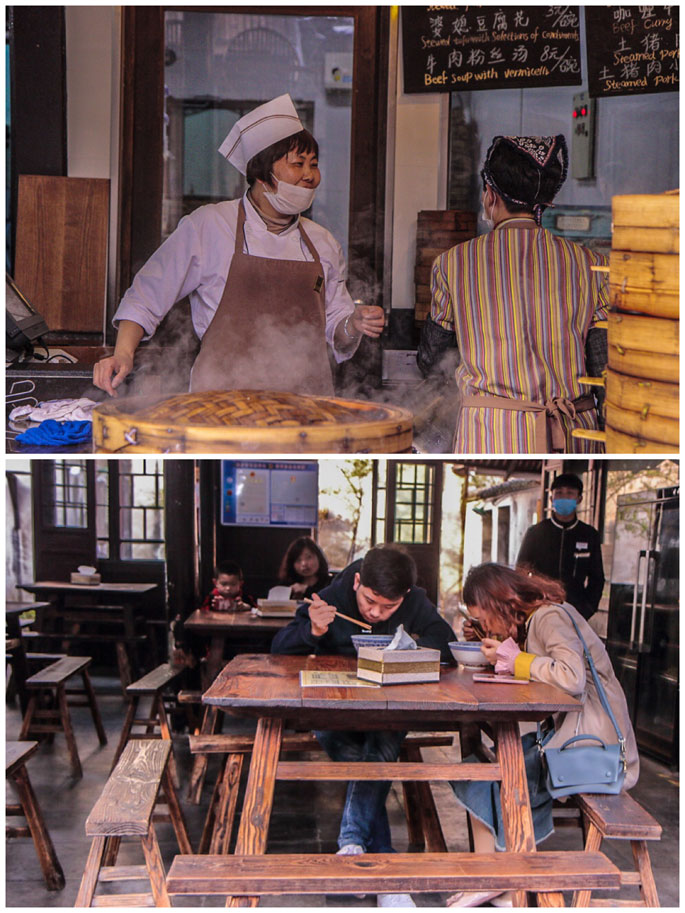
Many local restaurants opened out onto the lanes, allowing unobscured views of various food preparations. The atmospherics were enhanced by the large, circular bamboo containers for steaming dumplings.
Wuzhen has many charms, and stands as a fine example of historic conservation and heritage preservation. If I returned, I would spend many hours sitting beside the waterways, camera in hand, looking for shots which could be translated into paintings and drawings of scenes representing historic periods of classical water towns, so special to the southern lands of the Yangtze River.