(Source: China Daily)
Discovering Beijing's industrial-strength beauty
By Bruce Connolly | chinadaily.com.cn | Updated: 2019-02-12 15:30
Returning to Beijing as the recent Spring Festival holiday drew to a close, I approached the city's southern edges along the Jingjin Expressway. Ahead rose the remains of a large heavy industrial plant, possibly a former steelworks. In today's Beijing, it is unusual to see such structures. This got me thinking of the capital's post-1949 history. I remember looking westwards from the observation deck of China Central Television Tower in 2000, towards steam and smoke coming from the chimneys and cooling towers of the former Beijing Shougang Steel Works at Shijingshan. Today, the city's skyline is dominated by structures such as the 530-meter high China Zun development, rising over Beijing's central business district.
Before 1949, much of Beijing consisted of a maze of narrow hutong alleys and single-story buildings within the walls. There was very little industry and almost no development through the first half of the 20th century. However, sections of the walls were also crumbling due to a lack of maintenance even before the 1911 collapse of the Qing Dynasty.
Parallel to the walls, a local railway line ran alongside increasingly silted waterways that once connected with the Grand Canal at Tongzhou. Beyond laid countryside, farming villages, small towns. China at that time was still mainly a rural society.
1949 saw peace returning to much of the country after long periods of turmoil. A rapid period of industrialization commenced that would forever change the landscape and social structure. Factories and steel works would, for example, produce the railway engines and machinery needed to build a new society and modern economy. Initially with help from the Soviet Union, factories which resembled miniature cities spread rapidly.
Starting in 1987 I became fascinated with the different periods of Beijing's history and growth. Living for many years in the Chaoyang district, I noticed several factories still operating in places like Guomao and what is today's high-rise CBD. However, later there was a closure and demolition of may coal-fired plants, particularly during the late 1990s and early 2000s. The city wanted to transform into a cleaner, more modern place. Closures became more inevitable, as many younger people sought employment within more advanced enterprises.
Beijing has plenty of examples of modern, futuristic architecture. However, reminders of its 1950's industrial past remain to this day, even around the CBD. This can make for interesting walking tours trying to trace the overlapping levels and stages of the city's growth and change. What have remained are the housing blocks, the former worker apartment buildings. Before the more market-oriented systems of today, most production was state-owned. Factories were organized as danwei or "work units", a system I personally found fascinating during my early days living and working in China. Each unit provided highly-subsidized housing, health care, education and more for its workers, which by the 1980s was proving very expensive to support. The red brick, six-floor walk-up apartments and the later 18-floor towers were part of this system, and areas such as Tuanjiehu and Hujialou formed strong community bonds that are still evident today.

Because of these changes I thought finding a former factory site still in existence and walkable would be impossible. That was until friends asked if I had been out to Dashanzi on the eastern edge of the city, toward the airport.
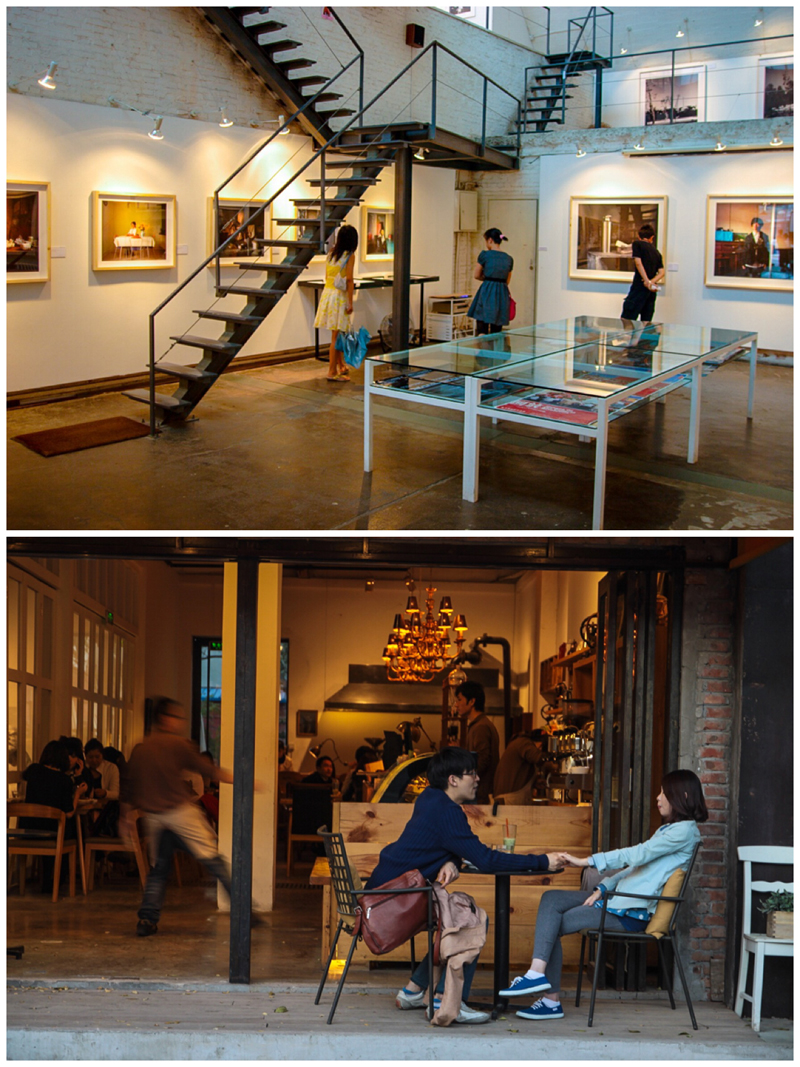
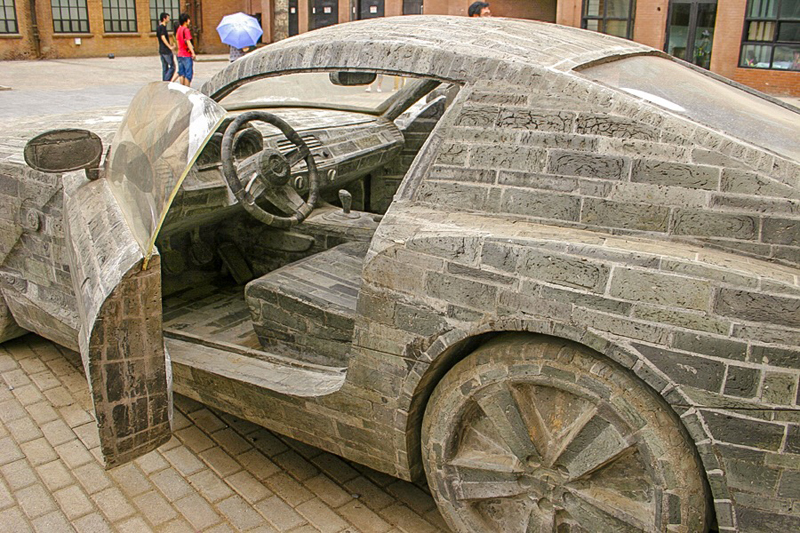
Even today, no subway line directly connects Dashanzi with downtown. Initially I would take a taxi, and later my preferred mode of transport was public bus 403. Starting from Beijing Railway Station, it crosses the former walls at Jianguomen, heading towards Yonganli and Guomao. Running alongside the Airport Express, it eventually reaches Dashanzi. Signs indicate 798 Art Zone, for that is what much of the area is today. With its mixture of galleries, designer stores, coffee shops within the framework of 1950s industrial buildings, it has become a must-visit section of Beijing for tourists.
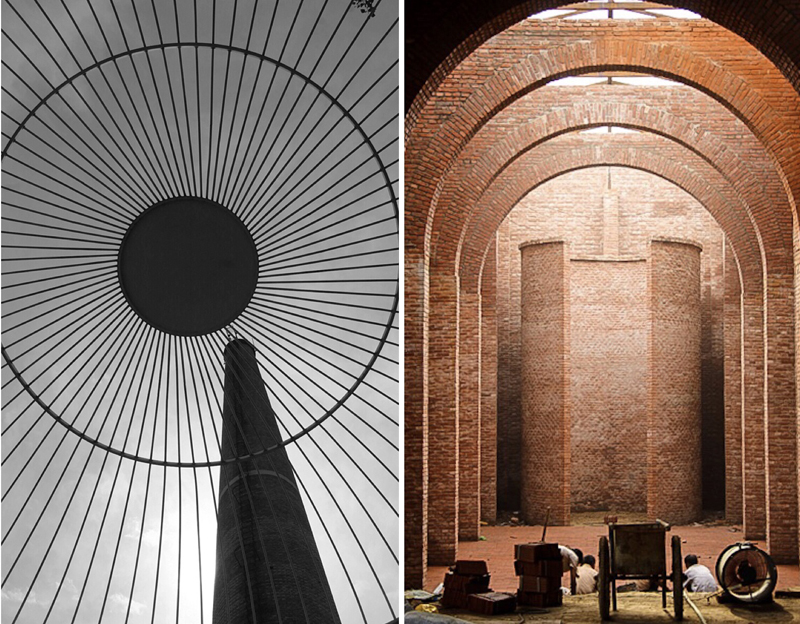
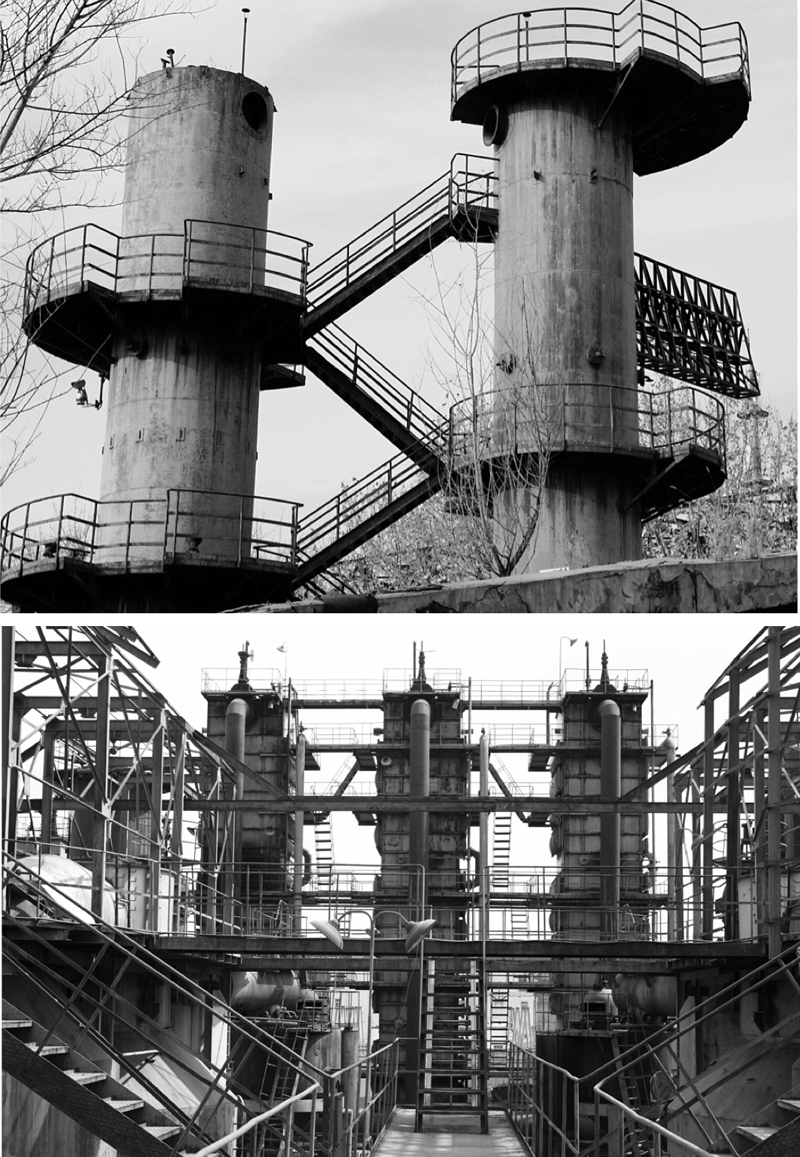
The complex occupies a vast area which took me several visits before I really started to comprehend its scale. Even today I still wander in awe while looking at the many buildings and workshops. Much is connected by a network of overhead pipes, some carrying steam but also gases from now disused storage tanks and gasometers.

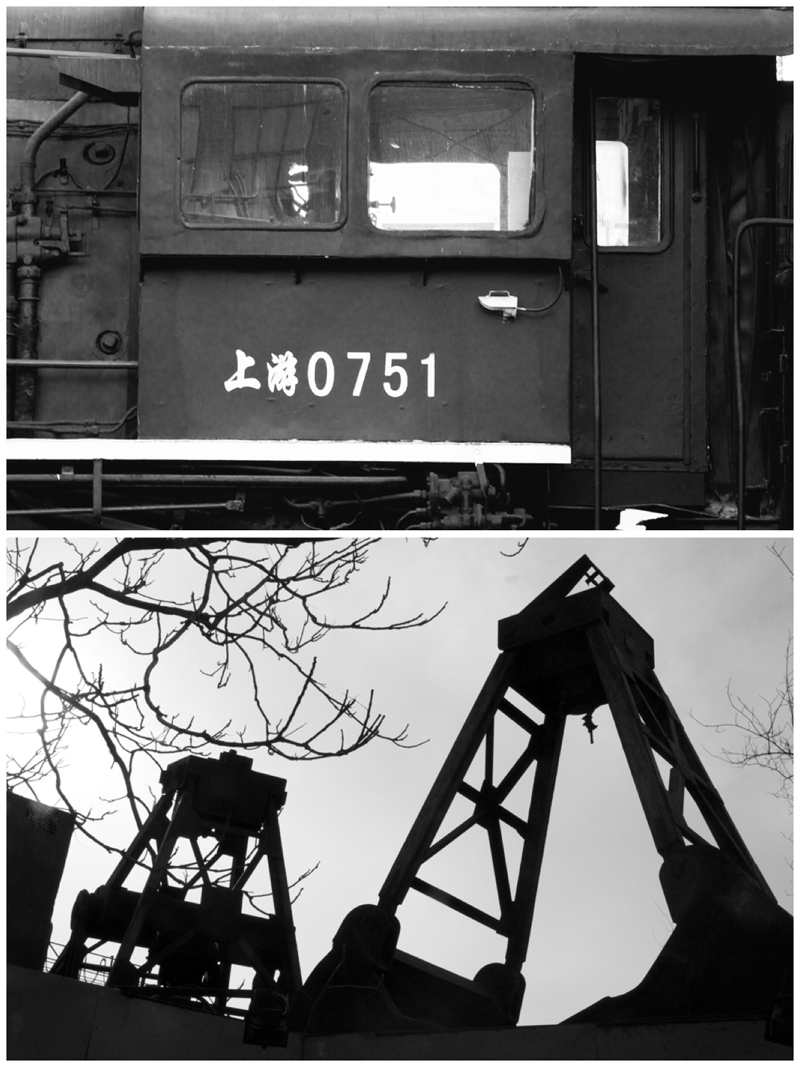
For much of its history, the industrial site and neighboring housing units relied on a large coal-fired power station which still provides hot water for the local area. Steam locomotives brought in trains where an overhead gantry crane unloaded the coal for transfer by conveyor to the furnaces. Today, coal is no longer used. But the area with its disused railway tracks is popular for photography, including wedding shots.
While referred to as Factory 798, the actual factory of that name was one of several units inside a much larger complex — Factory 718, specializing in electronic equipment and components. Its heritage is different from other factories of that period, for it combines East German architecture and engineering as opposed to the more common Soviet model. It was the largest project undertaken by what was then East Germany in China.

The Germans chose a functional Bauhaus-influenced design. Those buildings still attract much attention from architecture historians interested in their unique style, which later proved perfect for art galleries and studios. The indoor work spaces were large and had a window design that maximized natural light, yet they faced north to prevent strong shadows. Arch-supported roof sections held banks of slanted windows, creating a distinctive sawtooth appearance which is now an iconic symbol of the zone. Some still retain early engineering and power generating equipment, which have themselves become permanent exhibits of 1950s engineering.
Visiting the area today, it is hard to imagine it was mostly wide stretches of farmland — yet the scale is huge. The entire complex covered 500,000 square meters, of which 370,000 were occupied by living quarters for workers and their families.
Construction started in April 1954, and production commenced in 1957. Parts of the factory buildings were actually produced in East Germany before being transported overland along the Trans-Siberian Railway to Beijing.

In its heyday, Factory 718 would have been a model production unit. Its work force benefited considerably from excellent housing, and there were a host of extracurricular and sporting opportunities available. Photographs I came across in cafes and bookshops during my visits show a miniature city, with soccer and basketball teams, and even an orchestra.
Producing a wide variety of military and civilian equipment, Factory 718 was split into compact units after 10 years of operation that include today's more familiar 798 and 751. A steam locomotive with the number 0751 stands as an exhibit today alongside the former coal yard.
While the main factory and assembly areas are fascinating to explore, I have always been more intrigued by the vast chemical production units. It is amazing to walk amidst a great mixture of steel tanks, pipes and towers. These amazing areas for photography have featured as backdrops for fashion shows and musical events.

The structural economic reforms of the 1980s saw the start of Dashanzi's inevitable decline, eventually becoming obsolete and ceasing production. The area could have faced a fate similar to other large industrial sites — being cleared for urban redevelopment. However, by chance, Beijing's Central Academy of Fine Arts took over some of the vacant buildings in 1995 to create storage and workshop facilities. Much has been written and published about the growth of a premier arts space over subsequent years, of how artists created studios, of literary bookshops and cafes transforming the area into a major cultural center. For me, it was simply the feel of the area that pulled me in.
It was fortuitous the site did not give way to demolition and real estate development, for it remains a special memorial to Beijing in the 1950s. I also appreciate its cafes, some created within former factory spaces. There I could easily while away the day reading up on this unique industrial archaeological space. After hours of study I would set off with my camera, discovering even more hidden gems.