(Source: China Daily)
'Meet me at Wangfujing': Tales from a Beijing neighborhood
By Bruce Connolly | chinadaily.com.cn | Updated: 2019-03-29 17:08
During my early days in Beijing, I would ask friends to "meet me at Wangfujing". It was one location widely known by locals and visitors alike. More specifically I would suggest "outside the bookstore" or sometimes "the French-style coffee shop" in a recently opened mall.
Why Wangfujing? This was in the 1990's and into the early 2000's the premier shopping street in Beijing. It was where people went to buy a wide range of items including many "time-honored brands" or nationally renowned products. It is a street with a long history, going back around 700 years. The name refers to a well (jing) and princely residences (wang fu) when there used to be eight royal mansions in the area, and a well with sweet water.
I first started frequenting Wangfujing in summer 1994, as it was home to the Foreign Languages Bookstore. There I could purchase the latest street maps, since even then Beijing was changing quickly. I would discover publications on the city, including one based around sketches of its traditional hutong alleys. One pocket-sized guidebook was based on colorful drawings of the capital's main streets, parks and attractions. This was a time when there was not much information outside of China except for travel guides, which lacked the detail I required. Today Beijing has many top bookstores, some with coffee shops where visitors can quietly scan through the many volumes on display. But the Foreign Languages Bookstore will always be an icon, an oft-treasured memory for earlier visitors.

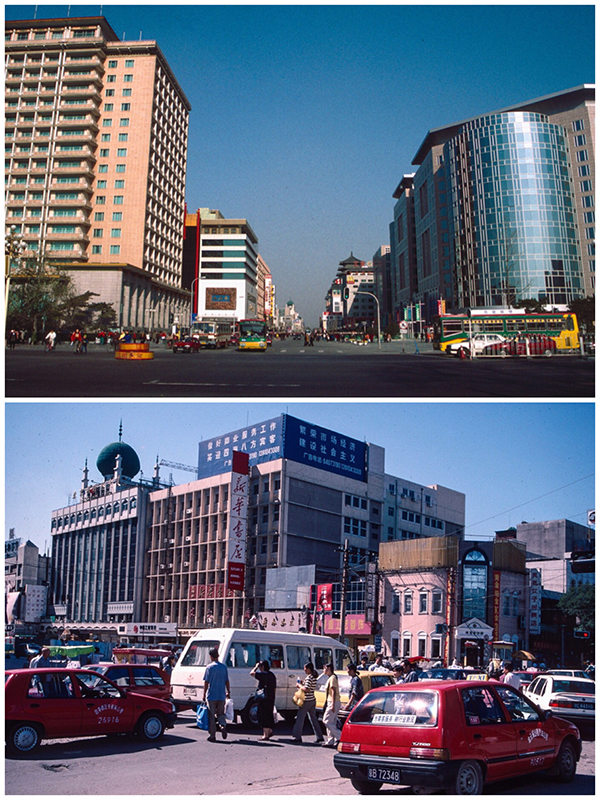
In those days, it was much quieter when I would walk from Jiaodaokou. Heading south I could see buildings become larger as I approached the main commercial center of Wangfujing. Equally fascinating hutong alleys stretched east and westward, once home to prominent residents such as the renowned modern novelist Lao She. He lived on Fengdu Hutong in a traditional courtyard for 13 years starting in 1949. His works were strongly influenced by life in Beijing, including Rickshaw Boy, regarded as a classic of 20th-century Chinese literature. The book talks about the life of a fictional Beijing rickshaw man. Interestingly, on the north end of pedestrian Wangfujing is a metal replica of a rickshaw, along with other statues depicting traditional Beijing characters. A very popular location for photography.
A favorite spot of mine for photography, or just to sit and relax, remains the beautiful St Joseph's Catholic Church, also known as East Church (Dongtang). Originally founded in 1653 by Italian Jesuits it sits on land donated by the Qing Dynasty's Shunzhi Emperor. The present structure, combining both European and Chinese features, dates from 1904. It is built in a "Romanesque Revival" style incorporating three bell towers. I first saw the church in 1996 from high up in the Beijing Peace Hotel on Jinyu Hutong. Then it was obscured from Wangfujing by an enclosing wall. As part of a major renovation completed in September 2000 the wall was removed, allowing for the creation of a large patio in front of the church. Today it is a popular location for wedding photography. One of my most beautiful memories outside St Joseph's was in the late 2000s, when an orchestra from Macao performed a selection of classical and modern works. A stunning experience to sit there listening under the evening stars!

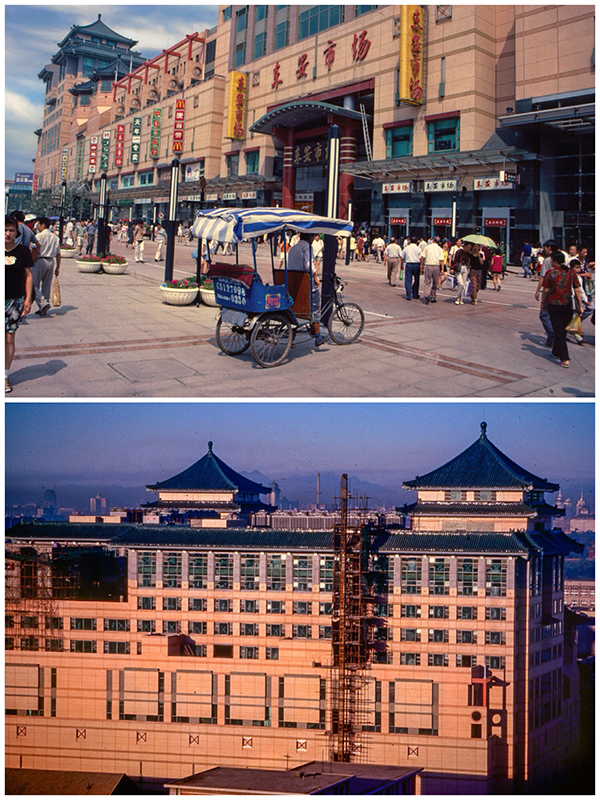
Until the late 1990s the entire length of Wangfujing was open to vehicle traffic, though gradually between 1999 and 2000 the stretch south between Jinyu Hutong and Chang'an was pedestrianized. This was part of a major renovation program I saw across central Beijing, partly to improve the city's image in the run-up to its 2008 Olympics bid. It has had great success, creating a pedestrian zone where visitors can walk safely. Today only small trolleys taking sightseers around Wangfujing and surrounding spots of interest are allowed passage.

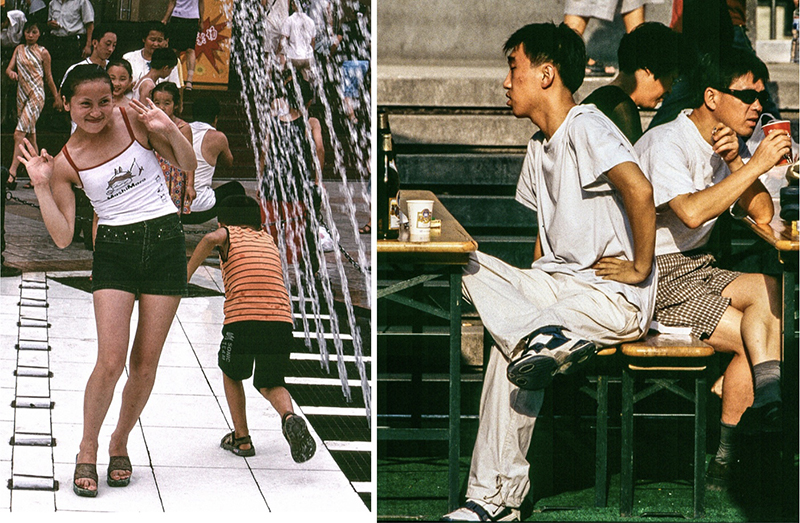
Following Wangfujing's pedestrianization, outdoor cafes started appearing. In warm summer days they were excellent locations to sit, have a cold drink and people-watch, always hoping for some good photo ops. Those were the days when few people had mobile phones, but along the street there were many public phone booths where people could chat. I delighted watching their facial expressions and body language continuing throughout often lengthy conversations!
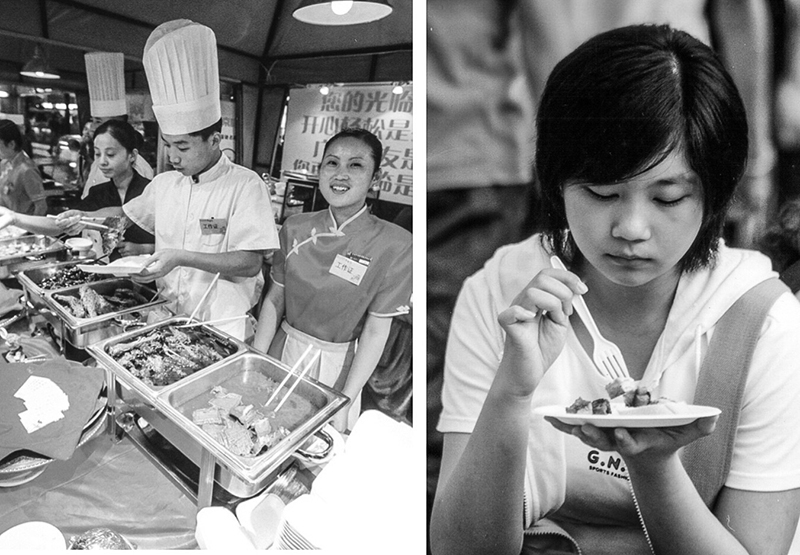
Outdoor events were popular during those warmer months. In the early 2000s a beer festival was held annually. One evening a fellow photographer asked to photograph me holding up a beer glass. I was happy to oblige, until the next day when my image popped up in a Beijing evening newspaper. There were also food festivals where Beijing restaurants offered tasty snacks and "bites" to eager diners. Again, many great moments presented themselves for photography.

With Beijing's vast urban expansion, many people drive to shop at suburban malls. But Wangfujing remains busy, for it is a "must-see" destination for domestic visitors — who now head to the city not just at peak holiday times but seemingly year-round.

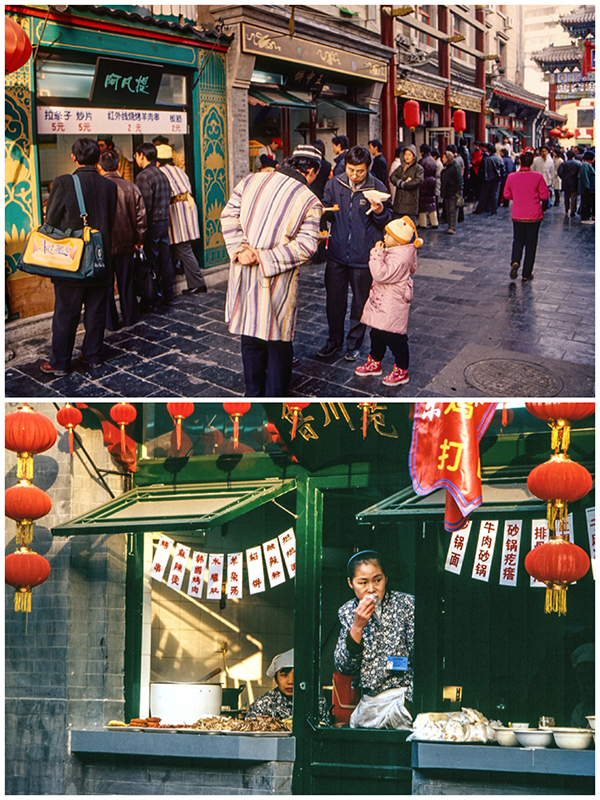
A food alley, Wangfujing Snack Street, runs just south of the Haoyu World Mall. It offers many exotic foods. Not only popular chuar such as grilled spicy lamb and chicken skewers, but also squid or scorpions, which I admit to never trying. Various sweet, sticky desserts such as tonghulu and candied fruit are featured, also on sticks. Many meat dishes here originated from Northwest China's Ningxia, Gansu and Xinjiang.

Wangfujing is home to several renowned brands or heritage stores alongside famed restaurants. Some feel like a walk through pages of Chinese history. They include a large branch of the renowned Quanjude Roast Duck restaurant; Shangxilu Hat Store, whose customers included Chairman Mao Zedong and Premier Zhou Enlai; Tongshanghe Shoe Store reputed for its traditional shoes and caps; and Ruifuxiang Silk and Cotton Shop, offering stylish cloths. Gongmei Mansion is one of the city's largest outlets for craft goods, while the Wuyutai Tea Shop has a history going back over 120 years. The Xinhua Bookstore is fascinating to wander through browsing its extensive collection of books, mostly in Chinese.

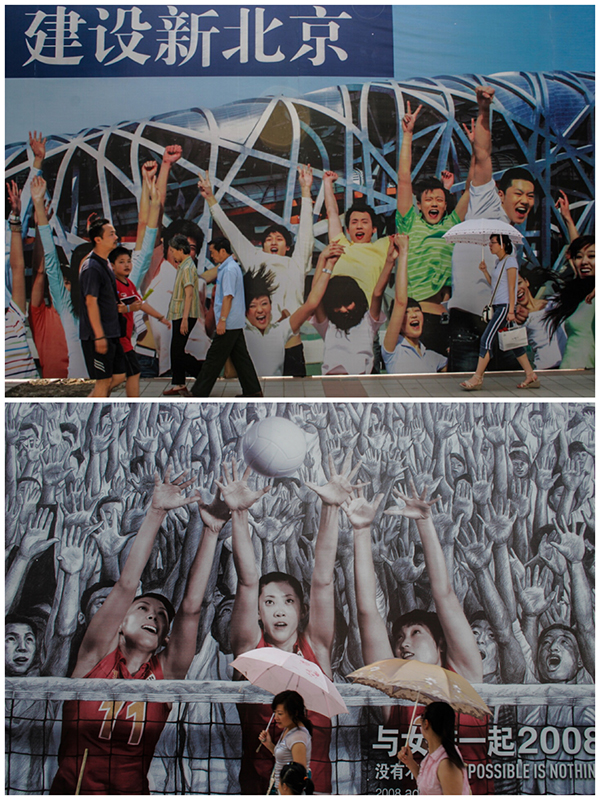
2008 brought many memorable images of the street, for it was the heart of the Olympic City. While billboards proclaimed "One World. One Dream" throughout August 2008, crowds of international visitors thronged the pavement cafes or walked along dressed in their country's colors. Meanwhile volunteer helpers and locals were greeting foreign guests with "Beijing huanying ni" or "Beijing welcomes you." I was out most days and evenings on Wangfujing taking in the fun, still fondly remembering those times now 11 years on.

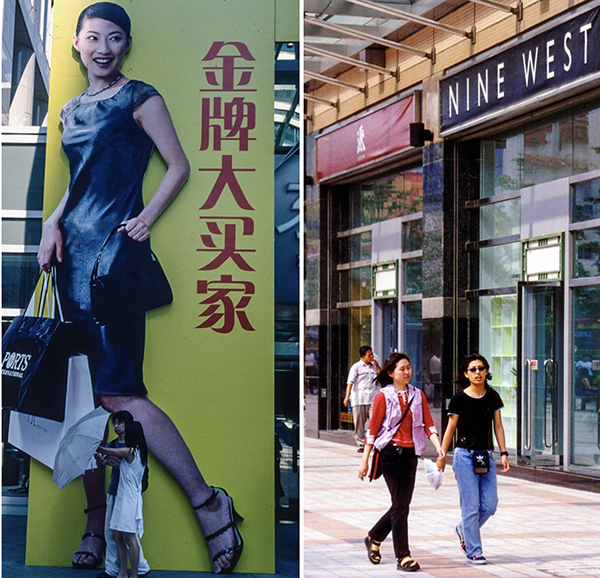
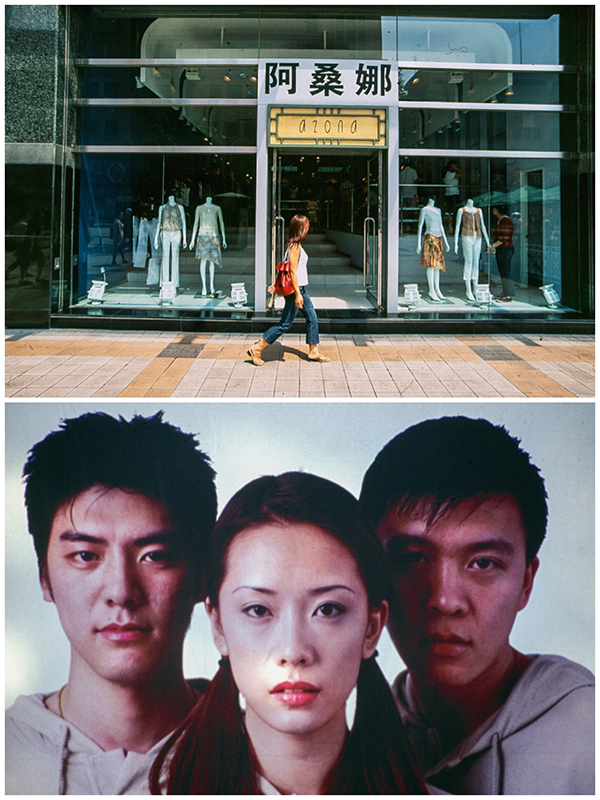
Wangfujing was a street where over the years I would witness a transformation, particularly within younger sectors of society. It was where people came to admire, try on and purchase the latest fashions. International brands opened outlets facing onto the main thoroughfare or deep within the malls. The latter were regularly updating their appearance and facilities, creating world-leading shopping experiences. Outdoor billboards would illustrate youthful expressions of designer trends — both in clothes and mobile technology.

It was where Beijingers started to encounter world fashion names, with adverts espousing trendy dress styles and more. Today this can be seen in the Malls at Oriental Plaza, where Wangfujing meets Chang'an Avenue. It presented a more upmarket concept in fashion and dining, something now increasingly found along the street's pedestrianized section.
The Beijing Hotel sits as an iconic landmark just west of this main intersection. It's a building immersed in much of the city's 20th-century history, but that indeed is another story — another episode in the fascinating tales of this area. Just as I referenced Wangfujing as a landmark for travelers, so too would generations of people as they said, "Meet me at the Beijing Hotel."