(Source: China Daily)
Discovering Hong Kong - an early Gateway to China
By Bruce Connolly | chinadaily.com.cn | Updated: 2018-08-01 07:02
In the late 1980s and through the '90s my attention was mostly focused on southern China with Hong Kong the natural gateway for both entry and exit. It was late July 1987 that I first experienced the city at the finale of a transcontinental railway journey from Scotland. Although exciting to visit, initially anticlimax set in, partly induced by tiredness. After such lengthy travels so much felt somewhat familiar, for example English street names while my hotel room radio relayed British programs including "The Archers". My schooldays images of China were frequently of Hong Kong. The narrow streets with the advert banners slung between buildings brought back such memories. This was all comparing to the landscapes that had held me in transfixed coming south from Inner Mongolia, through Beijing and down to Guangzhou. However, fascination soon took over as I walked around, camera in hand - always my preferred way to explore a city! A surprise was how few people actually used English. Although not understanding conversational Cantonese I was, however, familiar with its sounds for it was similar to what was spoken by my local Scottish Chinese community mostly originating from Fujian, southern Guangdong and, of course, Hong Kong. Putonghua was rarely heard in 1987, both in Hong Kong and Scotland, unlike today.
August 1992 was when my relationship with the city really started developing. From late August I would be based for a year in Guangzhou. Partly to acclimatize to the heat I first spent a fascinating week in Hong Kong exploring and discovering so much more about the city than I had achieved in 1987. Thereafter, every couple of months I would take the "through-train" from Guangzhou to Hong Kong's Kowloon. The train's destination "Jiu Long", or "Nine Dragon", the putonghua form of "Kowloon". Another option was travel to Shenzhen, walk across the bridge to Lo Wu and ride the metro downtown.

As a photographer the type of professional film that I used for presentations could only be found in Hong Kong, particularly among the specialist photographic shops along Stanley Street in Central District. That area was a paradise for likeminded people for the store owners were often photographers themselves who regularly proved very helpful. Often spending hours there I got to know some, but they were often curious as to why I was living in Guangzhou and not in Hong Kong.
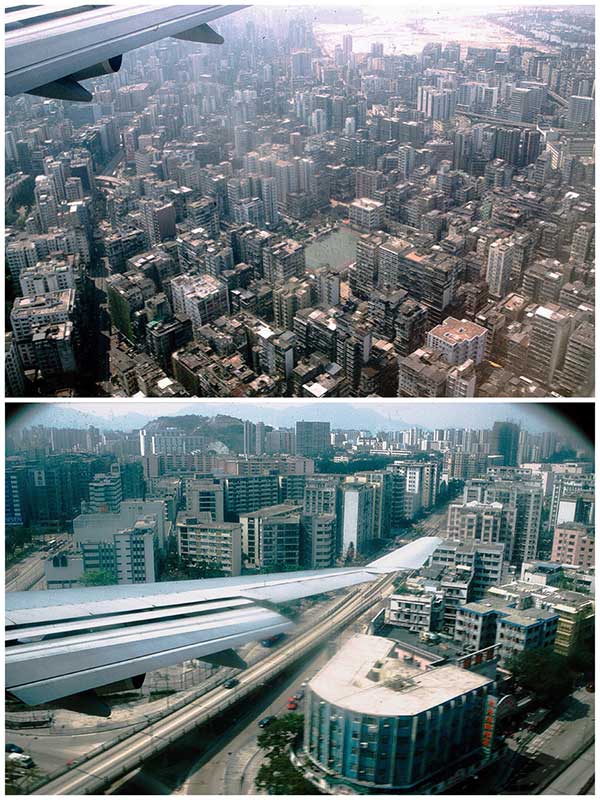
Returning to Scotland in mid-1993, at every opportunity I came back to China. At that time few direct international flights served Chinese cities outside of Beijing. I regularly transited through Hong Kong. After a long haul from London, it was welcoming as we flew over the Pearl River Delta to hear the captain announce that the aircraft was into its decent towards Kai Tak Airport, with the familiar, now iconic add-on that the final approach would be "through the buildings". An approach where pilots would at times rely on basic flying skills such as "stick and rudder". Aircraft would come in over Victoria Harbour toward large red and white markers on "Checkerboard Hill" before veering right. Below the wings stretched amazing views of the congested urban scene only two nautical miles from Runway 13/31 which was laid along reclaimed land, bordered by sea. In 1998, with the opening of Hong Kong International Airport on Lantau Island, heavily congested Kai Tak physically closed but lived on as a memory of pioneering aviation history.
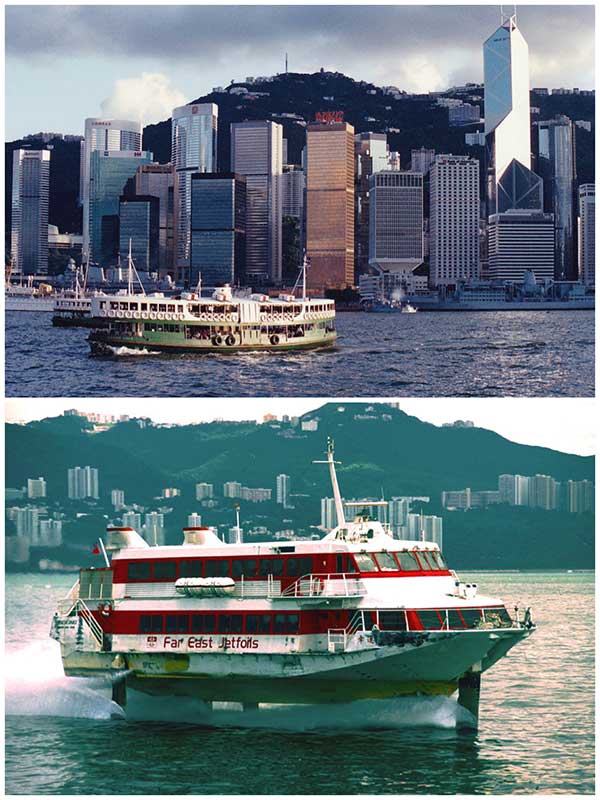
My onward journey was often by fast catamaran from the China Ferry Terminal in Kowloon, traveling across the estuaries of the Pearl and West Rivers to Guanghai Port for Taishan City and ultimately Guangzhou in Guangdong.
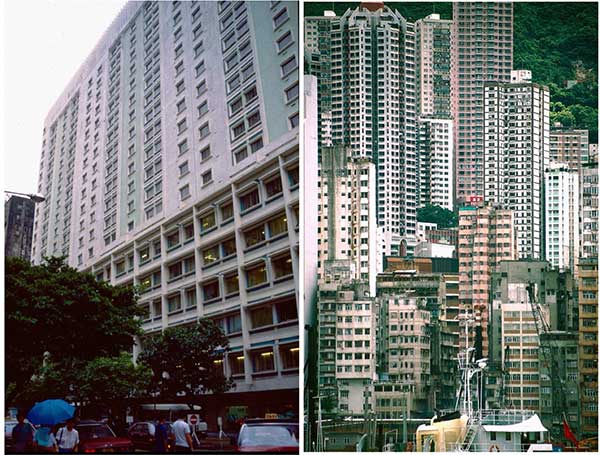
An impression of Hong Kong is of one of the world's most densely populated cities. This may be true around urbanized areas of Kowloon and the northern parts of Hong Kong Island. Settlement appears linear, following the irregular, often narrow coastline and transportation routes. However, I was surprised to discover so much was not built up, indeed often tree covered mountains and isolated islands. A great way to appreciate some of the geography continues to be taking the Star Ferry from Kowloon's Tsim Sha Tsui across Victoria Harbor to Central while looking up at The Peak steeply rising above the city's spectacular high-rise waterfront. Hong Kong's name in Putonghua, Xianggang, translates as "Fragrant Harbour". Twelve ferries, each incorporating the word "Star" are key, iconic elements, in transportation, carrying around 70,000 passengers daily. While road and metro tunnels also do the crossing, it is those ferry journeys, with origins dating back to the 1880s, which are surely the most spectacular, indeed romantic, having featured in many films.

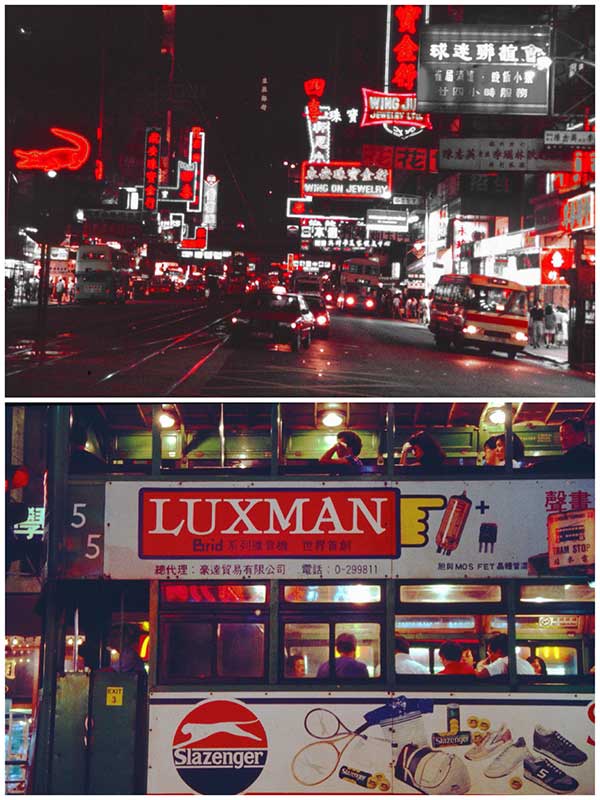
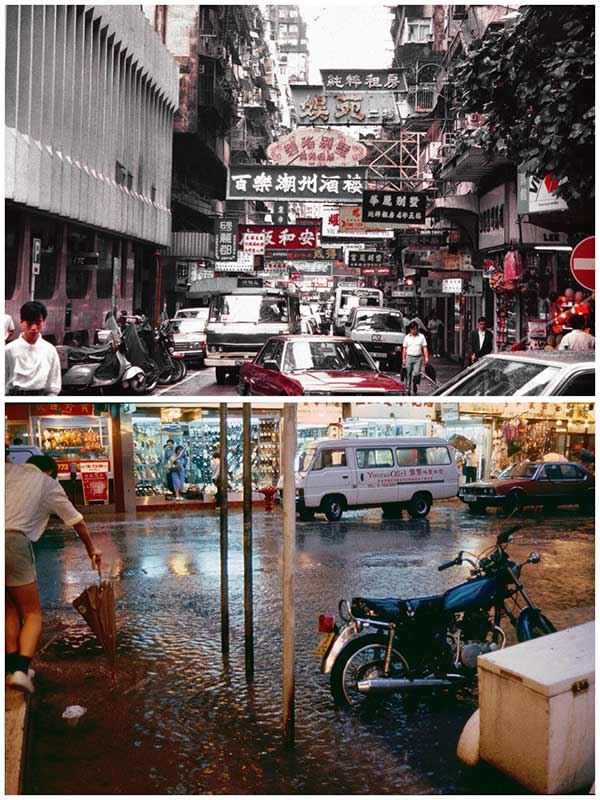
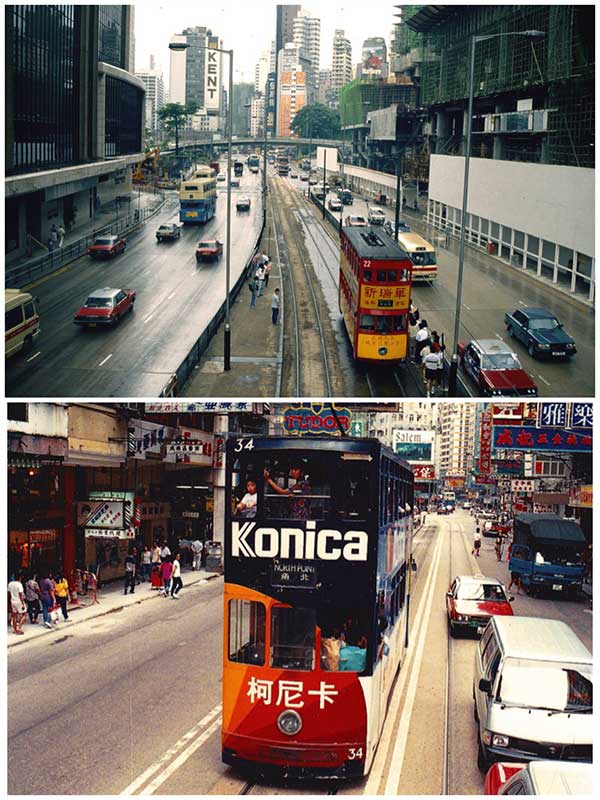
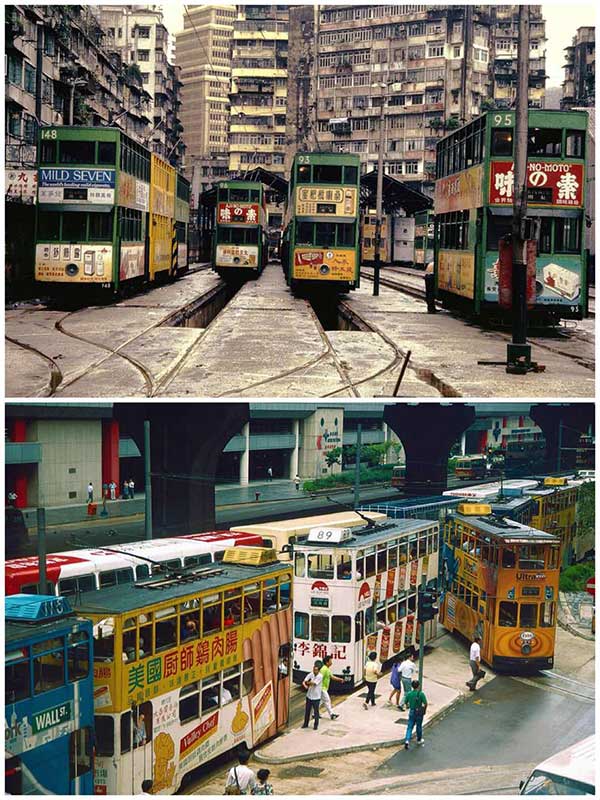
Stepping from the ferry and onto one of Hong Kong Island's double-deck tramcars is another moment in travel, particularly at night. The system, operating for over 110 years, was one of the earliest and still cheapest form of public transport on the island. Today it is a major tourist attraction with visitors happily following its 13 kilometers that initially stretched along the waterfront. With land reclamation and construction the lines today run inland passing through bustling Wanchai with its multitude of neon lights. One track diverts around the Happy Valley Racecourse. Not far from the former Lee Gardens on Hysan Avenue where I stayed in 1987, was Sharp Street Tramway Depot - a great spot for photography. Inevitably, with land prices so expensive, the yard closed in 1989 to be replaced with high-end Times Square retail and commercial development. Simply wandering the narrow streets that year was fascinating, looking in to its many small shops and restaurants while experiencing seasonal monsoon rains regardless of which local life just seemed to go on.
Most of my time was spent on Hong Kong Island where I would come upon a mixture of earlier British-influenced architecture set amid what was evolving into a skyscraper city. In '87 I visited the 180 meter 47 floor HSBC Headquarters in Central. Completed in November 1985, at that time it was the world's most expensive building. It was designed by UK architect Sir Norman Foster along with British structural engineers Ove Arup and Partners who were later jointly involved with the design and engineering of Beijing Capital Airport Terminal 3. I was fascinated also to discover the importance of feng shui within building design across Hong Kong - those with direct views of a body of water were more likely to prosper.
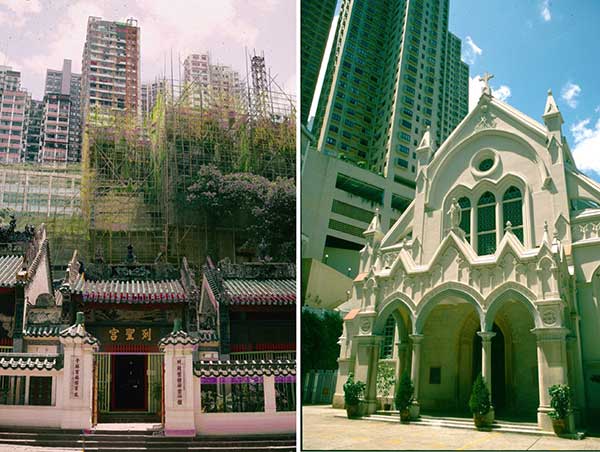
I soon discovered that Hong Kong remains a "melting pot" of different peoples and cultures resulting in peaceful Buddhist temples coexisting alongside elegant Catholic churches, Islamic mosques and much more set amidst the rising modernity of the city's skyline. This mixing of cultures has created something of a culinary paradise offering a wide variety of international cuisines creating mouth-watering dining experiences. It was possible to start off with dim sum at a local restaurant for breakfast, a light salad lunch followed by some of the finest Indian cuisine, including vegetarian, particularly around Kowloon's Tsim Sha Tsui.
Hong Kong was offering me more than the familiar tourist sights, there were so many parts of everyday life and activities to discover that it could take days, indeed months to explore.
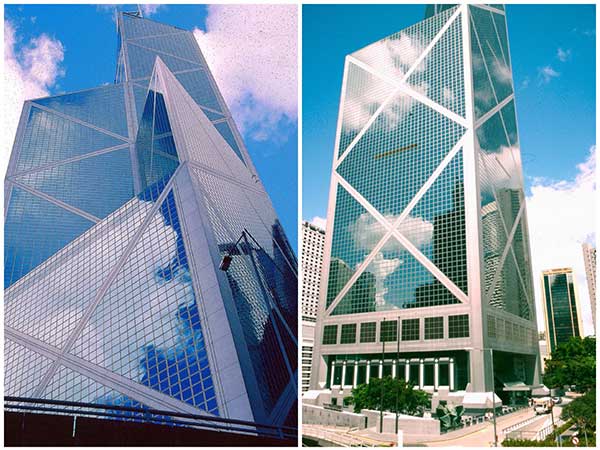
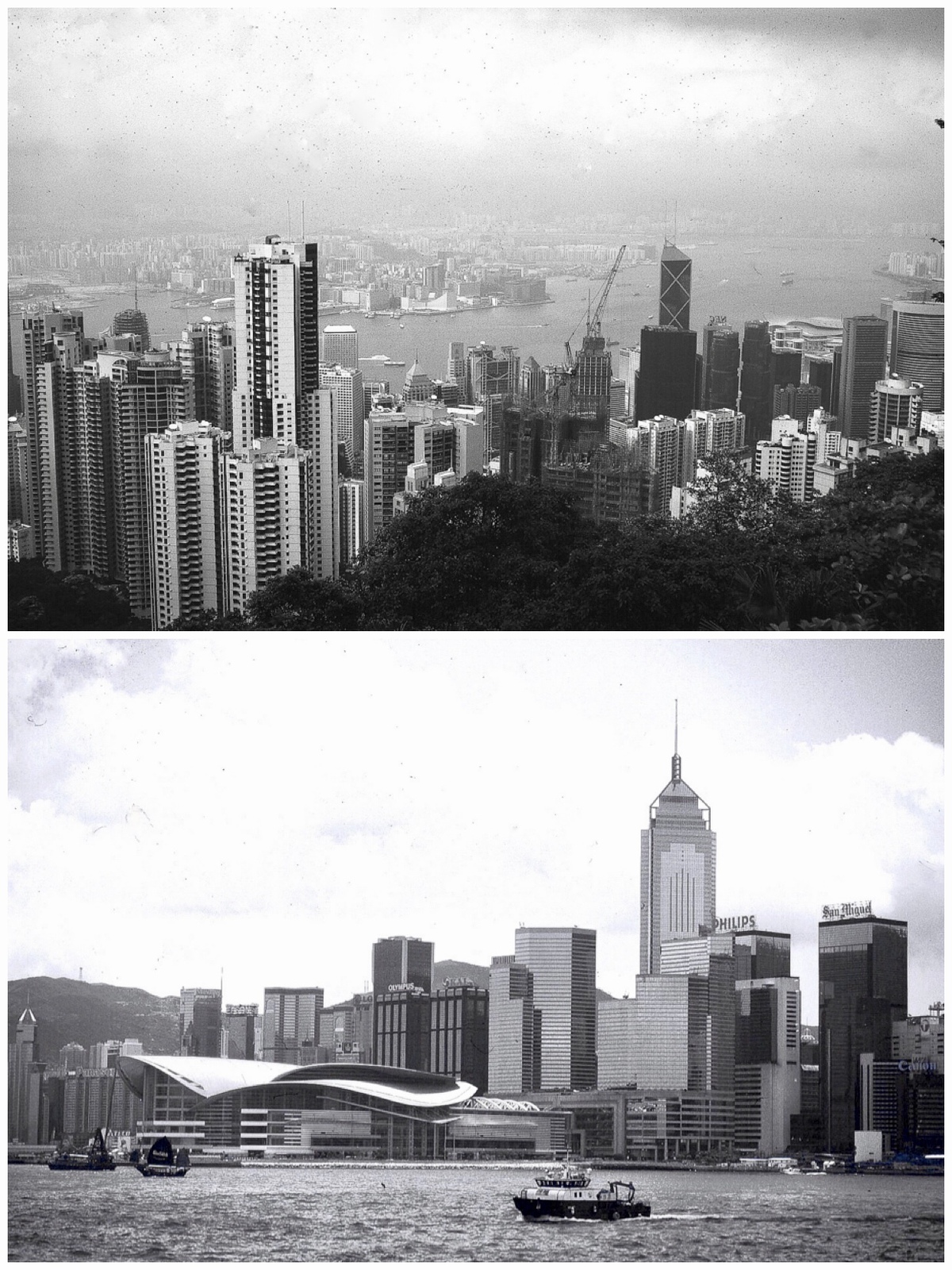
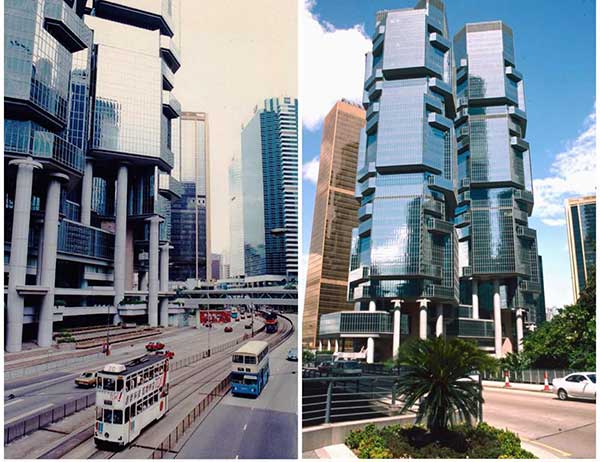
Before my 1992 visit the 72 story, 315 meter tall Bank of China Tower, designed by Pritzker Prize-winning architect I.M.Pei had opened on Hong Kong Island. During the period 1989-92 it was the tallest building both in the city and Asia. Looking across from Kowloon, it had certainly influenced the seemingly ever rising skyline. However, if the weather is clear a tramway rise up The Peak can provide stunning views across the harbor and the city. The tram climbing at such a steep angle may create a visual illusion of nearby buildings appearing to tilt!
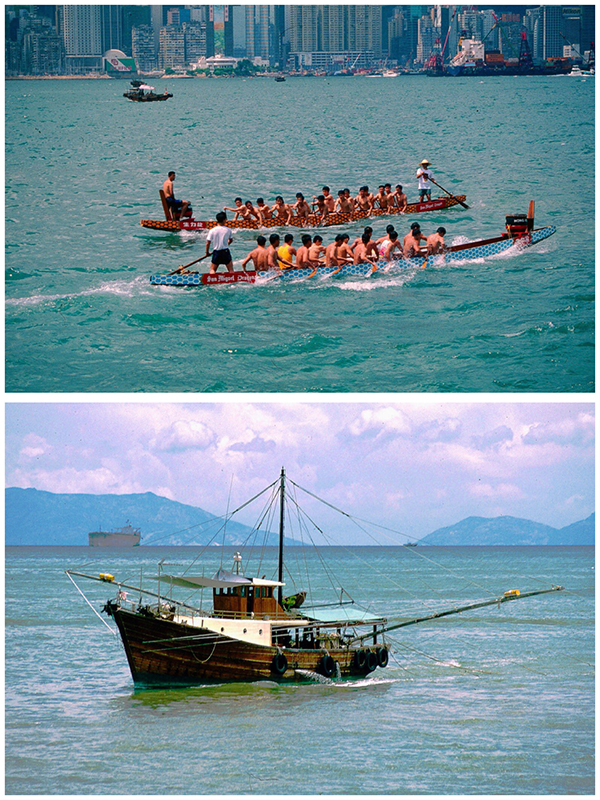
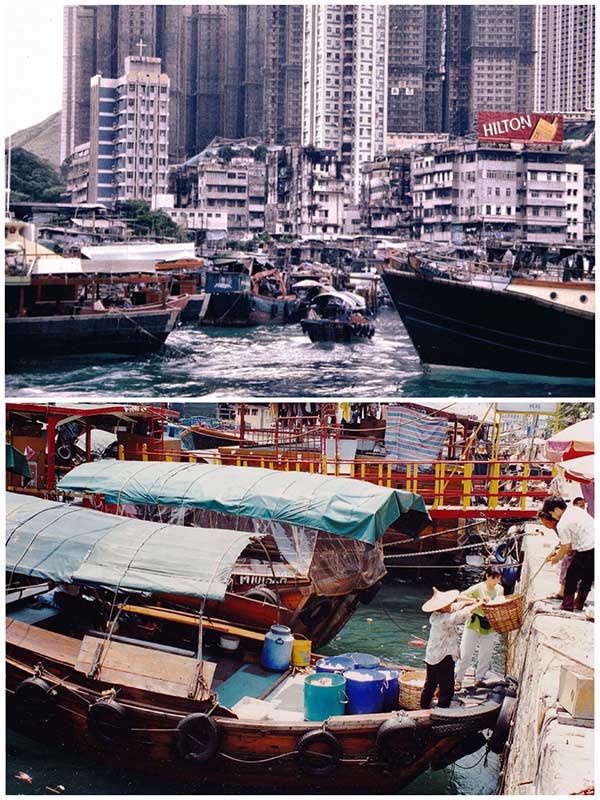
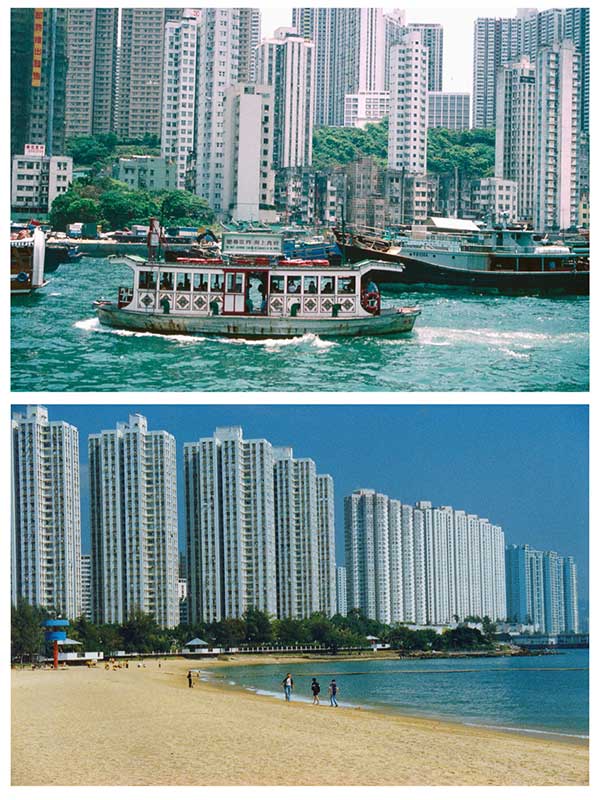
Excellent public transport allows convenient exploration beyond the main urban concentration. From Central, buses pass through a road tunnel to Aberdeen on the island's southern coast. It developed between 14th and 17th centuries as a port for sandalwood brought from Lantau Island to be transshipped north along China's eastern coast. Today Aberdeen is increasingly a commuter residential area for downtown workers crowded into its high-rise apartments. However, it still remains a major fishing port where visitors can be taken around on sampan boats while watching life on the water among fishing community and grand floating restaurants. Back on shore, Nam Long Shan Road Cooked Food Market can present a cacophony of sounds reminiscent of older days in Hong Kong.
A magnificent coastal drive leads southeast from Aberdeen to Stanley. Once just a fishing village, today a major tourist destination centered around its famed gift markets. For me, a joy to walk around its pedestrian alleys on a warm late December afternoon in 1999. Sitting outside one of its seafront cafe bars, looking across to islands almost shimmering on the calm waters, I tried to forget that next day I would be flying back up to a cold, wintery, UK.
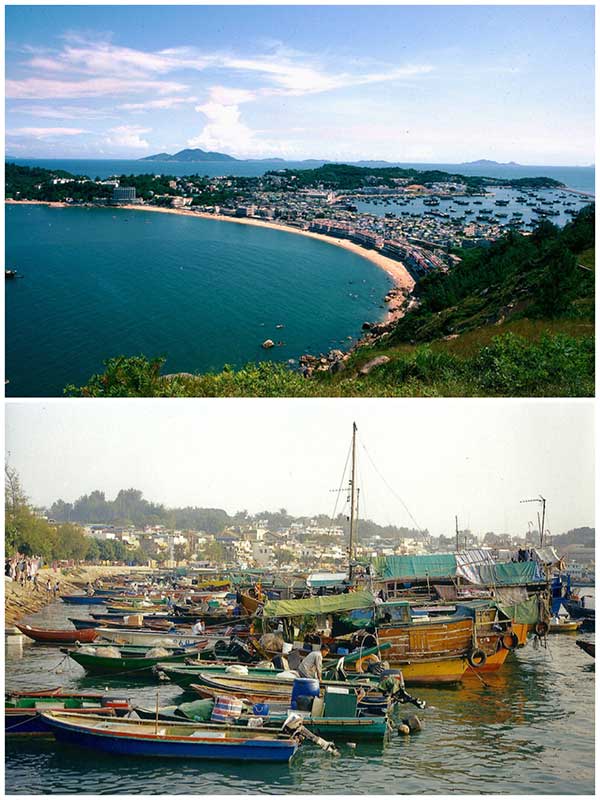
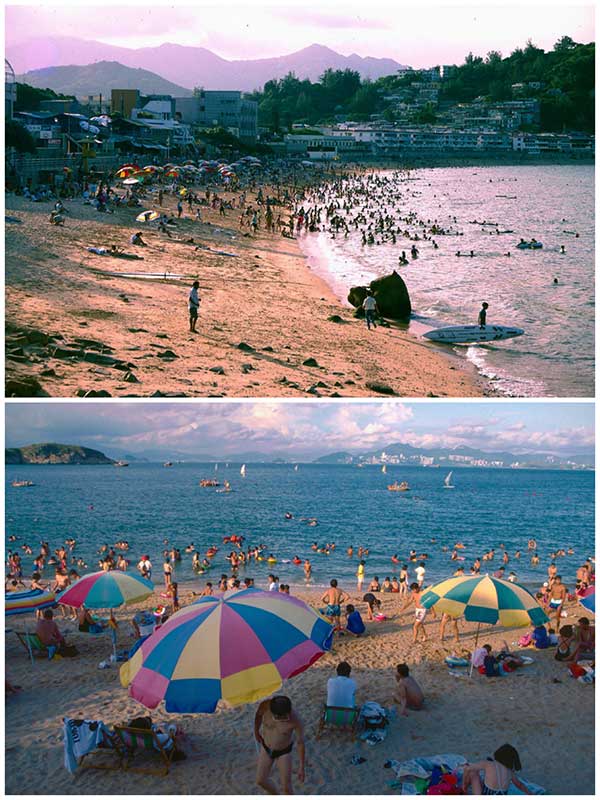
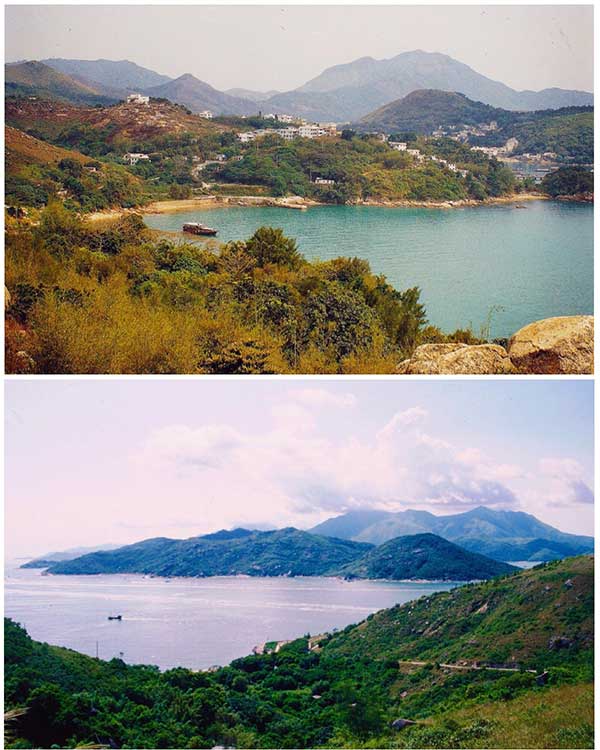
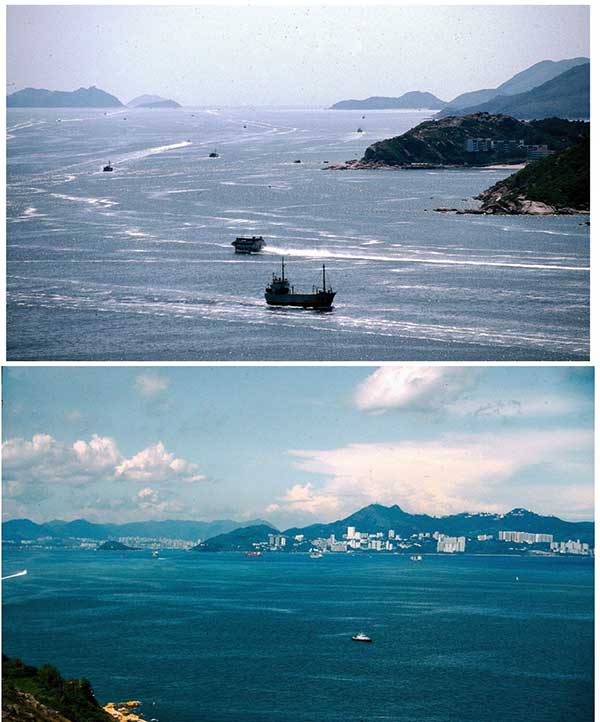
The islands, particularly the outer group, reach toward the South China Sea. From Central boats take around one hour to Cheung Chao. Going there first in 1992 it became my idyllic Hong Kong retreat. Its 20,000 people live around a compact urban area on a narrow strip of land between its northern and southern upland areas. Having been an active fishing village since the Ming Dynasty that remains a major activity. Along the seafront a strip of open-air seafood restaurants provide first class views of the harbor and the regular passenger boats to/from Central. The island is car-free and provides wonderful walking. I headed up a trail from the town, leaving urban settlement behind to arrive at the North Lookout Pavilion (beitiao).Sitting there for an hour, I looked down to popular Tung Wan Beach and across the fishing harbor. Beyond like shimmering diamonds, or maybe like a string of pearls for Hong Kong is the "Pearl of the Orient", stretched many islands including beautiful, lightly populated Lama Island which I would later explore.
Inevitably in the '90s all routes led back to Kai Tak Airport. Preparing for take-off on a flight back to London, the captain announced our route would take us along the Pearl River to Guangzhou before striking west toward Kunming, capital of Yunnan - we were heading "Beyond the Clouds", toward another of my China Dreams.
I hope to return south later this year, with my camera, by direct train from Beijing to relive those many Hong Kong experiences, not a dream this time but a reality.