
(Source: China Daily)
World War I Chinese laborers thanked
By Nigel Collett | chinadaily.com.cn | Updated: 2018-09-03 09:45
In the summer of 1915, at the start of the second year of the first World War, Liang Shiyi, senior adviser to President Yuan Shikai, suggested sending 300,000 laborers to work for Britain and France behind the Western Front and for Russia behind the Eastern Front. China would not declare war on Germany until Aug 14, 1917, but even at this stage there was probably a hope, sadly a vain one, that China would gain concessions from the Allies if they won the war.
Russia was first to hire Chinese laborers, and about 200,000 men were recruited by Russian private contractors to work there during the war. France, in contrast, signed up workers using a government contract, with its first recruits sailing from Tianjin in July 1916; France would eventually recruit 40,000 men. The British followed the French example and began recruitment in 1917; by the end of the war, they had employed 96,000 Chinese laborers in Europe in an organization they designated the Chinese Labor Corps, which was led by British officers and NCOs. All the laborers recruited came from North China, 80,000 of them from Shandong alone.
The French and British set up agencies staffed by their own officials to manage recruiting. The British depot was based in Weihaiwei, where a hospital was built to examine and treat recruits, and a second depot was later opened at Cangkou, 15 km from Qingdao. Laborers were given contracts stating that they were not to be employed in military operations. At first, the British paid their workers 1 franc a day for a contract of three years and the French 2.5 francs a day for a contract of five years, with rates based on laborer rates prevalent in France at the time. Working hours were fixed at 10 hours a day, seven days a week, but Chinese holidays were to be observed.
When they reached France and Belgium, the men worked as stevedores unloading supplies in the docks, as railway porters ferrying munitions to the front, as laborers in ammunition depots, as warehousemen storing food and supplies, as bakers baking bread and as mechanics cleaning and refitting tanks for battle. When the war ended, they were put to work in the massive task of cleaning up the battlefields, filling in the trenches and burying the dead.

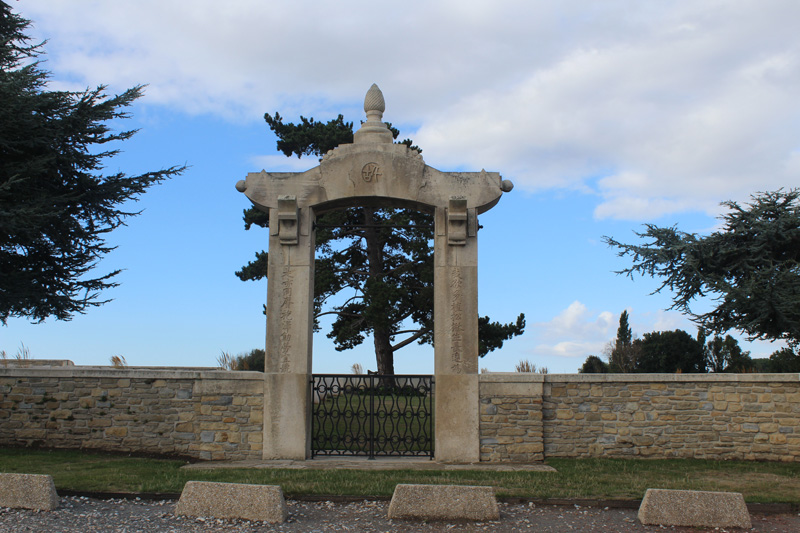
Over 3,000 Chinese laborers died during their service in France (many more died in Russia) and they are buried in cemeteries alongside British and French servicemen near where they died. Only in rare circumstances, such as the emergency of the last German offensive of 1918, did they find themselves having to take up arms, but many died from air attack and shell fire. Large numbers succumbed to tuberculosis and other diseases, especially to the outbreak of Spanish flu that swept Europe in the wake of World War I in 1919. At the end of their gruesome task of clearing up the battlefields, the 133,000 Chinese laborers who survived the war in the west were shipped home to China, each with the sum of money he had earned and with a bronze war medal. Those who worked for Russia, by then in the throws of revolution, were not so lucky, and there are no figures for how many came home from there.
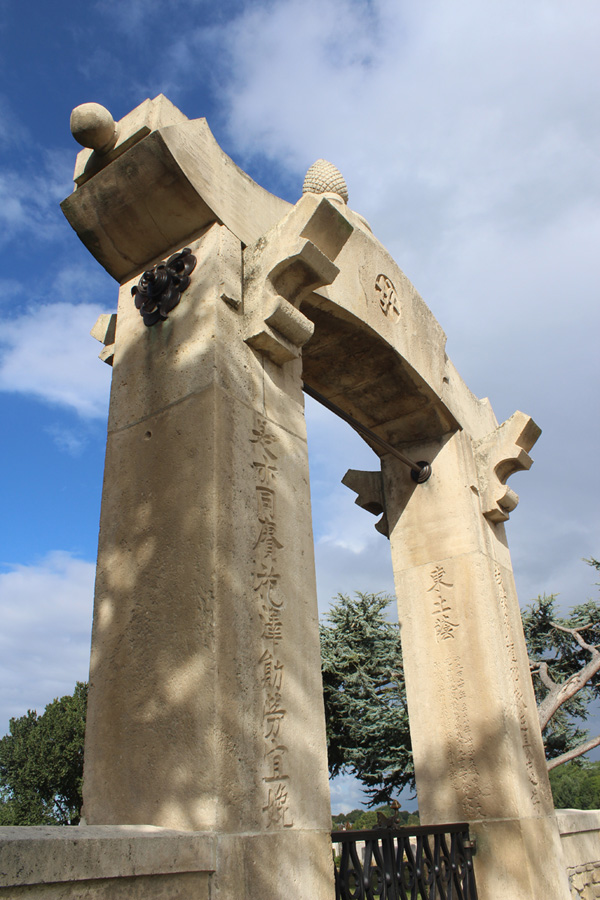
2018 being the centenary of the end of the first World War, the British veterans association, the Royal British Legion, created a "Thank You" campaign to show gratitude to all those who served in the war. The Hong Kong & China Branch of the Legion, which works in Hong Kong to provide welfare assistance to any ex-serviceman and his family that is in need, decided to play its part in the campaign by sending a party to Europe to thank and commemorate the men of the Chinese Labor Corps who died in the war. Over one week in early August, the party visited 17 of the 44 cemeteries in Belgium, France and England where Chinese laborers are buried. At each, a wreath or flowers was laid, with a card from the Branch in both Chinese and English saying "Thank You". At all of the cemeteries, a minute's silence was observed.

While they are not widely known, the Chinese laborers who served in the First World War are nowadays becoming a subject of both study and commemoration. In November 2017, in the village of Busseboom, just outside Poperinge in Belgium, Chinese Ambassador Qu Xing unveiled a monument to the Chinese laborers who died in the war. A bronze statue depicts three laborers carrying shells, digging trenches and evacuating wounded soldiers. A smaller figure in stone depicts one of 13 men killed in an air attack on their camp in the village nearby.

It is fitting that those who went to a war thousands of miles from their home, and laid down their lives for a cause that at first they could not have understood, are at last remembered and thanked for their sacrifice.
The author, Lieutenant Colonel Nigel Collett, is a retired British Army officer who commanded the 6th Queen Elizabeth's Own Gurkha Rifles in Hong Kong between 1991 and 1992 and is currently vice-chairman of the Royal British Legion's Hong Kong & China Branch.