(Source: China Daily)
Discovering Gansu's diversity, from Lanzhou to Gannan
By Bruce Connolly | chinadaily.com.cn | Updated: 2018-06-21 10:39
In the early 1990s, living in densely populated, sub-tropical Guangzhou I became fascinated with China's northwest. The idea so much of the country could be almost devoid of population intrigued me, as did the knowledge people lived in scattered oasis settlements along a corridor of land which throughout history had been an overland trade route connecting both Europe and Central Asia with China. What also fascinated me were my flights, in those days from Hong Kong to Amsterdam, where half of the journey would actually be over China. Such is the vastness of the country.
As I wanted to explore this area, my travels regularly took me to or through Lanzhou, capital of Gansu province. Its topography attracted my attention; the province stretched almost like a belt along the Hexi Corridor, renowned for its Silk Road associations. That fabled trail would bring weary travelers to Lanzhou, effectively the first major city on a route winding along the Wei River toward Xi'an. However, Lanzhou had another facet — the Yellow River flowing from the Qinghai-Tibet Plateau. Although not deep enough to facilitate major commercial navigation, its waters did allow transportation of goods via unique inflated sheepskin rafts. They could float upriver to Baotou within Inner Mongolia carrying cargo and people for shipment to Beijing by camel, or railways starting in the early 20th century.

My interest in Lanzhou, as with much of my fascination with China, came from images in geographical magazines. Photos revealed the iron girded 234-meter long Zhongshan Bridge spanning the Yellow River. Completed in 1909, this was the first permanent structure across that river, replacing a "roadway" laid over a series of floating pontoons.
Books I would go on to read about the Yellow River highlighted Lanzhou's geographical importance. China's river systems were a source of considerable interest, inducing me to pore over atlases, following their routes from high upland glaciers eventually discharging into the Bohai Gulf or Yellow Sea.
On flights out of Lanzhou's Zhongchuanzhen Airport in the mid '90s, I would look down pensively at a dry, lightly settled landscape. Today that airport is connected with the city by high-speed rail, a by-product of recent construction that links Lanzhou efficiently and rapidly with Xinjiang on the borders with Kazakhstan. Unfortunately no such services existed when I first reached Lanzhou in 1996, traveling by rail from Xining in Qinghai. It was a conventional train all the way, which I admit I did enjoy.
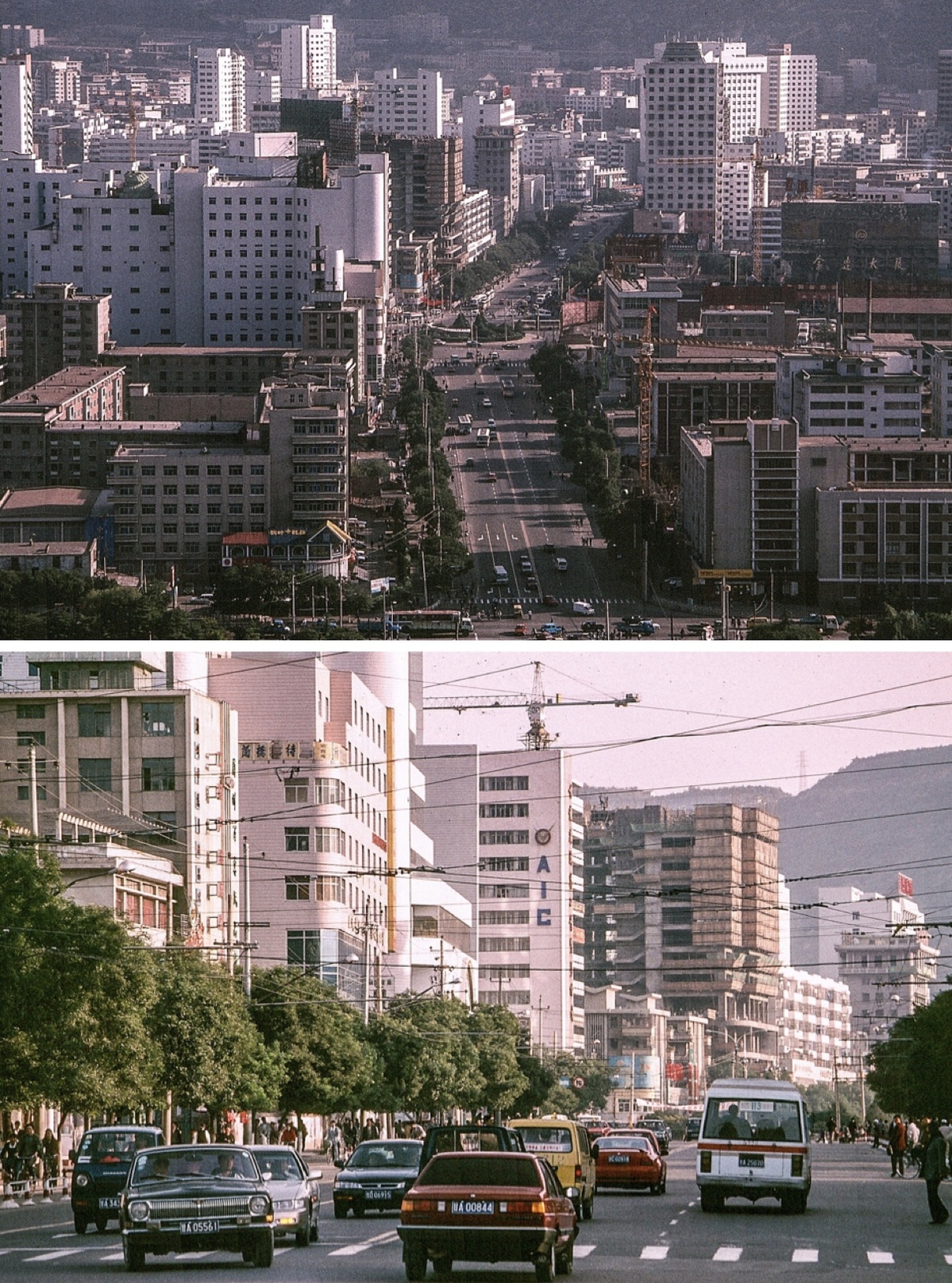
Over subsequent years Lanzhou became a railway hub as I ventured across northwestern China. It became a base for exciting, stunning road trips southwest toward the Gannan Tibetan autonomous prefecture.
Lanzhou holds many personal memories, such as my arriving early one morning by train from Yinchuan in Ningxia to be taken straight to a great steaming bowl of the city's famed beef noodles (roujiabing) for breakfast.
My first destination within Lanzhou was often Zhongshan Bridge — after all, it was my earliest impression of the city. There I would sit looking at the brown waters of the river while a camel would stand nearby, tethered on an exposed mud flat. On the adjacent riverbank rose replicas of the iconic wooden water wheels regularly located along this section of the Yellow River. While most water would be directed into irrigation channels, some would feed into mills to turn stone wheels for grinding corn. Nearby, a man produced winter quilts by pedaling a wooden machine.
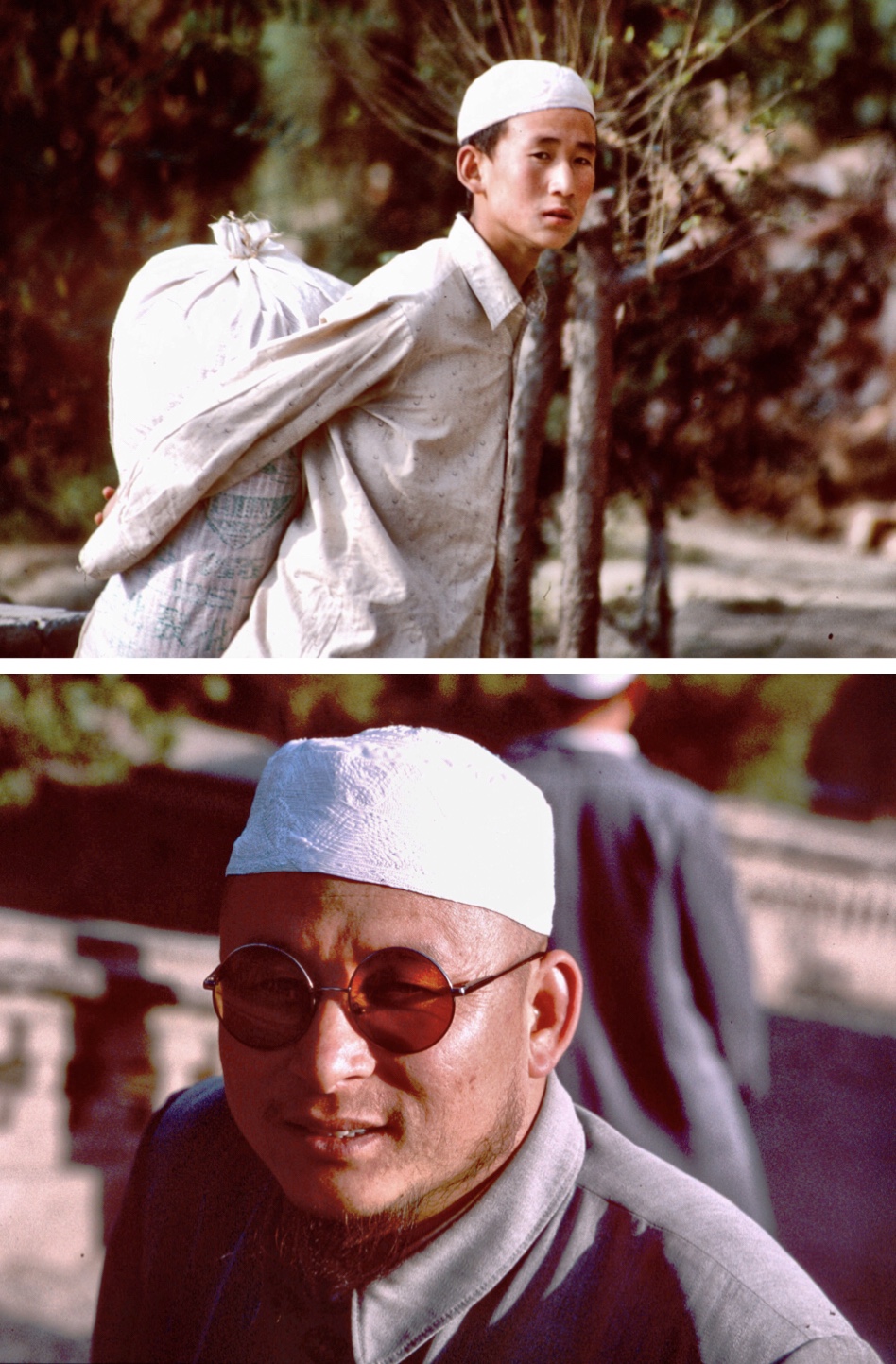
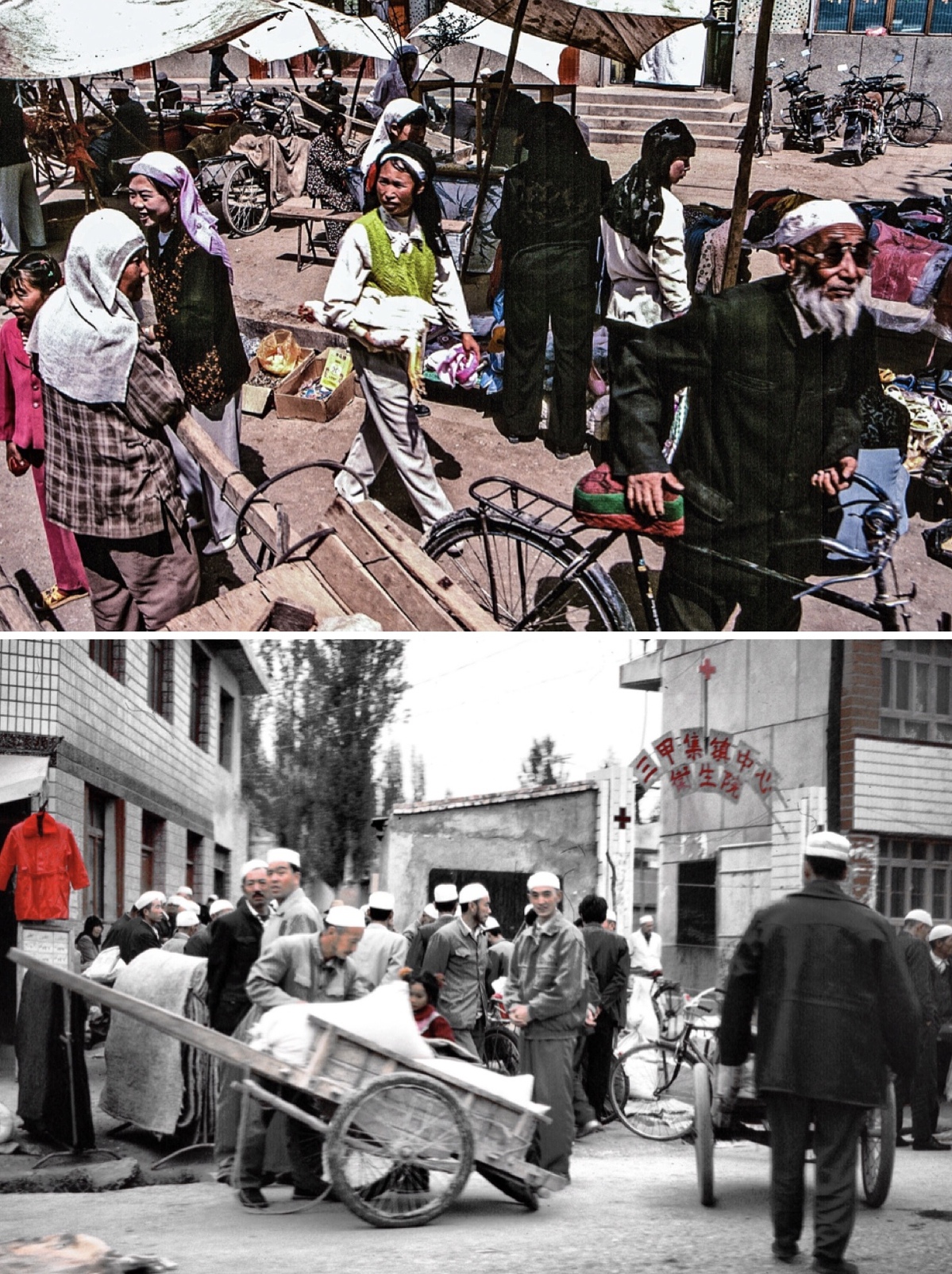
In the mid-90s Zhongshan Bridge continued to carry a limited amount of vehicle traffic, but today it is pedestrianized. I would walk slowly across, stopping to look down on the sometimes turbulent waters or to gaze upon the constant flow of people. Lanzhou, like other northwestern cities such as Xining, reflects the region's demographic diversity — you see many Hui (Chinese Muslim) men wearing white circular caps or ladies with heads covered with green or black scarves mingling with maroon-robed Buddhist monks and Tibetans who had come down from nearby uplands or from Qinghai. Simply enthralling.
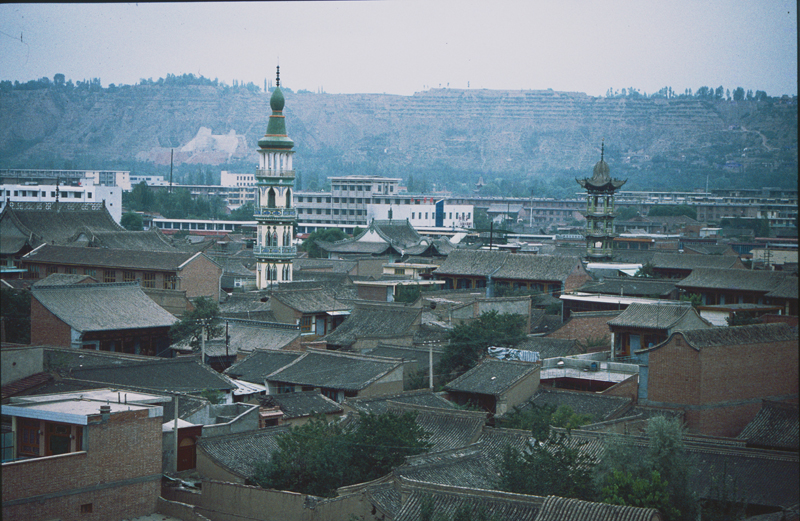
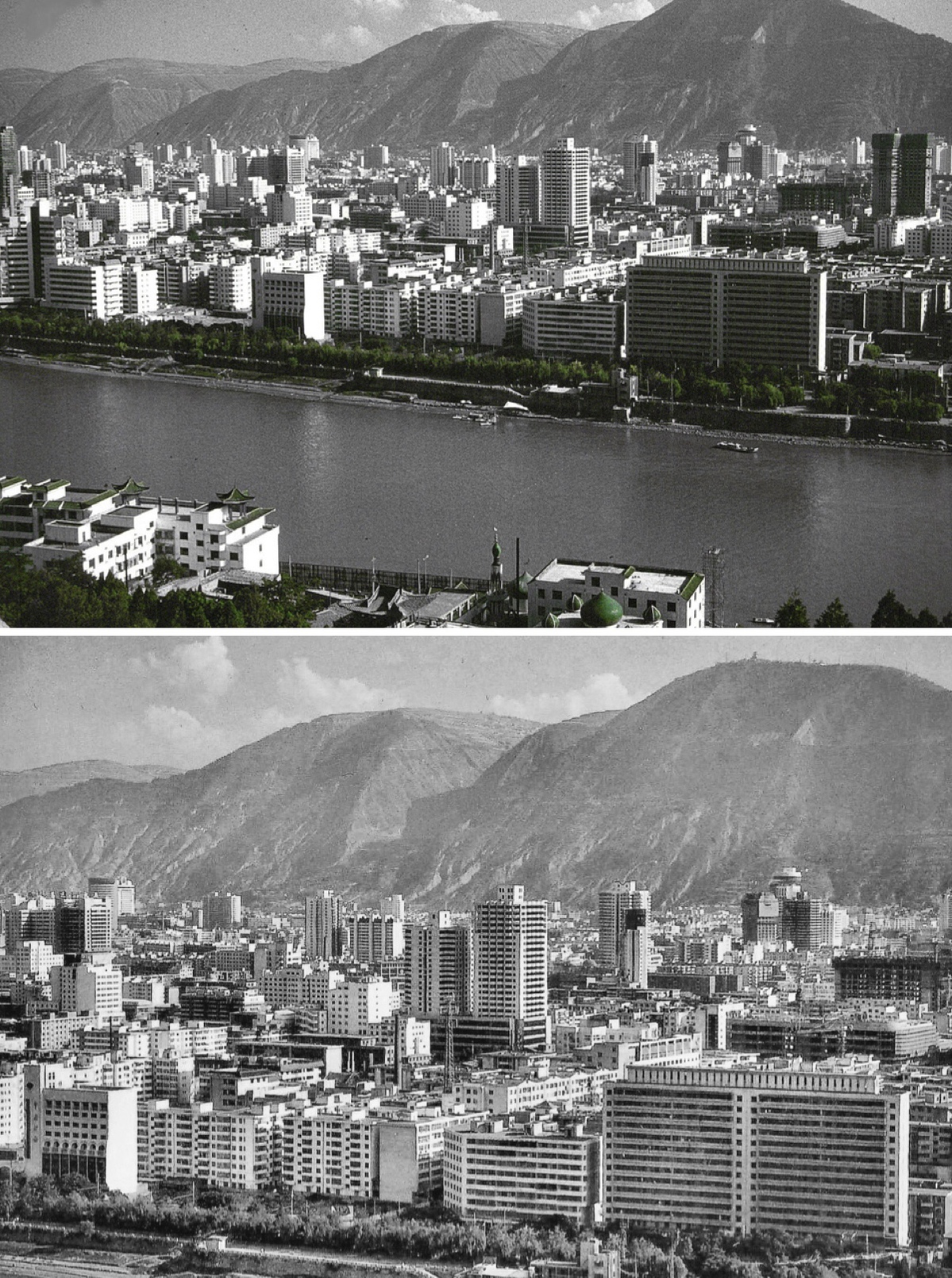
Beyond the bridge, steps led steeply up White Pagoda Hill (baita shan), where small temples provided a respite to gaze across the river, while looking over an increasingly modernizing city toward the Five Spring Mountain (wuquan shan). That long ridge hems Lanzhou tightly in toward the Yellow River. It was also interesting also to look down on the rooftops of mosques with their distinctive minaret towers — reminders this has long been a leading gateway to China's northwest.

A good idea when visiting a new city is to tap into the treasures of its museum, in this case the Gansu Provincial Museum. There I would catch up on stories of the Silk Road, learning more about the river while discovering traces of settlement locally went back over 7,000 years. Before man, giant mammoths roamed around, as shown by the large skeletal remains unearthed in 1973.
Walking is my favored way of discovering a city — stopping and sitting at a streetside stall while taking in the local scene. Below Wuquanshan, temples feature teahouses with gentle music playing in the background. Nearby alleys were lined with small restaurants, providing my favorite mixture of spicy lamb kebabs roasted over charcoal, Xinjiang bread and with clay pots filled with vegetables and noodles cooked over small fires.
Of course, even at that time Lanzhou was modernizing. New buildings were rising, international brands of restaurants and clothing stores were opening, and outdoor fashion shows contrasted with local people dressed in traditional attire.

Beyond Lanzhou sits one of China's great historic treasures, the Bingling Grottoes. Liujiaxia Lake was formed in 1969 by damming the Yellow River. Carved from red sandstone cliffs of a side valley running from the southwest side of the lake are 184 caves dating from the Liang (AD 502 -557) to the Ming period (1368-1644). Steps and walkways allowed me to marvel at this treasure, made even more special by a high-speed boat trip across the lake from a ferry port with connections to the city of Linxia.
Linxia Hui Autonomous Prefecture sits in the highlands southwest of Lanzhou, an area I visited thrice for extended lunch stops. From Lanzhou the road initially climbed steeply up from the Yellow River as it headed towards Linxia nestling in the fertile Daxia River valley. As we drove, I watched with growing curiosity the minarets rising from numerous mosques in small towns and villages alongside the highway. Markets bustled with seeming hundreds of sheep while children in traditional Hui dress gathered in bemused curiosity as I wandered through.
At Linxia it was an honor to be shown around the city's principal mosque while climbing the narrow staircase of its tower, to view the surrounding skyline where a profusion of green minarets rose above a swathe of low-rise homes. I was invited into one compact dwelling with a courtyard full of potted plants. It was lovely to sit there sampling fragrant mint-flavored tea. Linxia then, in the late 1990s, felt like a place for serious wandering, particularly with its markets feeling more like Middle East bazaars. As a photographer it would have been easy to stay, but Highway 213 was leading onward to even more joys of travel.
Past Linxia, the scenery changed gradually — from wide, river-crossed plains into steep-sided forested valleys. Dark slopes of coniferous pines gave way to pockets of grassy meadows nestling below jagged rocky peaks. Increasingly, bundles of prayer flags and white stupas adorned the slopes. Small temples stood on isolated promontories above the valley, with monks sitting alongside their crimson walls. Harvesting was underway, and grains of upland barley spread across the highway. Alongside the road a river of milky white water crashed over grey rocks. Log bridges lashed with wire spanned the torrents. I was increasingly reminded of northwest Yunnan.

With higher altitude, the sky took on an intense blue as we drove above the treeline and onto a plateau of extensive upland grazing where shepherds looked over herds of sheep, goats and yaks. In the distance rose snow-capped peaks, and ahead lay the compact prefectural capital of Hezuo.
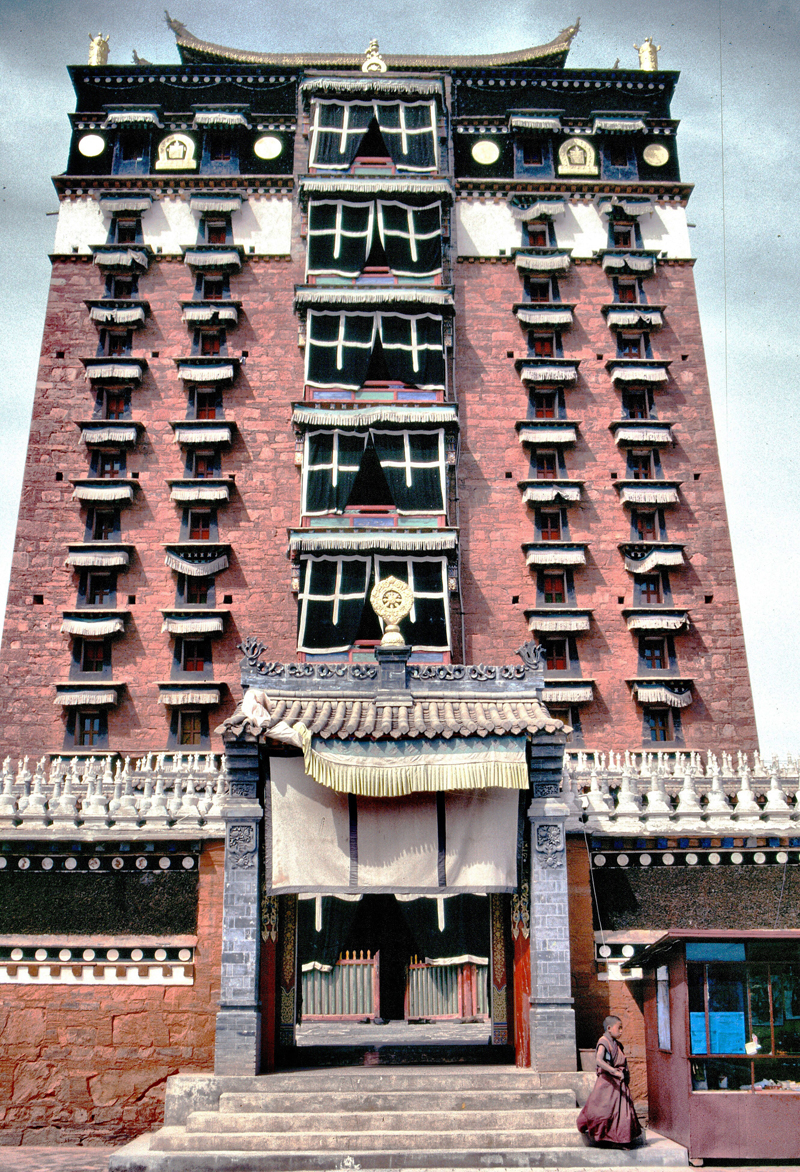
Overlooking the town is the 13-story 17th century reddish-brown Milaraiba Tower. Walking through its intricate entrance I emerged beyond a curtained gateway. It was a long climb up each floor, lit by flickering lamps. Overwhelmed, I came out onto the roof surrounded by many "golden" temple artifacts. Beyond lay the low-rise dwellings of this remote town surrounded by gentle green grassy slopes. For me, a hill walker, the temptation was too much and soon I was following a path leading above the urban confines. I found myself walking amidst white prayer flags grouped around a small squat temple. Soon I reached the wide ridge where a monk sat nearby in gentle contemplation. Sitting there for almost an hour, I gazed across a spellbinding landscape of upland cultivation terraces peppered with spreads of pastoral grazing. It felt so tranquil, pierced only by the clonking of wooden bells from the necks of larger animals.
Reluctantly I descended back to town for dinner before again wandering streets clustered with monks and locals shopping by bicycle. There was a mixture of people from various backgrounds and religions, all sharing a remote town high on a grassy upland between Gansu and Sichuan. As it got colder, I headed to a Hui restaurant where Hong Kong music was playing. An older Muslim man with a long beard tried to converse with me, just as some Tibetan youths came in and began playing beautiful music on two-stringed erhu. A lovely ending to my first day in Gannan.