(Source: China Daily)
Zhangjiagang - a rising city on Yangtze River
By Bruce Connolly | chinadaily.com.cn | Updated: 2018-05-31 06:30
Some years ago I realized that even in a lifetime it would be impossible to discover the entirety of China. Although there are large cities internationally known, the country has so many smaller communities that could equally provide excellent experiences while giving insight into local traditions. If only I could just reach them! Recently, having a coffee at Beijing West Station before heading off on a photo adventure to Xi'an a message flashed up on my phone from a friend, Chris, at China Daily. She was asking "Bruce, would you like to join a short journey to Zhangjiagang in Jiangsu?" My first reaction was "Where?" China has so many cities that even someone like myself with 31-year involvement with the country have never visited, far less heard of! After checking I was free, I felt "Why not?" After all, every visit helps increase my understandings of this vast land. Now back in Beijing, looking over photographs and personal memories, it certainly proved worthwhile visiting Zhangjiagang, a "county-level" city under the administration of Suzhou.
First visiting Suzhou in the mid-1990s I was fascinated by the "man-water" relationships across that part of the lower Yangzi River. The land appeared crisscrossed by canals and waterways serving a multitude of "water-towns"; lakeside and island communities; larger cities and ports stretching along the banks of the Yangzi. With mostly level terrain, rising only a few meters above water-level, it is composed of river-borne sediments built up over countless millennial. The shoals formed by these alluvial deposits were called, in Chinese, "shazhou". In 1962 this became the name for the county that in 1986 was elevated to county-level city status and renamed Zhangjiagang, recalling its earlier water function as the "Zhang's port" ("gang"="port'). The city continues as a major international trade port on the Yangzi River, with facilities considerably expanded and modernized.
Most of the region is abundantly fertile with extensive areas of rice cultivation and fish farming, which long formed a major base in the local economy. However in 1993 the city was selected for opening up to foreign trade, something that propelled it away from agriculture and more toward manufacturing. This became a driver for economic growth resulting in the modern, spacious city seen today. With a rapidly improving transportation structure Zhangjiagang sits within the Yangzi River Delta metropolitan region - one of the world's most densely populated areas and one of China's leading economic powerhouses. By 2020 Zhangjiagang will be connected into China's expanding high-speed rail network on completion of the "Hu-Tong" line connecting Shanghai with Nantong on the northern shores of the Yangzi. This has involved construction of a lengthy cross-river bridge carrying both rail and highway traffic.
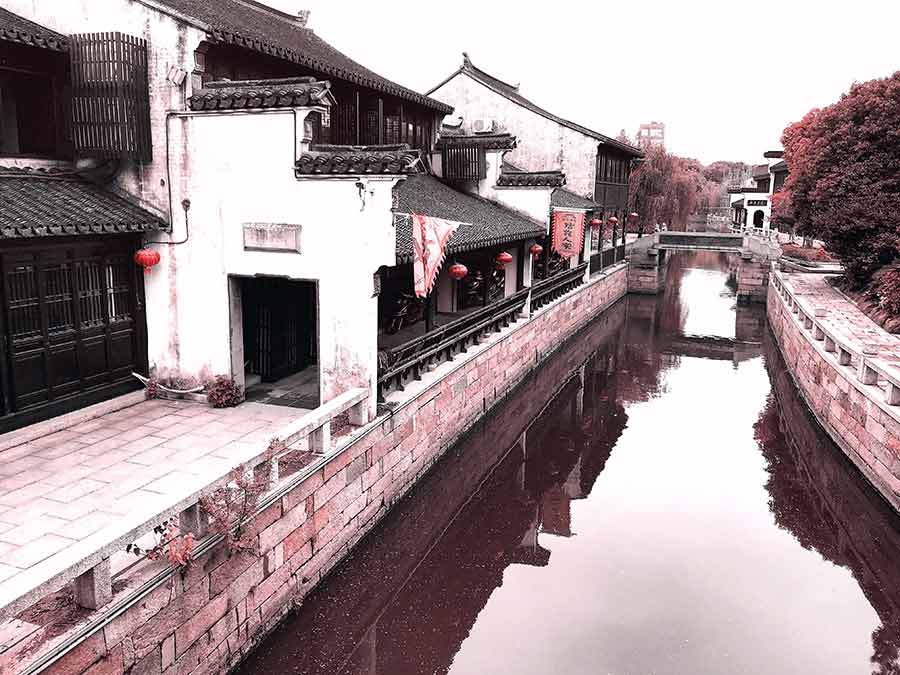
My journey from Beijing involved a fast train journey to Wuxi East Station followed by road/expressway travel through the area's agricultural lands where canal boats and barges still operate along many waterways. I noticed the distinctive two-floor white-colored domestic dwellings, often bordering the waters, that I remembered from earlier personal explorings around Suzhou.
Arriving at Zhangjiagang's urban area there was an obvious sense of spaciousness and clean environment. Alongside the streets there appeared considerable parkland, extensive belts of trees and bicycle ways interlacing with local waterways.
Guomao Hotel on Renmin Middle Road, within the central district, would be our base. With first-class accommodation along with excellent buffet breakfast and dinner, I soon wished the stay could be longer! The hotel, next morning, hosted the opening ceremony of "Go Jiangsu, Discover Zhangjiagang" Social Media Fans Event and 2018 Zhangjiagang Cyberspace Culture Season. This all designed to create and stimulate awareness of the city and its surrounds with a much larger global on-line community. A video presentation introduced the beautiful book, "Zhangjiagang in Poetry and Painting" by artist Li Min.
Near the hotel is Zhangjiagang Cultural Centre featuring within one of its spacious buildings a multi-media presentation on the city's past, present and future growth; about urban planning priorities and foreign direct investment. It was there I learned about the "Hu-Tong" railway project. I wondered how this would impact on the city's future development - certainly there was considerable commercial and private real estate construction going on. However, in my brief time, there felt a relaxed air about the city without much sign of traffic frustration. Always a sense of spaciousness. The retail brands and familiar food outlets found in most Chinese cities were present with the city also creating one of China's first pedestrian shopping streets.
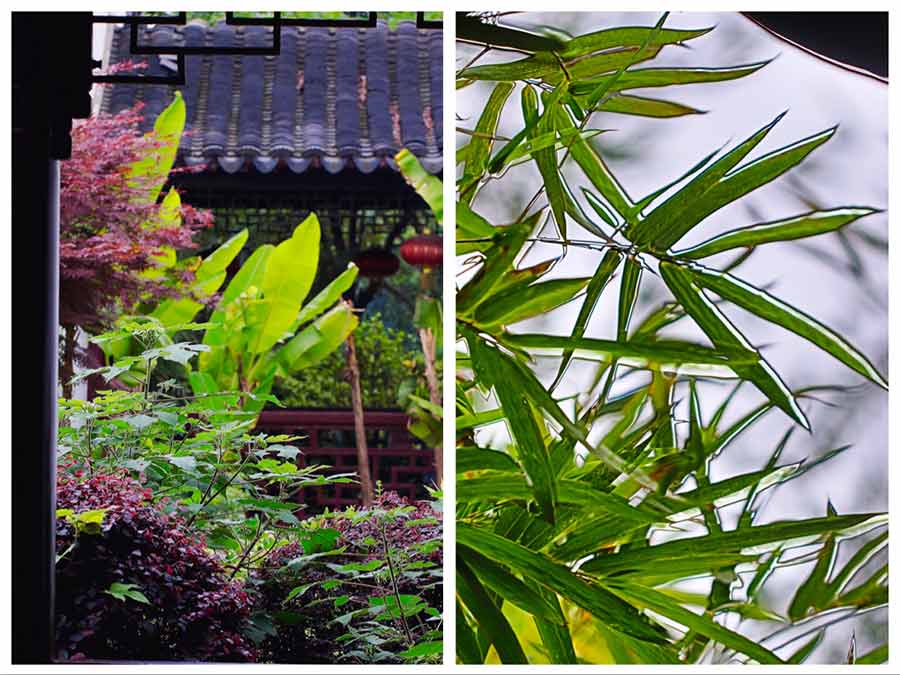
Developing the concept of "greening" and moving away from earlier more polluting industries it was positive to visit the Jiyang Lake Ecological Park in a southern part of the city. Covering 4.41 square kilometers it acts as a major "sponge" zone for Zhangjiagang's urban core - a concept being increasingly promoted for China's cities in a bid to reduce potential flooding danger. Following a trail through the wetlands, there appeared a dense mixture of vegetation, both tall trees and water-loving flora. This in turn created a natural habitat and breeding area for bird life. As we passed, one large specie, maybe a heron, lifted off from the marshes and headed above the tree-tops. Alongside Jiyang's vast lake tall wind-power generating towers rose above the waters.

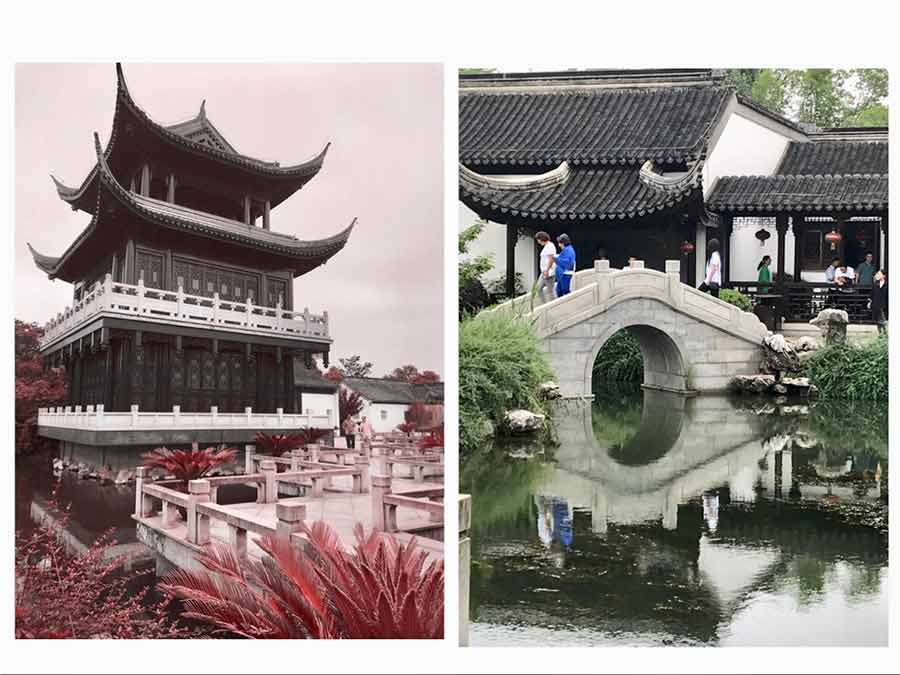
During the stay in Zhangjiagang there were opportunities to visit several tourist-related projects, usually featuring interaction with water while incorporating traditional local architectural styles. At Fenghuang Town, an area laced by canals, there was located the Heyang Folk Song Museum. It featured the story of the lower Yangzi region's traditional music including in an iconic teahouse some colorful performances by local ladies wearing the traditional blue patterned clothes of rural people.
As a reminder of the area's agricultural past, the Jiangnan Farming Cultural Park focused on the agricultural traditions of this region of water-towns. There was the opportunity to lunch over local farm and aquatic produce. By this time I was feeling that the area around Zhangjiagang had so much to offer that a future return visit may be useful.
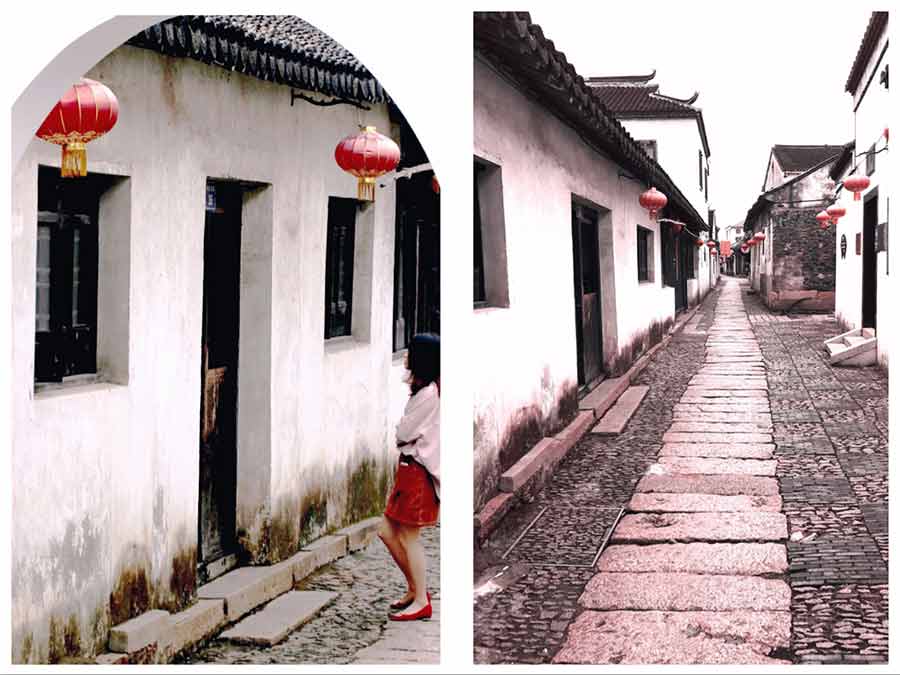
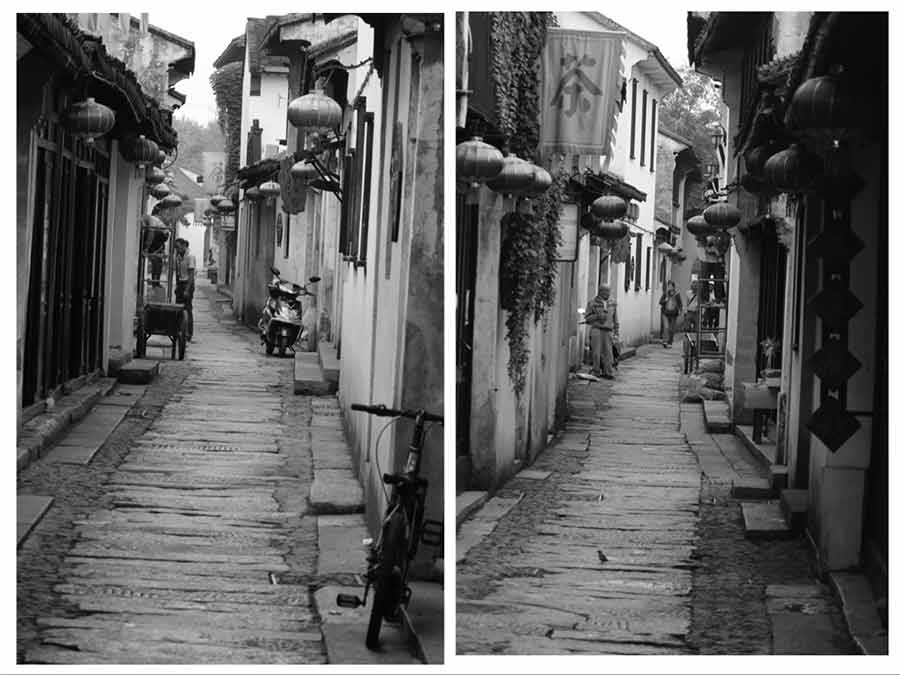
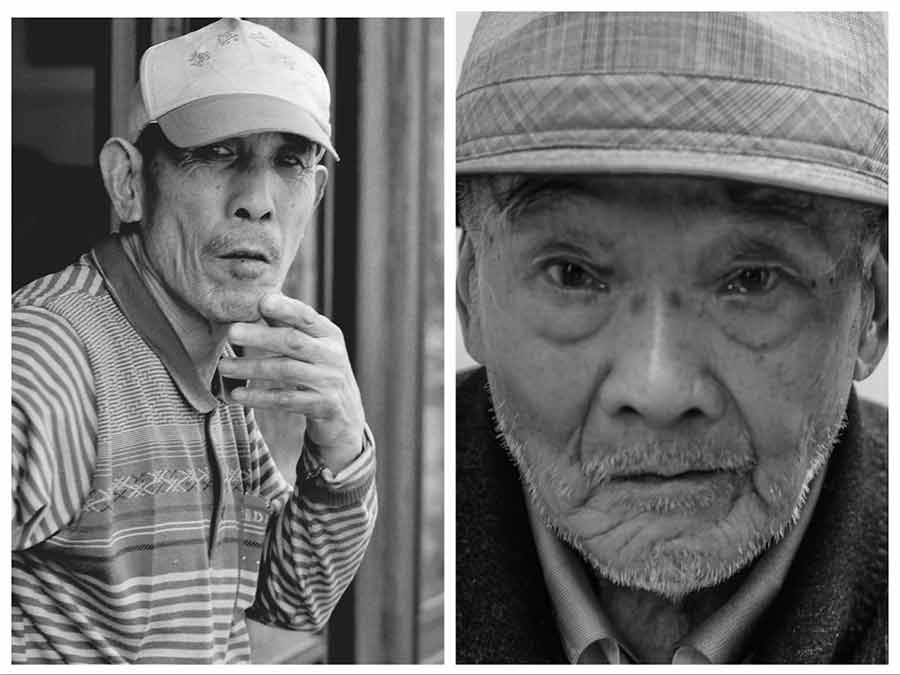
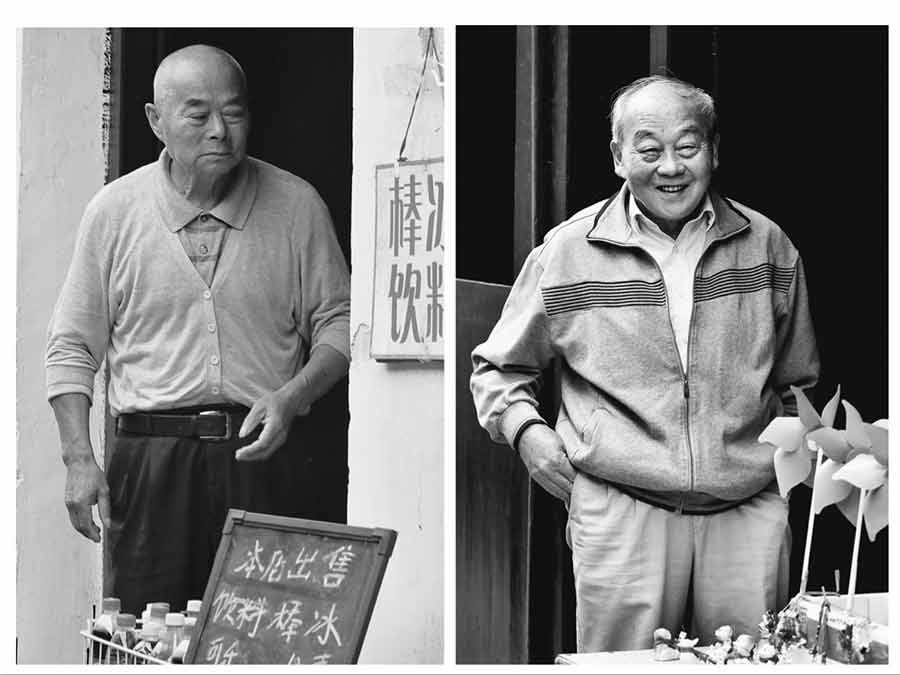
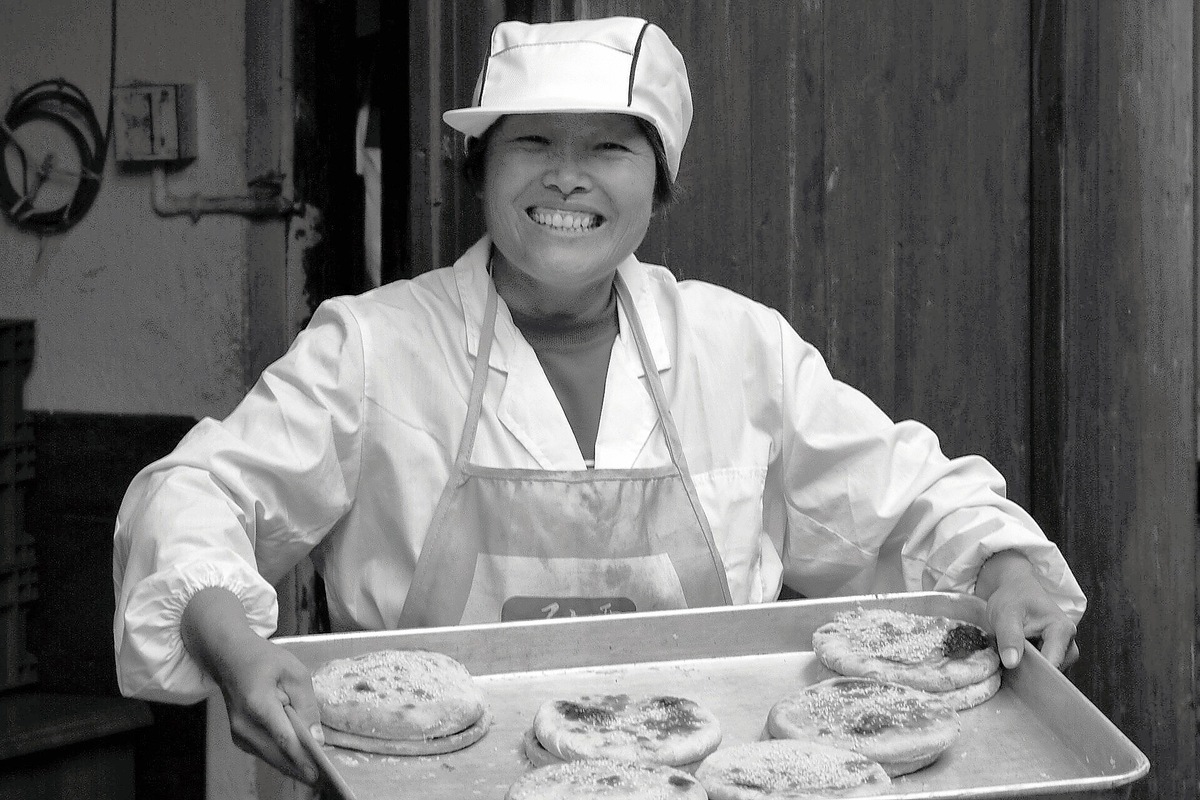
For me personally, a high point for photography lay along the Tianzhuang Old Street, one of the top cultural heritages around Zhangjiagang. Unlike attempts often seen to recreate the past, this street was real and quite amazing. It dated back to both the Ming (1368-1644) and Qing (1644-1911) dynasties. Close to the alley's arched gateway is the grand Yang Family Mansion, representing how a local family rose to prosperity. The stone-paved village passageway where buildings back onto a canal represented the epitome of a Suzhou-area water-town. Buildings again featured mainly white walls and cyan bricks. Every structure held attractions as though from a bygone age. Rooms opening out onto the street revealed villagers producing, for example, dofu that visitors could sit down to sample, to enjoy. Outside a small bakery a cheerful lady carried a tray of freshly-baked round snacks. Utterly fascinating was a small metal workshop where two men worked with a traditional fire to heat rods that would then be hammered into shape. This in particular proved a top location for photography - capturing images of local people in what were everyday settings. Indeed so many seemed delighted to be caught by my camera.
At the end of the alley an arched bridge spans Anjing River - looking beyond, a small quay remains where boats once loaded or unloaded cargoes. Stretching back along the river many houses had steps leading directly down to the waters - just like what I remembered from the older alleys of Suzhou in 1996. I was informed that around Zhangjiagang there remain several historic villages such as I discovered at Tianzhuang.
Before heading back to Wuxi East Station there was a visit to the Lucky Metal Handicraft Company. It produced many amazing varieties of high quality tableware, some featured in Beijing's Great Hall of the People. A sizable order for its produce also came from the Dubai royal family.
It was a pleasure to meet Yao Shirong, creator of some beautiful metal carvings on display.
The return journey to Beijing gave me time to think over the experiences had in and around Zhangjiagang. A city only two weeks previously I knew nothing about but within only a few days I had developed a deep fascination for. There is obviously much more still to discover and document about this attractive, indeed very pleasant part of Jiangsu within the vibrant lower Yangzi River.
I smile when I hear the term "small city" for what may be "small" in China is likely to be larger than my Scottish home, Glasgow with just over 600,000 is Scotland's largest and fourth in the UK. Zhangjiagang has a population around 1.6 million! What can I say?