(Source: China Daily)
An ongoing passion for historic Beijing
By Bruce Connolly | chinadaily.com.cn | Updated: 2018-05-12 09:48
Though I first came to China in 1987, I confess to knowing surprisingly little about the country back then. It did not feature prominently in school, or even most university courses. Personal knowledge was acquired from the occasional geographical magazine, which focused on grand historic monuments or features of physical grandeur. As I made my way south from Mongolia by train in July 1987 towards Beijing, I was aware of some of the capital's monumental palaces and temples but little of everyday life. This was not helped by the sightseeing program at that time, with visits to the Great Wall, Forbidden City and so on. All fascinating and spellbinding, but nothing was related, for example, to everyday hutong life,. How things have changed!
In 1994 I stayed in Beijing for a few days before going southwest to Sichuan. By a stroke of good fortune my hotel, a former Soviet-era building, was located in Beixinqiao Santiao — a hutong alley relatively close to the Lama Temple. It was my first taste of traditional old Beijing, and I loved it. Returning regularly to the city over the following years, I would stay at that hotel, and dine at local restaurants. Within nearby narrow lanes there was so much history, so much to try and to discover while attempting to understand the many overlapping complexities over different periods in history. I spent more and more time there before finally moving in 2000 into a small courtyard room near Jiaodaokou. This became "my Beijing".

Friends living in more modern parts of the city would ask to be shown some of the hidden gems within the former historic walls — and were never disappointed. Recently two Australian visitors to Beijing, who are passionate about the city, went with me around the Zhonggulou area. Fortuitously some alleys still retained much, making it feel like little had changed.
Over my three decades of association with the city, Beijing has opened up to me like pages from a textbook. What is it that made the old city of Beijing so different, so special? After some thought, I realized it was like no other city in the way it was planned and laid out. At its heart resided the em-perors through various dynasties. The city symbolically was built around them and their needs, which included annual ceremonial visits to temples or altars representing the sun, earth, moon and heaven. Then there was the importance of water — or the lack of it — and time, in a city where people had neither clocks nor watches. I was thinking of this when I met up with my Australian friends outside Guloudajie Metro Station.

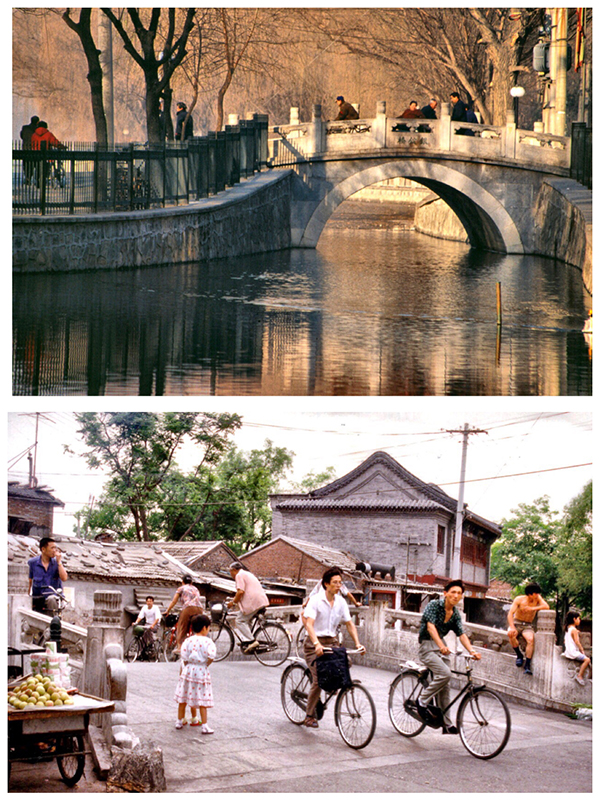
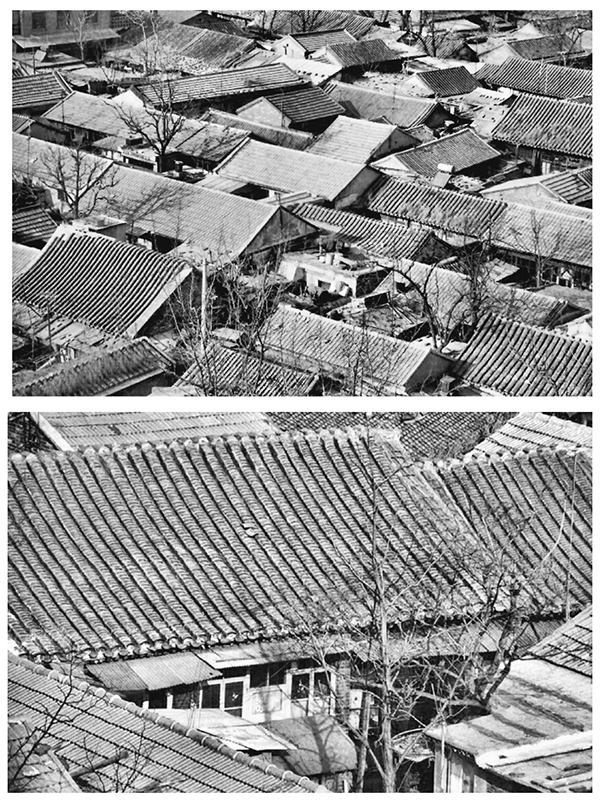
Jiuguloudajie, south of the metro station, dates from the Yuan Dynasty. Venturing either west or east is like taking a walk back in time. The Gulou area offers many possibilities for exploration and photography, with many of its hutongs originating from the Yuan period. Walking east along Guowang Hutong, much remained familiar — the grey walls and tiled roofs of tree-shaded low-rise courtyard dwellings, children heading to and from school, three-wheeled bicycle carts pedaled by hawkers calling out for rubbish to be recycled, the distinctive clatter of beer bottles taken to or from small shops, knife-sharpeners plying their trade, pedicabs showing tourists around the homes of once-famed residents and so much more. As we walked, a monk from a temple in Shanxi ap-proached. He was also visiting, photographing the alleys.
Climatically, Beijing is located in a mostly dry zone. However, through many eras of history, partic-ularly the Yuan Dynasty, it was home to the emperors and their needs had to be met. East Central China, around Hangzhou and the Yangzi Delta, were humid and had abundant food output. Some of that had to come north, but how? The historic Grand Canal was significantly rebuilt during the Yuan and Ming eras to serve Beijing from nearby Tongzhou. Waterways connected it to the walled city with one flowing north of Dongzhimen to Jishuitan, where boats could pass through to Xihai and Houhai Lakes. Historic sketches show an area thronged with small wooden vessels. Around today's Gulou West Street, the heart of old Beijing's commercial district developed. It was a busy, busy place.

Many boats unloaded close to the Silver Ingot Bridge, while others continued to the Jade River Ca-nal. The restored Fire God Temple sits at its entrance from Qianhai Lake. That channel allowed navigation east around the former Imperial City to serve the Forbidden City close to today's Chang'an Avenue.
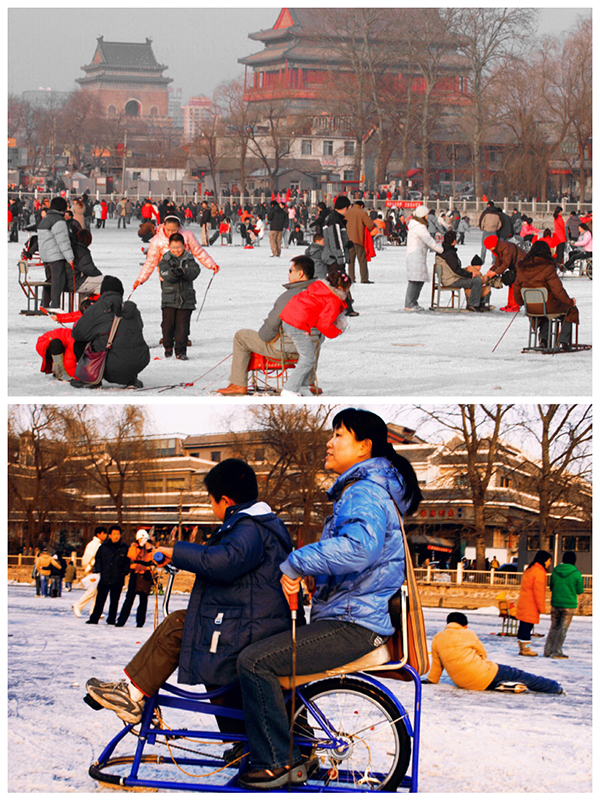
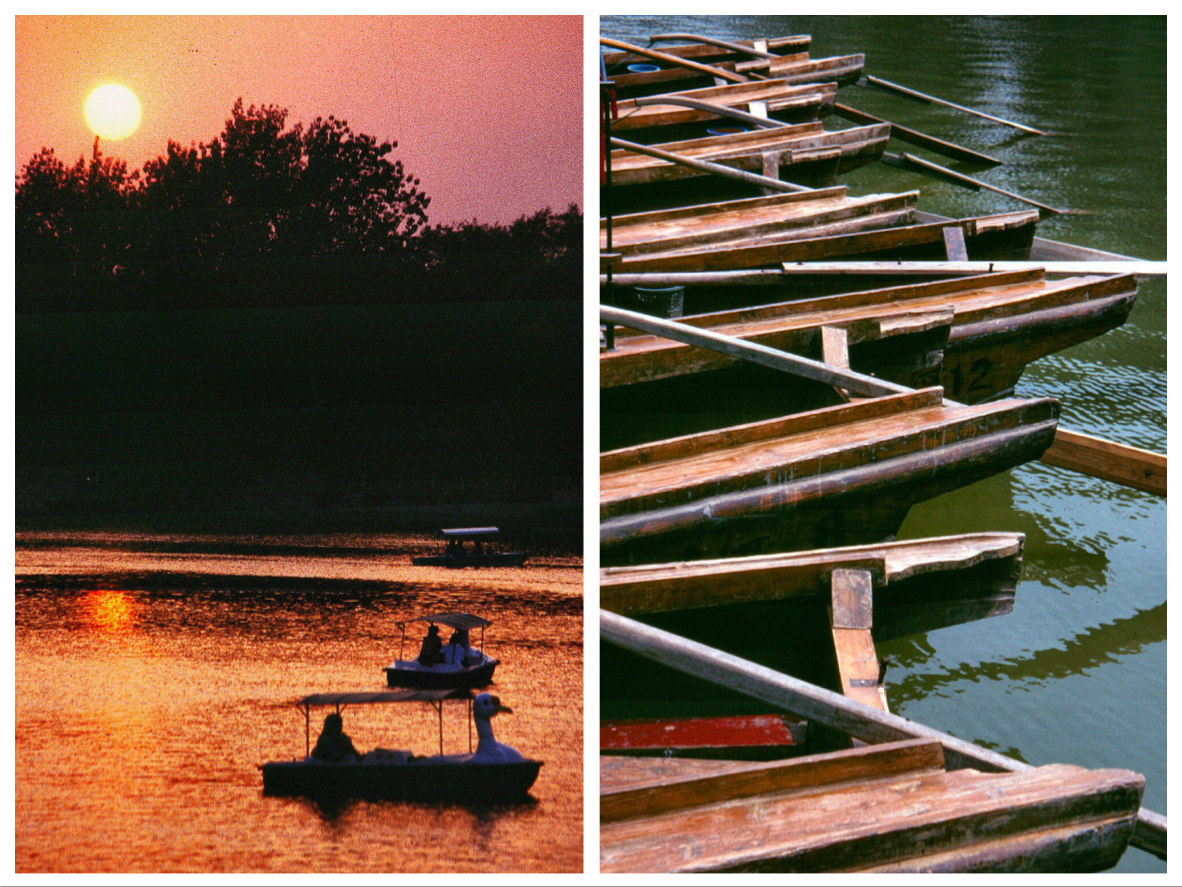
The northern lakes (Xi, Hou and Qian) are collectively known as Shichahai or "The Lake of Ten Temples". Today it provides a unique and beautiful water landscape for the city. Cafes and restau-rants along the willow tree-lined banks are particularly popular on weekends. It has long been a de-light for me to take friends on walks around this area — many of whom are surprised to see such beauty right in the city's heart. I started getting to know the area from 1995, when it was so totally different — indeed, an almost isolated spot with mostly poor-quality buildings. It was, however, a place I would go to walk, cycle, relax and let time drift away in a small cafe or bar with no name near the bridge. And yes, it was referred to as "No-Name Bar". When I was at Shichahai with friends, we wandered through a quiet back alley with several good Muslim restaurants to visit the delightful Guanghua Temple. Later, time was spent chatting in a modern teahouse close to a lakeside pagoda-style tower before wandering through pages of history and ultimately reaching Nanluoguxiang Metro Station.

Today the entire area is easily accessible through Beijing's continually expanding metro system - in the early days, Guloudajie was the nearest. However, I was always at my happiest walking the alleys of old Beijing, which partly explains my long and passionate relationship with this city.