(Source: China Daily)
Tianjin - A fascinating city worthy of many return visits
By Bruce Connolly | chinadaily.com.cn | Updated: 2018-05-04 08:10
Travel and photography, particularly in China, have long been my passion. In the beginning, it was often the case of dashing around the country, shooting images of everything that was new to me before heading off to somewhere else and again taking photographs. That was when visits were limited by available holiday time from my native Scotland. Such experiences, although exciting, were often frustrating for I would depart with a feeling there was so much more to be gained. Now living in China, I find myself regularly returning to places that have fascinated me, taking time to discover more of the history, the different periods in time represented by architecture or maybe just surviving street names. Although appearing increasingly modern, China's cities have many layers to them going back sometimes thousands of years. Despite physical change often a colorful human side has been retained - a street life just waiting to be photographed.
Tianjin is one such city which I first experienced briefly in 1996. Only 30 minutes from Beijing by high-speed train, because of its geography and a history influenced by both maritime and canal trade, it presents a quite different image to the photographer. Following on from four visits last year, I was invited back this April for a television appearance on "Vivian Speaking" to talk about my experiences and feelings of the city. Staying on for nine days it proved to be another journey of discovery.
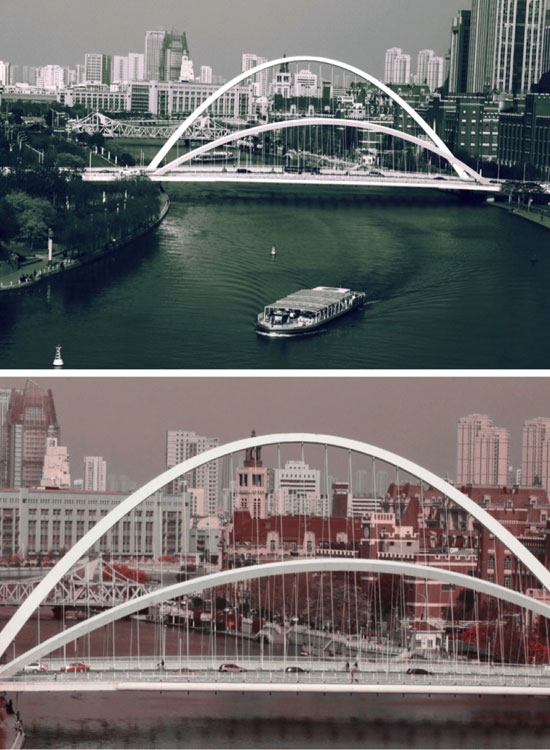
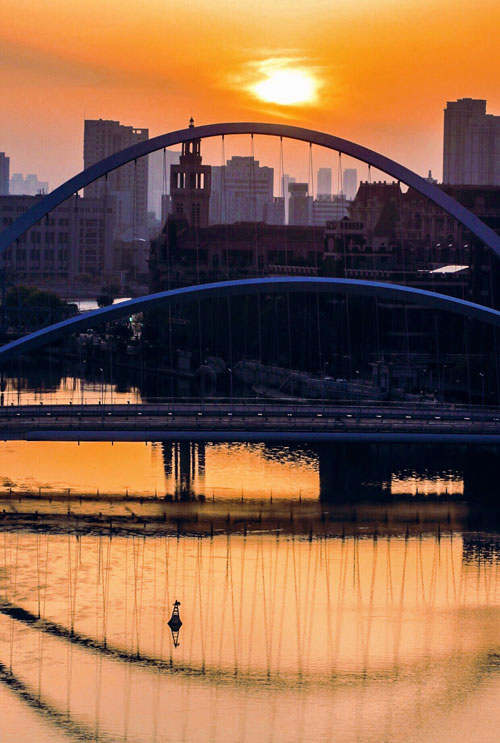
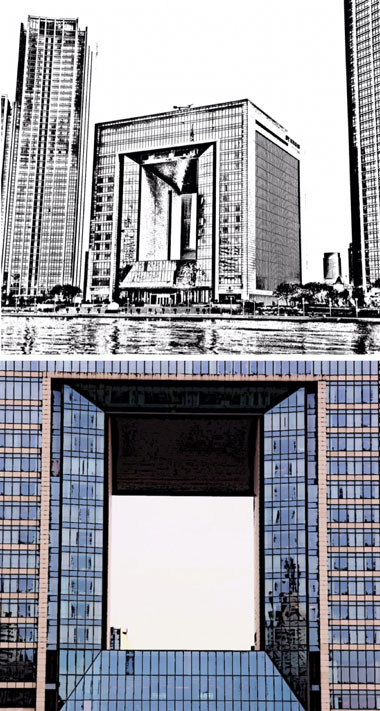
The Haihe River flowing southwards through central Tianjin has long been at the heart of the city's identity and growth. Walking along its manicured, landscaped banks or sitting at a riverside park overlooking one of the two sweeping meanders or bends within the downtown area it is hard today to imagine the bustle that went on for centuries at this very location - a scene enhanced by the futuristic, cubic shaped St Regis Hotel. Its eye-catching architectural design incorporates "Jinmen" or "Tianjin Gate" for the city over many centuries was indeed a gate, a gateway from the sea to landlocked Beijing and northern China. "Haihe" literally translates as "Sea River" referring to a relatively short stretch of water running from where Tzu-ya River merged with the Nanyunhe, the southern stretch of the Grand Canal close to Jingang Bridge. The Haihe flows outwards to Tanggu before discharging into the Bohai Gulf alongside Tianjin's vast modern port, one of China's busiest.
The early city centered on the Drum Tower (Gulou) just south of the Grand Canal was compact, walled and laid out, as was the pattern in many early Chinese settlements, on a strict geographical north, south, east and west layout. Although the walls have gone, the heart of the old city can still be traced. Although commonly thought the name Tianjin was given to the city by Ming Dynasty Emperor Yongle there is also a view it referred to its waters being a gateway or route to Beijing where the word "Tian" or "Heaven" had long associations with past emperors.
Throughout history the city has been an important trading and transhipment center. The Haihe is relatively shallow and prone to silting. Larger sea-going vessels anchor at Tanggu Port with cargoes transferred by smaller vessels and barges upriver to Tianjin with much going onwards along the northern extension of the Grand Canal to Beijing. Certainly the formerly muddy banks were once crowded by small vessels being loaded or unloaded by armies of porters with wooden shoulder poles. Horse-hauled carts would transfer the cargoes to warehouses for onward transportation.

Commerce bustled along its "bund" similar in some ways to Shanghai, but the shallowness of the waters means that today only sightseeing tourist boats cruise day and night along with the occasional fishing craft. However, some of Tianjin's contemporary charm, its attraction, comes from landscaping of several kilometers of river banks today lined with often futuristic, indeed striking architecture. It is particularly beautiful at night when buildings and bridges are illuminated.
For me, the river area offers so many photo opportunities, but as a geographer the entire waterway system around Tianjin has long intrigued. The city is generally flat, lying only a few meters above sea level. Its topography along with that of neighboring coastal Hebei and Shandong has through millennia been influenced by the Yellow River (Huang He). That river presently discharges into the Bohai Gulf near Dongying in Shandong. During the Spring and Autumn Periods of the Qin Dynasty and again around 1048 AD it flowed into the Gulf close to today's Tianjin. Known for centuries as "China's Sorrow" the river was long associated with devastating floods along with frequent course changes. Taming the uncertainties of the river has been one of China's great engineering achievements. In past epochs the coastline was more inland than today. Over time as it entered the sea so deposition of transported material ultimately built up new land - an ongoing process. Tianjin spread across such sediments but the river, the waterways required regular dredging to maintain navigable channels. Ultimately, as with many river ports worldwide, so major dock facilities move downstream to deepwater coastal locations. For Tianjin massive, modern port-handling facilities steadily developed at Binhai.

One of China's earliest railways connected the early Tanggu Port with today's downtown area. Today Tianjin is a nodal point on the nation's rail network where lines from the northeast join others radiating both south, west and of course, north to Beijing. High-speed trains today serve these routes.
Arriving by rail from Beijing, I usually sit for a while close to the railway station at Jiefang Bridge which crosses the Haihe. There I would look and think about the river while taking in its increasingly modern skyline dominated by 336.9–meter-high Tianjin World Financial Centre that opened in 2011. With 13 bridges spanning the Haihe and its tributaries Tianjin is a "City of Bridges". Mostly modern in design they are integral in the landscaping and regeneration of the riverfront.
Jiefang Bridge, completed in 1927, connected both the railway station and the former Italian concession area with similar but much larger districts south of the river. In total there were eight foreign concessions in Tianjin, granted by the former Qing government. Some, such as the Austro-Hungarian (1901-17) and the Russian (1903-1920), were relatively short lived. The French and British Concessions, dating from 1860 to 1943 and 1946 respectively, were actually built up from formerly swamp lands stretching from the river whose course was straightened to alleviate potential flooding. Stretching along Jiefang North Road many of the grand, classical-styled buildings from that period have survived and continue to be utilized as banks, public offices and museums. Indeed at its north end, close to the bridge still stands the unique architecture of the Belfran Building and the former Imperial Hotel (today the Ji Hotel).

Such unique historic districts encourage visitors and photographers to Tianjin. I have walked the area many times thinking of its legacy while trying to imagine the scene over one hundred years ago. However, this time I was invited to join a walk organized through the city's AmCham (American Chamber of Commerce). For me a journey of discovery, learning and seeing much more about what I had thought was familiar. It was interesting sensing the passion among the group - some were Tianjin locals while others were westerners living and working in the city, but all shared a mutual feeling for Tianjin.
Time, patience and studying maps can help get the best out of historic areas. This time I was introduced to what had been historically been international social clubs, foreign trade organizations, administrative offices for different concessions, French-inspired Zizhuilin Catholic church, former residences and much more. Today the area, which has had a program of landscaping and renovation, is a pleasure to walk or cycle through or simply to relax at tranquil Jiefang Park.
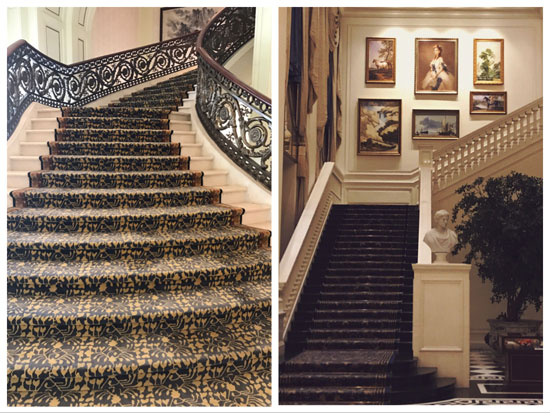
Opposite that park stands the Astor Hotel, dating from 1863. Within its wood paneled corridors is a fascinating museum providing detailed insights into the city's intriguing and complex history. Beyond lay Wudadao. Known for its western-inspired domestic architecture it was at the heart of the former British Concession. Indeed walking its tree-lined avenues the feeling was maybe of suburban England? Some homes have been transformed into quite beautiful restaurants offering garden dining. We had lunch in one close to what had been the home to a Tianjin-born Scot, Eric Liddell. A gold medal 400-meter winner at the Paris 1924 Olympics, he was nicknamed the "Flying Scotsman". Liddell returned to China, to Tianjin, in 1925. He helped design, in 1926, the original Minyuan Stadium at Wudadao - apparently modeled on London's Stamford Bridge, his favorite athletic venue. Someone who indeed gave his life to China, Liddell ( January 16, 1902 - February 21, 1945) retains a high degree of respect within the city.
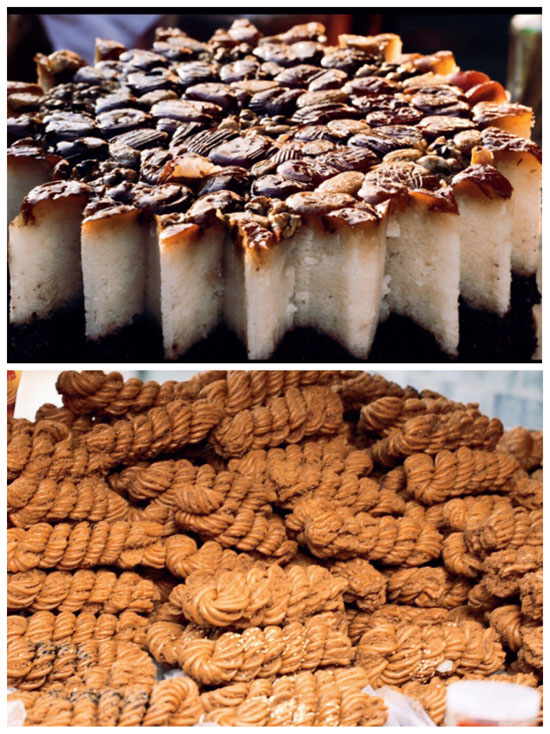
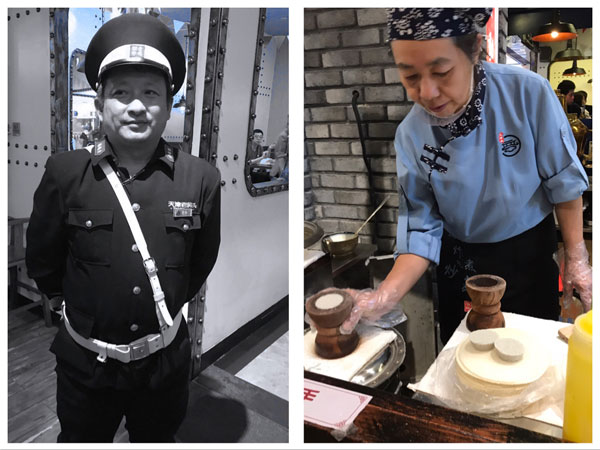
The more I look at Tianjin, the more help and advice I have appreciated from local people. From Wudadao I was directed toward fascinating "We Brewery", a craft brewery located in a compact former red-brick factory close to Xi'an Road and run by a former Chinese footballer star. On the northwestern edge of Wudadao I was taken to a three-floor house converted into an artistic-themed restaurant serving up local specialties. Later, in a popular shopping mall, I was introduced to a restaurant, where some staff members dressed as 1930's police officers. I was honestly enjoying Tianjin.
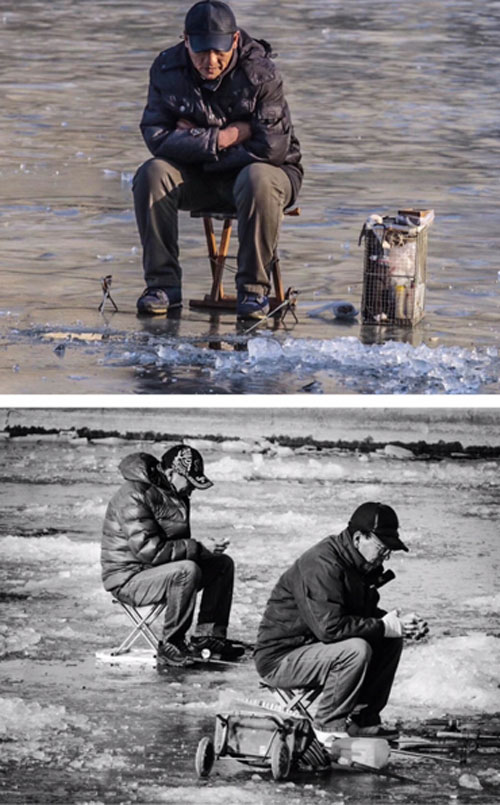
My previous visit was at the end of December 2017. Although cold, midwinter can be a beautiful time. The canals frozen, fishermen sat patiently at holes cut in the ice while at the nearby Ancient Cultural Street steam would rise profusely from snacks being prepared at outdoor stalls. There I could easily spend all day photographing people going about their daily lives. Indeed for me a joy about Tianjin are the people, whether it be couples exercising on the riverbanks, resting in parks, going around on bicycles, there are always images waiting to be caught through the lens. Certainly a reason to regularly return to Tianjin, to learn more about this very compelling city and to share the experiences through photography and writing.