
(Source: China Daily)
Thirty years' watching the changing face of Beijing
By Bruce Connolly | chinadaily.com.cn | Updated: 2018-04-24 09:49
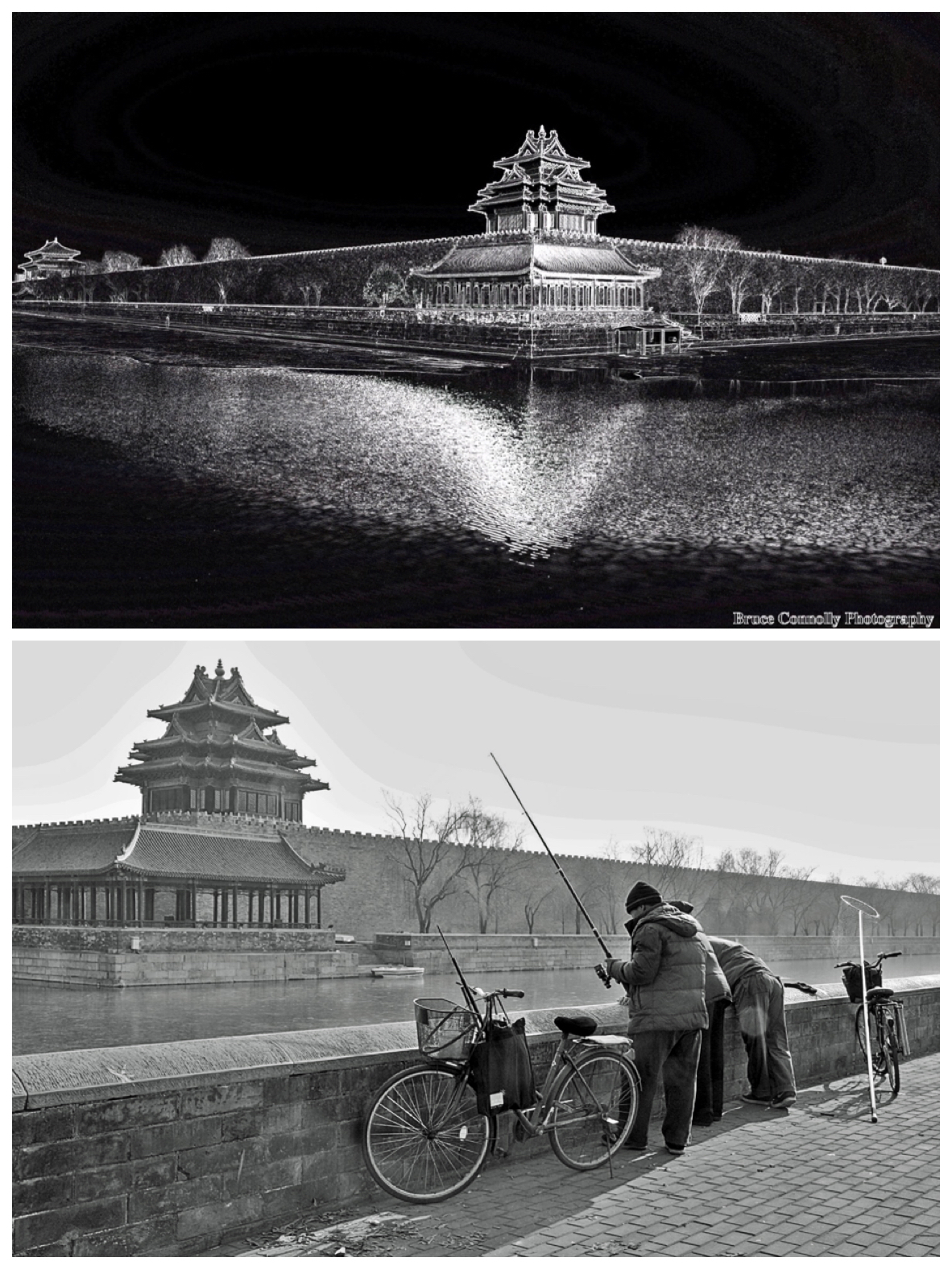
"Photography today offers possibilities impossible in my earlier days. There is now available software that can enhance a photograph, to effectively tell a story. With some images I have applied simple techniques to create such effects and add interest to the shots."
- Bruce Connolly

"What? Thirty years involved with China? You must have seen so many changes!"
I have lost count how many times that question has been fired at me. Actually it is difficult to answer. To start, what do we mean by "changes"? China's overall change has accelerated in recent years, particularly through the growth of high-speed rail now happening nationwide. Though reform and opening-up stimulated the economy during the late 1970s and early 1980s, growth and adjustments were initially patchy. Traveling by train north to south in 1987, I was crossing a country where the technology was still at an intermediate level — that is, until we pulled into Shenzhen! The contrasts then were dramatic, but a starting point for the transformation I have witnessed nationwide over three decades. Wherever I go, my camera remains by my side, though today's smartphones produce excellent images.
Living in Beijing over many years the dramatic, often vertical, alterations to the city's s skyline have certainly caught my attention. However in earlier days, Beijing was a very different city. Apart from a few exceptions, mostly along the eastern Third Ring Road, most buildings in Beijing were low-to medium-rise. Within the formerly walled Ming Dynasty city, buildings crowded around historic hutong alleys were generally one floor.
For me, simply being in Beijing in the 1990s was a period of excitement and discovery. Much was old, but there was still a lot waiting to be discovered. With camera in hand, I walked all over the city. In those days of travel, questions back in my native Scotland would often be about the Great Wall; had I stepped on it? The wall stands as an incredible engineering achievement for its time, an iconic symbol for China just like the high-speed rail or Shanghai's Pudong skyline today. Revisiting the Badaling Great Wall north of Beijing in March, I could feel its majesty just as in 1987.
Those early days documenting Beijing's symbols became a mission — for example, the Forbidden City or Imperial Palace was a "must-visit"! It symbolized the traditional heart of Beijing and the country at large, for it was there the Emperor would carry the Mandate of Heaven. Its walls, gates, ornate halls and structures presented so many angles to work with in trying to achieve "page-stoppers", or images that would catch attention. My preferred locations were often around the northern moat, particularly in winter.
I came to realize how much of historic Beijing was influenced by the needs of the Palace. Shichahai, especially around the Silver Ingot Bridge or yindingqiao, was long my favorite hangout. Man-made, its lakes facilitated navigation from the Grand Canal right into the Imperial Palace while providing excellent panoramas for photography of the Drum and Bell Towers, or Zhonggulou.

Historic Beijing laid along a seven-kilometer axis. Passing through the Forbidden City and Tian'anmen Square it now traverses the pedestrianized Qianmen Street. It was along this direction the emperor would be transported south to the Temple of Heaven. Often I walked the route, marveling at Qianmen's Jianlou Arrow Tower before heading beyond a traditional pailou arch, ultimately reaching the temple — where the grandest of its circular halls was constructed without nails.
Northwest of the original city lies a vast stretch of water, Kunming Lake, part of the Summer Palace. This formed a retreat for the emperors along with the beautiful pagoda-capped Jade Spring Hill and royal hunting grounds around the Fragrant Hills. Some of my favorite locations there are now easily accessed by metro and tramway, but previously involved lengthy bus journeys.
During the 1950s, Beijing's layout radically changed. The compact walled city embarked on a program of rapid industrialization, resulting in considerable urban expansion beyond those historic walls. This was particularly noticeable in Chaoyang District, where largely rural areas were transformed into vast industrial complexes. Little of this exists today but a significant reminder is the Dashanzi Art District. Much of the original factory structure remains, and until a decade ago trains continued to haul coal to supply its large central heating plant.
Around Chaoyang, particularly within the central business district, some unique contrasts have arisen, with 21st-century architecture coming face-to-face with apartments that once housed factory workers and their families.
A major stimulus to Beijing's transformation to a world-class city was the run-up to the 2008 Olympics. While construction of the Olympic Green produced landmark structures such as the National Stadium, other less obvious changes were underway — mostly underground. It is hard to imagine only 15 years ago Beijing had just two metro lines. One followed the former inner city walls, while the other went out west from Xidan to Pingguoyuan close to the Western Hills. Today, the city has a system that just keeps on growing.
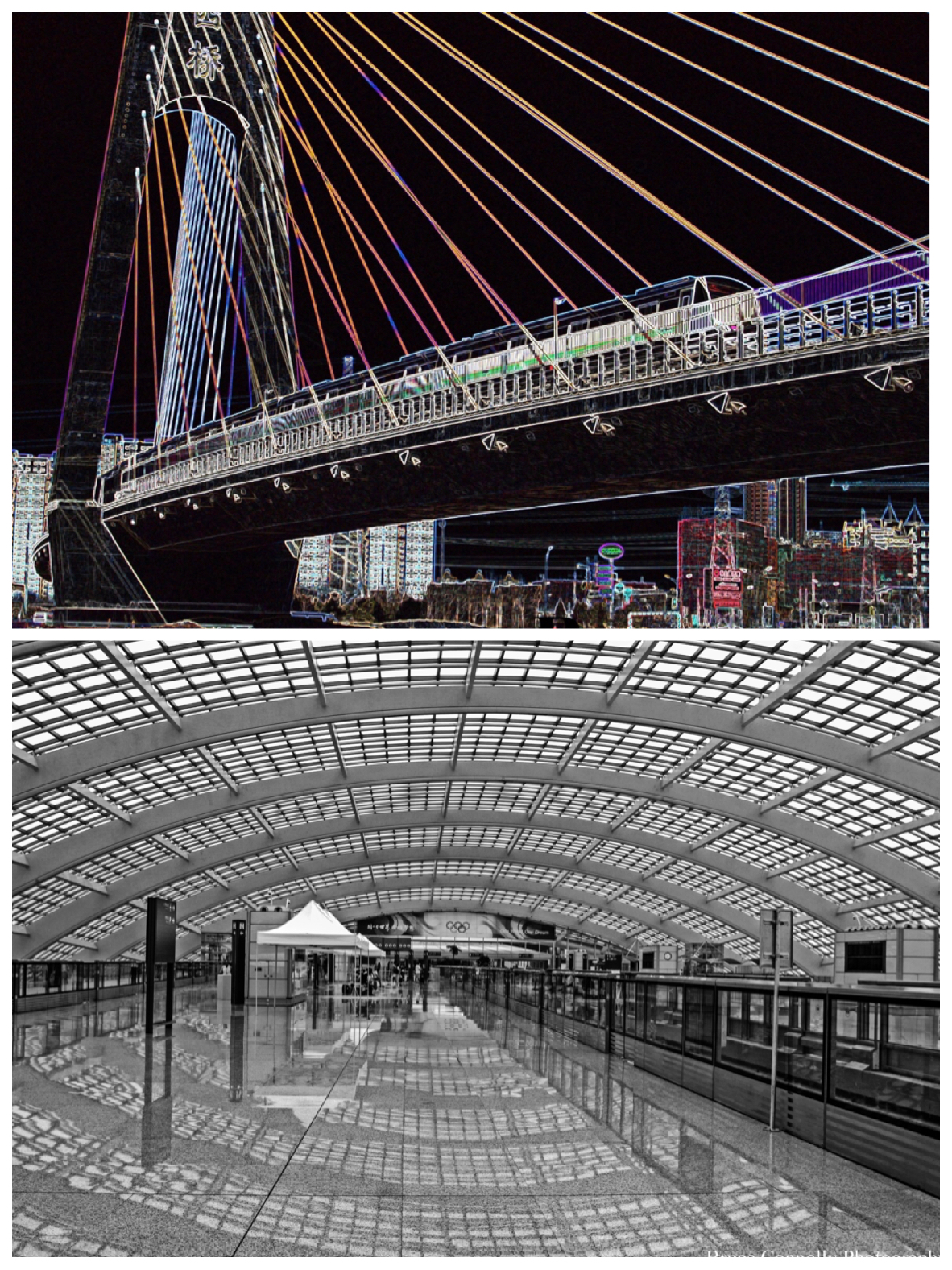
This not only greatly improves mobility, but is also a factor in stimulating urban expansion. Some suburban lines have added to the city's futuristic architectural signatures, such as the graceful design of Lishuiqiao Bridge, which carries Line 5 across the Qinghe River.

In anticipation of the Olympics, Beijing Capital International Airport was expanded with the opening of Norman Foster's Terminal 3, then the world's largest airport building. For photographers, the Metro Station at T3 has created fascinating patterns due to the internal reflections of its roof structure.
There was a real buzz of activity in the period before 2008. Structures gaining international attention were changing the appearance and feel of the city. Close to the Great Hall of the People, designed in the 1950s, the "egg-shaped" National Center for the Performing Arts designed by French architect Paul Andrew was completed in September 2007, giving Beijing a world-leading concert and theatrical venue.
I remember looking in amazement in the early 2000s at a model within the Beijing Urban Planning Exhibition Hall at Qianmen of the proposed CBD developments along Guanghua Lu, and wondered if it would ever happen. It has, and as we see today it has emerged into the thriving international business heart of the city while continuing to expand both in area and in height. In 2008 the 330-meter China World Trade Center 3 tower grew skyward, eventually becoming the capital's highest commercial building. Eastward were other eye-catching designs, such as the 234-meter high CCTV Headquarters on eastern Guanghua Lu, which opened in May 2012. Designed by Dutch and German architects Rem Koolhas and Ole Scheeren, today it is a popular backdrop for photography by visitors to the outdoor terrace at the recently opened extension to China World Mall at Guomao. That terrace has allowed me to continue documenting the rise of China Zun to 530 meters, from what only three years ago was a great hole in the ground!

Beijing's development and change has expanded well beyond the central business district, but for photographers there are the sweeping lines of Zaha Hadid's Galaxy SOHO and the later Wangjing SOHO. Wangjing is an area to watch. Since the neighborhood is closer to Capital Airport, there is more room for expansion, with a host of new buildings completed or still rising. Similarly, the high-tech areas around Zhongguancun which once were countryside south of the Old Summer Palace. Such areas also provide quality, modern living in environments that couldn't be more different from the city's earlier courtyard hutong dwellings.
Rail travel has been a lifetime passion for me. In 1987 I arrived at Beijing's main railway station, and over the past three decades have witnessed quite stunning changes — both in the trains themselves and the railway stations. In July 1996, coming from Northeast China on a very rainy morning I stepped down onto a small, open-air station: Beijing South. Apart from the name, there is no comparison to the vast, modern and easy-to-use terminal, where the world's fastest passenger trains whisk passengers to Shanghai in under five hours.
Again with transport infrastructure, Beijing's main airport which was considerably expanded before the 2008 Olympics is now operating at capacity, or even beyond! Next year, 2019, it will be complemented by a vast new airport with eight runways in suburban Daxing southwest of downtown.
When I first came to Beijing 31 years ago, it felt like everything moved slowly. Indeed, with nine million bicycles on its streets the city had the reputation for the quietest rush hour in the world. Though bicycles are still present in the form of rentals, the city's avenues have now been taken over by cars in ever-increasing numbers — a situation I never thought I would come to witness.
So much has happened to Beijing since my first stay in 1987 at the Friendship Hotel in Haidian, when horses were pulling carts on Zhongguancun South. As I write this, it feels like I have only just started talking about the changes I have witnessed and documented in this city which has become my home, and whose streets I walk daily. This is a city that has vastly modernized, but one where I can still find great beauty and tranquility.


