(Source: China Daily)
Xishuangbanna, China's enchanting tropical borderland
By Bruce Connolly | chinadaily.com.cn | Updated: 2018-04-14 10:33
This month, many domestic and international visitors will head to Xishuangbanna in Southwest China's Yunnan province. They want to experience the New Year celebrations of the Dai ethnic group and the Water Splashing Festival in particular. But for me, Xishuangbanna is a beautiful area with some fascinating personal memories.
"Did I really get married in Xishuangbanna?" A question I've asked myself, and one that was also mentioned in a radio travel feature from my native Scotland, along with an image appearing in one of our national newspapers. "Did Bruce actually marry a Dai girl?" is another. After all, there were photographs of me going through a wedding ceremony near Jinghong, the charming, laid-back capital of Xishuangbanna. "What actually happened?" people might ask.
In the 1990s I led several geographical study tours to China, particularly Yunnan. After visiting the dramatic mountainous landscapes around Lijiang, we concluded our travels by relaxing in the tropical warmth and geographical beauty of Xishuangbanna, on the border of Myanmar and Laos. One groupt took in the tranquil Jinghong Botanical Gardens where we marveled at the biodiversity of the area. Lying south of the Tropic of Cancer, Xishuangbanna is home to one-quarter of China's animal species and a sixth of the nation's plant varieties. Over 600 species of flora are featured in the gardens.
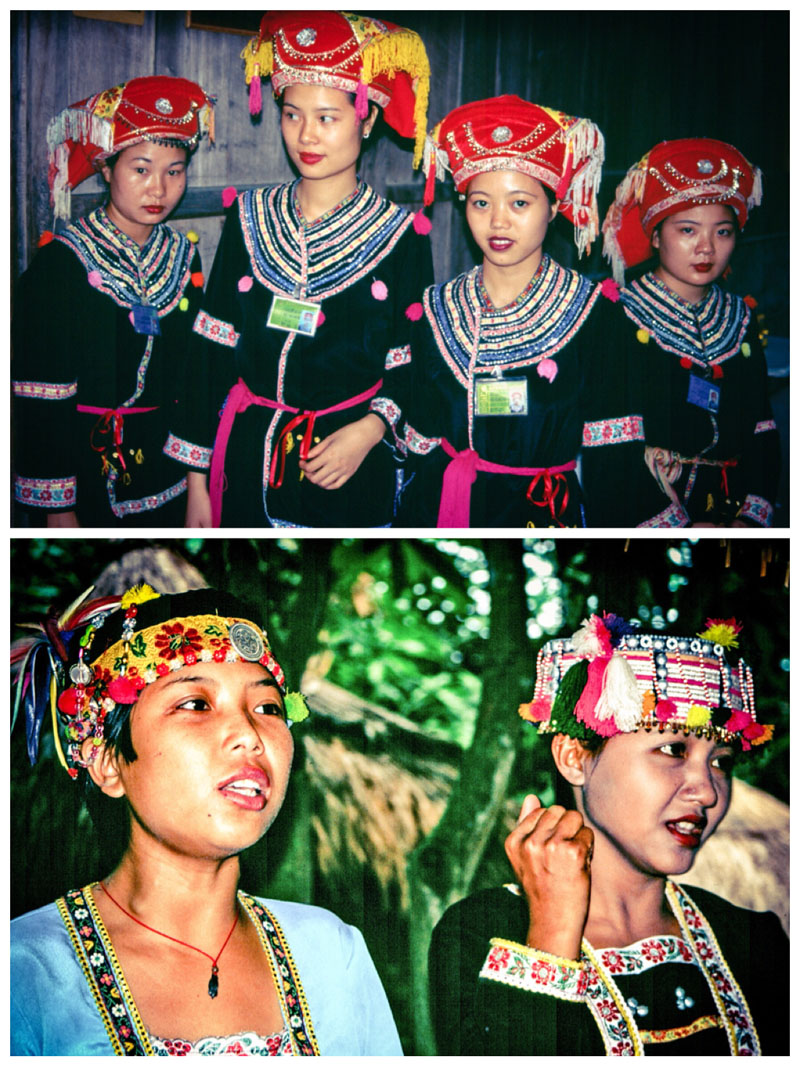
After walking around that warm April morning, it was time for lunch, followed by a lively performance of local ethnic culture and dance. As the show concluded, a small perfumed pouch was thrown from the stage by one of the dancers. I caught it, only to be led up on a platform and dressed in Dai costume. Asked to kneel beside an attractive girl in her brightly colored attire, we then went through a "marriage ceremony" involving the consumption of a large bowl of local white spirits. This happened much to the enjoyment of my group, who gleefully cheered before we headed back onto the bus. The Dai dancers waving goodbye, leaving me with fond memories of "Banna", as the area is affectionately called.

The Xishuangbanna Dai autonomous region derives its name from the Dai phrase Sip song panna, or "12 rice-growing districts". This was until recent years a remote part of southwestern China sharing many ethnic, cultural, linguistic and physical characteristics with neighboring countries. Since the 1950s, considerable effort has gone into eradicating potential threats of tropical disease, as such areas were avoided in the past. In coming years it will be part of a railway corridor connecting Kunming with Laos and on to Thailand — a major project designed to facilitate connectivity and trade between China and Southeast Asia.
Maybe it was its soporific, tropical atmosphere, but Jinghong felt more like a laid-back small town in the late '90s, particularly when compared to Kunming, the provincial capital. Its atmosphere was something I could embrace, even on descent to what was then a relatively small airport. At that time, flying was the only feasible option for anyone on a tight itinerary, including my groups. It is still the main route for most visitors, though the road journey that previously took a day or more due to mountainous road conditions have now been considerably shortened following expressway construction.
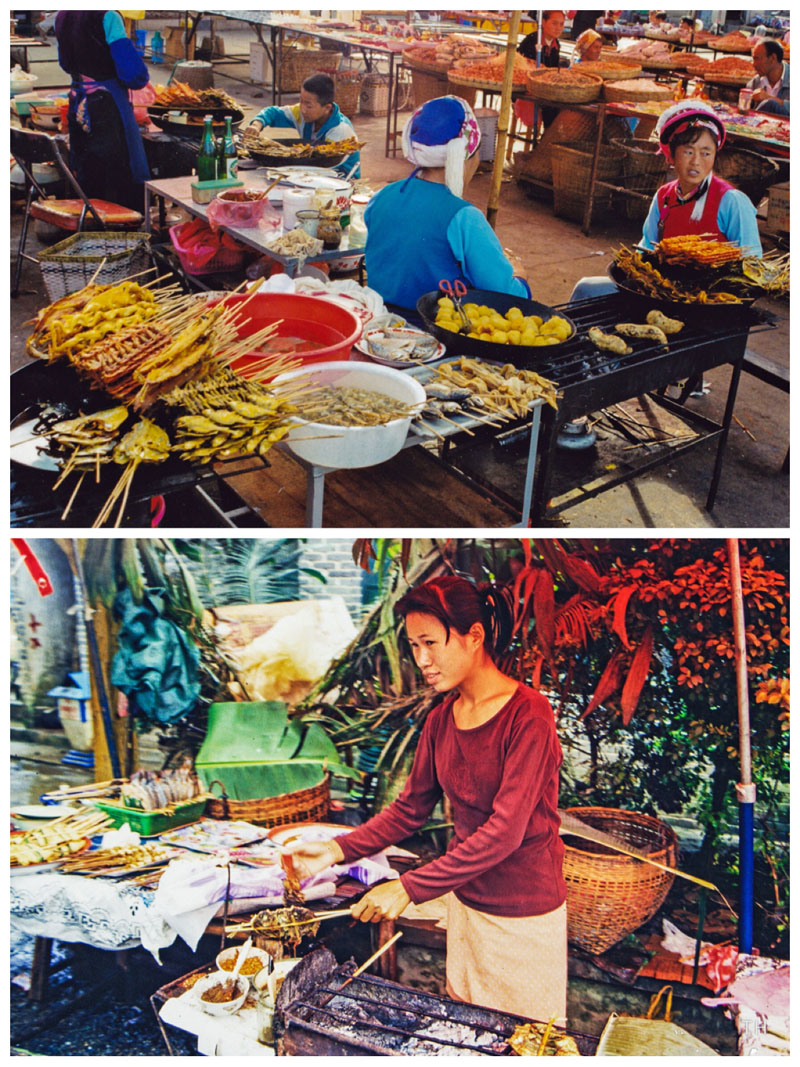
Jinghong had its modern palm-fringed streets, but I could not escape the feeling it was different from other Chinese cities. It felt both relaxing and exotic. What I enjoyed about the downtown area was sitting in the evenings at street food stalls or exploring the bustling food markets with their range of exotic foods and spices — sizzling sounds filled the air. A pleasant way to end the day.

With so many ethnic nationalities living in and around the city, it is enlightening to visit what today is known as Sipsongpanna Nationalities Folk Customs Park. The park brings diverse groups together, illustrating architecture, costumes and cultural activities. Some nationalities are small in number, living in remote forest villages and the park provides an insight into their lives.
The Dai are the principal ethnic group in Xishuangbanna. Just over a million live across southwestern China, principally in Yunnan province, with over a third actually residing in Xishuangbanna. In Jinghong, opportunities for fun can be had at Dai village-style restaurants, where diners relaxing in bamboo huts can be invited to take part in traditional dancing or even "marriage" ceremonies.

Tourism, mainly domestic, is today a major driver of the local economy. It tends to be seasonal due to weather patterns, with midsummer often bringing high humidity and rain. But during northern China's cold winters, "Banna" is warm and dry, attracting many visitors. The region's hottest months are actually April and May, with temperatures dropping due to summer rains. Although it's around 45 minutes' flight time southwest to Jinghong, the drier landscapes around Kunming soon give way to scenes of green where dense tropical mountain ridges are interspersed with tea plantations and banana groves. Jinghong's Xishuangbanna Gasa Airport is Yunnan's second largest, having expanded in response to the growth in tourism. Extensive holiday resorts have developed near the airport — my first journey featured a stay in such a location beyond the main urban area. On a later visit, I much preferred staying in an older downtown riverside hotel where Premier Zhou Enlai had been a guest in 1961. I loved its traditional bamboo furnishings and the views from the French-style latticed windows of my bedroom towards the Lancang River. A statue commemorating his visit stands in Manting Park, one of Jinghong's several exotic gardens.

During his visit, Zhou attended Jinghong's famed Water Splashing Festival. The Dai people's close relationship with water is particularly exemplified during their Lunar New Year celebrations, falling annually in mid-April. The Festival (poshui jie) lasts three days, with dragon boat races, dancing, lush dining and a lot of fun. Splashing water symbolizes the washing away of past transgressions while creating a fresh start. This a way of bestowing blessings on each other, so the wetter the better.
The Dai heartland is the area of Ganlanba in Xishuangbanna, around 40 kilometers south of Jinghong and on the border with Myanmar. With an altitude only 530 meters above sea level, the environment is most certainly tropical, producing an abundant variety of crops and vegetation. Golden-haired monkeys and tigers are rumored to live in the forest depths — but thankfully I never encountered any, even while walking off-road and into the gloom of the jungle.

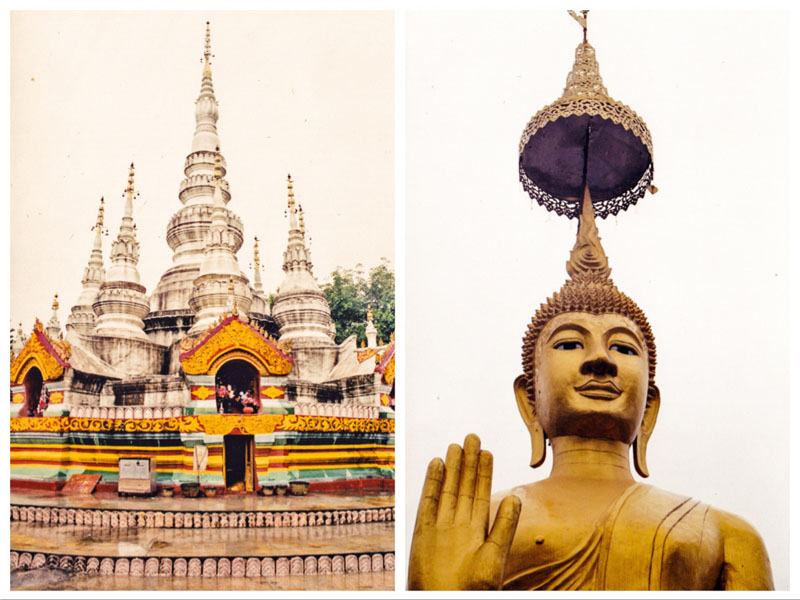
While Jinghong presents a modern, contemporary image of Xishuangbanna, visiting villages transports the traveler to a much more rustic scene. I was lucky to visit several villages, not just Dai but also Lahu. The principal town I visited in Ganlanba was Damenglong. It was a great place to enjoy a range of Dai foods, including rice cooked in bamboo tubes along with a host of barbecued snacks. The main attraction, rising three kilometers beyond the town, is the Manfeilong Pagoda dating back to the 13th century. It is accessed by a path climbing through forest and rubber plantations. On Damenglong's streets and particularly around nearby gilded temples, Buddhist monks walk around wearing lightweight saffron robes. This attire, commonly found throughout much of SE Asia, contrasts with the heavier maroon robes worn in northern Yunnan.
Xishuangbanna was so relaxing and so much fun. It was difficult to leave, but I was taken aback by so many memories for the photo album — including that "wedding" in Jinghong.