(Source: China Daily)
A week that changed the world
By Harvey Dzodin | chinadaily.com.cn | Updated: 2017-01-20 10:28
This third week of January, 2017 is one overflowing in ironies that will long be remembered. It is full of sea changes in which history performed flip flops and somersaults leaving the world noticeably transformed from many decades that preceded it.
This week reminds me of Margaret MacMillan's 2002 award-winning book Nixon and Mao: The Week That Changed the World but oddly only as a tangential mirror image of it. This is because this week the world as we knew it has gone and been supplanted by a new paradigm hardly imaginable a year ago.
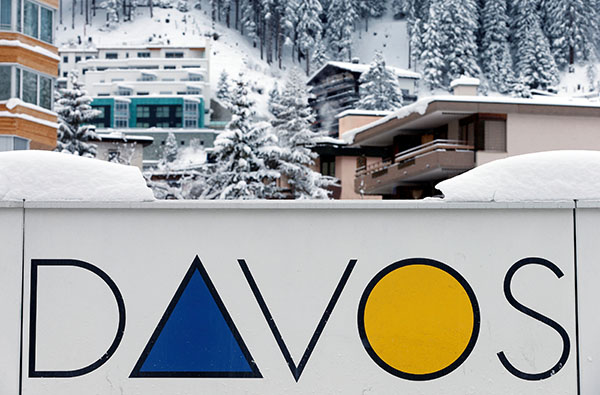
Three events make my point. The attendance of President Xi Jinping for the first time, along with senior Chinese officials, at the World Economic Forum, together with his much anticipated keynote address and visits to various multilateral organizations. United Kingdom Prime Minister Theresa May's announcement that Brexit will be a "clean" one marked by untying the many knots that bound it to the European Union. The third is the inauguration of one of the most enigmatic Presidents in the history of the United States, Donald J. Trump.
A year ago it would have been hard to imagine, as memorialized in President Xi's Davos keynote, that China would assume the mantle of leadership in globalization, opposing protectionism and promoting free trade. But that's exactly what he said. And in tandem, the State Council announced that the Chinese government would liberalize policies on foreign investment in Chinese banks and other financial institutions.
Although some may still quibble with the "purity" of China's open trade policies, there is no doubt that the US abdicated its leadership as of todayby renouncing the Trans-Pacific Partnership, and handed China its global leadership role on a silver platter. And to give credit where credit is due, Xi's One Belt, One Road (OBOR) initiative begun in 2013 was prescient. China is occupying the moral economic high ground in the world now and can further capitalize on being there. More than forty countries and international organizations have signed cooperation agreements with China, and Chinese companies are responsible for more than $50 billion in investments resulting in significant job creation at home and abroad under OBOR.
President Xi in Davos and at the United Nations office in Geneva, restated his goal to stay the agreed course on climate change. It was a pleasant shock to the world in 2015 that China and the US would play a joint leadership role in assuring the implementation of the Paris Climate Accord. This was a bold bilateral achievement and a concrete example of a new great power relationship. Now however, it appears that the US may renege on that pledge because the new administration does not subscribe to overwhelming scientific evidence that human activity is to blame for global warming. Apparently, China has also been ceded leadership here too. The only good news perhaps is that it would take four years for the US to withdraw from the Accord.
Being in Davos, is not merely about making speeches. It's the ultimate networking event. President Xi held many meetings there and continued building bridges for China with global movers and shakers that he can build on in the years to come. His visits to the UN Office in Geneva, the headquarters of the World Health Organization and the International Olympic Committeefurther underscored China's commitment to multilateralism and to responsibly shoulder its responsibilities as a full-fledged world leader.
The contrast with the other two events during this week that changed the world couldn't be more stark.
In contrast to President Xi's remarks, the announcement by the British Prime Minister that the United Kingdom, the world's super power of its time, would abandon the single market, customs union and the European Court of Justice in order to achieve a clean break with the European Union marks the UK's further decline and possible dismemberment, and may also signal the beginning of the end for the EU as we know it. It is significant evidence of the recent world-wide trend away from world and regional cooperation that has governed the globe since the end of World War II to one of anti-internationalism and neo-isolationism.
And then there is the new American president, Mr. Trump, a wild card to say the least. We'll just have to hold our collective breath and wait and see what he does.
The author is a senior featured contributor of China Daily website.