(Source: China Daily)
The paradox of the US election and where to go next
By Nathan Gardels | chinadaily.com.cn | Updated: 2016-10-13 17:14
The great paradox in the last few months of the US presidential election campaign is that American democracy has been weakening the post WWII alliance system as well as a central plank of the pivot to Asia, the TPP. By saying the US might cast off the burden of allies, Donald Trump has already made leaders in Japan, South Korea and the Philippines anxious. Rodrigo Duterte, the Philippine president, surely only says what many are thinking when he doubts American staying power and recognizes he must forge a relationship with China. And it should be noted that, whatever else may be repulsive about Trump, the idea of shedding and sharing the burden with America's allies resonates with the public, both with respect to alliance commitments in Europe and Asia.
China, however, should be careful what it aims for in this regard – it could end up producing a nuclear Japan sooner rather than later if Trump were to win and America's defense umbrella of Japan were to be removed. No present security arrangements in the region should be dismantled until more inclusive architecture is in place. A vacuum would be dangerous for everyone.
Both Donald Trump and Hillary Clinton, under pressure from the left, have condemned the TPP, which was the centerpiece of the idea of an "economic NATO" that would cement new trading architecture for East Asia that would put China on the sidelines. Singapore has signaled that a failure to see through TPP, which leaders in Japan agreed to at great political cost by overriding its rice farmers, will make allies doubt America's clout. A failure of TPP would grant China more space to shape the rules in the region.
In short, the American pivot has been sent on a detour, if not knocked off course, by a disgruntled American public. This raises an even larger question: Can democracy be counted on to keep its commitments? This may also be true with respect to the climate change accord signed by the US and China – 28 American states are trying to kill Obama's linchpin Clean Power Act in the courts.
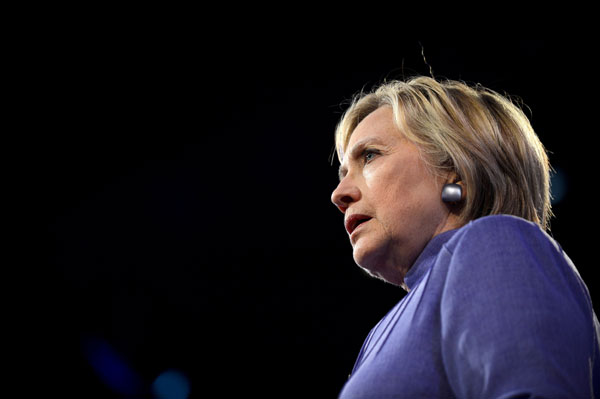
If Hillary Clinton wins, her stated foreign policy aim is to maintain America's global leadership. At the same time, no responsible leader, her national security team has made clear, wants a weak China. That is not in America's interest, or the world's interest. If China's ambitions need to be challenged, her team has said, it would be through bolstering its allies.
On this score, the US has to be careful not to over-reach given the growing wariness of those allies concerning America's long-term commitment. As George Yeo, Singapore's former foreign minister, has said, "Asian nations can be friends of America, but they can't afford to be enemies of China."
Overall, a new Clinton administration would oppose the idea of "Asia for Asians." It wants a "pan-Pacific order, not an Asian order." The idea is more to maintain America's presence, not contain China.
As Peking University scholar Wang Jisi has recently written, the "new normal" of relations between China and the US is a contest over writing these rules of the future order, both in trade and security.
A few further observations
From Brexit to Trump and the opposition of TPP, an anti-globalization backlash is setting in across the West. Perhaps we are seeing a new division – Asia favors globalization and the West wants to pull back. On the other hand, some see the neo-Maoist nostalgia sweeping parts of China today as "populism with Chinese characteristics" – also challenging the lack of inclusiveness in the prosperity globalization has created for some while leaving others behind.
To the extent this is true, both the West and China in the coming years will be absorbed in reconfiguring the social contract, adjusting globalization according to domestic policies that ensure there are fewer losers than winners.
What should be on the agenda
From the US side, the first gesture of a new Clinton administration should be to join the AIIB (Asian Infrastructure Development Bank) to demonstrate there is ground for agreement on rules and inclusive institutions for the future, and not only contestation. Many policy voices in the US regard opposition to AIIB as a major mistake of the Obama administration.
The most urgent problem, North Korea, could prove the most ready ground for creating new security arrangements outside the old alliance system. Clinton advisors have told me they put North Korea high on their early agenda.
It seems clear that further sanctions only will generate further bombs and missiles from Pyongyang. That has been the consistent pattern. Unlike in Iran, where there is vigorous public discourse and elections, the sanctions approach can produce political pressure for change. That does not work in a totalitarian state like North Korea.
It is time to take a bold alternative and open up direct talks between the US and North Korea that focus on diplomatic recognition in exchange for a freeze on nuclear weapons and missile development. China should be a key part, if not the leading role, of any inspection regime to verify such a freeze. If that arrangement can hold out over time, the ultimate step would be a formal peace treaty with the US to replace the armistice and formally end hostilities. South Korea would have to agree, of course, with such an approach. And China would have to play a key role in guaranteeing it is adhered to.
If such a deal could be put together, not only would the danger of North Korean nukes to the region be dampened, but this common security approach by the US and China would be the embryo of Northeast Asia architecture that is inclusive of all key powers.
If this were combined with the US joining AIIB, it would show there are scenarios for cooperation instead of only conflict. It would be a step out of the Thucydides trap – the conflict between rising and established powers – into which the US and China have now drifted.
The author is editor-in-chief of The World Post and Executive Advisor to the Berggruen Institute's 21st Century Council.