(Source: China Daily)
Enthusiastic keynote speech endorses globalization trend
By Rakesh Gupta | chinadaily.com.cn | Updated: 2016-09-06 09:26
This year's G20 summit is being held in an environment experiencing a sluggish economic period and people around the world are watching this with eagerness and hope. Apart from looking at the new growth drivers, leaders around the world are also interested in developing a sustainable growth agenda and to some extent see China's rapid growth with awe and interest.
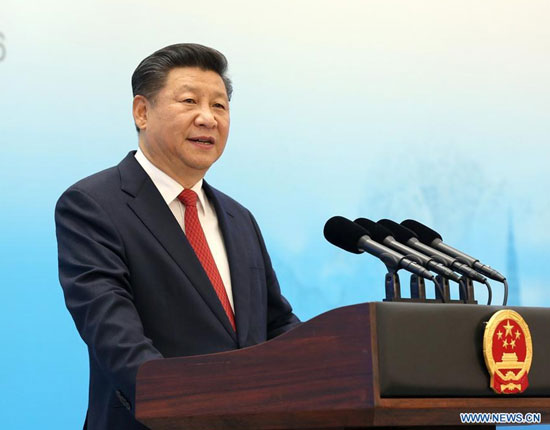
President Xi delivered his keynote at the B20 meeting on Saturday. He started his speech on a personal note talking about his work in Hangzhou and the development of the region from humble beginnings, bringing in a personal touch to international business and diplomacy.
His speech was full of enthusiasm and hope; of clear blue skies and lakes and rivers with clean, clear waters. He talked about China's success in achieving tremendous growth outcomes despite the challenges of starting as a poor nation with a population of over 1.3 billion and turning into the second largest economy in the world.
Path to success for China may not have been easy but they have achieved this with perseverance, resolve and dedication.
Some may argue China has pursued path of economic growth at the cost of environment. This growth in China has not been even. It has been focused on economic outcomes. China has more than 6 per cent of its people living in extreme poverty. Recently China has shifted its growth focus to be equitable and inclusive and has implemented policies that are aimed at alleviation of poverty and had some success in this regard.
His speech had all key elements included that were expected in his speech such as balancing of social and market model, continuing with its efforts in globalization, achieving common prosperity, deepen reforms etc.
President Xi presented China's strategies to provide impetus for future economic growth such as; innovation driven development strategy to provide stronger and new growth drivers, green development, promoting equity and further opening to achieve greater mutual benefit.
He talked about the importance of the issues that business community and policymakers around the world are concerned about; such as — global investment, peaceful & stable environment and global economic governance. He provided China's vision to tackle these issues for the future.
His speech had something for everyone, businesses around the world, policymakers, poor people, developed economies and developing economies alike. His speech conveys a clear but subtle message; China is prepared to play a more significant role in global governance.
Another key message I can see embedded in his speech is articulation of his new ideology for China and its engagement with the world. This ideology, is based on co-existence of socialism and market model, was referred to in his speech and sometimes is also called 'new normal'.
We all understand the importance of free market and deepening of the process of globalization and research has argued in favour of the deepening of the globalization process. However, when there is an economic slowdown political leaders tend resort to protectionist policies in the hope that protectionism will solve their economic vows.
I am glad President Xi has argued that this summit should further deepen the process of globalization and free flow of trade and investment.
This is especially important for emerging economies; Start of protectionist policies will probably hurt them most. With the globalisation thus far the costs of living in these economies have risen significantly during the period.
For the rich countries it is not just humanitarian to look after the interest of the poorest of the countries such as Sub Saharan Africa but is also ethical and moral responsibility. Leaders of these nations ought to look at the issues not from national perspectives but from humanitarian perspective.
Dr Rakesh Gupta is an academic at Griffith University, Australia. He also holds visiting Professor positions at Chongyang Institute of Financial Studies at Renmin University and Dalian University of Technology.