(Source: China Daily)
The destruction of Brazil's economy, institutions and hope
By Marcos Fava Neves | chinadaily.com.cn | Updated: 2015-12-30 15:48
One of the most promising economies of the BRICS countries lost track and finished 2015 with a decline of almost 4% in the country's GDP. Another 3% loss is expected for 2016, bad news for Chinese trade with Brazil.
What are the reasons for such a disaster, when we see the emerging countries growing and China with more than 6% this year?
Brazil harvests the results of an antique (old mindset of the State being the big actor of the economy) populist and left-handed (socialist) government, completing 13 years in power, without important reforms to make production more competitive. The government of Lula da Silva (2003-2010), followed by the current government (2011-2015), that still has this gentleman as a "hidden president", was one of the worst seen in Brazilian history. This period is called the "lulopetismo" era (a word that joins Lula and Petismo, his political party with origins in labor unions with the damaging view of employee protection and rights, and not of company productivity and meritocracy).
The deficit of the federal government is out of control, industrial production is declining, unemployment exploding (and a very low labor productivity) and unfortunately inflation, a terrible disease that hits the poor, is back in our society at a rate of almost 11%. The currency has lost its value and interest rates are among the highest in the world, transferring money from production to the financial sector, another punishment for poor people.
Similar to the results of other populist governments, Brazil lost its capacity to generate income and as a consequence, income can't be distributed anymore. Social gains and inclusion that happened within the last 15-20 years are being lost, unfortunately. The country was downgraded in rating agencies, losing its investment grade, but mostly downgraded as an organized society.
Together with the economy, the Lulopetismo period resulted in a strong deterioration of institutions and public companies in Brazil. The destruction of Petrobras can be found in a recent paper of the recognized finances Professor Aswath Damodaran. The company lost its value and most of its directors are in jail. Several publically-owned companies, pension funds and agencies were destroyed similarly to Petrobras.
Even being a poor country, the expenditures of the giant state structure are incredible, like for instance what was spent during the recent event COP in Paris. It is a culture of endless money with rentals of limousines, staying always in the most expensive hotels and other daily aggressions to Brazilian tax-payers.
Lula infiltrated corruption in the state structure in a dimension never seen in Brazilian history. The prime minister (chief of casa civil) of Lula's government, the president of PT (Labor's Party), the president of Congress during Lula's government and PT financial managers were all condemned and arrested. The CEOs of the most important construction company of Brazil, of one of the fastest-growing banks and a cattle rancher whoran several lobbies during his term in governmentare all in jail.
Finally, the leader of PT and the government in the Senate was just arrested and accused of planning to help one of the convicted directors of Petrobras to escape from prison and disappear, so he could avoid testifying about corruption.
Unlike Mr.José Mujica (the Uruguayan ex-president), there is strong evidence in the press showing that Mr. Lula became a very rich man in the last 13 years and his family is also being investigated.
Finally, the worst result of the lulopetismo period is that Brazilians lost confidence in the country. Business investments fell, young talent is leaving the country, the lack of growth, the explosion of urban violence, the lack of morals and the lack of opportunities. At the end, this is the legacy.
The current government (the fourth term of lulopetismo) was elected in October 2014 with only 42% of Brazilian voters (54 million in 130 million that were allowed to vote). So it was not elected by the majority of Brazil, but by those who went to vote and were convinced by the lies of the marketing campaign. The opposition almost won, achieving 51 million votes even with the strong usage of the state structure in the elections by the current government.
After 13 years of lulopetismo, Latin America gives another example to the world of the destruction that left handed (socialist) populist and corrupt governments can do. These always fail in the basics: they don't know how to generate income, just how to badly spend more and more, and these types of governments finish when everything was already spent and there is nothing left for more populist expenditures.
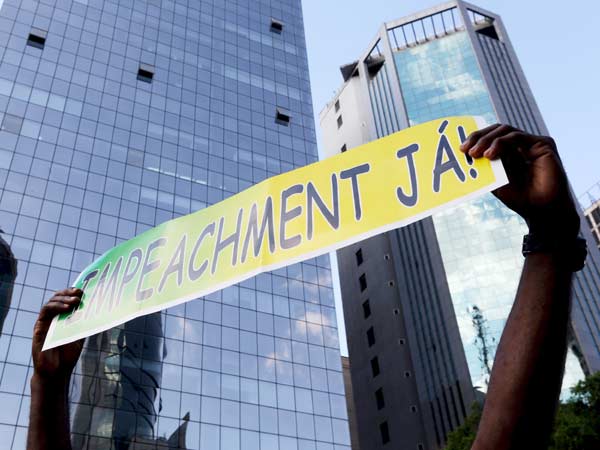
The management disaster in Brazil, as The Economist journal headlined recently, hit the population and only 7% approves the government and around 65-70% of Brazil wants impeachment.
At this moment, the best that could happen to recover hope in Brazil is the democratic removal of this group from government and the start of the long process of rebuilding the country with new leadership based on good management and low corruption, exactly the opposite of what the lulopetismo proved to offer. The individual mindset should be changed to stimulate work, entrepreneurism, productivity and less dependence on the state and laziness.
If this scenario doesn't happen, there is little hope for Brazilians in 2016. As a scientist not linked to political parties, I write all these words with sadness, since in my professional career, I've never seen Brazil so disorganized as it enters a new year.
Dr. Marcos Fava Neves is a full professor at the School of Economics and Business, University of São Paulo, Brazil.
The opinions expressed here are those of the writer and don't represent views of China Daily website.