(Source: China Daily)
Traveling by train is often a good way to view a country, to look not just at the landscape but also the levels of development. In 1995 a journey from Beijing to Kunming led me from Hunan through Guiyang, Anshun and Liupanshui. Later rail journeys took me through central and southwestern Guizhou. Although never actually staying in the province, the impression was of an economic and lifestyle disparity between fast growing eastern cities and what then was a relatively remote mountainous part of China. Guizhou was often touted as one of the least developed, poorer provinces. However, it appeared to me that most deprivation was concentrated mainly within mountainous rural villages often lacking adequate road connections. Access was along rough tracks, transport by packhorse. These upland areas were home to ethnic nationality groups. However I did feel there was potential for Guizhou due to its stunning topography: a geology featuring large limestone caves and dramatic waterfalls, a climate allowing lengthy periods of cultivation, and of course the ethnic diversity which has long been a draw for tourists. Later I would discover Guizhou's close association with the famed Long March in 1935. I believed that if a modern infrastructure was laid down then the area's potential could be unleashed.
Accepting a recent invitation from China Daily to visit Guizhou, I still expected lingering rural poverty. On arrival my preconceptions were quickly dispelled.
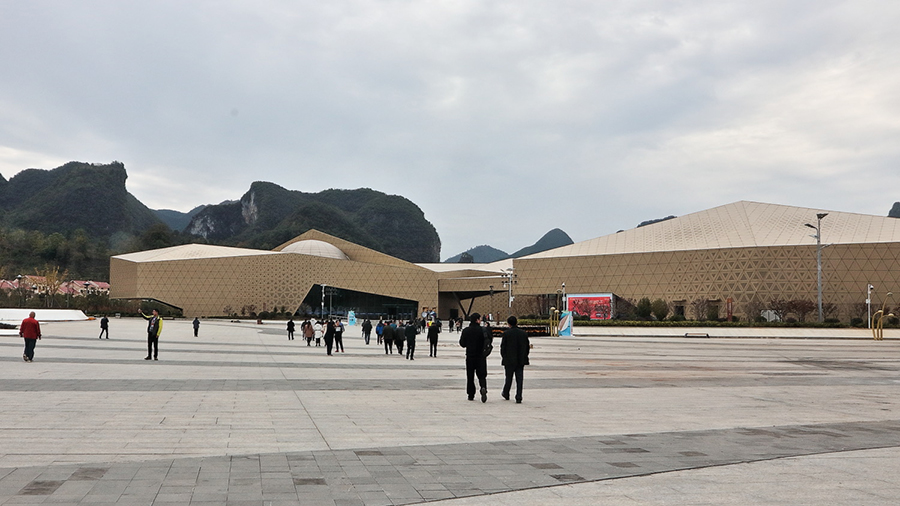
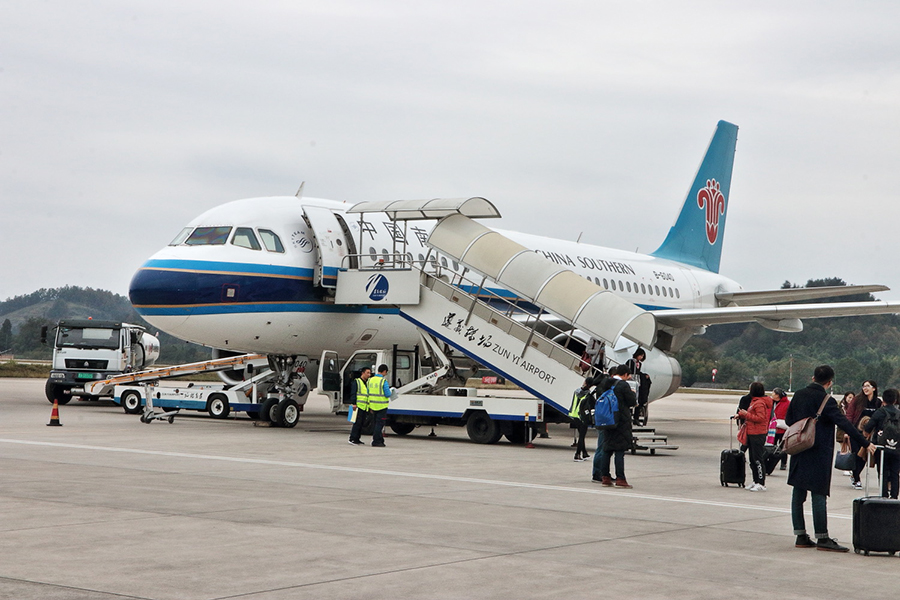
A modern Airbus jet connected Beijing to Zunyi, Guizhou's second city, in under three hours. A 40-minute journey from the airport to downtown by expressway was an eye opener. Initially the route along a forested valley passed modern villages - there were very few signs of the older wooden buildings I remembered. This gave way to a new area of modern university campuses, high-tech zones, smart hotels and a mixture of real estate development. Environmental work included a network of cycleways weaving through well-maintained parklands. A far cry from what I had imagined for Zunyi. Closer to downtown, administrative buildings and a new cultural centre rose above squares and landscaped lakes within a clean, well-maintained setting. Indeed what I saw could easily replicate longer-developed eastern cities although lower land prices and less urban pressure meant more space for extensive green environments, including Xinpu Wetland Park. I did however notice a significant number of women with babies strapped to their backs - Guizhou' s ethnic nationalities were not subject to the two-child policy – and there appeared to be many young people.

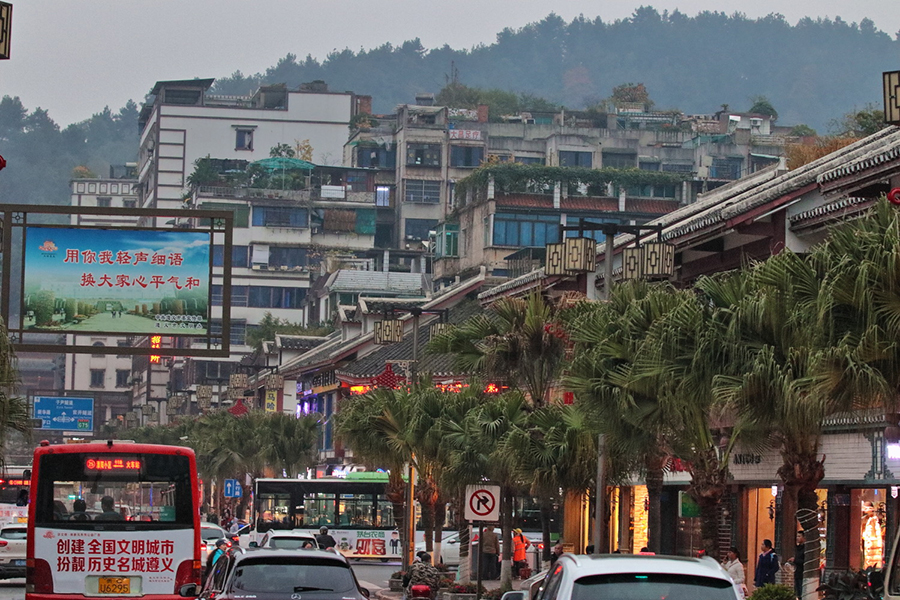
Parks featured prominently in Zunyi. The city winds between a series of forested hills such as Fenghuangshan National Forest Park, literally rising above the city centre. This mixture of steeply rising green topography astride several natural waterways alongside low-rise traditional-style buildings creates a very pleasant, often photogenic scene.
Zunyi is closely associated with China's revolutionary history, particularly some of the hardest moments during the legendary Long March. Today this drives a tourism sector pivotal to the local economy. Central to this is the Site of the 1935 Zunyi Conference, which is the city's main tourism draw.
Approximately an hour from Zunyi, along a valley presenting so many fascinating aspects of rural life, lies Huamao, a village and surrounding area hailed as an example of successful poverty reduction. Heading there it was obvious that considerable effort had gone into creating an appealing environment. Cycleways followed rivers to a guesthouse built in a traditional architectural style and to areas where visitors could learn from local people about rural skills and life. One area featured renovated traditional wooden buildings within a semi-forested area, where it was so fascinating I could easily have spent hours photographing. However the main area we had come to see had, in June 2015, been visited by President Xi Jinping. Huamao is regarded as a model example of rural poverty alleviation. Although a few older wooden buildings remained as reminders, the farmers and villagers today live in modern homes constructed in a style encompassing local traditions. President Xi had walked through the area while shown bamboo and pottery workshops, greenhouses, local financial centres and farmer Wang Zhiqiang's household. That home, now a featuring a restaurant, is the focal point of visitor interest. President Xi was quoted as saying there that "A good life is created with one's own hands, so poverty is nothing to fear. If we have determination and confidence, we can overcome any difficulty."
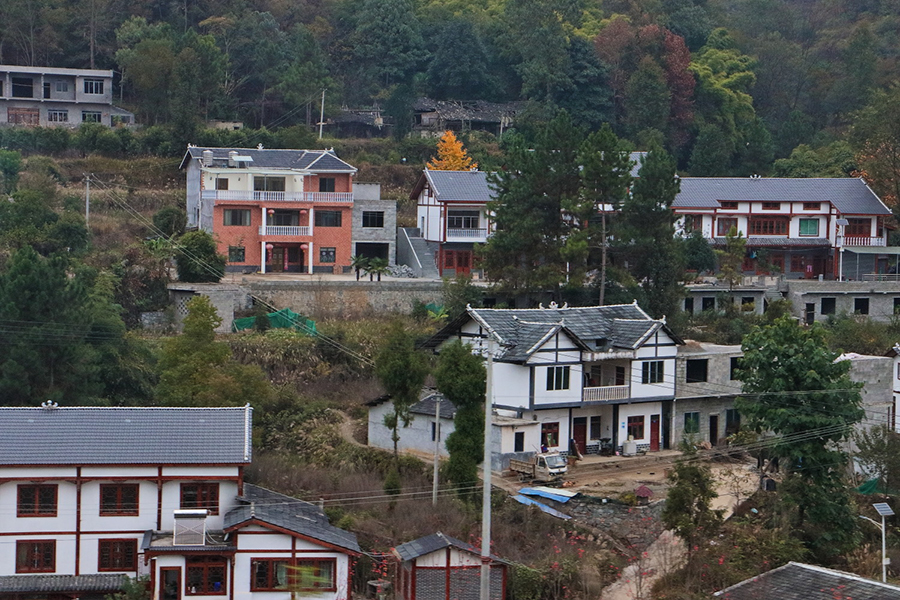
After lunch, in a village hall, we had the chance to meet with local residents while sharing our impressions of the area. Personally, I am positive at seeing attempts to retain a rural population while providing opportunities to raise their living standards, reducing urban migration.
So easy to have stayed longer at Huamao, but we were soon heading by road again through often breathtaking countryside. Skirting past Zunyi, where suburban expansion was underway, we were soon again into a rural landscape. Here was a mixture of renovated villages while others showed why the policies of poverty alleviation are so important. In some areas life still looked hard, some based around older heavy industries relocated to mountainous areas in the 1950s and 1960s. However road construction was rapidly opening these areas to the modern world.
Guizhou is part of a vast limestone plateau stretching from Guangdong across Guangxi and Guizhou toYunnan. The topography is challenging, a reason for local remoteness. Recent highway construction tunneling through the mountains and spanning valleys with some of the world's tallest bridges has greatly reduced travel time to the provincial capital of Guiyang, a city I had only previously passed through by train.
Guiyang is a true mountain city, built literally between, on and below luscious green hills that effectively split the city into many local neighborhoods. Today an extensive urban expressway network connects the city's rapidly expanding spread. It is connected nationwide by high-speed train and internationally by air. It would be our base for two days.

Cradled in a nearby hilltop limestone depression is Tianyan, or the Eye of Heaven, a five-hundred-meter aperture spherical telescope or FAST. This area was selected for the telescope in 2007 with construction ongoing between 2011 and 2016. The world's largest and most sensitive single-aperture radio telescope, costing 1.2 billion yuan ($180 million), its 4,450-panel reflector is as large as 30 football pitches. The concept is to observe pulsars while exploring interstellar molecules and interstellar communication signals. So sensitive, no device generating electromagnetic radiation waves such as cell phones and digital cameras can be taken within the area's limits. Shuttle buses transfer visitors up the mountain to an extensive series of wooden staircases climbing up to the rim for stunning views over this massive project designed and built by Chinese scientists and engineers. It is expected to be a world leader in its field for the next 10 to 20 years.

Back in Guiyang, before departing for Beijing, we were introduced to the Big Data Exchange Center, which is at the heart of the city's rapid high-tech transformation. Indeed, along with eradicating rural poverty, this is one more massive factor in the turnaround of Guizhou. It is estimated around 1.2 million people in Guizhou were lifted out of poverty in 2016! Guizhou posted the third-fastest economic growth among China's 31 provinces in 2016, with Guiyang ranked as the best performing 2016 city by the Milken Institute. Guiyang hopes to attract big names to launch data centres within China's Big Data Valley. Chinese companies such as Alibaba and Tencent, along with multinationals such as Microsoft and Hyundai, have been drawn in. The relative affordability of areas such as Guiyang, a city regarded by residents as very livable, is appealing.
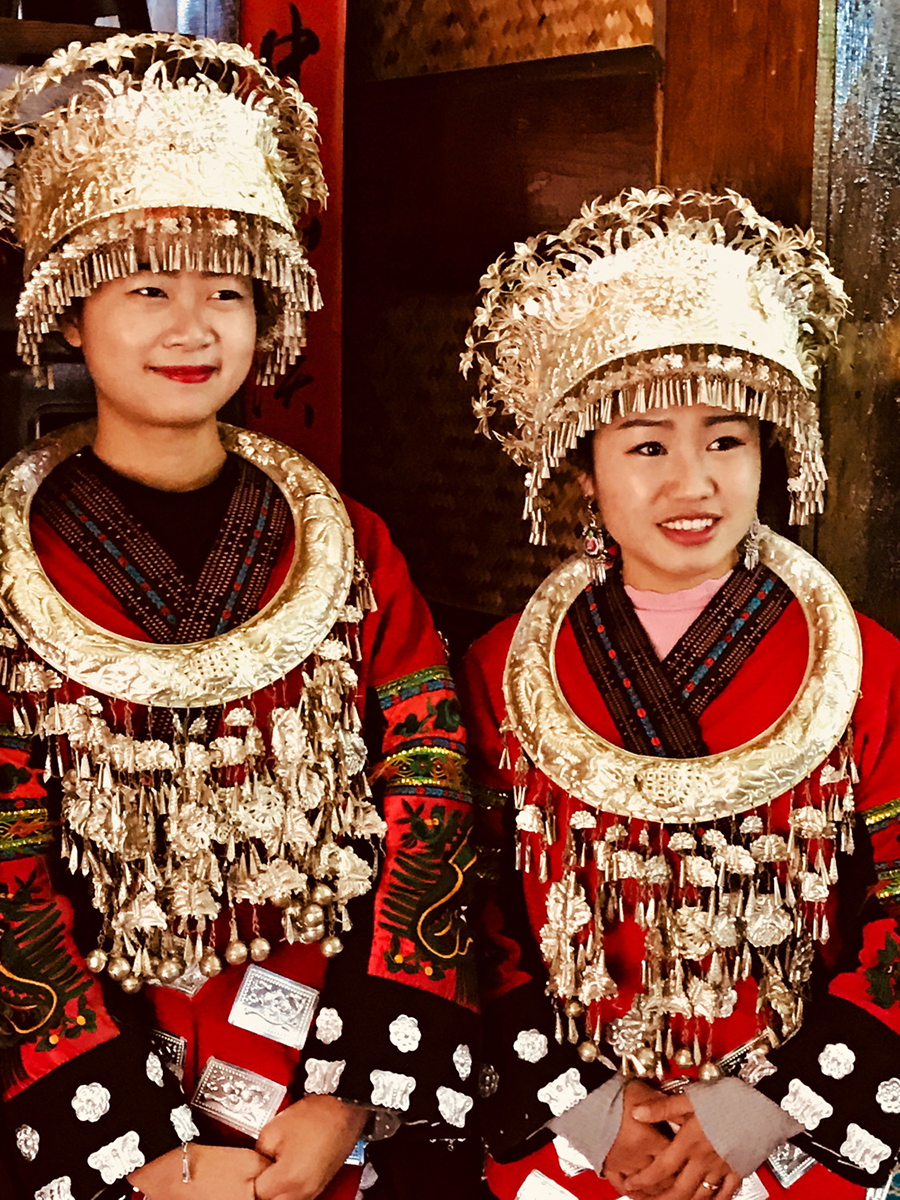
A fitting end to our visit was to have hotpot in a traditional Miao restaurant before heading out to the airport!
Guizhou, there are still considerable challenges in reducing rural poverty across the province, but willpower along with strong encouragement from President Xi is certainly there.
Guizhou, a truly fascinating place to visit. I will certainly return to Guizhou.