(Source: China Daily)
Strengthening global policy coordination to fuel economic growth
By Wu Zheyu | chinadaily.com.cn | Updated: 2016-09-24 11:08
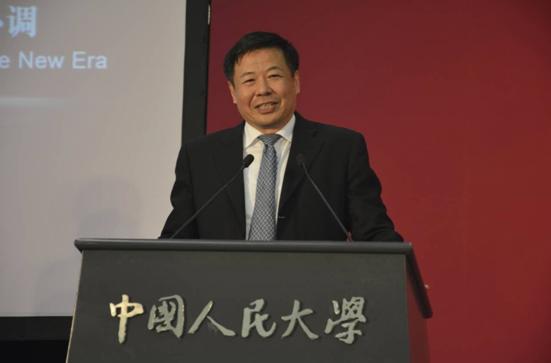
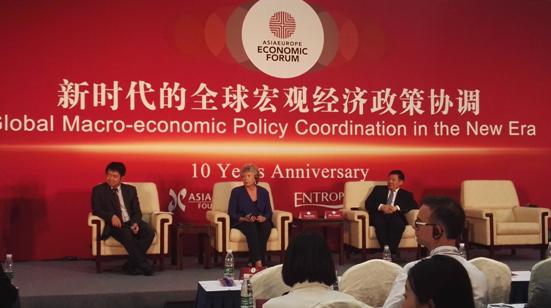
The tenth Asia Europe Economic Forum was held at Renmin University on September 21 and 22, 2016. Zhu Guangyao, China's vice Finance Minister, addressed the importance of implementing the consensuses that was achieved during this year's G20 summit, especially on facilitating the global economic recovery and the stability of financial markets.
Celebrating its 10 year anniversary, six institutes and think tanks co-hosted the forum this year: The Asian Development Bank Institute (ADBI), Bertelsmann Foundation, Brugel, Center for East Asian Studies of Korea University (CEAS), Centre d'Etudes Prospectives et d'Informations Internationales (CEPII) and Chongyang Institute for Financial Studies, Renmin University (RDCY).
The forum occurred right after the G20 summit so attending members could discuss how countries all over the world could enhance global governance and coordinate macro-economic policies within the G20 framework.
Viviane Reding, the former Vice-president of the European Commission, emphasized building an open world economy and multilateralism during her speech. She also said that a significant characteristic of globalization is the value chain's internationalization and that trade protectionism would definitely cost every economy.
"Actually trade is not like the zero-sum game, we have much more common interests than conflicts. Obstacles need to be demolished. Multilateralism deserves real efforts to be paid. Hence Chinese government should encourage more domestic corporations to go abroad, and correspondingly allow more foreign companies and institutes to invest in China, fairly compete with local players," she further explained.
Vice Finance Minister Zhu Guangyao described this forum as a serious discussion and implementation of the "Hangzhou Consensus". He responded to President Reding's speech initially by saying that China is also dedicated to pursuing common interests along with countries all over the world, and her suggestions would be valued highly.
Then he introduced two major milestones that were achieved during the G20 summit this year. First, the policy consensus of G20 has been unveiled for the first time in history: to pursue strong, sustainable, balanced and inclusive growth. Second, President Xi hopes to put forward China's blueprint for innovative growth along with an action plan to break new ground in global economic growth. It's the first time that China has ever delivered such a comprehensive version to the world. This unprecedented plan will help dig out economic growth potential and put the global economy back on a strong, sustainable growth track.
Zhu stressed that: "The world is looking forward to the success of G20 summit, while the G20 countries are also expecting that all the economies could achieve their goals—especially for those less-developed ones, they need to catch up."
A report named "Global Macro-economic Policy Coordination in the New Era" was also issued during the forum. The research group behind this report was lead by RDCY's chief economist He Fan, who conducted the report with coordinated efforts with the National Development and Reform Commission (NDRC) and Chinese Academy of Social Sciences (CASS). It offers five policy suggestions: countries need to save enough space for domestic policies, encourage global public goods cooperation, allow benign competition on global economic reform, let professional international institutes play bigger role and strengthen cooperation between leading powers.
During the guest speakers' discussion, Zhou Qiangwu, director general of International Economics and Finance Institute, Ministry of Finance, highlighted a very special achievement of the G20 summit. This year China came up with the quantitative economic indicator system for structural reform, which is a huge step forward compared to a purely qualitative analysis of structural reform in previous G20 summits, which has overcome difficulties both technically and balancing conflicts of countries under different development stages.
Andreas Esche, director of Program Shaping Sustainable Economies, Bertelsmann Foundation, expressed his views toward China's role in the G20 summit this year during interview with China Daily website: "I did really see China's shouldering a vital responsibility in accord with its growing importance in global community."