(Source: China Daily)
Remembering Guangzhou in the late 1980s and early 1990s
By Bruce Connolly | chinadaily.com.cn | Updated: 2018-02-28 17:22
Looking at images of contemporary Guangzhou, it is so hard to believe this was the compact riverside city I had arrived in on a humid July morning in 1987. I confess to having then known so little about the country and far less about Guangzhou. Reaching the finale of an overland rail journey from Scotland, my 18-coach green train pulled into the city's main station. I was surprised not to be disembarking at 'Canton', the name printed on my schedule. In the UK I was familiar with Cantonese cuisine, multi-toned Cantonese speech and of course, Canton. But Guangzhou and Guangdong were names relatively unknown. Ironically, five years later I would return to live and work for one year both in the city and the province. There was a dearth of knowledge and indeed so many misunderstandings not just about this rapidly developing area but also China as a whole. My subsequent public talks, in Scotland, about the '87 rail journey and later about Guangdong attracted large audiences. There was a thirst to learn about China, particularly to hear firsthand experiences. Indeed, as I look at today's images it is time to return south and re-document the city that became my home, my passion, indeed my life over a quarter century ago. It is a city now at the heart of one of the world's increasingly important urban areas, the Greater Pearl River Delta.
Traveling south along Renmin Lu from the railway station in 1987 I was fascinated with Guangzhou's architectural contrasts. So different to the wide avenues and imperial palaces of Beijing I had been through only two days previously. Pavements, shaded by buildings built over to protect from rain and sun, brimmed with local commerce. Pulling onto Shamian Island, the White Swan Hotel, dating from 1983, provided the most luxurious stay I'd had since leaving Scotland. It rose like a tower above the busy Pearl River, providing a vantage point to appreciate the importance of the city's waterborne commerce.

For over two millennia, the Pearl River Delta, with watery tentacles reaching across much of southern and into central China, has acted as a natural gateway to the country. Guangzhou, at the apex, can trace its origins back to the Qin Dynasty (221-206 BC). By 200 AD Indian and Roman traders were arriving. Over the next 500 or more years trade grew along the Maritime Silk Road, bringing increasingly Middle Eastern contact, a reminder being the 7th century Huaisheng Mosque. As late as the 19th century its minaret was one of Guangzhou's prominent landmarks.
European contact dated initially from the 16th century, with the Portuguese trading for silk and porcelain. In 1685, the Qing government opened Guangzhou to the West, with foreigners permitted to reside specifically on Shamian Island. Shamian has retained swathes of non-local architectural styles. Physically separated from the city, it felt a serene enclave, almost a time warp. In 1987, I regrettably stayed only one night but on return visits regularly spent leisure time there.
In 1987 my short stay included visiting the intricate Chen Family Temple and a duck farm just across Renmin Bridge - farming encroaching onto the urban area.
Traveling onwards to Hong Kong, a landscape of rice fields and traditional villages dramatically gave way to Shenzhen. It was a real eye-opener, as I realized I was looking at a sign of things to come - not just for the delta lands but increasingly for China. Shenzhen, chosen for its proximity to Hong Kong, was one of the four pioneering Special Economic Zones trying out new models of economic growth - a major reform policy from 1979 under the leadership of Deng Xiaoping.
Returning to Scotland my dream was someday to return to China but I never expected that five years later it would be for a year, to Guangzhou! The Strathclyde Region, my former local government, had established a twinning relationship with Guangdong province. Having been to China and subsequently developing a deep interest in the country, I was selected to be part of an exchange program with the Provincial Education Bureau and would be based at Guangdong Foreign Languages Normal School in suburban Guangzhou.
Unlike today, in August 1992 very few international flights served Guangzhou. I transited via Hong Kong, although my bulk luggage was flown directly into the city via Indonesia!
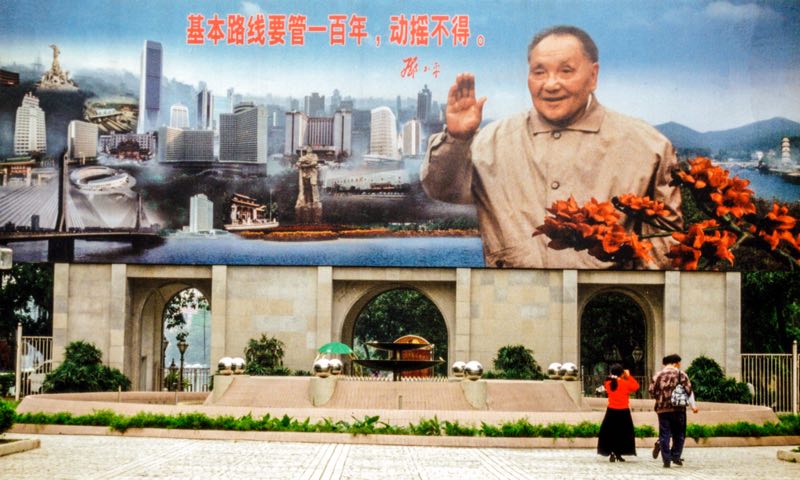
Earlier that year Deng Xiaoping had undertaken his now historic journey to the south of China. A large poster commemorating that visit rose above an entrance to the city's Liuhua Park. However, rapid development also brought problems. With the region growing economically at a rapid pace, many people were enticed by the prospect of improving their living standards and moved to Guangzhou and its surrounds. Between 1987 and 1992 the city's population grew from 2.5 million to 3.5 million. Today, it's about 13 million. Inevitably the numbers put considerable pressure on both resources and transport, particularly railways. Infrastructure development, as I would observe, was top priority.
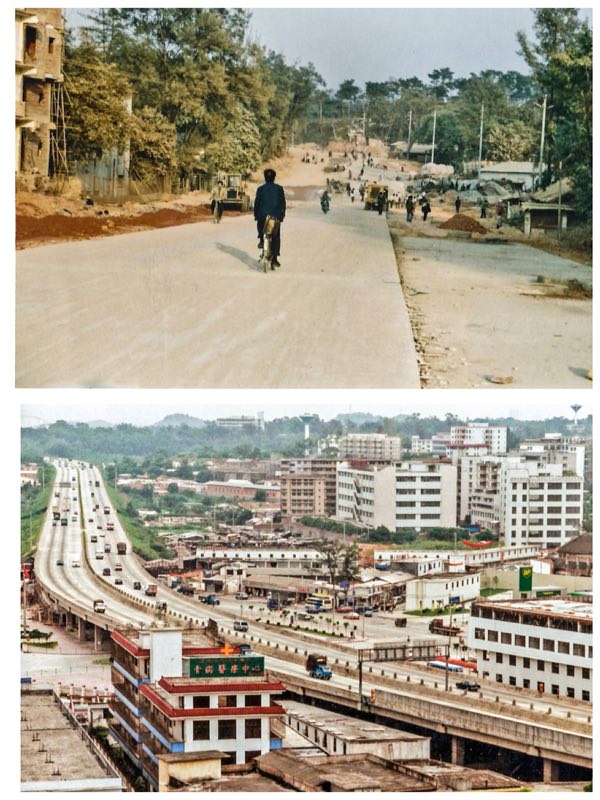
I was based in what were the northern suburbs at Yuangang. Outside my apartment window I looked across extensive semi-rural areas of intensive vegetable cultivation, along with chicken, pig and duck rearing. In 1992 the district where I lived underwent regular disruption associated with highway construction. Directly outside the college gates an elevated expressway that would eventually link Guangzhou with Shenzhen and Hong Kong was going up. Meanwhile Yanling Road, a principal route into the city, was undergoing a major upgrade. For me, it was easier to walk! The college's location, my colleagues informed me, was originally chosen for its tranquility! Actually, so comfortable was the campus and life there that it would have been easy to simply feel settled and not try to go downtown, but I was always restless and wanted to discover more. Today the district, urbanized, is connected by excellent roads and metro with downtown.
Guangzhou's urbanization has been partly dictated by topography. The city does not have vast spreads of unbroken flat land, for example, as around Beijing. Mountains press down from the north while the southern alluvial lands are broken up by many water courses.
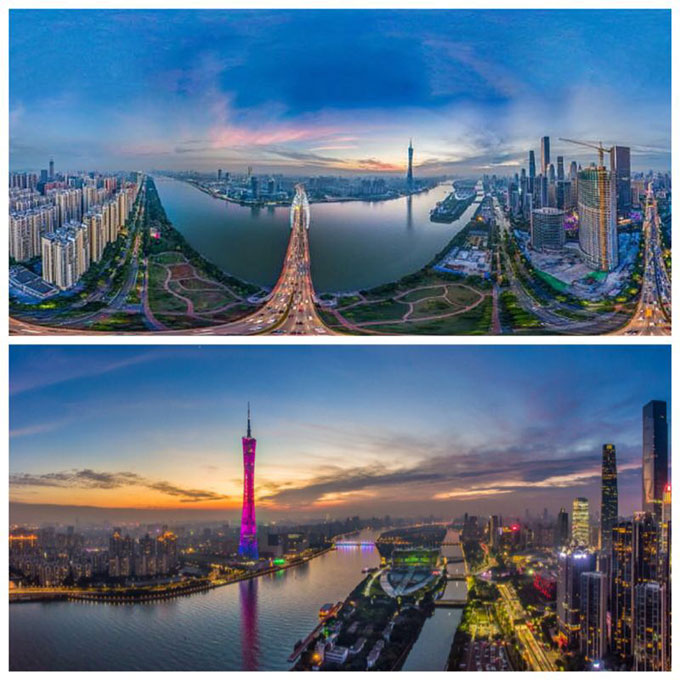
Urban spread has followed the northerly valleys while south of the Pearl River much recent growth has spread across the alluvium that 20 years ago was still dotted with farming communities. Bridge construction has been vital.
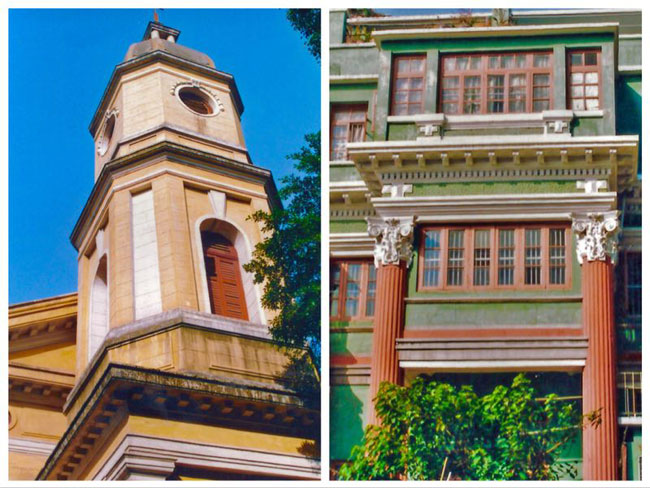
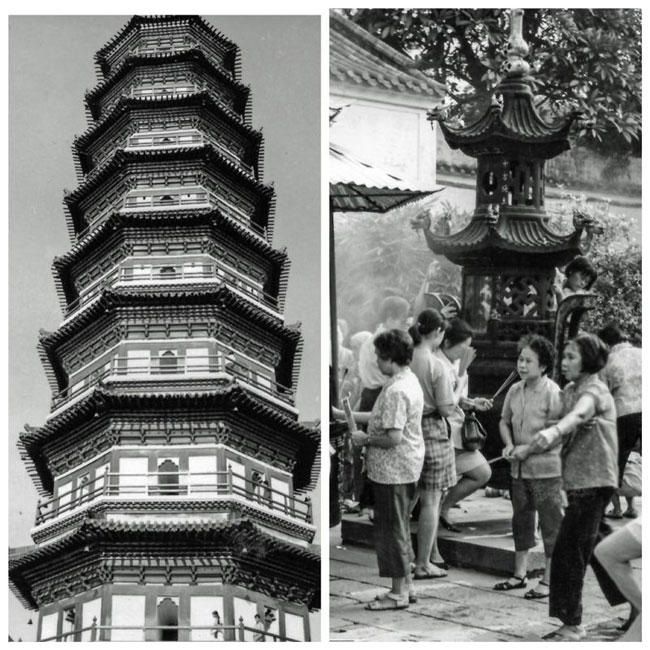
Early in my stay I was taken to the delightful Beiyun Restaurant for 'morning tea' and a dim sum breakfast. I remember smiling and thinking how much I was already enjoying my life in Guangzhou! I was introduced to the city's temples, including my personal joy, the Six Banyan Trees (Liurongsi) with its 11th century, 55 meter high pagoda. Larger Guangxiao Temple had a history over 1,400 years. The city also boasted several fine churches, including twin-spired Sacred Heart Cathedral in the old town on the north bank of the Pearl River. It was completed in 1888.
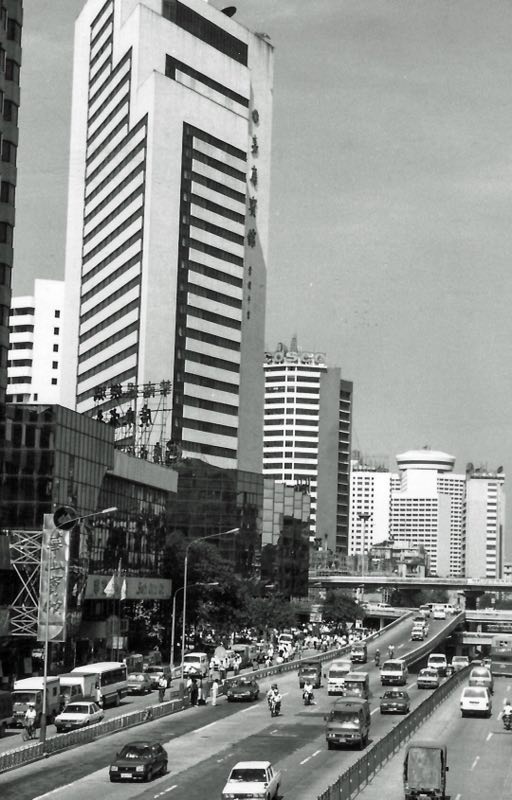
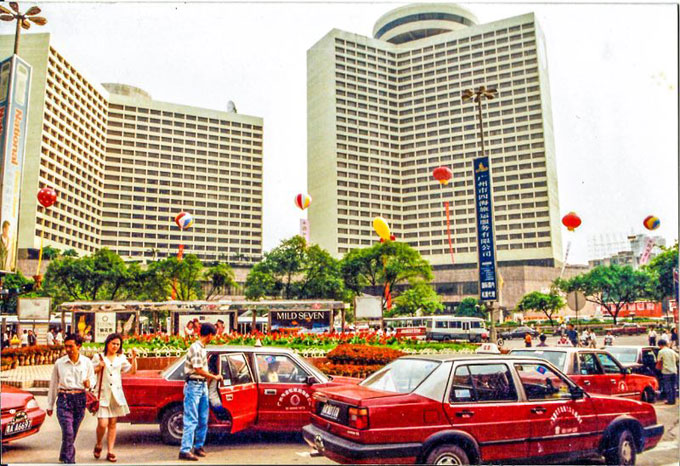
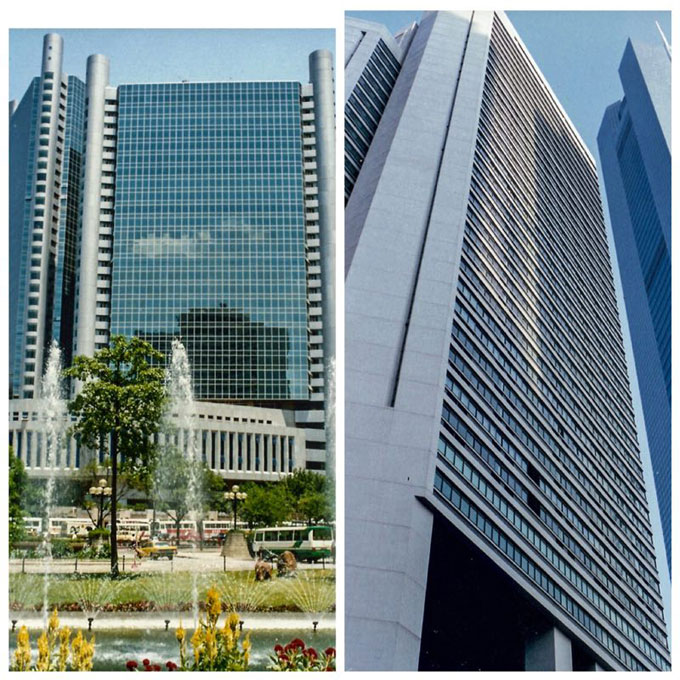
By 1992 there were major changes, particularly around northeastern Huanshi Lu, then the city's principal boulevard. A growing international area dominated the locality, including the 63-floor GITIC building, today the city's oldest landmark tower; the Guangzhou World Trade Center Complex; the Friendship Store and the Garden Hotel. I regularly visited the Garden. With access to international telephones fairly limited, the hotel's business center was ideal for phoning back to Scotland. It also offered a delightful Cantonese restaurant where diners could sit in replica wooden boats while enjoying great food. The hotel boasted its own pub, Cheers Bar, a useful place for networking with westerners involved, for example, in infrastructure projects. From there I was invited to 'discover' the then-steam-hauled San-Mao Railway running through Southwest Guangdong with its stunningly beautiful countryside, particularly around Zhaoqing.

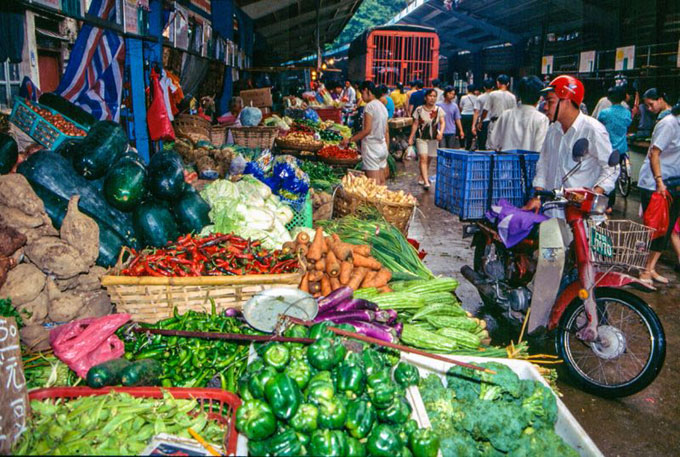
Through the early 1990's bicycles remained a popular mode of travel, particularly as buses often were crowded. However ongoing road construction suggested the approaching end of that era. With streets in Guangzhou's older areas narrow, elevated highways were built, for example, above Renmin Road. Images shot annually, for example on Dongfang Dong Lu, would show steady traffic build-up. There I regularly crossed a pedestrian bridge going to or from the Garden Hotel. My walking route led through semi-open air markets hosting an amazing range of vegetables.
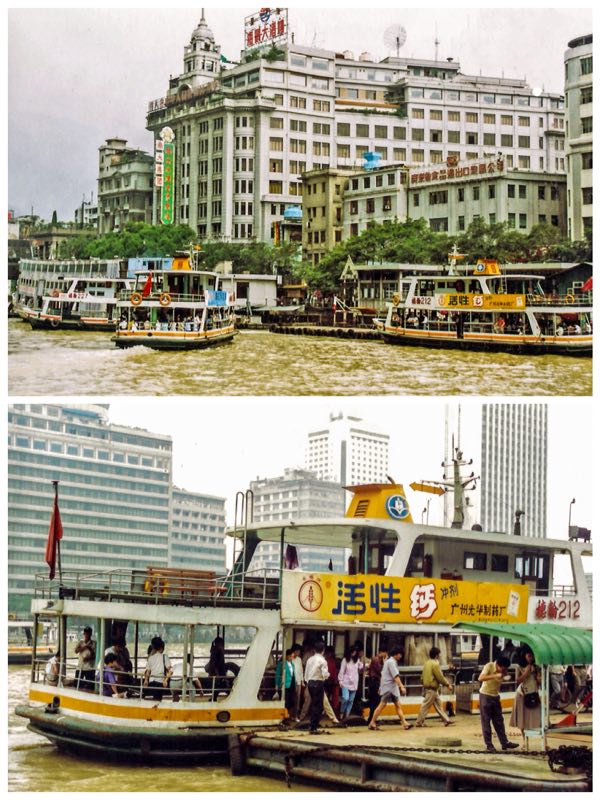
Fascinated with the city's older areas I would head down to the Pearl River, boarding local ferries crisscrossing the many watercourses. It was a relaxing and incredibly cheap way to observe life on and off the river. Larger passenger vessels frequently set off for lengthy journeys up the West River to Guangxi, while seagoing ships headed downriver, crossing the South China Sea to Hainan.
Unique dining experiences awaited in the local restaurants crowding around older alleys. Authentic Cantonese cuisine proved so different to westernized variations back in Scotland. To discover, to experience, I would visit with friends from the college who would order local specialties. Lanes, often only wide enough for walking, would have market areas specializing in colorful tropical fish or song birds. Traditional streets, such as Beijing Lu, provided many local shopping experiences, including the state-run 'Xin da Xin' department store where I often had lunch.
Guangzhou is a city of parks, which with a semi-tropical climate, were in bloom all year. Some offered lakes for boating while others, including the delightful Orchid Garden, had tranquil teahouses where music was played gently on classical seven-stringed guqins. Close to my college, forested Baiyun Shan (White Cloud Mountain) Park offered easily accessible hiking. Beyond lay Guangzhou's exotic botanical gardens.
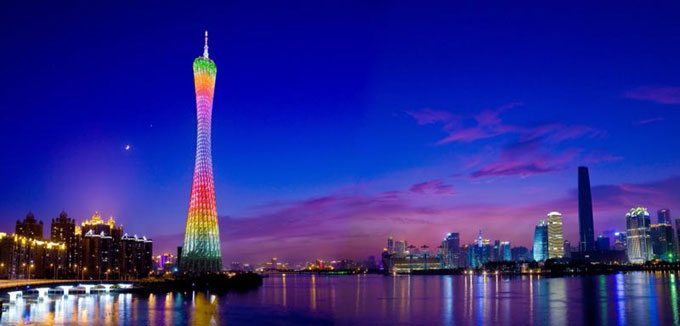
Returning regularly to the city more changes were obvious through the mid-90s, with high-rise structures going up in the Tianhe area close to the much-enlarged East Station, which provided regular services to Shenzhen and Hong Kong. However nothing can compare to the stunning contemporary images of a City of Lights stretching along the Pearl River - areas that were simple farming villages a few years back.
In 1992-93 in Guangzhou, living and working with Chinese colleagues and students, their friendship and honesty and many ordinary people in Guangzhou all did so much to make my year particularly special. Guangzhou was a catalyst in keeping my China Dream alive now for over 31 years.