
(Source: China Daily)
International perspectives on Xi's governance of China
By Song Jingyi | chinadaily.com.cn | Updated: 2017-09-21 08:47
Editor's Note: With the 19th Communist Party of China National Congress approaching, three global political researchers recently gave a review of China's progress since 2012,and analyzed the reasons. Here are some of the key points.
In the past five years, China took the lead in quantum science and quantum computing. China built the first fully Chinese aircraft C919. China also has become the leader in environmental technologies. But China is not only leapfrogging its innovation processes, it is also creating new alliances and trade zones such as the Belt and Road Initiative, which is the first strategically planned, a global infrastructure network and zone of economic development. It has the potential to reinvent globalization and create a more balanced growth model.
So what made China's achievements of the past five years possible? What will support further achievements in the coming five years? Why is China so effective? I think the secret lies in what we call the three congruencies: The first one is the congruence between the self-image of the government and the image the people have of the government. The second one is the congruence between the goals of the government and the goals of the people. The last one is the congruence of how China sees itself and how it wants to be seen by the global community.

Over the past several years, China has taken excellent steps for other nations to study. For example, in climate change. In May 2017, China joined France, India, and other important powers in reaffirming its commitment to the Paris Climate Agreement even as US President Donald Trump threatened to pull the US out. While all countries, including China, must actually do much more to limit carbon emissions than the Paris deal requires, the agreement is an important baseline, and China is leading by example.
On the subject of trade, in January at the World Economic Forum, President Xi Jinping said that China would keep its borders open, stressing that there would be no winners from a trade war. Here is what he said. "Pursuing protectionism is like locking oneself in a dark room. Wind and rain may be kept outside, but so is light and air." And we must all work to ensure that our two nations continue to enjoy a free trading partnership.
On the critical question of the Democratic People's Republic of Korea(DPRK), China is among the most vulnerable nations. If the political system there collapses, China will receive a flood of refugees from its neighbor. The same is true if an armed conflict occurs. China is cooperating well with other concerned powers, attempting to find a peaceful resolution. We need to find ways to bring the DPRK to the negotiating table, not by dictating the terms of the agreement, but by finding a way for them to be successful too.
These examples testify to the evolution of China into becoming a new type of major power - one that takes international responsibilities very seriously.
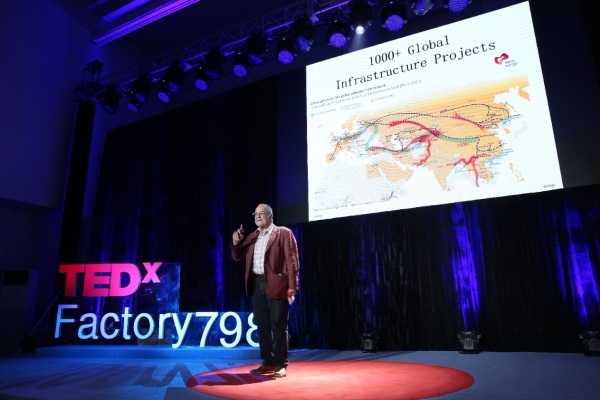
First China's economic success has been attributed to its own prioritizing the infrastructure in the modernization of its economy. It has generated the model at a global level drawing on its own experience.
A second factor is that China gained valuable experience in its 2008 response to the global fiscal crisis. It's spent massively on infrastructure and constitutes a fundamental lesson four condiments that focused infrastructural investment can have catalytic effects on growth and production.
The third reason is the Belt and Road Initiative provides new customers and investment opportunities for Chinese industries which supply all the material and inputs required.