(Source: China Daily)
Yangshuo: A scenic Li River town transforming into a major tourist destination
By Bruce Connolly | chinadaily.com.cn | Updated: 2018-01-17 07:02
Arriving by boat in 1993 at Yangshuo's Shuidongmen Wharf, I was entering a very different world from Guilin, 85 kilometers back up the Li River. Guilin had developed what was for that time a highly organized tourism sector, receiving mostly international and domestic tourist groups. Ascending the stairs from the river, I felt I had stepped back in time — gone was the modernity and commercialism I had experienced earlier. Being in Yangshuo gave me the feeling I knew I was going to enjoy this town.
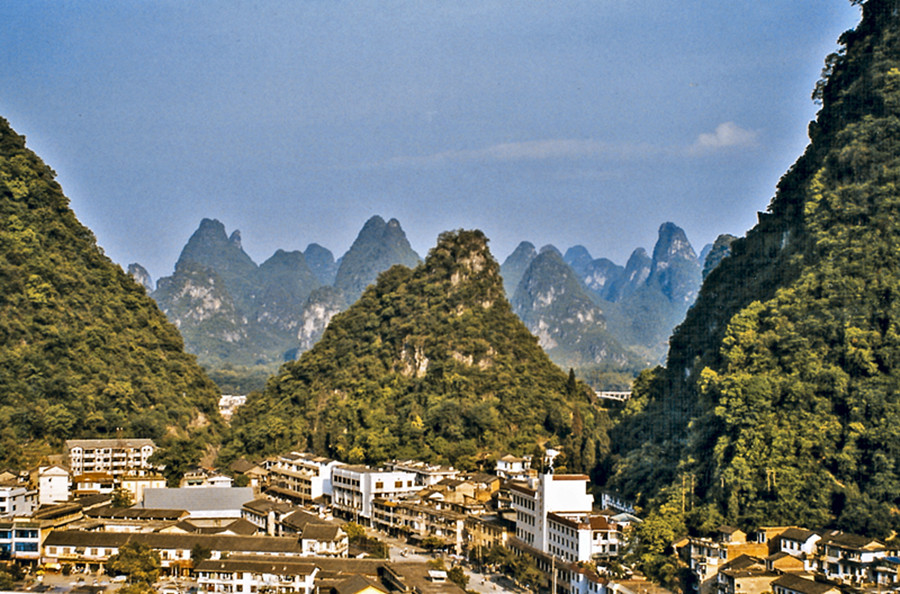
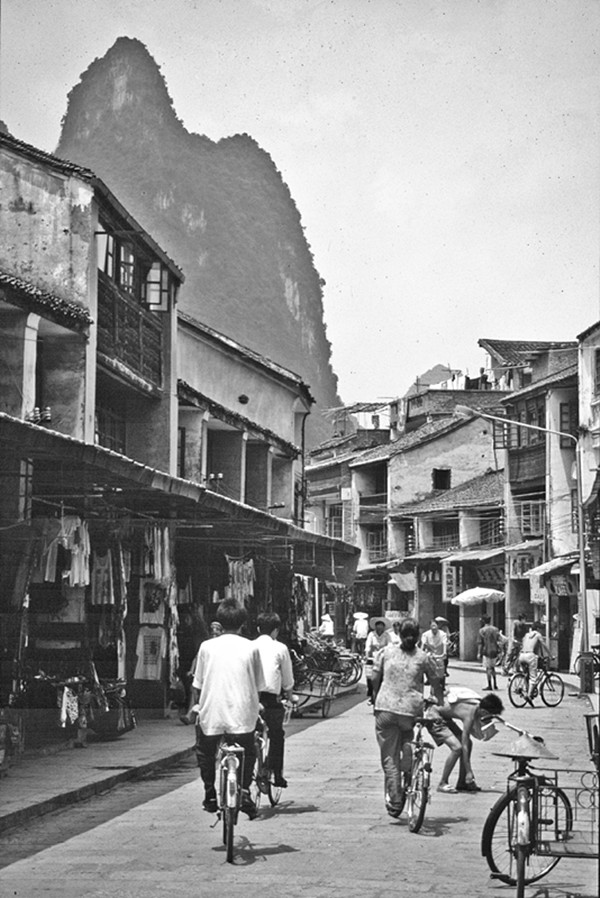
Walking along narrow Xijie, or West Street, hemmed in by jagged, often egg-shaped limestone peaks, two- or three-floor buildings looked as though they had been there for generations. Apart from ground level spaces opened up to accommodate cafes and shops selling T-shirts, there was very little modernity. There were no large hotels — indeed, there appeared a dearth of visitor information, though locals were happy to point out guesthouses. I kept wandering, looking around, wanting to find a place that would suit me. I needed somewhere reasonably quiet but easily accessible to the Old Town. An elderly lady approached and led me through several narrow alleys to a peaceful inn. Set around a small lake-garden, I checked into a single room with great views of the surrounding landscape. It was perfect, and they even had bicycles for hire!
Within minutes I was back out cycling the stone-paved streets, stopping at cafes for cold drinks and snacks. The fun had started! Normally in China I would try to speak some Chinese. No matter how poor my efforts, they were usually appreciated — but not in my first Yangshuo cafe! As I tried to order a cold beer, the owner looked at me with indifference, interjecting in perfect English, "Please don't try to practice your Chinese with me, please speak in English!" Yes, Yangshuo was different. Cafes did offer classes in elementary Chinese, but the lingua franca of the town was English, at times French or other European languages.
During the 1980s, destinations such as Yangshuo, Dali and Lijiang became increasingly popular for Western independent travelers and backpackers, following a route connecting with southeastern Asia. Most were on tight budgets, so relatively cheap accommodation was made available alongside cafes with menus in English offering a range of international "comfort foods". Staff would provide a wealth of information about where to visit, even offering personalized tours to local farmers" homes, train and bus ticket services, and so on. This created an easy alternative for foreign visitors speaking little or no Chinese — it was different from other parts of China at that time. People would regularly stay for lengthy periods, sometimes several months. Yangshuo was laid back, indeed pleasantly enjoyable. It's easy to understand why travelers headed there. The cafes were great places for friendship, and sometimes groups formed for rural cycling expeditions.
The Yangshuo area, with its stunning karst landscape, winding rivers, seemingly timeless villages and clean air, along with many unique dining opportunities, has today transformed into a premier tourist destination. In order to cater to this growing market, now predominantly domestic, a seemingly unlimited number of luxury resorts and distinctive boutique hotels have opened. However, foreign travelers on their adventure circuit still pass through, enjoying off-road cycling, rock climbing, bamboo river rafting or simply sitting at a cafe and letting time gently slip away. A small river runs through the Old Town — today, smart-balconied restaurants and bars increasingly overlook the scene.
Tourism-related facilities have greatly expanded since my visits in 1993 and 1999, but of course so have the crowds and prices. In the early days, particularly cycling beyond urban Yangshuo, I often felt I was the only visitor, it was my own "heaven on Earth". The recent tourist boom has of course come at a cost — certainly within the town now there's not much space for quiet solitude; rapidly increasing car numbers detracting from the joy of cycling; generally prices are more. However, recent policies such as creating pedestrian-only streets, countryside cycleways and designating certain scenic spots as "no-go" areas for cars is helping maintain some balance.

Connecting Yangshuo with the Li River, West Street has existed in different forms for over 1,400 years. The Li is part of a waterway network that through history allowed a connection from the Yangzi right down south to the Pearl River Delta. The rivers were the principal means of movement through this vast area. Yangshuo, the first town of any size after Guilin, served an extensive hinterland by mule tracks or local rivers connecting with the Li. Commercial businesses associated with this trade had developed along West Street, transforming themselves into cafes, bars, guesthouses and tourist shops as the town's economy shifted focus, particularly over the past two decades.
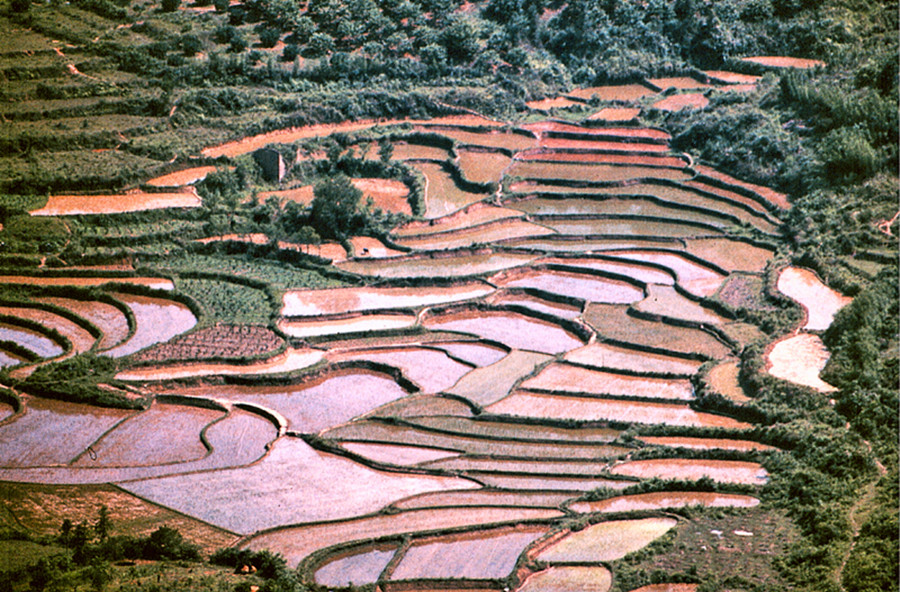
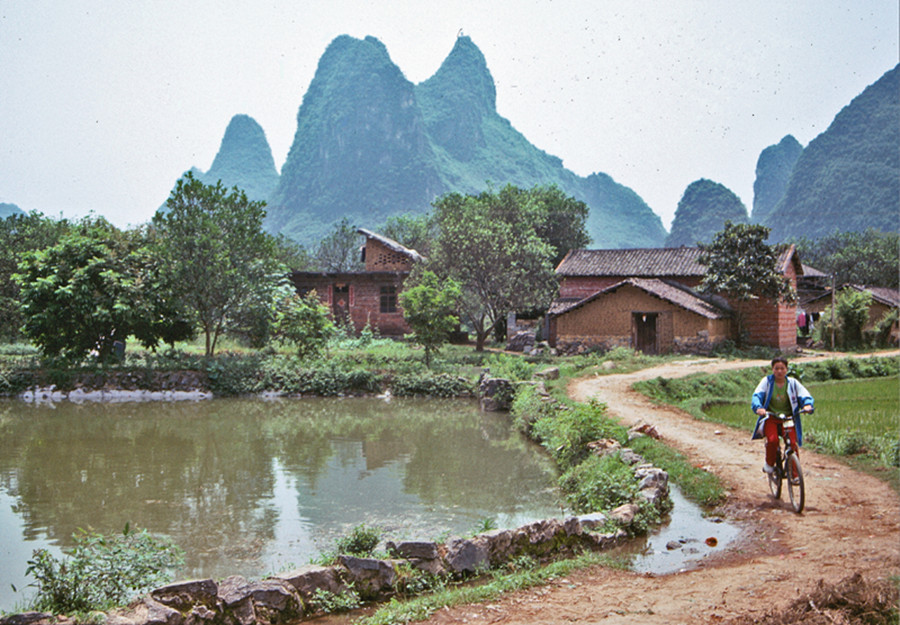
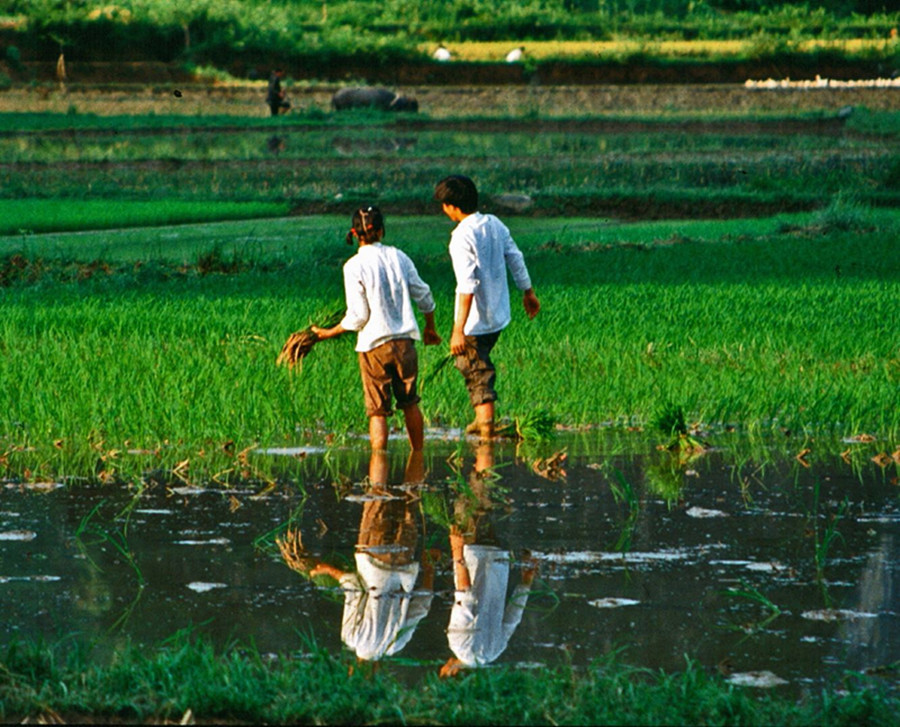
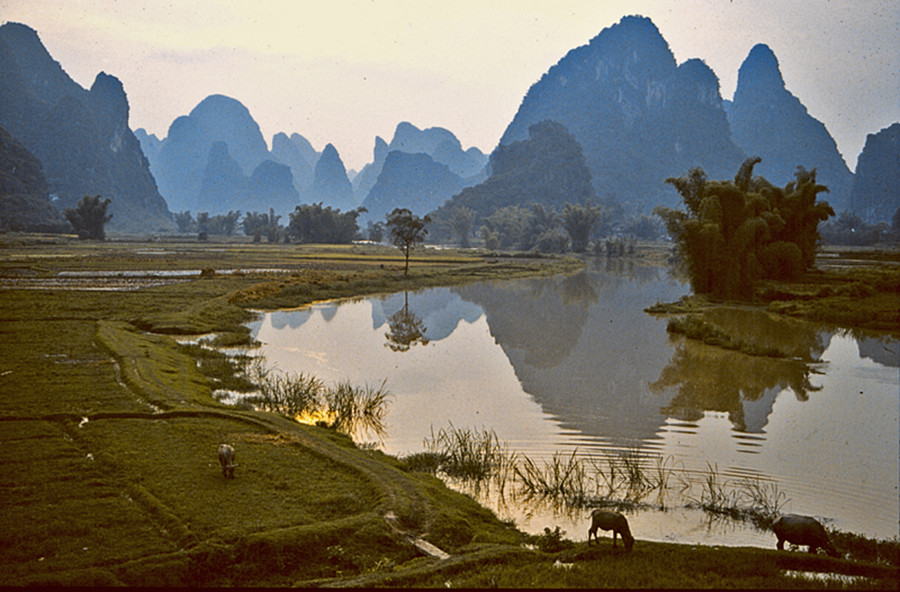
For me, the fun of Yangshuo was simply grabbing my camera, jumping on a hired mountain bike before heading out to a pavement cafe on West Street for a leisurely breakfast. Most days I would set off in different directions to discover the wealth of spectacular countryside beyond the small urban core. Turning off main highways, I would quickly find myself alone in a world of rice cultivation, where villages literally clung to the base of circular conical peaks. Trees amazingly grew from almost vertical rocky slopes. Midsummer was hot and I would frequently stop, dismount from the cycle and sit by the track while watching hard, exhaustive work going on in the paddy fields.

Baisha Valley and the Yulong River made for excellent off-road experiences. In 1999, with no real maps I explored by simply following tracks to discover what was literally around the next bend. An old arched stone bridge led across an irrigation channel to a village. Hearing a shout of "Hello", I was waved up to an elementary school courtyard, where an entire class came out for photos with this lone laowai who had appeared seemingly out of the blue. A village shop had a refrigerator, and inside was one last bottle of cold water. That cooled me enough to start heading along the valley to where it meets Gongnong Bridge, carrying the road from Yangshuo over the tranquil Yulong waters. As I stood on that bridge, another call — this time from people beside the river, where a new hotel had opened. After a welcome cold drink in a small wooden cabin at the waterside, I was invited to float on a bamboo raft, for free. Yes it truly was heavenly.
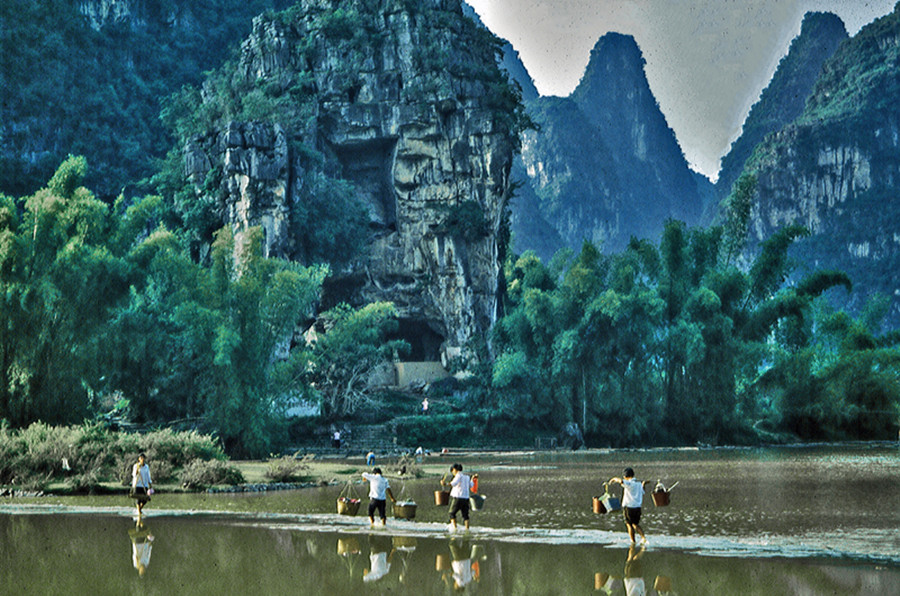
One early evening in 1993 while cycling alongside the Jingbao River, a tributary of the Yulong, I saw a massive tree. Pulling off the highway I headed down a track to the "Big Banyan Tree" or Darongshu, with its almost umbrella-like shape. 17 meters high with a width of 7 meters, it was planted around 1,400 years ago during the Song Dynasty (581-618). A popular love story, Liusanjie, was partly filmed there, so many young couples these days visit the site to express their mutual love. But in '93, I had the area to myself. As I looked across the river, villagers, some with bamboo shoulder poles, crossed a ford — a scene keeping me transfixed even as the sun was going down. It was one of the most beautiful evenings imaginable, with the surrounding peaks stunningly reflected on Jingbao's calm surface.
A day later, I was cycling back again past the giant tree to the Assembling Dragon Cave, with its underground limestone landscape. However, my main destination was directly west. Yueliang Shan, or "Moon Hill" was regularly mentioned in Yangshuo's cafes, and locals offered to arrange visits. Seeking solitude, I went alone. The attraction was a wide, semicircular, almost 50 meter-high arch through the hill 150 meters below its summit. It is the remnant of a cave that once penetrated the limestone, most of which has been weathered or eroded away. It took roughly 30 minutes to climb the steps with an increasingly spectacular view. Beyond stretched a panoramic landscape of conical pinnacles set amidst river valleys dotted with villages and rice fields. It was an opportunity to take in some of Yangshuo's finest scenery.
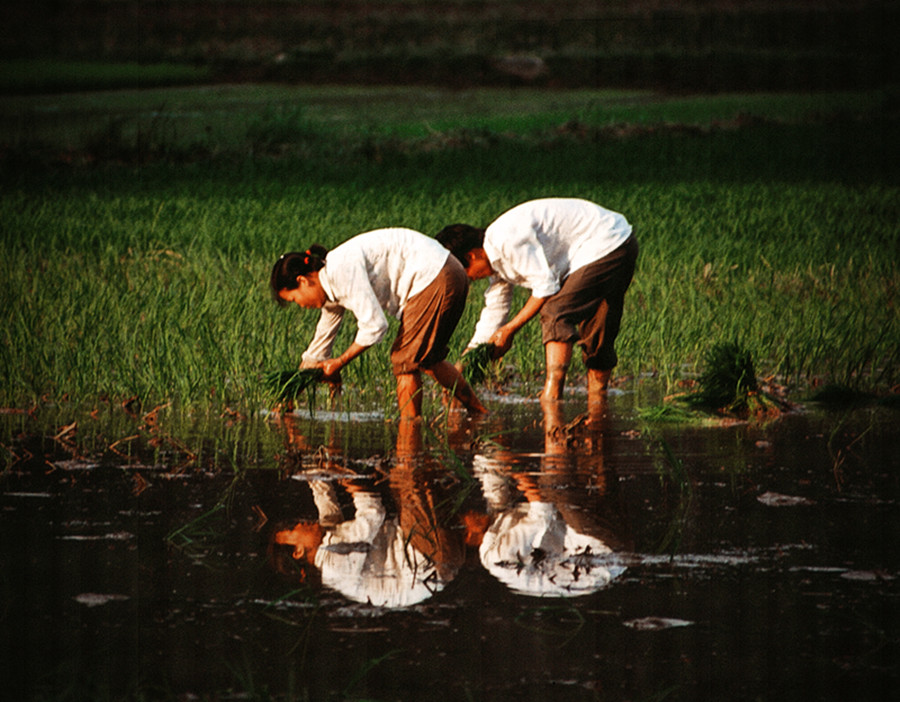
One day it started off cloudy and damp, but in some ways it was fortuitous. Despite the weather I still cycled. Gliding past countless rice fields, the scene was indeed photogenic but too dull and gray for photography. While heading toward the point where the Yulong flows into the Li River, a ray of sunlight broke through the clouds, illuminating two farm workers bent over in the mud transplanting green shoots. This was a moment not to be missed, with only an instant to quickly fire off the camera in hopes such a scene could be captured in all its beauty. It was a memory among many of Yangshuo, as I wondered how many more days I could spend within this heavenly land.