(Source: China Daily)
How the completion of a major railway project introduced Bruce Connolly to southwestern Guangdong's stunning landscape and a fascinating river city.
1987, my first rail journey through China, travelling down to Hong Kong, effectively one railway connected everywhere north of Guangdong with the Pearl River Delta. A branch line, the Guangsan, dating from 1904, ran from Guangzhou through Foshan to Sanshui. Why Sanshui? A maze of rivers -- the West, the North and the Dongping Waterway -- come together at Sanshui. The Guangsan became an interface between water and rail.
It is well worth looking at satellite images on smartphones to understand the complexity of Guangdong's waterways. For centuries much of southern China's human and freight traffic moved by water with manmade sections facilitating connections between the West River and Guangzhou. The West flows down from Sanshui towards Jiangmen, entering the South China Sea just west of Macao. It also allows for travel beyond Nanning, the capital of Guangxi, almost to the border with Vietnam. The river becomes the West downstream from Guangxi's Wuzhou where the Xun River merges with the Gui River. The system culminating with the Pearl River is second only to the Yangtze in importance for China.
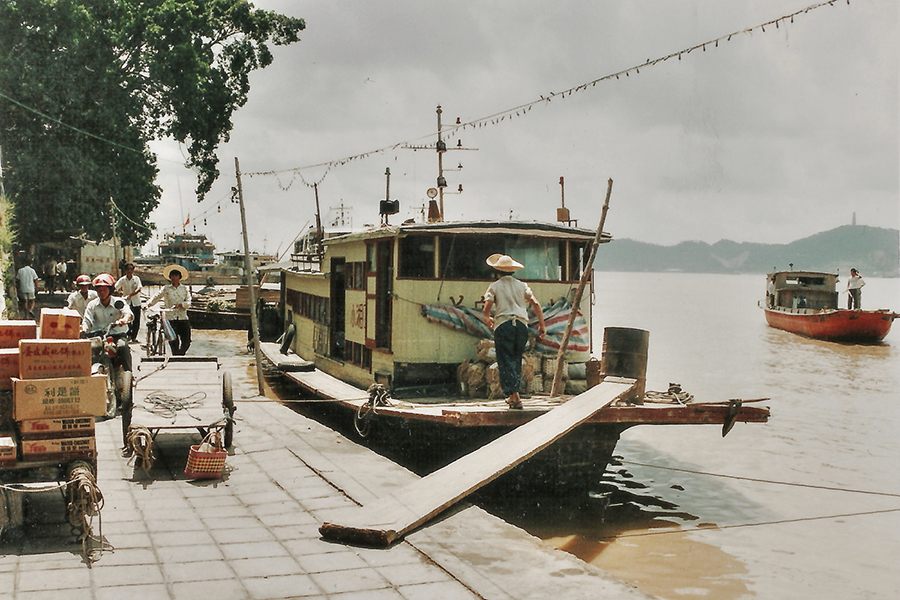
Travelers, including myself, found the 24-hour boat journeys to Wuzhou a relatively convenient way to head onwards toward Guilin and Yangshuo. Standing on deck with the scene and activity continually changing, it was an excellent way to appreciate the importance of such water highways for the region. Today, over a remarkably short period, many of the long distance river passenger journeys have disappeared although some local ferries along with fast catamaran services from Hong Kong to Pearl River Delta cities remain; they were often my preferred way of entering southern China.
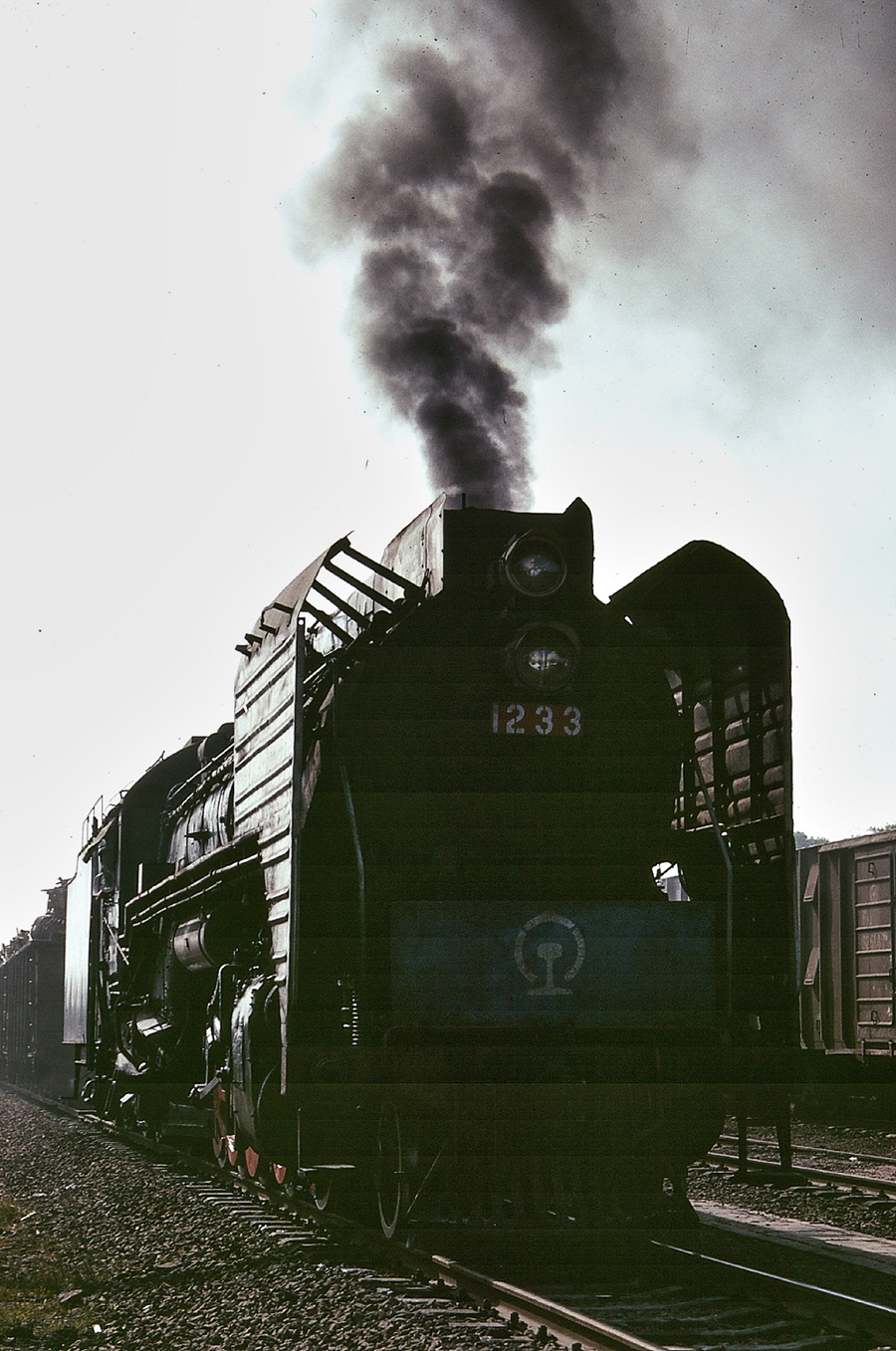
Guangzhou's Garden Hotel was a regular networking venue for westerners in 1992. Several were involved in the modernization of railways within Guangdong. Rail travel has long been a passion so it was an honor to be invited to the offices of the Guangdong Sanmao Railway Company to learn firsthand about their major project and its benefits for the province's southwest. An aspiration for almost a century was to have a railway linking Maoming in the far west with Sanshui, thus the name "Sanmao". It would connect the port of Zhanjiang with Guangzhou while greatly shortening distances between Guangxi, Yunnan and the Pearl River Delta. Work, in stages, ran from 1958 with final completion in Dec 1990. Full operations commenced March 28, 1991. What made it special for me was that some of China's finest steam locomotives hauled scheduled passenger and freight services to Sanshui, while diesel locomotives continued into Guangzhou. The entire 404.2 kilometers from Guangzhou to Maoming is now known as the "Guangmao Line".
In late Oct 1992 I received an opportunity to experience the line. As I've previously said, solo travel was challenging, but so much awaited to be discovered in Guangdong. This was my first major journey, and it became an inspiration for farther expeditions.
The trip was a trial run of a steam-hauled tourist train. Departing in darkness from Sanshui, it was an evening of quality dining and statutory karaoke, on a train. I awoke to an incredibly beautiful landscape at Chunwan. However it was only 6;30 am when I was ushered outside to photograph the locomotive and climb up into the driving cab.
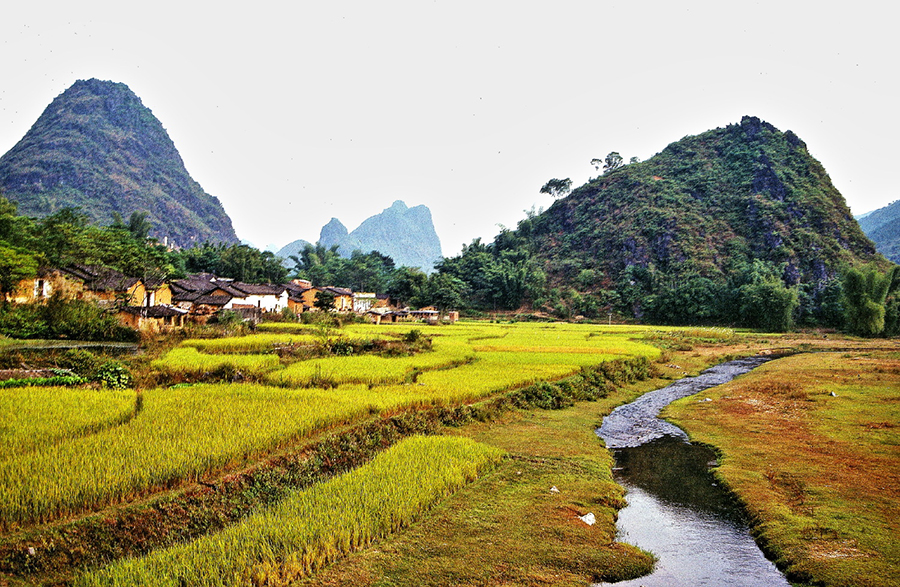
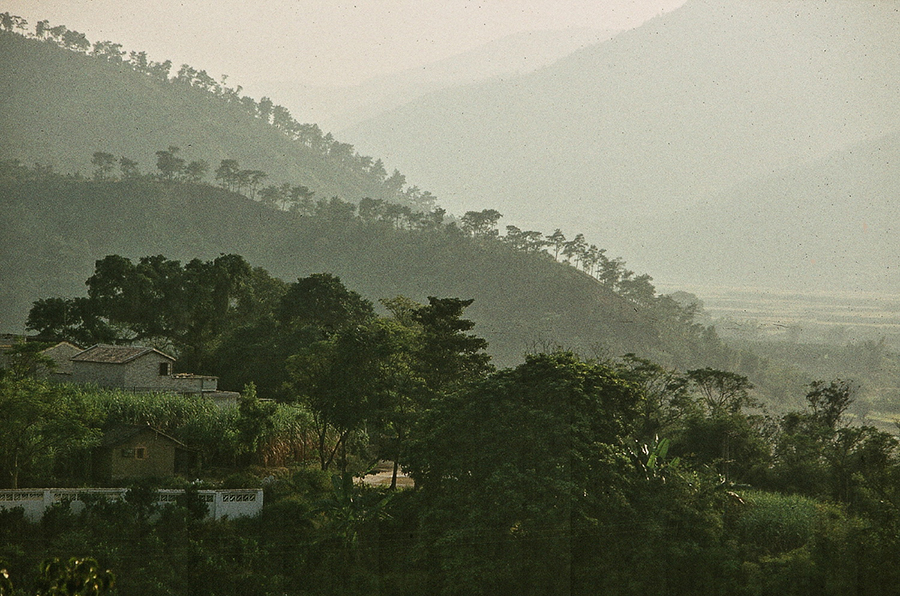
I was back on board for breakfast before driving through stunning mountainous topography, passing small agricultural towns and villages, to reach Yuxi Three Holes Cave. A river flowing inside the mountains carried our boat while the boatman sang as we glided along before emerging out into a scene with cattle grazing on river banks below sheer pinnacles. Lunch was in a restaurant overlooking the river, but for me the sheer natural beauty became more important than dining.
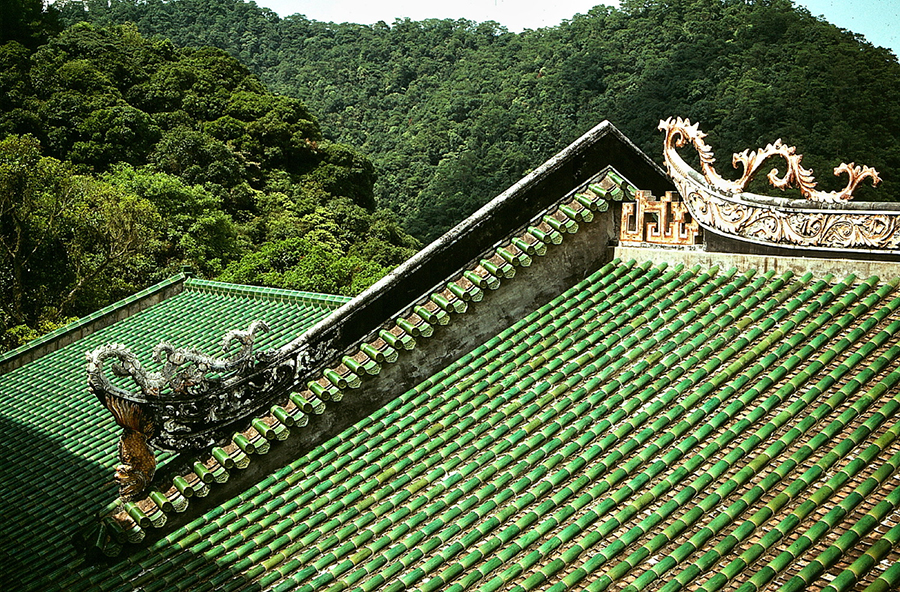
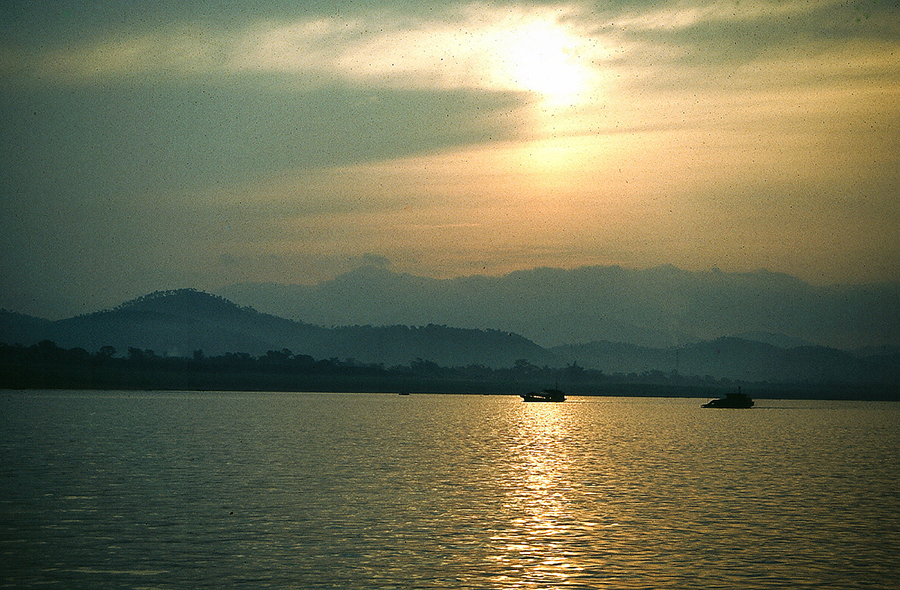
In Xinxing County, Guo En Temple and its pagoda overlooks the San Mao Railway Longshan Hotel. This is a tranquil location to overnight amidst land golden with maturing rice. I was transfixed by the beauty of this part of rural Guangdong as I watched the sun set behind a pavilion, pastel hues transforming the stronger daylight colors into gentle blends. It was incredibly peaceful and as darkness fell, so quiet except for the sound of flowing water.
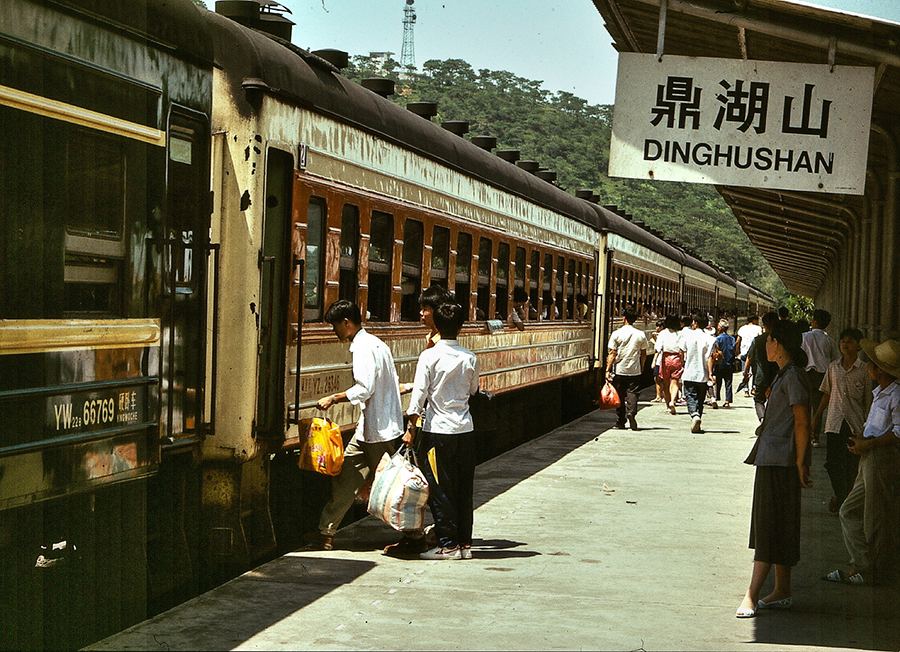
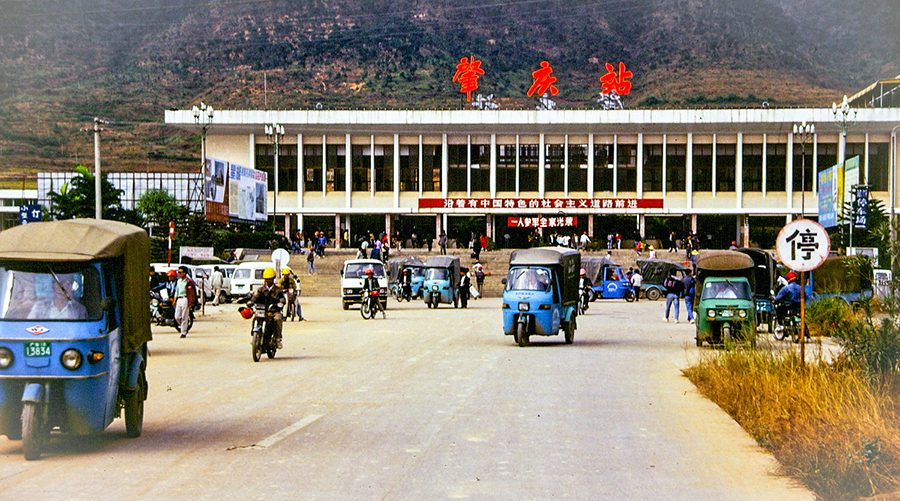
That initial rail journey introduced Zhaoqing. Over time I made several return visits, by train, to discover more of this attractive, historic river city. It was the setting, the topography that so inspired me. Historically it controlled a route between the West River and Dinghu Mountain. The latter is a national nature reserve offering excellent hiking through forests, passing waterfalls dropping into natural pools such as Leaping Dragon Pool. Temples including Qingyuan feature nearby guesthouses where visitors can stay overnight, awakening to the tranquility of mountain nature. In 1993 a small, single platform railway station stood close to the reserve entrance. It was a delight to be there when a steam-hauled passenger train from Guangzhou pulled in.
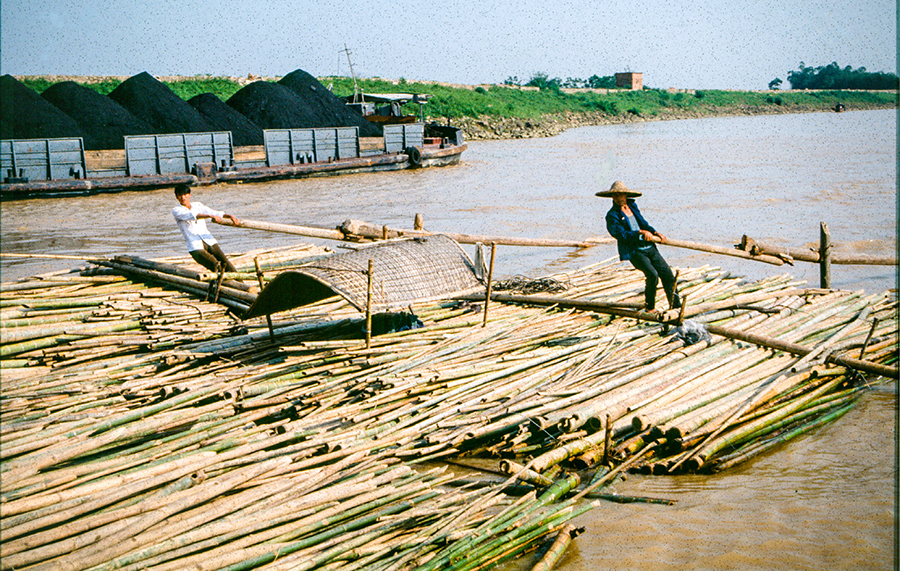
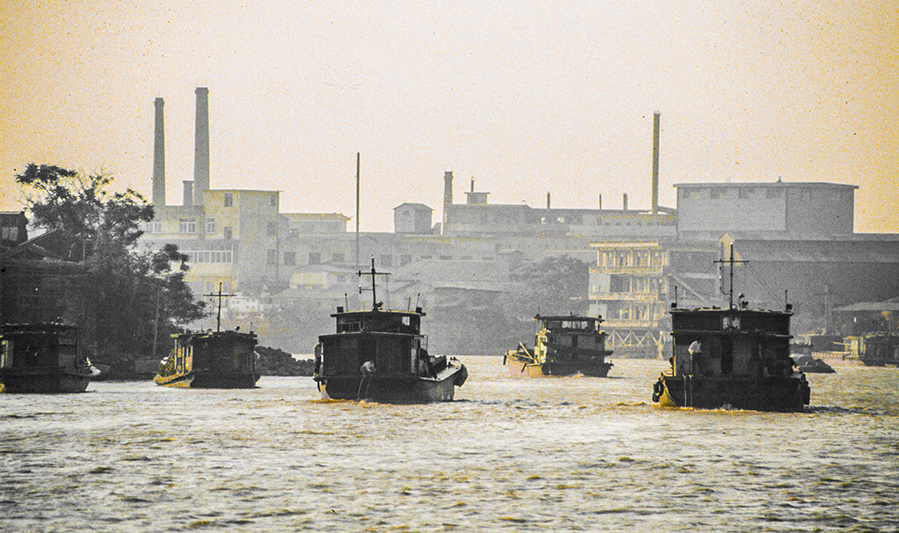
Zhaoqing has long been an important river port. In the 1990s many small ferries brought in crowds of people carrying baskets of fresh vegetables and fruits including cargoes of bananas. Today expressways and cross-river bridging have made many of the local boats redundant.
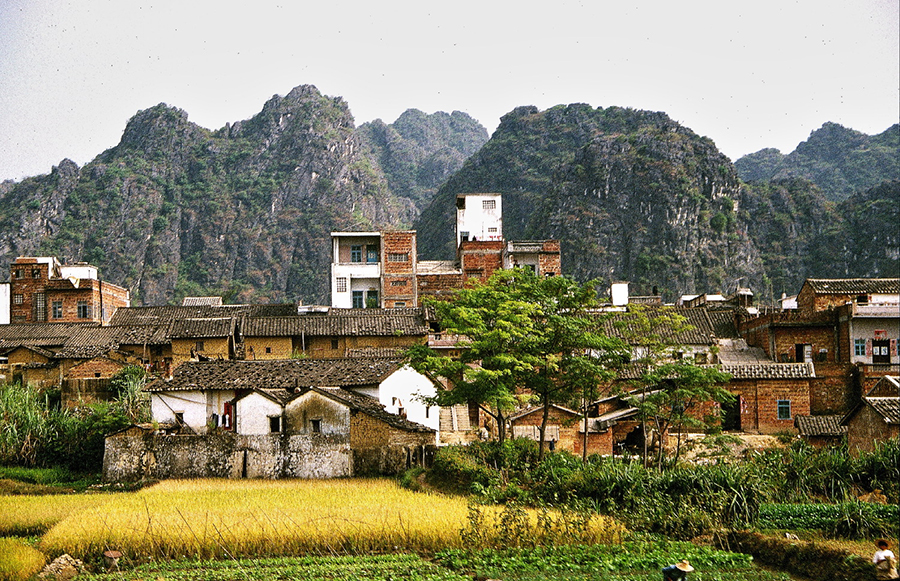
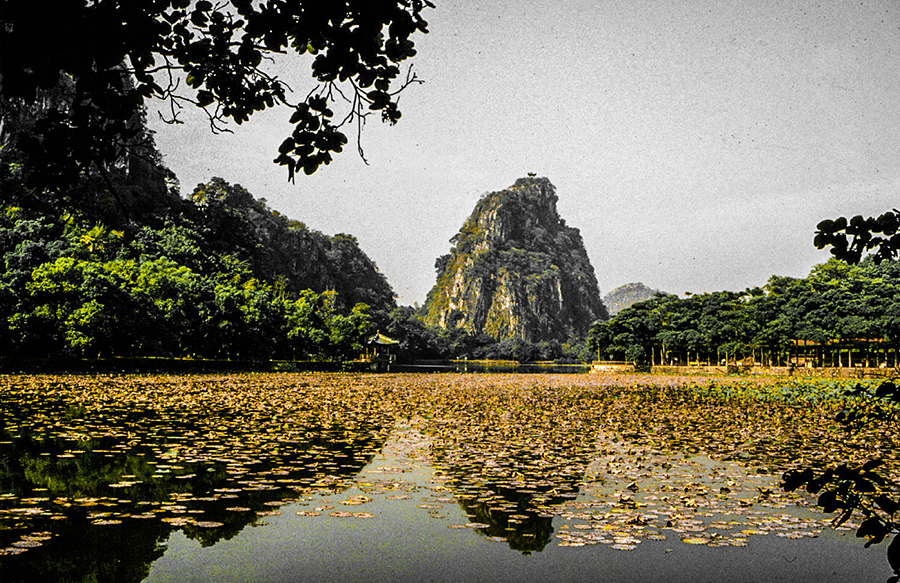
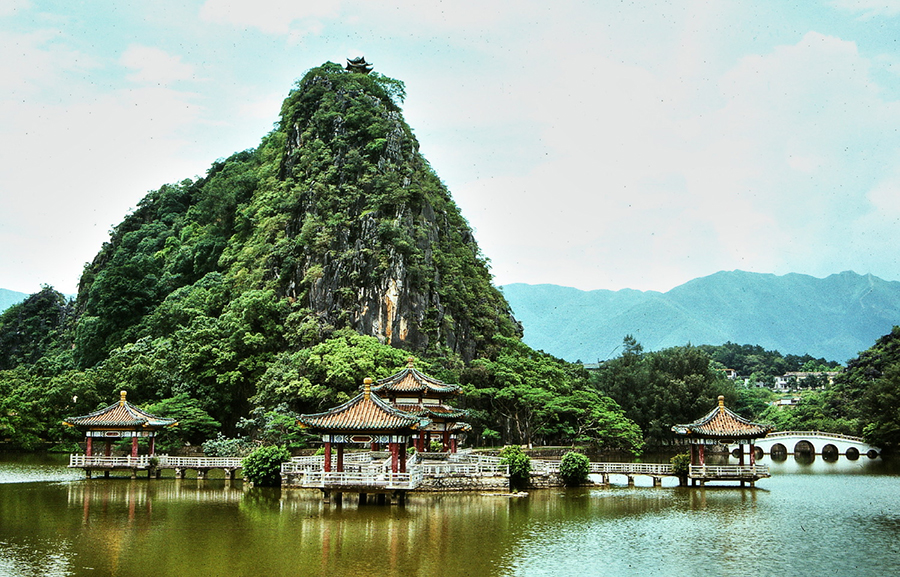
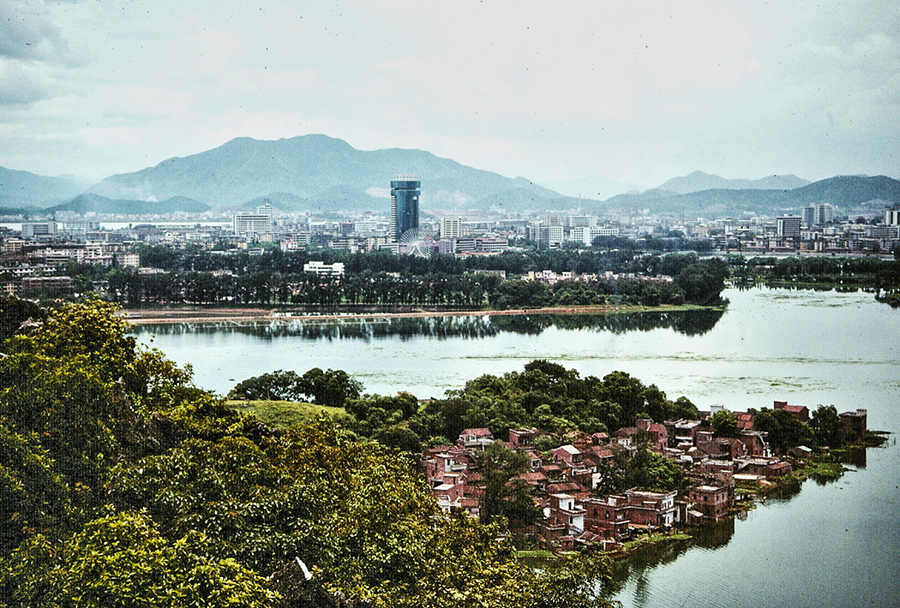
The city's iconic beauty reminds me of similar scenery around Guilin and Yangshuo. The Seven Star Crags, which in 1992 I accessed initially via a chain link bridge, rise sheer from the waters of Star Lake. Walkways shaded by willow trees connected the pinnacles or larger islands. Calligraphy adorned rocky slopes and walls of numerous caves. Narrow stone paths climbed steeply up to summit pavilions alongside small temples clinging to rock faces. Legend has it that seven stars fell from the sky to form a pattern on the ground resembling the Big Dipper. Locals believe that if one stands under Stone House Crag on a clear moonlight night it is possible to hear celestial strains of music. In 1992, brick villages still crowded parts of the lakeshore with fish ponds interspersed between rice and vegetable fields.
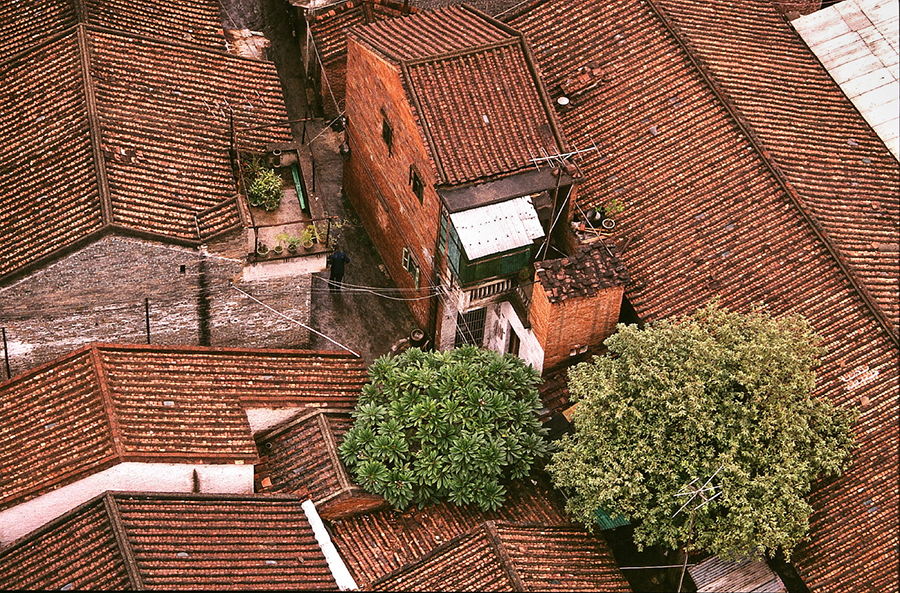
In Zhaoqing I would stay at Star Lake Hotel from whose windows I would awake to a view of the waters with a backdrop of verdant mountains warming up in morning sunshine. The hotel was conveniently placed to quickly lose myself within a maze of narrow old town alleys connecting the lake to the West River. The area brimmed with activity -- small walk-in shops, restaurants, children going to and from school -- and as darkness fell night markets illuminated by single light bulbs over food stalls sprang into life. Aromas and sounds of hot wok stir-fry cooking filled the air.
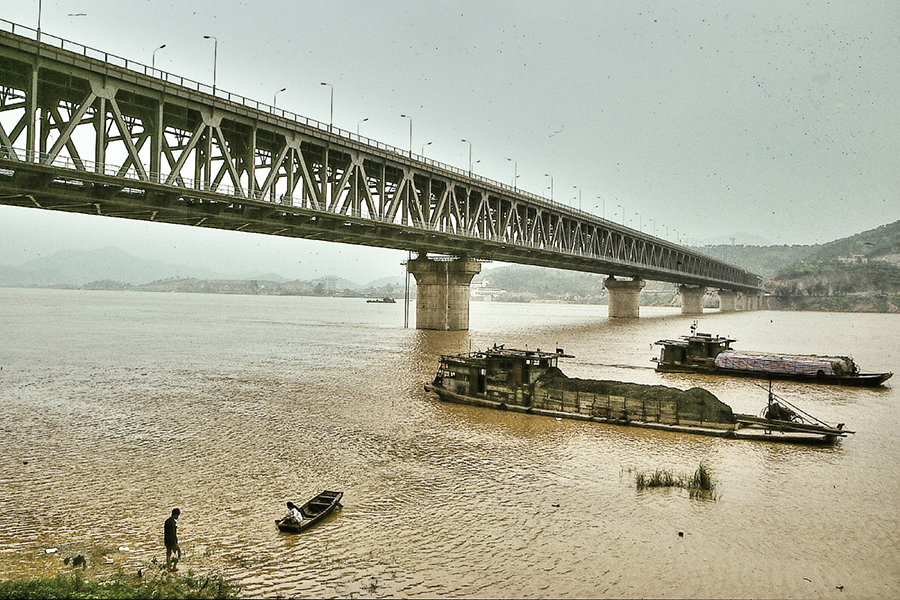
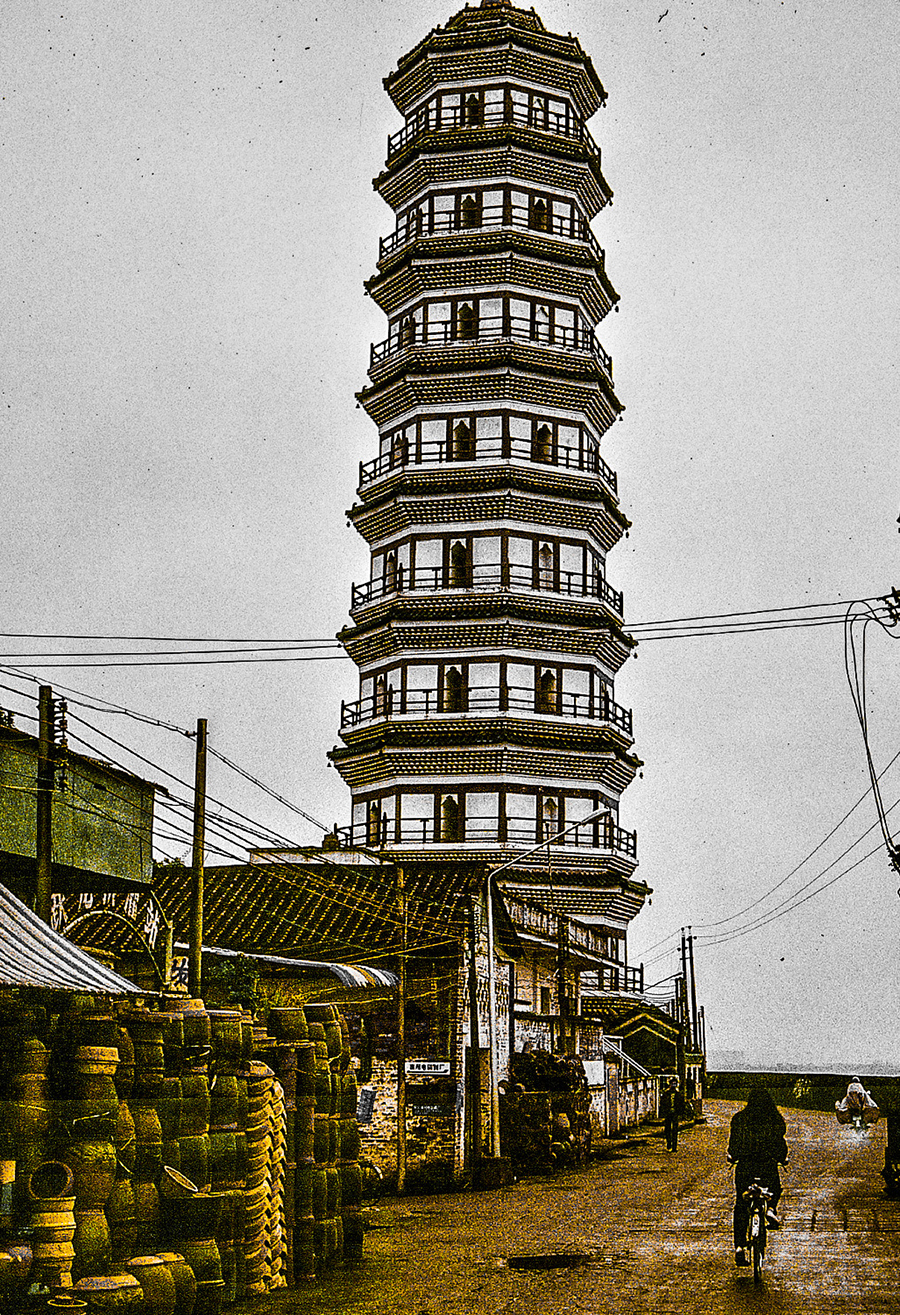
Beyond the alleys, remnants of the city's historic walls bordering the river led to nine-story Chongxi ("flowery") Pagoda overlooking the river. Floating restaurants, much favored at that time, greeted diners as many small boats bobbed alongside. The view across to steep hills and villages also swept around to the West River Bridge. Like similar grand structures found in Wuhan or Nanjing it carried both road and rail. The bridge was a vital link connecting southwestern Guangdong with Guangzhou and an excellent location to watch steam locomotives haul their loads.
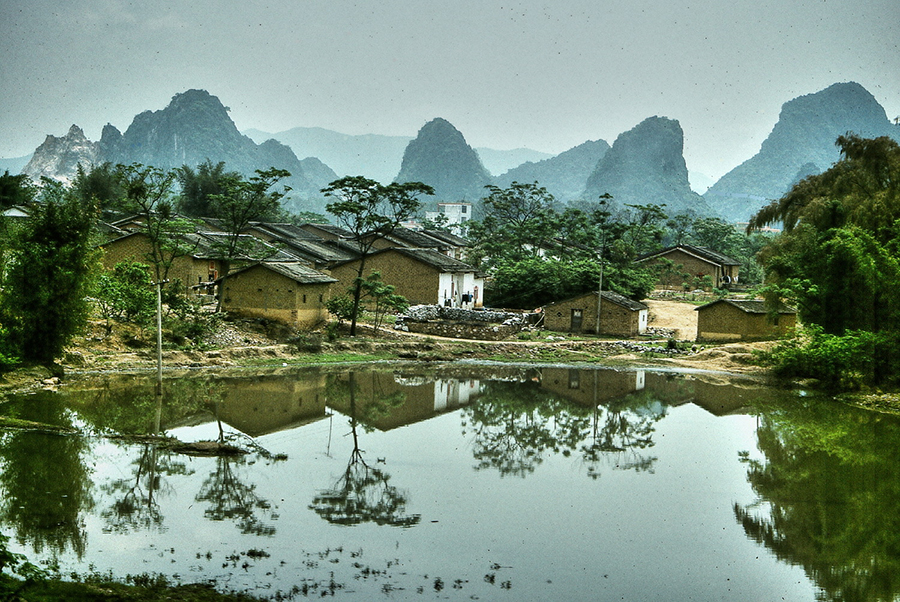
Several times I travelled across the bridge discovering more of this magnificent railway and the terrain between Zhaoqing and Maoming. The train snaked through narrow gorges, piercing the limestone massifs by tunnels while milky colored water emerging from caves flowed past the track. The Sanmao was truly a fine line to traverse as it continued beyond the San Du River Viaduct passing scenes of seemingly continual agricultural activity. Slopes carried rows of fruit trees and long strips of vegetables or banana plantations. From the train window I watched as buffaloes toiled through the fertile mud of rice paddies. Farmers with baskets suspended from bamboo shoulder poles followed narrow tracks between the cultivated plots. Villages of adobe brick construction centered around fish ponds providing reflections of the area's stunning geography. People stood with bicycles as the train passed, whistles screeching warnings and chickens scurrying away from the tracks. This was South China's rural landscape at its best and where else in the world could I view this but from a steam-hauled train?
Baishacun near Sanshui was the Sanmao's locomotive maintenance depot. In November 1992 a rail buff's dream materialized -- a visit to the depot. Just like a child I was onto footplates, walking under engines or standing trackside photographing as steam giants hauling freight trains thundered past.
Today Zhaoqing is very much incorporated into the economy of the greater Pearl River Delta. Intercity rail connects with Foshan and Guangzhou. A high speed CRH line to Guizhou skirts the city's eastern edge. Meanwhile, the Guangmao line carries trains from as far away as Beijing and Northeast China onwards to Hainan, Guangxi and Yunnan. Much has changed but those magnificent steam locomotives are no more.