(Source: China Daily)
Discovering Dalian, Northeast China's thriving port city
By Bruce Connolly | chinadaily.com.cn | Updated: 2017-09-20 07:16
'Clang, clang, clang goes the trolley.
Ding, ding, ding went the bell'
(The Trolley Song, sung by Judy Garland in the 1944 movie Meet Me in St. Louis)
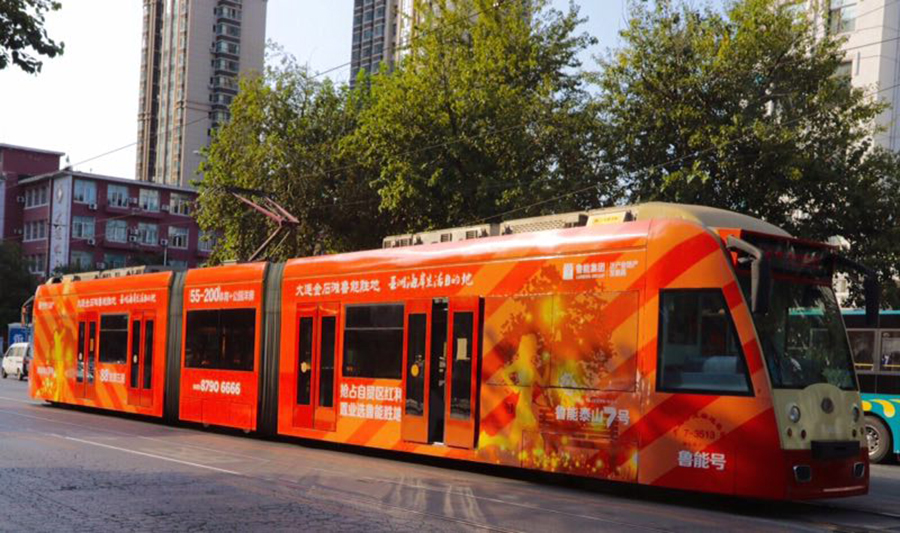
Qingniwaqiao is the center of early Dalian, a city owing much initial growth to the advent of the railway. Exiting from its prime rail terminal I momentarily thought I was in St Louis or New Orleans – there, running along Changjiang Street with the distinctive sound of steel wheels following a metal track, was a classic streetcar, or tram as we would say in my youth back in Glasgow. Scotland's largest city has long been twinned with Dalian, in Northeast China's Liaoning province. In 1991, my interview for an exchange post in Guangzhou occurred in Glasgow's Dalian House!
Dalian's tramways go back to 1909. A fleet of modern vehicles continues to cross downtown areas with several cars constructed in a 'heritage style'. My favourite mode of travel, the trams provides a leisurely way of observing the city with its fascinating mix of historic and modern architecture. The trams attract international and domestic transport enthusiasts, just as previously many came to marvel at the giant steam locomotives produced by what was the Dalian Locomotive and Rolling Stock Works (originally Shahekou Works) from 1899 until in 1965, a change started towards diesel. A giant steam engine stands outside the Dalian Modern Museum at Xinhai. Today's CRRC Dalian Co. Ltd continues to produce electric and diesel locomotives, along with metro cars at a new plant in suburban Lushunkou.
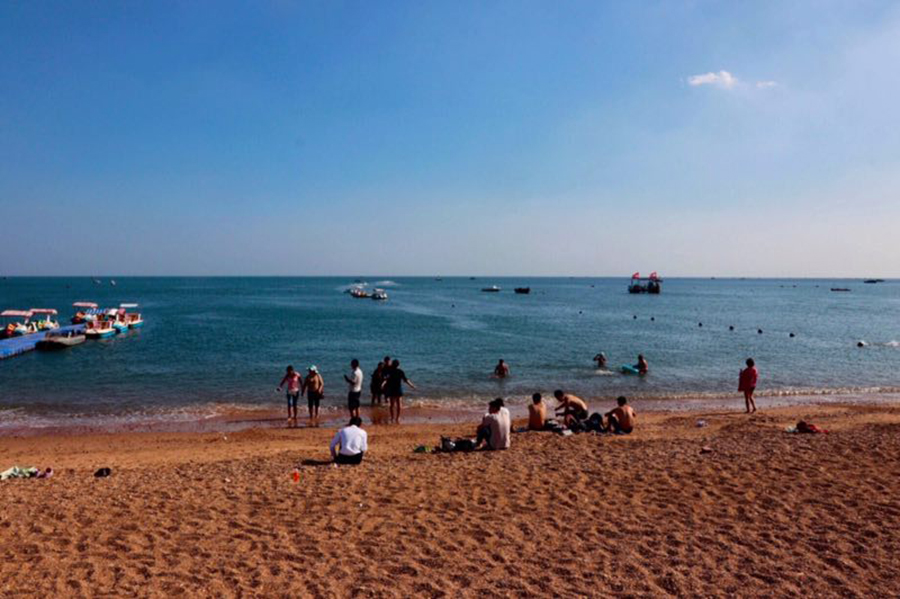
Northwest of the Korean landmass, Dalian occupies a narrow neck or isthmus close to the tip of the Liaodong Peninsula, a strategic area of land, which along with Shandong guards the entrance to the Bohai Gulf. The challenge of physical geography or topography has resulted in Dalian's urban layout contrasting with the sprawl from a central point more familiar to modern Chinese cities. Mountains and cliffs border the sea; many hills within the city alongside narrow stretches of flat land have resulted in a multi-nodal city with different functional zones spread out often in attractive coastal locations connected by an expanding metro and light rail system. Indeed, apart from the tram system, the metro was my preferred way of reaching many distant parts of Dalian.
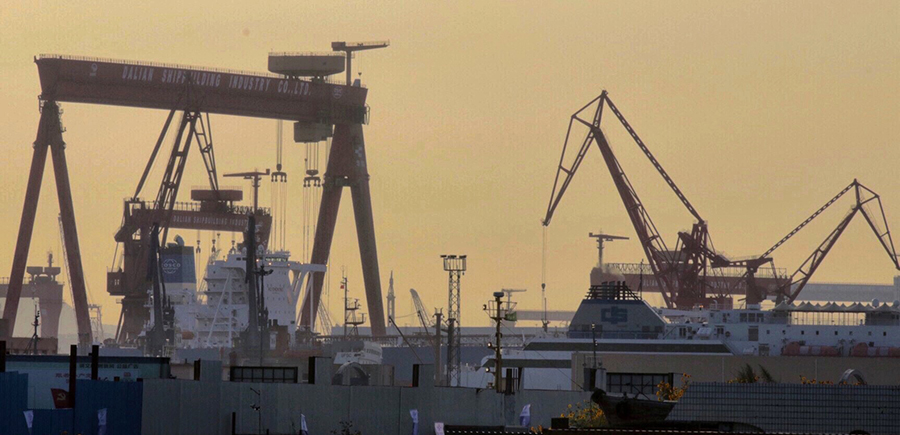
Looking from my hotel room 19 floors above Shanghai Road I appreciated a close proximity to the harbour with large ferries regularly heading out across the water to Yantai and other ports in Shandong, for example. Dalian is one of China's largest and busiest ports. However, looking down on the immediate street layout it had an uncanny resemblance to Paris, with 10 avenues radiating out from expansive Zhongshan Square – today a place popular for photo opportunities with its flock of white doves. Originally known as Nikolayevskaya Square it was laid out in magnificent style by Russia in 1898 as part of a plan to create, in a Parisian style, one of the grandest cities of northeastern Asia. Late 19th century Russia was extending its cross-continental railway system south from Harbin. Close to where the Yalu River flows into the Bohai Sea, Liaodong has several excellent ice-free natural harbors. The area around today's Dalian was viewed with particular enthusiasm. Over a seven year period from March 1898 to January 1905 Russia leased an area of land, building up a commercial town and port centered on earlier fishing villages of Qingniwaqiao ('bridge over cyan mud swamp'), naming their settlement 'Dalniy' ('remote one'). North of the central railway station there is a tourist thoroughfare, Russia Custom Street, with some surviving buildings and structures dating from that period. Adjacent is the tranquil Dalian Railway 1896 Garden Hotel, a series of buildings carefully renovated in 2012 within a park-like and statuette setting, each villa having informative plaques, including references to railway construction in Northeastern China from 1896.
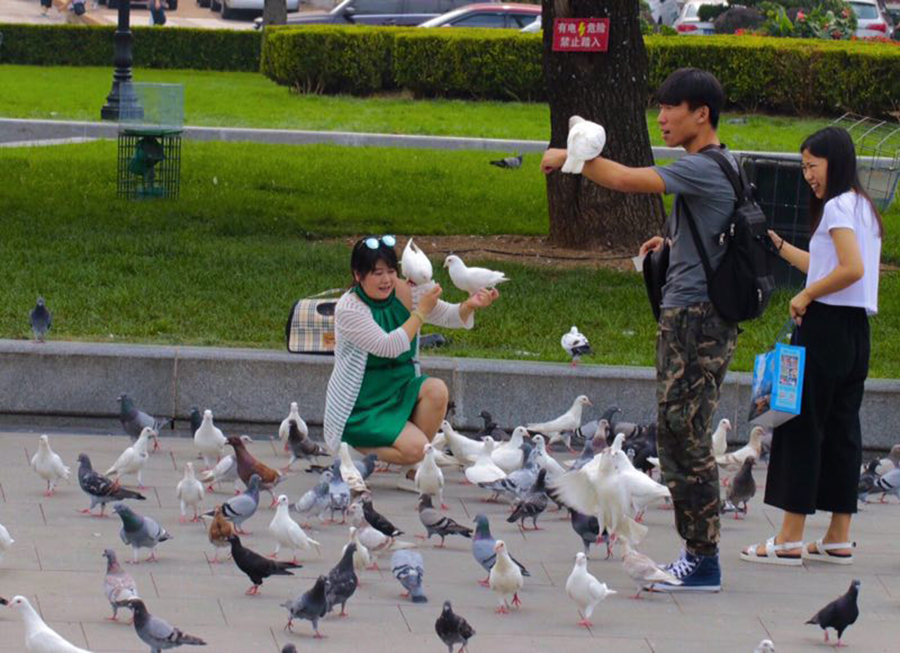
After the Russo-Japanese War, in 1905 Japan occupied the formerly Russian-leased territory until 1945. Reminders of that period are the large gothic-style bank, and financial and hotel buildings around Zhongshan Square, illuminated nightly.
A walk eastwards from the Square, along Renmin Road, is like slicing through Dalian's architectural history. Behind the grand early 20th century financial edifices, narrow side alleys reveal a maze of older domestic dwellings, street markets, little restaurants and much fascinating everyday life. Along the main thoroughfare, international hotels rise alongside top-end shopping malls. An intersection with Shiji Street provides a chance to see the iconic trams passing some beautifully restored buildings while sharing space with the automobiles increasingly thronging Dalian's roads – something the early tramway engineers could never have envisioned! But I was walking, always a great way to appreciate a great city!
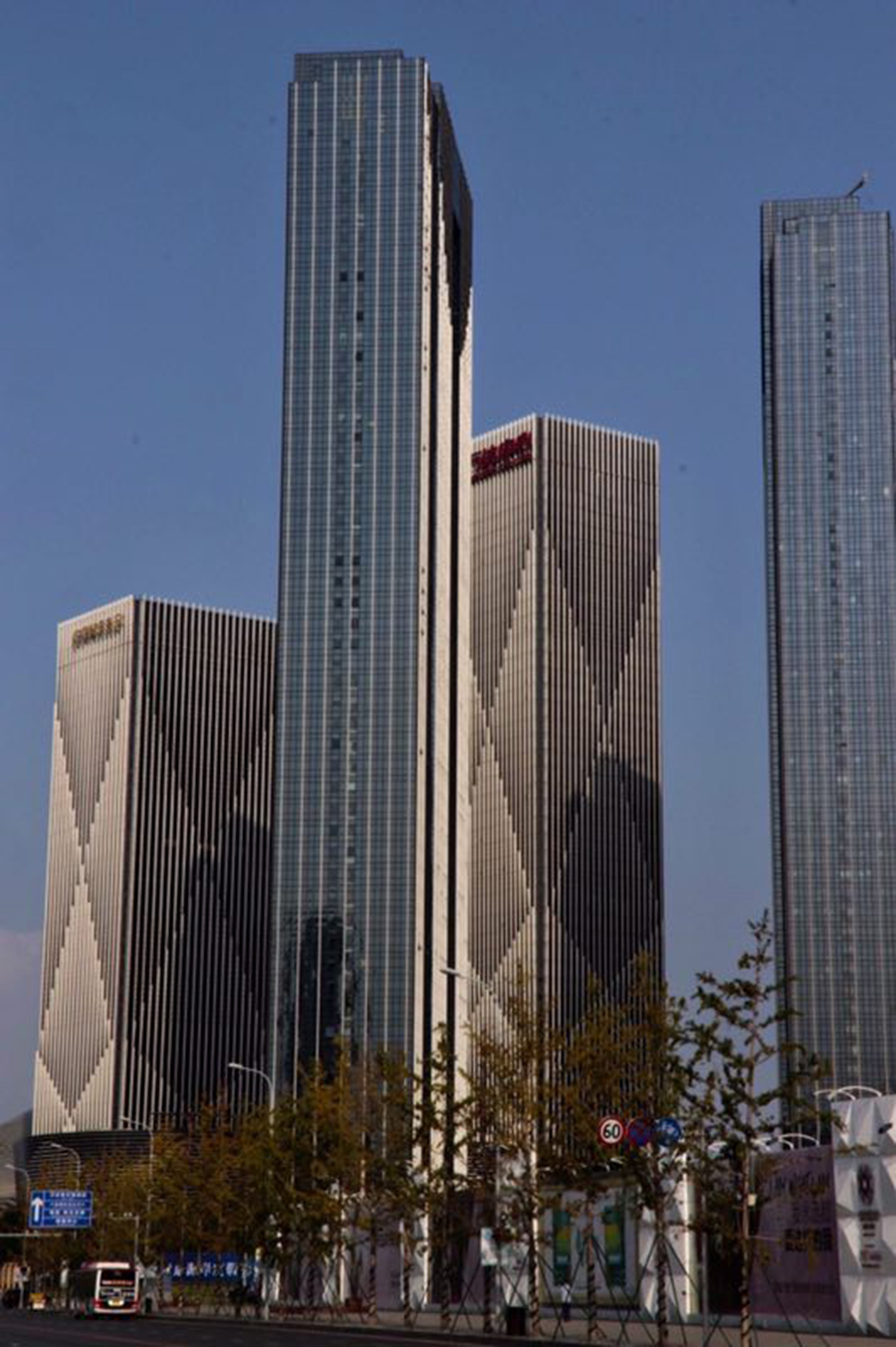
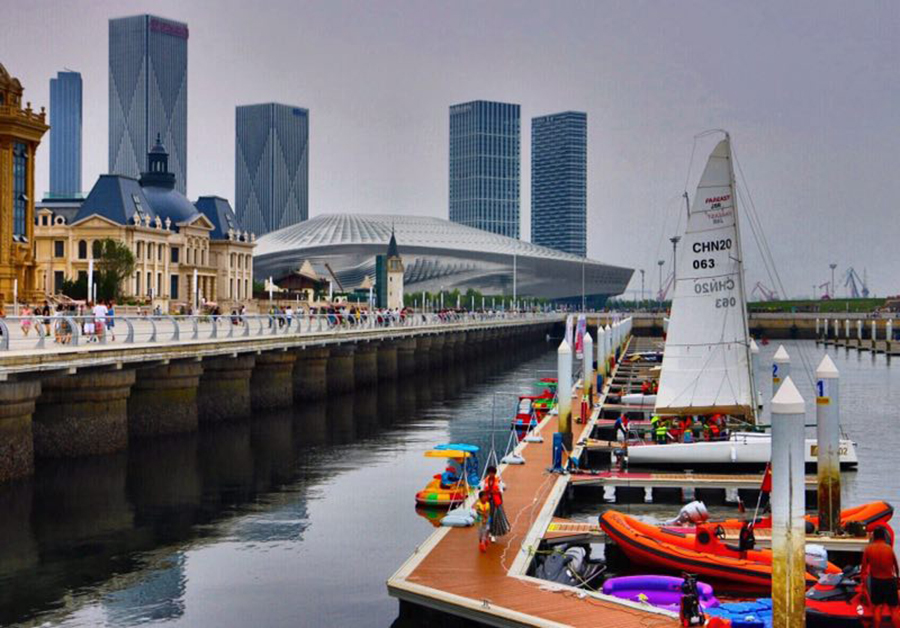
Gangwan Square is a place to stop, to contemplate again the relationship between history and a fast developing metropolis. Close to the port, this area retains grand historic financial, trade and maritime-related buildings, though beyond is a totally new Dalian. A wide boulevard, Renmin East Road, goes like an arrow across land reclaimed from the sea straight into the heart of Dalian's new CBD - an area playing an important role in presenting modern China to the world. Beyond the gleaming contemporary towers of the Conrad and Hilton Hotels is an instantly recognisable landmark, the Dalian International Conference Center, completed in 2012. It was a venue from June 27-29 this year for the World Economic Forum or Summer Davos – a gathering of investors, CEO's, academics and policy makers focusing on the strength of the Chinese economy.
The Conference Center is in a prime location facing Dongang Square to the ocean and an adjacent yacht wharf portraying both lifestyle and recreational activities unimaginable not so many years ago in China. Neighboring Gangdong features a large European-themed development where visitors can walk freely through the streets of Belgium's Brugge or sail on a gondola along Venetian canals – great for photography, particularly for weddings!
Some evenings I would head from my hotel to the Pavilion close to the Railway Station. An excellent example of commercial mall design, it offered a great range of shopping and dining experiences. Returning home it was convenient to board a tram but going there it was always pleasurable to walk along pedestrian-friendly Tianjin Street, with its popular outdoor seafood dining opportunities. This was an opportunity to think about the challenges Dalian faces. Walking would take me through older areas of Qingniwaqiao – busy narrow streets with two or three floor walk-up buildings, many 'hole-in-the-wall' restaurants, commercial businesses and cheap hotels, although simply looking upwards showed continuing encroachment of high-rise structures along with questions about what Dalian can do about its older surviving downtown areas? Land availability is tight because of the city's topography – could some areas be transformed similar to Shanghai's Xintiandi? There is much history written in stone in Dalian but once an area goes it is remembered only in name. I pondered this question many times as I rode by tram or walked around the streets. There is no easy answer.
The city's metro/light rail system means access to popular and often delightful coastal locations is both inexpensive and convenient. With much of the system elevated above ground, it provides an excellent opportunity to observe the city's development.
Metro Line 3 runs north from the Railway Station, winding around the coast, past shipyards, port facilities, through rolling countryside with technological development zones, passing relocated academic institutions to arrive at Jinshitan (Golden Pebble Beach) a seaside resort for the city offering horse-drawn carriage transfers from the metro terminal to a range of fun, sea and beach-related activities.
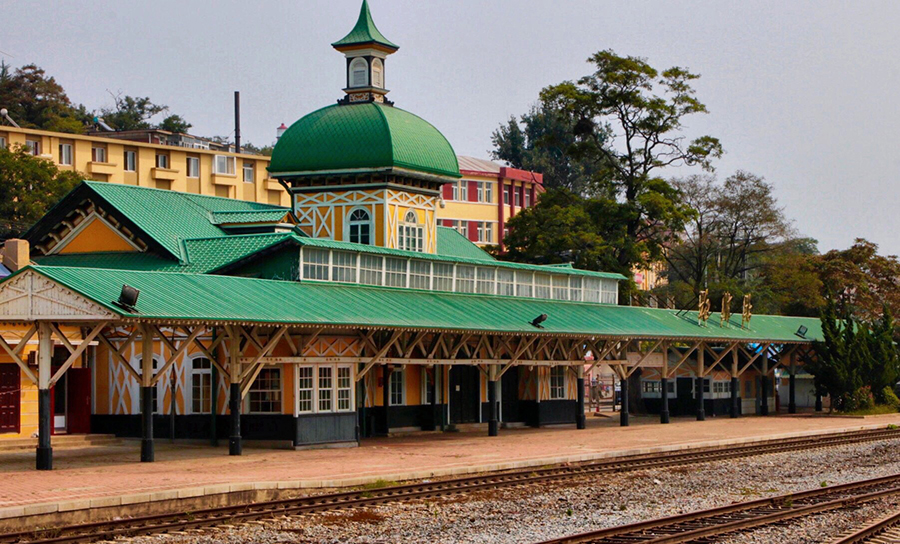
Line 1 takes in Xinghai Square with its lengthy Xinghaiwan Bridge suspended above a bay overlooked by the fairytale-like, Germanic-styled Castle Hotel. Hekou is a transfer station from Line 1 to Line 12 - running above ground it skirts through mountainous valleys, passing farming villages and following coastlines where fisher folk bring their catch ashore, before arriving at Lushun, one of the world's most perfect natural harbours and a startling reminders of the 1905 Russian-Japanese conflict. Lushun Railway Station is a terminus of the historic railway from Russia that today remains as an architectural gem.
Walking along Changjiang Street towards Dalian Railway Station for the night train back to Beijing a 'heritage' tram passed by with the sound of 'clang, clang, clang, goes the trolley' – I knew I would return to Dalian with so much still to explore!